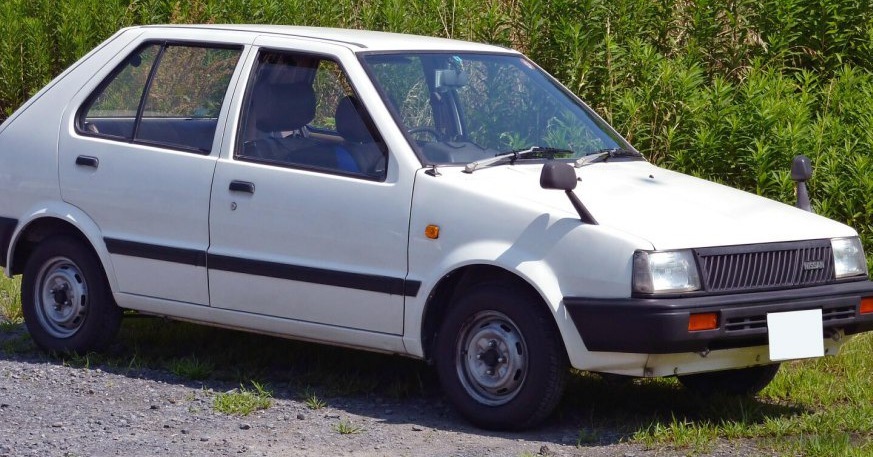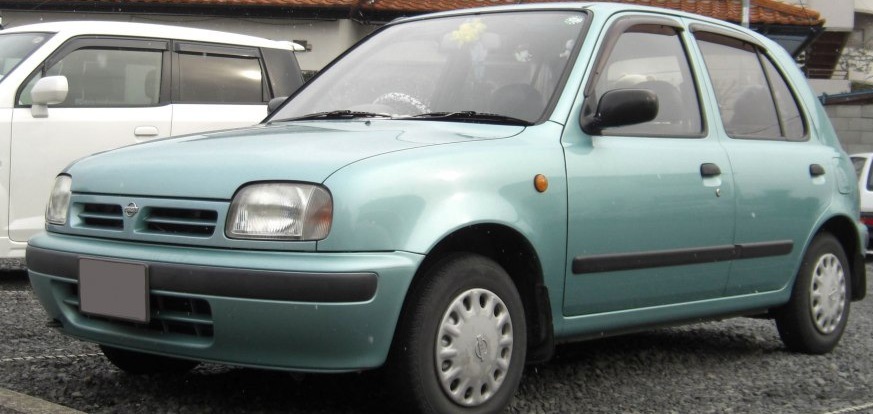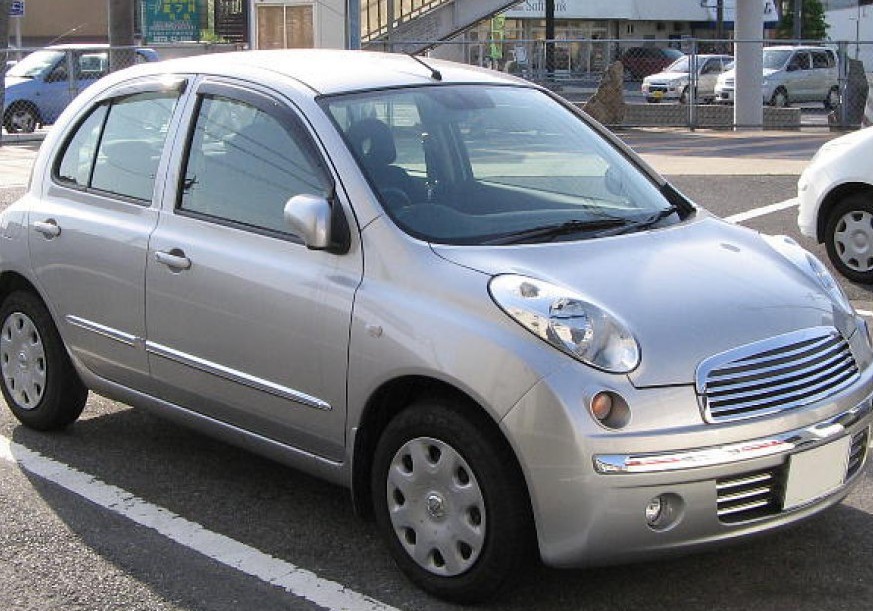
The Nissan March, known as the Micra in many markets, K12 series represents the third generation of this supermini, produced from 2003 to 2010. The 1.5 Di variant, available primarily in Europe and select international markets between 2003 and 2005, offered a diesel-powered option within the K12 lineup. This model aimed to provide fuel efficiency and practicality in a compact package, catering to buyers seeking a cost-effective and economical city car. It occupied the lower-mid range of the K12 offerings, positioned below the more powerful petrol variants and above the base 1.0-liter models.
Technical Specifications
| Brand | Nissan |
| Model | March |
| Generation | March (K12) |
| Type (Engine) | 1.5 Di (65 Hp) |
| Start of production | 2003 |
| End of production | 2005 |
| Powertrain Architecture | Internal Combustion engine |
| Body type | Hatchback |
| Seats | 5 |
| Doors | 3/5 |
| Fuel consumption (urban) | 5.6 l/100 km (42 US mpg, 50.4 UK mpg, 17.9 km/l) |
| Fuel consumption (extra urban) | 4 l/100 km (58.8 US mpg, 70.6 UK mpg, 25 km/l) |
| Fuel consumption (combined) | 4.6 l/100 km (51.1 US mpg, 61.4 UK mpg, 21.7 km/l) |
| Fuel Type | Diesel |
| Acceleration 0 – 100 km/h | 17 sec |
| Acceleration 0 – 62 mph | 17 sec |
| Acceleration 0 – 60 mph | 16.2 sec |
| Maximum speed | 155 km/h (96.31 mph) |
| Weight-to-power ratio | 15.1 kg/Hp, 66.3 Hp/tonne |
| Weight-to-torque ratio | 6.1 kg/Nm, 163.3 Nm/tonne |
| Power | 65 Hp @ 4000 rpm |
| Power per litre | 44.5 Hp/l |
| Torque | 160 Nm @ 2000 rpm (118.01 lb.-ft. @ 2000 rpm) |
| Engine layout | Front, Transverse |
| Engine displacement | 1461 cm3 (89.16 cu. in.) |
| Number of cylinders | 4 |
| Engine configuration | Inline |
| Cylinder Bore | 76 mm (2.99 in.) |
| Piston Stroke | 80.5 mm (3.17 in.) |
| Compression ratio | 18.8:1 |
| Number of valves per cylinder | 2 |
| Fuel injection system | Diesel Commonrail |
| Engine aspiration | Turbocharger, Intercooler |
| Valvetrain | OHC |
| Kerb Weight | 980 kg (2160.53 lbs.) |
| Max. weight | 1510 kg (3328.98 lbs.) |
| Max load | 530 kg (1168.45 lbs.) |
| Trunk (boot) space – minimum | 371 l (13.1 cu. ft.) |
| Trunk (boot) space – maximum | 584 l (20.62 cu. ft.) |
| Fuel tank capacity | 46 l (12.15 US gal | 10.12 UK gal) |
| Length | 3715 mm (146.26 in.) |
| Width | 1660 mm (65.35 in.) |
| Height | 1525 mm (60.04 in.) |
| Wheelbase | 2430 mm (95.67 in.) |
| Front track | 1470 mm (57.87 in.) |
| Rear (Back) track | 1445 mm (56.89 in.) |
| Minimum turning circle | 9.8 m (32.15 ft.) |
| Drivetrain Architecture | The Internal combustion engine (ICE) drives the front wheels of the vehicle. |
| Drive wheel | Front wheel drive |
| Number of gears | 5 gears, manual transmission |
| Front suspension | Spring Strut |
| Rear suspension | Torsion |
| Front brakes | Ventilated discs |
| Rear brakes | Disc |
| Assisting systems | ABS (Anti-lock braking system) |
| Steering type | Steering rack and pinion |
| Tires size | 175/60 R15 |
| Wheel rims size | 5.5J x 15 |
INTRODUCTION
The K12 Nissan March/Micra represented a significant departure from its predecessors, embracing a more rounded and contemporary design. Introduced in 2003, it was built on Nissan’s ‘S’ platform, also used for the Renault Clio II and other compact vehicles. The 1.5 Di variant, powered by a Renault-sourced diesel engine, was primarily aimed at European markets where diesel fuel was more prevalent and economically advantageous. This engine offered a balance between fuel efficiency and reasonable performance for urban driving. Available in both 3-door and 5-door configurations, the 1.5 Di trim typically included basic amenities and focused on practicality rather than luxury.
Powertrain & Engine Architecture
The heart of the 1.5 Di March is the K9K 704 engine, a 1.5-liter inline-four cylinder diesel engine developed jointly by Renault and Nissan. This engine utilizes a common rail direct injection system, delivering fuel directly into the combustion chamber at extremely high pressure for improved efficiency and reduced emissions. The engine code, often identified as K9K, is a key identifier for parts and service. The engine features an overhead camshaft (OHC) valvetrain with two valves per cylinder. A turbocharger with an intercooler is employed to boost power output and improve torque across the rev range. The 5-speed manual transmission was the only gearbox option available with this engine, prioritizing fuel economy over rapid acceleration. The transmission is a standard front-wheel-drive configuration.
Driving Characteristics
The 1.5 Di March, with its 65 horsepower and 160 Nm (118 lb-ft) of torque, provided adequate, though not exhilarating, performance. Acceleration from 0-60 mph took around 16.2 seconds, and top speed was limited to 155 km/h (96 mph). The engine’s torque peak at 2000 rpm meant that it felt relatively responsive in city driving, offering sufficient power for overtaking and merging. However, on highways or when fully loaded, the engine could feel strained. The 5-speed manual transmission was well-matched to the engine’s characteristics, with gear ratios optimized for fuel efficiency. Compared to the 1.4-liter petrol versions, the 1.5 Di offered significantly better fuel economy but lacked the petrol engine’s higher revving nature and quicker response. The manual transmission also provided more driver engagement than the automatic options available on other March trims.
Equipment & Trim Levels
The 1.5 Di trim level of the K12 March was generally considered an entry-level offering. Standard equipment typically included power steering, central locking, electric front windows, and an adjustable steering column. Safety features included ABS brakes and driver and passenger airbags. Interior upholstery was typically a basic cloth material. Optional extras included air conditioning, alloy wheels, and a CD player. The dashboard layout was functional and straightforward, prioritizing usability over aesthetic appeal. Higher trim levels, such as the Visia or Acenta, offered additional features like air conditioning, upgraded interior trim, and alloy wheels, but were not available with the 1.5 Di engine.
Chassis & Braking
The K12 March utilized a MacPherson strut front suspension and a torsion beam rear suspension. This setup provided a comfortable ride quality, particularly on smooth roads, but could feel somewhat unsettled on uneven surfaces. The front brakes were ventilated discs, while the rear brakes were solid discs, providing adequate stopping power for the vehicle’s weight and performance. The steering was a rack and pinion system, offering precise and responsive handling. The 175/60 R15 tires provided a good balance between grip and rolling resistance, contributing to fuel efficiency. Stabilizer bars were fitted to both the front and rear axles to reduce body roll during cornering.
Market Reception & Comparison
The 1.5 Di March was generally well-received by critics for its fuel efficiency and practicality. It was seen as a sensible choice for urban commuters and those seeking a low-cost-to-run vehicle. However, its performance was often criticized as being underwhelming, particularly when compared to more powerful petrol alternatives. Compared to the 1.4-liter petrol versions, the 1.5 Di offered significantly better fuel economy – around 51.1 US mpg combined – but at the cost of acceleration and overall refinement. Reliability was generally good, although some owners reported issues with the diesel particulate filter (DPF) and turbocharger over time. The 1.5 Di offered a compelling alternative to other small diesel cars of the era, such as the Peugeot 206 HDi and the Fiat Punto JTD.
Legacy
The Nissan March K12 1.5 Di, while not a performance icon, remains a popular choice in the used car market, particularly for those seeking an economical and reliable city car. The K9K engine, despite some potential issues with the DPF and turbocharger, is generally considered durable and long-lasting when properly maintained. Parts availability is generally good, and maintenance costs are relatively low. Today, these vehicles are often found with high mileage, testament to their robustness. The K12 March 1.5 Di represents a practical and efficient solution for urban transportation, and its legacy continues as a dependable and affordable option for budget-conscious buyers.