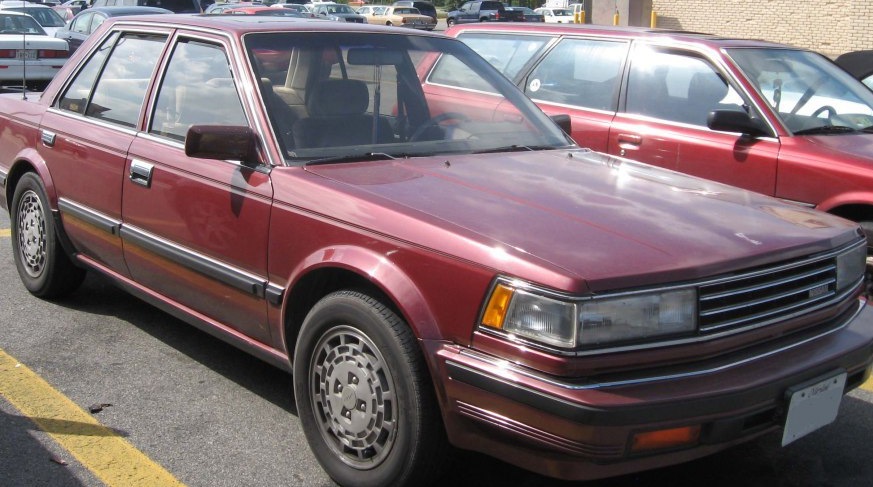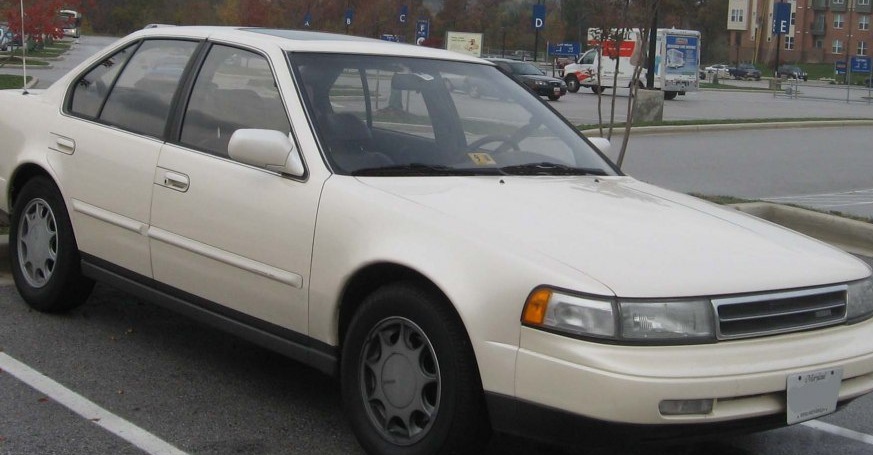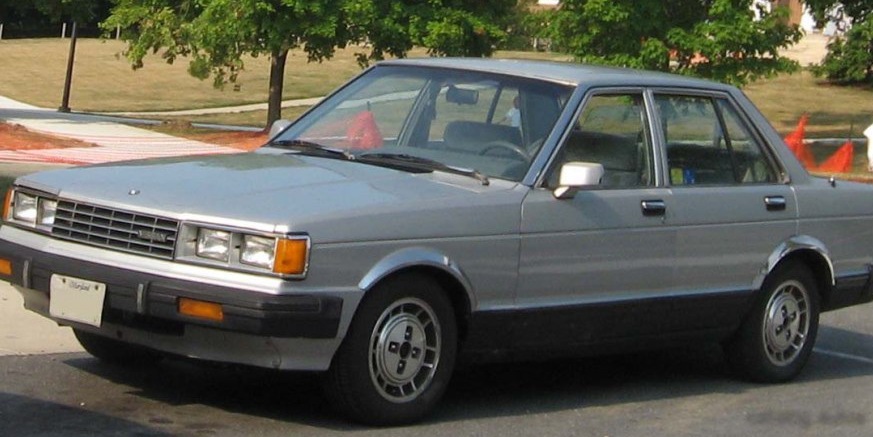
The Nissan Maxima I (G910), produced from 1983 to 1984, represented a significant step for Nissan in the mid-size sedan segment, particularly in the North American market. Positioned as a more upscale and sporty alternative to the Datsun 810 (which it effectively replaced), the Maxima aimed to compete with established American and European sedans. The 2.4-liter (120 hp) variant was a key offering during this initial production run, providing a balance of performance and fuel efficiency for the time. It was the primary engine choice for the US market, marking Nissan’s ambition to establish a stronger presence in the American automotive landscape.
Technical Specifications
| Brand | Nissan |
| Model | Maxima |
| Generation | Maxima I (G910) |
| Type (Engine) | 2.4 (120 Hp) |
| Start of production | 1983 |
| End of production | 1984 |
| Powertrain Architecture | Internal Combustion engine |
| Body type | Sedan |
| Seats | 4 |
| Doors | 4 |
| Fuel Type | Petrol (Gasoline) |
| Weight-to-power ratio | 10.4 kg/Hp, 96.5 Hp/tonne |
| Weight-to-torque ratio | 6.8 kg/Nm, 146.4 Nm/tonne |
| Power | 120 Hp @ 5200 rpm |
| Power per litre | 50.1 Hp/l |
| Torque | 182 Nm @ 2800 rpm (134.24 lb.-ft. @ 2800 rpm) |
| Engine layout | Front, Longitudinal |
| Engine displacement | 2393 cm3 (146.03 cu. in.) |
| Number of cylinders | 6 |
| Engine configuration | Inline |
| Cylinder Bore | 83 mm (3.27 in.) |
| Piston Stroke | 73.7 mm (2.9 in.) |
| Compression ratio | 8.9:1 |
| Number of valves per cylinder | 2 |
| Fuel injection system | Multi-port manifold injection |
| Engine aspiration | Naturally aspirated engine |
| Valvetrain | SOHC |
| Kerb Weight | 1243 kg (2740.35 lbs.) |
| Fuel tank capacity | 62 l (16.38 US gal | 13.64 UK gal) |
| Length | 4670 mm (183.86 in.) |
| Width | 1645 mm (64.76 in.) |
| Height | 1395 mm (54.92 in.) |
| Wheelbase | 2625 mm (103.35 in.) |
| Front track | 1379 mm (54.29 in.) |
| Rear (Back) track | 1359 mm (53.5 in.) |
| Drag coefficient (Cd) | 0.45 |
| Drivetrain Architecture | The Internal combustion engine (ICE) drives the rear wheels of the vehicle. |
| Drive wheel | Rear wheel drive |
| Number of gears and type of gearbox | 5 gears, manual transmission |
| Front brakes | Ventilated discs |
| Rear brakes | Drum |
| Tires size | 185/70 R14 |
| Wheel rims size | 5.5J x 14 |
Powertrain & Engine Architecture
The heart of the Maxima I 2.4 was the L24E inline-six engine. This 2.4-liter powerplant featured a single overhead camshaft (SOHC) valvetrain operating two valves per cylinder. The L24E utilized multi-port fuel injection, a relatively advanced feature for its time, contributing to improved fuel efficiency and smoother power delivery compared to carbureted engines. The engine’s longitudinal mounting and rear-wheel-drive configuration were a deliberate choice, aligning the Maxima with traditional European sports sedans. The 8.9:1 compression ratio was a compromise between performance and the ability to run on the available fuel grades of the early 1980s. The engine produced 120 horsepower at 5200 rpm and 182 Nm (134.24 lb-ft) of torque at 2800 rpm. The standard transmission was a smooth-shifting 5-speed manual, although a 3-speed automatic transmission was also offered as an option.
Driving Characteristics
The 2.4-liter Maxima offered a reasonably spirited driving experience for its era. While not a high-performance machine, the engine provided adequate power for comfortable highway cruising and passing maneuvers. The rear-wheel-drive layout contributed to balanced handling, although the relatively soft suspension tuning prioritized ride comfort over outright sportiness. The 5-speed manual transmission allowed drivers to fully exploit the engine’s powerband, while the optional automatic, while convenient, did diminish acceleration. Compared to potential upgrades like the later V6 engines offered in subsequent Maxima generations, the 2.4-liter felt less refined and had a narrower powerband. However, it was considered a reliable and durable engine, and the rear-wheel drive setup provided a more engaging driving experience than many front-wheel-drive competitors.
Equipment & Trim Levels
The Maxima I 2.4 was generally well-equipped for its price point. Standard features typically included cloth upholstery, a basic AM/FM radio, and manual windows and locks. Air conditioning was a popular option. The interior design was functional and straightforward, prioritizing ergonomics over luxury. Higher trim levels, though not extensively differentiated, might have included upgraded sound systems or minor cosmetic enhancements. The focus was on providing a comfortable and practical interior, rather than a lavish one. Power steering was standard, a welcome feature for a vehicle of this size and weight.
Chassis & Braking
The Maxima I utilized a conventional body-on-frame construction. The front suspension consisted of independent MacPherson struts, while the rear employed a solid axle with leaf springs. This setup provided a comfortable ride but wasn’t particularly sophisticated in terms of handling. Braking duties were handled by ventilated discs at the front and drum brakes at the rear. The braking system was adequate for normal driving conditions, but lacked the stopping power of more modern systems. The 185/70 R14 tires provided reasonable grip, but were not particularly wide by contemporary standards.
Market Reception & Comparison
The Maxima I was generally well-received by automotive critics. It was praised for its comfortable ride, spacious interior, and relatively refined engine. However, some reviewers noted that the handling was not as sharp as some of its European competitors. Compared to the Datsun 810 it replaced, the Maxima offered a more modern design and a more engaging driving experience. Against rivals like the Ford Granada or Chevrolet Citation, the Maxima offered a compelling combination of value, reliability, and features. Fuel economy was respectable for the time, averaging around 22-26 mpg in combined driving. The 2.4-liter engine was considered reliable, but maintenance costs were generally comparable to those of other inline-six engines of the era.
Legacy
The Nissan Maxima I laid the foundation for a successful and long-running model line. While the initial G910 generation was relatively short-lived, it established the Maxima as a credible competitor in the mid-size sedan segment. The 2.4-liter L24E engine proved to be a durable and reliable powerplant, and many examples are still on the road today. In the used car market, the Maxima I is appreciated by enthusiasts for its classic styling and relatively simple mechanicals. It represents a significant milestone in Nissan’s history, marking the company’s commitment to building high-quality, well-equipped sedans for the North American market. The transition to front-wheel drive in subsequent generations would further enhance the Maxima’s popularity and solidify its position as a leading contender in its class.