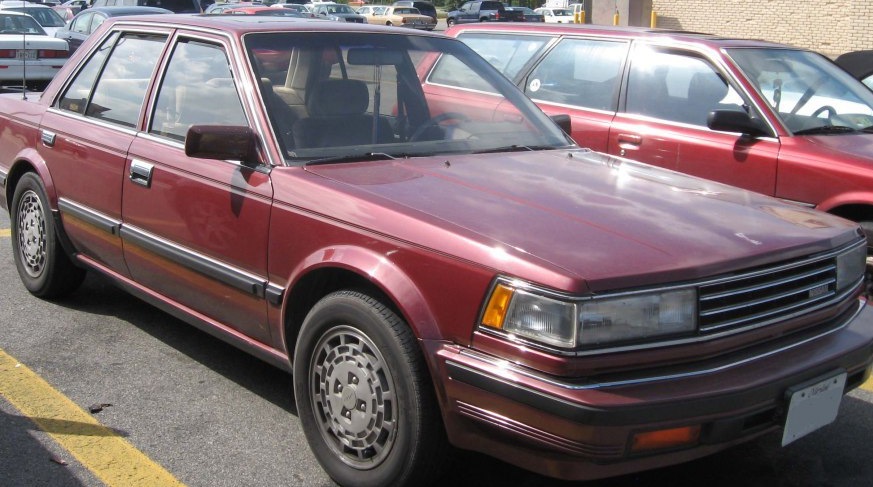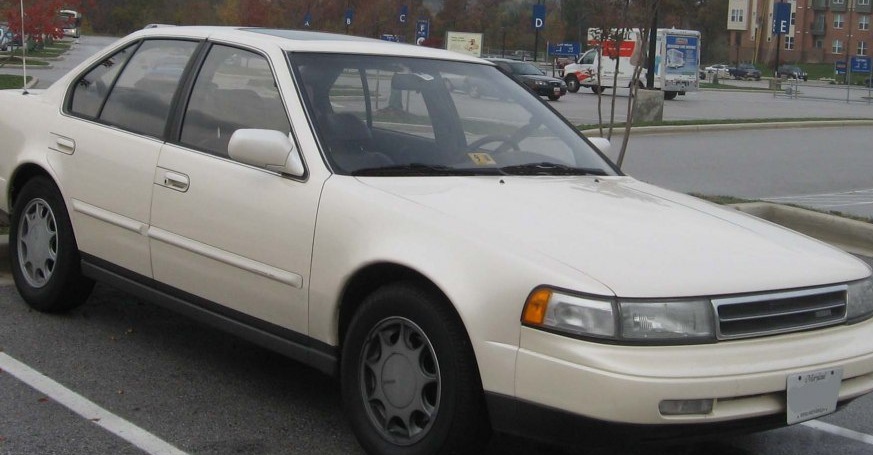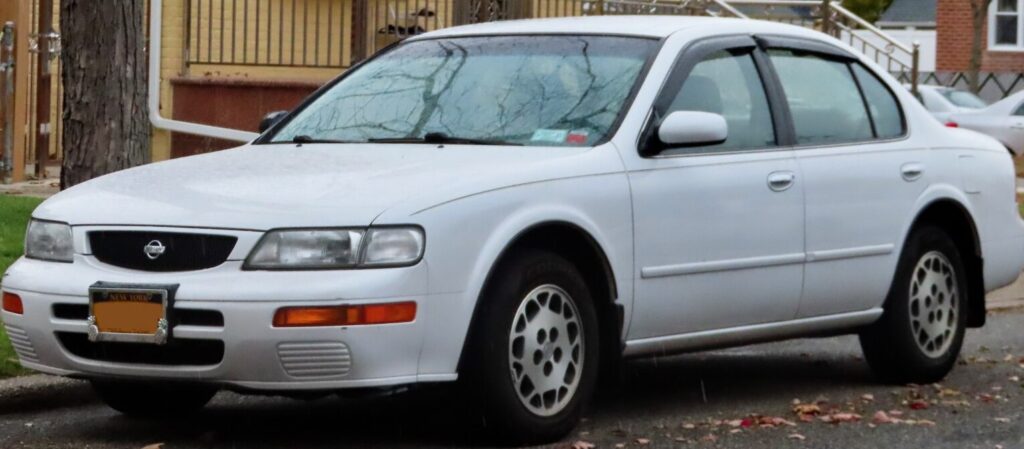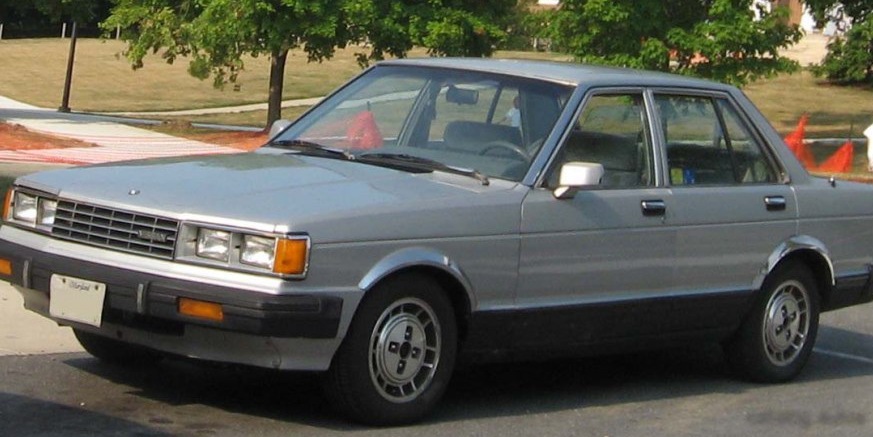
The Nissan Maxima I (G910) 2.8, produced from 1983 to 1984, marked Nissan’s initial entry into the mid-size sedan market, specifically tailored for North American consumers. Replacing the Datsun 810, the Maxima aimed to deliver a combination of comfort, dependability, and a hint of sporty handling, positioning itself as a more upscale offering. Built on the G910 chassis, this first-generation Maxima was instrumental in building Nissan’s premium brand image within the United States. The 2.8-liter engine paired with an automatic transmission was a key configuration, balancing affordability with user-friendliness, though it wasn’t the highest-performing option available.
Technical Specifications
| Brand | Nissan |
| Model | Maxima |
| Generation | Maxima I (G910) |
| Type (Engine) | 2.8 (81 Hp) Automatic |
| Start of production | 1983 |
| End of production | 1984 |
| Powertrain Architecture | Internal Combustion engine |
| Body type | Sedan |
| Seats | 4 |
| Doors | 4 |
| Fuel Type | Diesel |
| Weight-to-power ratio | 16.7 kg/Hp, 60 Hp/tonne |
| Weight-to-torque ratio | 8.3 kg/Nm, 120.7 Nm/tonne |
| Power | 81 Hp @ 4600 rpm |
| Power per litre | 29 Hp/l |
| Torque | 163 Nm @ 2400 rpm (120.22 lb.-ft. @ 2400 rpm) |
| Engine layout | Front, Longitudinal |
| Engine displacement | 2793 cm3 (170.44 cu. in.) |
| Number of cylinders | 6 |
| Engine configuration | Inline |
| Cylinder Bore | 84.5 mm (3.33 in.) |
| Piston Stroke | 83 mm (3.27 in.) |
| Compression ratio | 22.2:1 |
| Number of valves per cylinder | 2 |
| Fuel injection system | Precombustion chamber injection |
| Engine aspiration | Naturally aspirated engine |
| Kerb Weight | 1350 kg (2976.24 lbs.) |
| Fuel tank capacity | 62 l (16.38 US gal | 13.64 UK gal) |
| Length | 4670 mm (183.86 in.) |
| Width | 1645 mm (64.76 in.) |
| Height | 1395 mm (54.92 in.) |
| Wheelbase | 2625 mm (103.35 in.) |
| Front track | 1379 mm (54.29 in.) |
| Rear (Back) track | 1359 mm (53.5 in.) |
| Drag coefficient (Cd) | 0.45 |
| Drivetrain Architecture | The Internal combustion engine (ICE) drives the rear wheels of the vehicle. |
| Drive wheel | Rear wheel drive |
| Number of gears and type of gearbox | 3 gears, automatic transmission |
| Front brakes | Ventilated discs |
| Rear brakes | Drum |
| Tires size | 185/70 R14 |
| Wheel rims size | 14 |
Powertrain & Engine Architecture
The Nissan Maxima I 2.8’s engine was the L28E, an inline-six cylinder engine displacing 2.8 liters (2793 cc). This engine featured a precombustion chamber injection system, an unusual technology for the time, intended to enhance combustion efficiency and lower emissions. The L28E had a single overhead camshaft (SOHC) valvetrain with two valves per cylinder. While its output of 81 horsepower at 4600 rpm and 163 Nm (120.22 lb-ft) of torque at 2400 rpm wasn’t particularly high for the era, the engine was known for its smooth operation and durability. A three-speed automatic transmission was chosen for its ease of use and appeal to the target demographic. The engine was mounted longitudinally in the front of the vehicle, powering the rear wheels.
Driving Characteristics
The 2.8-liter Maxima with the automatic transmission offered a comfortable, but not particularly sporty, driving experience. The three-speed automatic, while providing smooth gear changes, lacked the responsiveness of a manual transmission. Acceleration was sufficient for daily driving, but overtaking required careful consideration. Compared to later, more powerful Maxima versions (equipped with the VG30E V6), the 2.8 felt noticeably less powerful. The gear ratios were optimized for fuel economy and comfortable cruising rather than outright performance. The rear-wheel-drive layout provided a balanced feel, but the relatively soft suspension tuning prioritized ride comfort over precise handling.
Equipment & Trim Levels
The Maxima I 2.8 Automatic came with a reasonable amount of standard equipment for its price. This included cloth upholstery, a basic AM/FM radio, and power steering. Air conditioning was frequently an optional extra, as were features like power windows and door locks. The interior design was functional and straightforward, emphasizing durability over luxury. Trim levels were relatively simple, with the 2.8 Automatic representing a mid-range offering. Higher trim levels, often paired with the V6 engine, included more luxurious features like leather upholstery and upgraded audio systems.
Chassis & Braking
The Maxima I used a traditional body-on-frame construction, common for sedans of that period. The suspension consisted of independent front suspension with MacPherson struts and a solid rear axle with leaf springs. The braking system featured ventilated discs on the front wheels and drum brakes on the rear. The 185/70 R14 tires provided adequate grip for typical driving conditions. Stabilizer bars were present, but relatively thin, contributing to the car’s focus on ride comfort. The curb weight of 1350 kg (2976.24 lbs) influenced the car’s overall handling characteristics.
Market Reception & Comparison
The Maxima I was generally well-received by automotive reviewers, who praised its comfortable ride, spacious interior, and overall reliability. However, the 2.8-liter engine combined with the automatic transmission was often criticized for its lack of power. Compared to the V6-powered Maxima variants, the 2.8 Automatic offered significantly less performance. Fuel economy was reasonable for the time, but not exceptional. The Maxima competed with other mid-size sedans like the Toyota Camry, Honda Accord, and Ford Fairlane, offering a unique combination of Japanese engineering and American styling. The 2.8 Automatic trim was positioned as an entry-level option, appealing to buyers who valued affordability and ease of use over performance.
Legacy
The Nissan Maxima I 2.8 Automatic, while not the most powerful or technologically advanced version of the first-generation Maxima, was vital in establishing Nissan’s foothold in the North American market. The L28E engine proved remarkably durable, and many examples remain on the road today. The three-speed automatic transmission, while simple, was generally reliable. In the used car market, these early Maximas are increasingly sought after by enthusiasts and collectors, particularly those who appreciate their classic styling and straightforward mechanical design. The 2.8 Automatic variant provides an affordable entry point into classic Nissan ownership, offering a glimpse into the brand’s early attempts to compete in the competitive mid-size sedan segment.