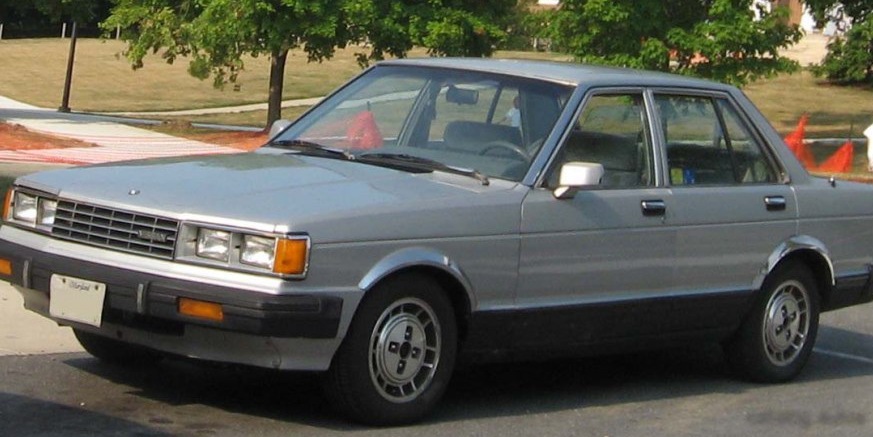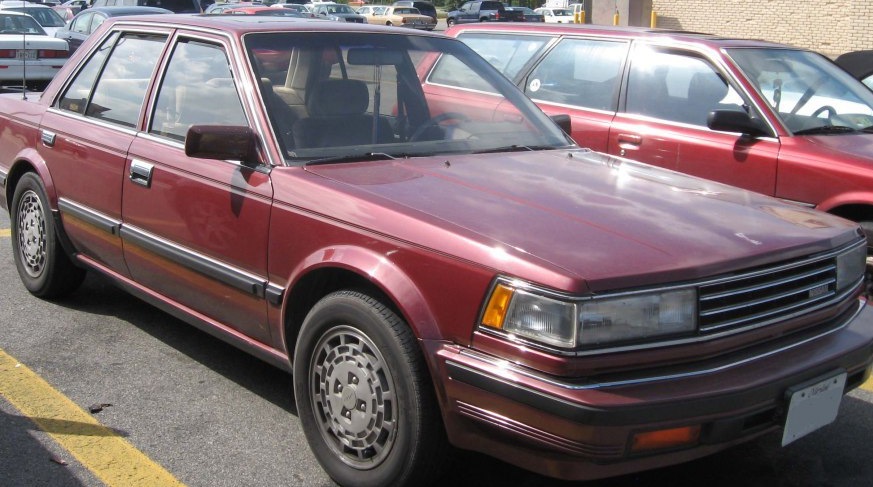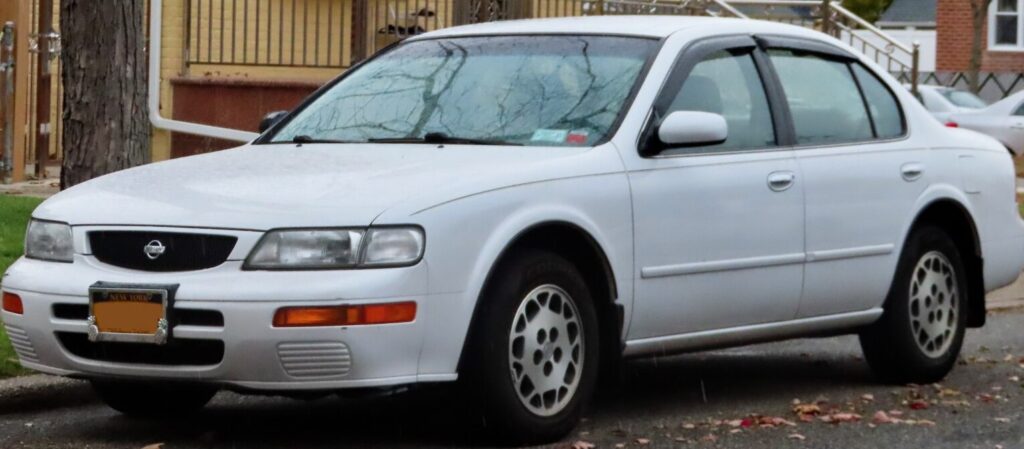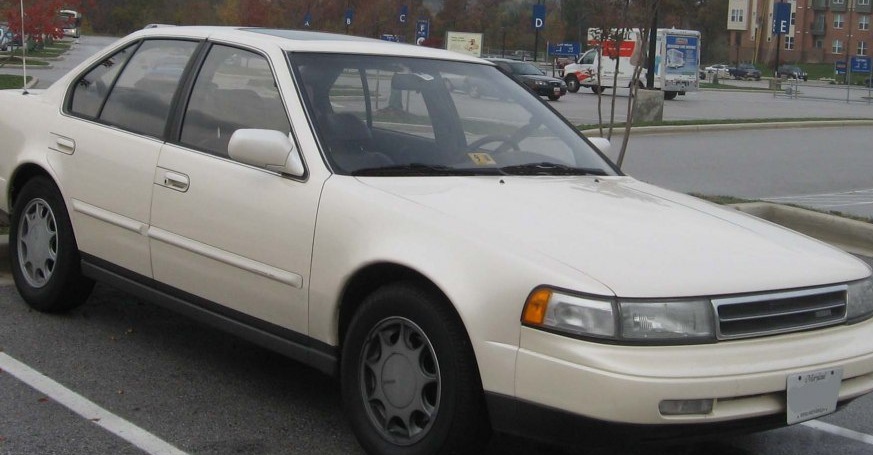
The Nissan Maxima III, designated the J30 chassis, represented a significant step forward for Nissan in the American market. Produced from 1988 through 1994 (with some models continuing into 1995), the J30 aimed to provide a more sophisticated and sporty alternative to domestic sedans. The 3.0i variant, equipped with the VG30E engine producing 170 horsepower, occupied a sweet spot in the lineup, offering a balance of performance and refinement. It was positioned as the premium offering within the J30 range, sitting above the base 2.4-liter models and offering a more engaging driving experience.
Technical Specifications
| Brand | Nissan |
| Model | Maxima |
| Generation | Maxima III (J30) |
| Type (Engine) | 3.0 i (170 Hp) |
| Start of production | 1988 year |
| End of production | 1995 year |
| Powertrain Architecture | Internal Combustion engine |
| Body type | Sedan |
| Seats | 5 |
| Doors | 4 |
| Fuel consumption (combined) | 9.8 l/100 km |
| Fuel consumption (US mpg) | 24 US mpg |
| Fuel consumption (UK mpg) | 28.8 UK mpg |
| Fuel consumption (km/l) | 10.2 km/l |
| Fuel Type | Petrol (Gasoline) |
| Acceleration 0 – 100 km/h | 8.7 sec |
| Acceleration 0 – 62 mph | 8.7 sec |
| Acceleration 0 – 60 mph | 8.3 sec |
| Maximum speed | 220 km/h (136.7 mph) |
| Weight-to-power ratio | 8.1 kg/Hp |
| Weight-to-torque ratio | 5.5 kg/Nm |
| Power | 170 Hp @ 5600 rpm |
| Power per litre | 57.4 Hp/l |
| Torque | 248 Nm @ 2800 rpm (182.92 lb.-ft. @ 2800 rpm) |
| Engine layout | Front, Transverse |
| Engine displacement | 2960 cm3 (180.63 cu. in.) |
| Number of cylinders | 6 |
| Engine configuration | V-engine |
| Cylinder Bore | 87 mm (3.43 in.) |
| Piston Stroke | 83 mm (3.27 in.) |
| Compression ratio | 10:1 |
| Number of valves per cylinder | 2 |
| Fuel injection system | Multi-port manifold injection |
| Engine aspiration | Naturally aspirated engine |
| Valvetrain | OHC |
| Kerb Weight | 1374 kg (3029.15 lbs.) |
| Max. weight | 1935 kg (4265.94 lbs.) |
| Max load | 561 kg (1236.79 lbs.) |
| Trunk (boot) space – minimum | 510 l (18.01 cu. ft.) |
| Fuel tank capacity | 70 l (18.49 US gal | 15.4 UK gal) |
| Length | 4780 mm (188.19 in.) |
| Width | 1760 mm (69.29 in.) |
| Height | 1405 mm (55.31 in.) |
| Wheelbase | 2650 mm (104.33 in.) |
| Front track | 1510 mm (59.45 in.) |
| Rear (Back) track | 1490 mm (58.66 in.) |
| Drivetrain Architecture | The Internal combustion engine (ICE) drives the front wheels of the vehicle. |
| Drive wheel | Front wheel drive |
| Number of gears and type of gearbox | 5 gears, manual transmission |
| Front suspension | Wishbone |
| Rear suspension | Coil spring |
| Front brakes | Ventilated discs |
| Rear brakes | Disc |
| Assisting systems | ABS (Anti-lock braking system) |
| Steering type | Steering rack and pinion |
| Power steering | Hydraulic Steering |
| Tires size | 205/65 R15 |
INTRODUCTION
The J30 Maxima represented a departure from previous generations, embracing a more rounded and aerodynamic design. It was a key model for Nissan as they sought to establish a stronger presence in the mid-size sedan segment, particularly in North America. The 3.0i model, introduced with the VG30E engine, was a significant upgrade over the earlier 2.4-liter options, offering a noticeable increase in power and torque. Production spanned from 1988 to 1994, with minor updates occurring throughout its lifespan. The J30 was built on Nissan’s ‘U’ platform, which also underpinned other models like the Nissan Leopard and Infiniti Q45.
Powertrain & Engine Architecture
The heart of the 3.0i Maxima was the VG30E, a 3.0-liter, naturally aspirated V6 engine. This engine featured a cast iron block and aluminum cylinder heads, a common configuration for Nissan’s V6 engines of the era. The VG30E utilized multi-port fuel injection, contributing to its improved efficiency and responsiveness. The engine’s overhead camshaft (OHC) design, with two valves per cylinder, was relatively conventional for the time but proved to be reliable. The 5-speed manual transmission was the standard offering, providing drivers with direct control over the engine’s power. The VG30E was known for its smooth operation and relatively linear power delivery. While not a high-revving engine, it produced ample torque throughout the rev range, making it well-suited for everyday driving.
Driving Characteristics
The 3.0i Maxima offered a noticeably more spirited driving experience compared to its 2.4-liter counterparts. The increased horsepower and torque translated into quicker acceleration and more confident passing maneuvers. The 0-60 mph time of around 8.3 seconds was respectable for a front-wheel-drive sedan of that era. The 5-speed manual transmission allowed drivers to fully exploit the engine’s power, while the gear ratios were well-chosen to provide a balance of acceleration and fuel economy. The Maxima’s suspension, featuring independent wishbones at the front and a coil spring setup in the rear, provided a comfortable ride without sacrificing handling. While not a dedicated sports sedan, the J30 Maxima offered a level of agility and responsiveness that was uncommon in its class.
Equipment & Trim Levels
The 3.0i Maxima typically came well-equipped, reflecting its position as the premium trim level. Standard features included power windows, power locks, air conditioning, and a decent sound system. Upholstery was typically cloth, although leather options were available. Optional extras included a sunroof, upgraded audio systems, and alloy wheels. The interior design was functional and relatively modern for the late 1980s and early 1990s, with a focus on ergonomics and ease of use. The dashboard layout was straightforward, with clearly labeled controls and a comprehensive instrument cluster.
Chassis & Braking
The J30 Maxima featured a front-wheel-drive layout with a relatively lightweight chassis. The suspension system, as mentioned earlier, consisted of independent wishbones at the front and a coil spring setup in the rear. Braking duties were handled by ventilated discs at the front and solid discs at the rear. Anti-lock brakes (ABS) were available as an option, enhancing safety and control during hard braking. The steering system was a rack-and-pinion setup with hydraulic power assistance, providing precise and responsive steering feel. The standard tire size was 205/65R15, offering a good balance of grip and ride comfort.
Market Reception & Comparison
The J30 Maxima was generally well-received by automotive critics. It was praised for its stylish design, comfortable ride, and strong performance. The 3.0i variant, in particular, was lauded for its powerful engine and engaging driving experience. Compared to its competitors, such as the Honda Accord and Toyota Camry, the Maxima offered a more distinctive and sporty character. However, some critics noted that the Maxima’s interior materials were not quite as refined as those found in some of its rivals. Fuel economy was also considered average for the class. The 3.0i model commanded a higher price than the base 2.4-liter versions, but many buyers felt that the extra cost was justified by the improved performance and features.
Legacy
The Nissan Maxima J30, particularly the 3.0i variant, has developed a loyal following among enthusiasts. The VG30E engine is known for its durability and relatively simple maintenance requirements. While not immune to age-related issues, these engines can often be found running reliably with proper care. Today, well-maintained J30 Maximas are becoming increasingly collectible, appealing to those who appreciate classic Japanese sedans. The J30 laid the groundwork for the Maxima’s continued success in the American market, establishing it as a credible alternative to domestic and import competitors. Its blend of style, performance, and reliability has ensured its place in automotive history.