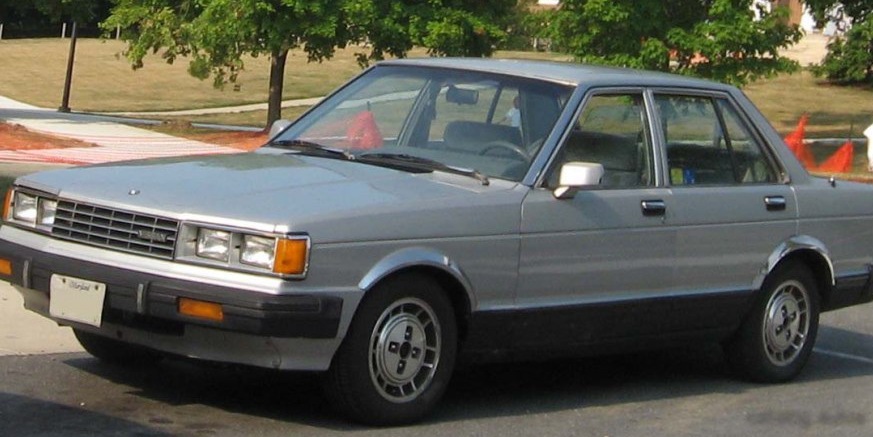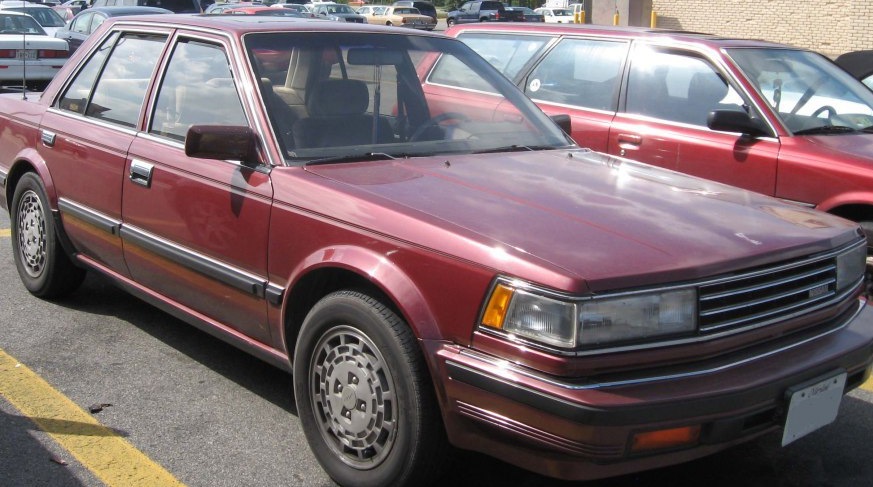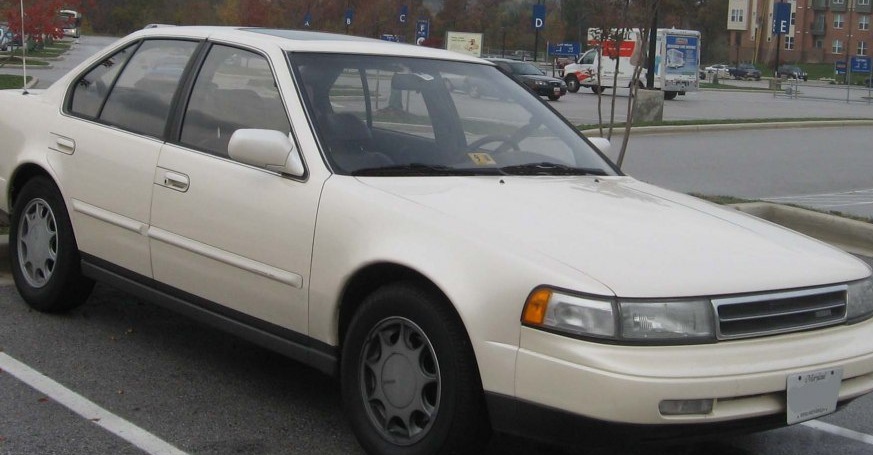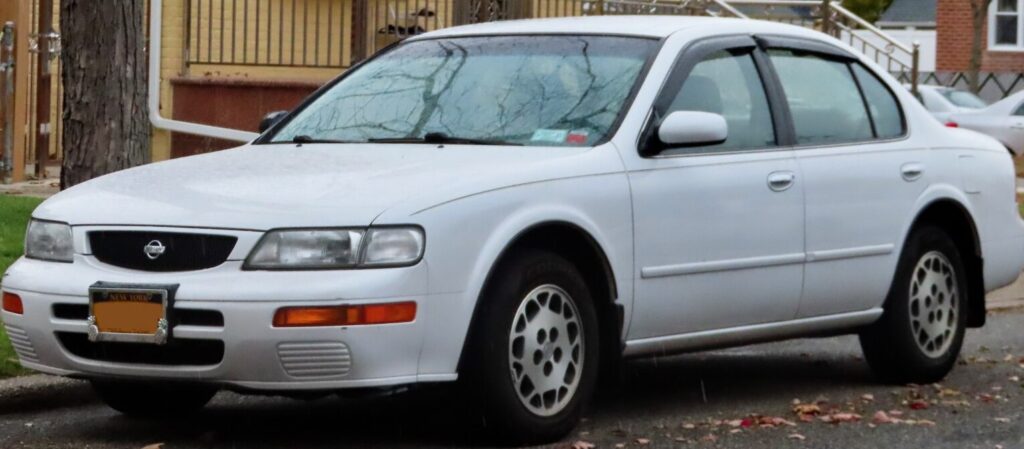
The Nissan Maxima QX IV (A32), produced between 1995 and 2000, represented a significant evolution of Nissan’s flagship sedan. Positioned as a comfortable and relatively affordable option within the Maxima range, the 2.0-liter (140 hp) automatic variant served as the entry point to the fourth generation, appealing to buyers prioritizing fuel efficiency and ease of driving over outright performance. This model occupied a crucial space in the market, particularly in regions where larger engines faced higher taxation or where a more economical option was preferred. The A32 Maxima was a key model for Nissan, solidifying its reputation for reliability and offering a compelling blend of features and value.
Technical Specifications
| Brand | Nissan |
| Model | Maxima |
| Generation | Maxima QX IV (A32) |
| Type (Engine) | 2.0 (140 Hp) Automatic |
| Start of production | 1995 |
| End of production | 2000 |
| Powertrain Architecture | Internal Combustion engine |
| Body type | Sedan |
| Seats | 5 |
| Doors | 4 |
| Fuel consumption (urban) | 13.5 l/100 km (17.4 US mpg) |
| Fuel consumption (extra urban) | 7.5 l/100 km (31.4 US mpg) |
| Fuel Type | Petrol (Gasoline) |
| Acceleration 0 – 100 km/h | 14.1 sec |
| Acceleration 0 – 62 mph | 14.1 sec |
| Acceleration 0 – 60 mph | 13.4 sec |
| Maximum speed | 184 km/h (114.33 mph) |
| Weight-to-power ratio | 10.2 kg/Hp |
| Weight-to-torque ratio | 8.1 kg/Nm |
| Power | 140 Hp @ 6400 rpm |
| Power per litre | 70.2 Hp/l |
| Torque | 177 Nm @ 4400 rpm (130.55 lb.-ft. @ 4400 rpm) |
| Engine layout | Front, Transverse |
| Engine displacement | 1995 cm3 (121.74 cu. in.) |
| Number of cylinders | 6 |
| Engine configuration | V-engine |
| Cylinder Bore | 76 mm (2.99 in.) |
| Piston Stroke | 73.3 mm (2.89 in.) |
| Compression ratio | 9.5:1 |
| Number of valves per cylinder | 4 |
| Fuel injection system | Multi-port manifold injection |
| Engine aspiration | Naturally aspirated engine |
| Valvetrain | DOHC |
| Kerb Weight | 1431 kg (3154.81 lbs.) |
| Max. weight | 2005 kg (4420.27 lbs.) |
| Max load | 574 kg (1265.45 lbs.) |
| Trunk (boot) space – minimum | 440 l (15.54 cu. ft.) |
| Fuel tank capacity | 70 l (18.49 US gal) |
| Length | 4770 mm (187.8 in.) |
| Width | 1770 mm (69.69 in.) |
| Height | 1415 mm (55.71 in.) |
| Wheelbase | 2700 mm (106.3 in.) |
| Front track | 1530 mm (60.24 in.) |
| Rear (Back) track | 1510 mm (59.45 in.) |
| Drivetrain Architecture | The Internal combustion engine (ICE) drives the front wheels of the vehicle. |
| Drive wheel | Front wheel drive |
| Number of gears and type of gearbox | 4 gears, automatic transmission |
| Front suspension | Coil spring |
| Rear suspension | Coil spring |
| Front brakes | Ventilated discs |
| Rear brakes | Ventilated discs |
| Assisting systems | ABS (Anti-lock braking system) |
| Steering type | Steering rack and pinion |
| Power steering | Hydraulic Steering |
| Tires size | 195/65 R15 |
| Wheel rims size | 15 |
Powertrain & Engine Architecture
The heart of the 1995-2000 Nissan Maxima QX IV 2.0 was the KA20DE engine, a 2.0-liter, naturally aspirated V6. This engine, part of Nissan’s KA series, featured a cast iron block and an aluminum cylinder head, employing a dual overhead camshaft (DOHC) valvetrain with four valves per cylinder. The KA20DE utilized multi-port fuel injection, contributing to improved fuel efficiency and smoother power delivery. The engine produced 140 horsepower at 6400 rpm and 177 Nm (130.55 lb-ft) of torque at 4400 rpm. Paired with a four-speed automatic transmission, the powertrain was designed for comfortable cruising and everyday usability. The automatic transmission, while not offering the sporty engagement of a manual, provided smooth shifts and simplified the driving experience, particularly in urban environments.
Driving Characteristics
The 2.0-liter automatic Maxima offered a comfortable, albeit not particularly sporty, driving experience. Acceleration was adequate for daily commuting, with a 0-60 mph time of around 13.4 seconds. The automatic transmission’s gear ratios were tuned for fuel economy and smooth operation, resulting in a less responsive feel compared to the manual transmission or the more powerful V6 options. The engine delivered its peak torque at a relatively accessible 4400 rpm, providing sufficient power for merging onto highways and overtaking slower traffic. However, drivers seeking more spirited performance would find the 2.0-liter automatic lacking the punch of the higher-output engines available in the Maxima lineup.
Equipment & Trim Levels
The 2.0-liter automatic Maxima typically came equipped with a respectable array of standard features. These generally included air conditioning, power windows and locks, a basic audio system, and cloth upholstery. Higher trim levels, often denoted by additional packages, could add features such as alloy wheels, a sunroof, upgraded audio systems, and cruise control. Interior appointments were generally functional and comfortable, prioritizing practicality over luxury. The dashboard layout was straightforward and user-friendly, with clearly labeled controls.
Chassis & Braking
The A32 Maxima featured an independent suspension system with coil springs at all four corners. The front suspension utilized MacPherson struts, while the rear employed a multi-link setup. This configuration provided a comfortable ride quality and decent handling characteristics. Braking duties were handled by ventilated disc brakes on all four wheels, supplemented by an Anti-lock Braking System (ABS) for enhanced safety. The steering system was a rack-and-pinion setup with hydraulic power assistance, offering responsive and precise steering feel. Tire size was typically 195/65 R15.
Market Reception & Comparison
The 2.0-liter automatic Maxima was generally well-received as a practical and affordable option within the Maxima range. Critics praised its comfortable ride, spacious interior, and reputation for reliability. However, it was often criticized for its lack of performance compared to the V6 models. Fuel economy was a strong point, making it an attractive choice for budget-conscious buyers. Compared to the 3.0-liter V6 Maxima, the 2.0-liter offered significantly lower running costs but sacrificed performance. The 2.0L was often seen as a sensible choice for those prioritizing fuel efficiency and everyday usability over driving excitement.
Legacy
The KA20DE engine, while not known for being particularly high-performance, proved to be a durable and reliable powerplant. The 2.0-liter automatic Maxima remains a relatively common sight on used car markets today, often prized for its affordability and dependability. Maintenance costs are generally reasonable, and parts availability is good. While not a collector’s item, well-maintained examples of the A32 Maxima 2.0 continue to provide reliable transportation for their owners. The model represents a solid example of Nissan’s commitment to building practical and long-lasting vehicles, and it remains a testament to the enduring appeal of the Maxima nameplate.