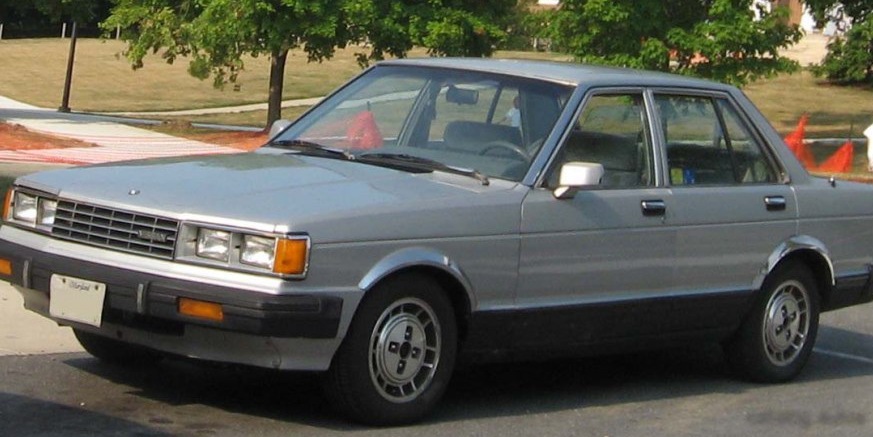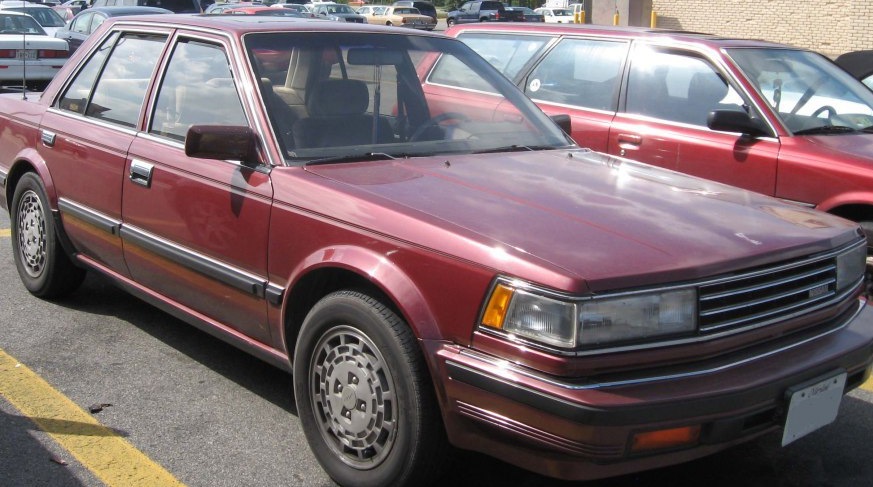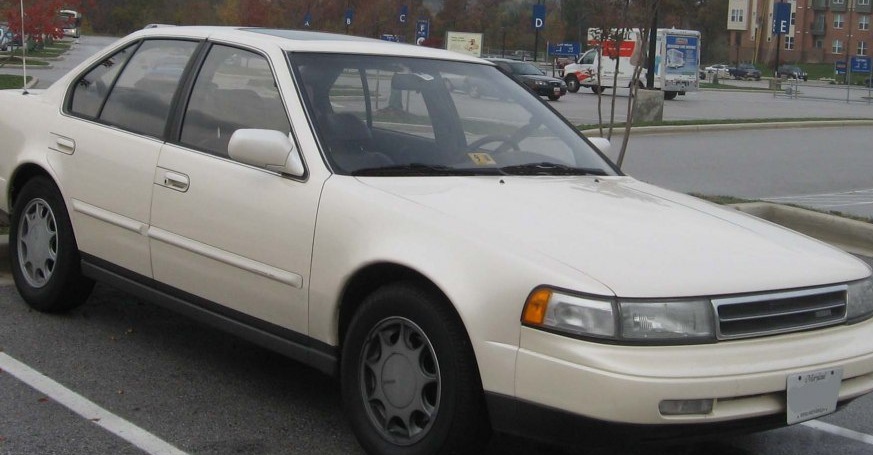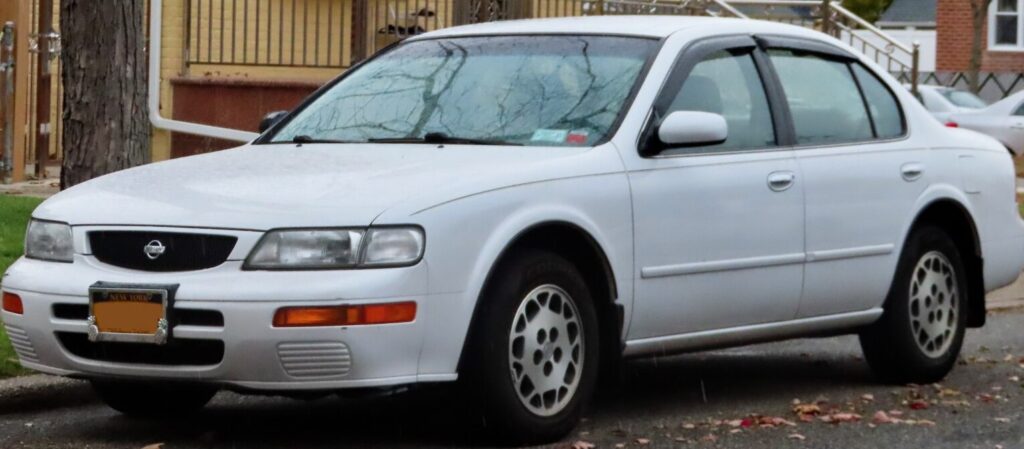
The Nissan Maxima QX IV (A32) 2.0-liter, manufactured between 1997 and 2000, represented an entry-level trim within the fourth generation of Nissan’s flagship sedan. Positioned below the more potent 3.0-liter V6 models, the 2.0-liter variant primarily targeted buyers desiring a comfortable and dependable mid-size sedan with an emphasis on fuel efficiency. This model found its largest sales volume in markets outside of North America, where larger displacement engines were generally preferred. The A32 Maxima, as a whole, aimed to combine sporty aesthetics with a comfortable ride, and the 2.0-liter version provided a more accessible price point.
Technical Specifications
| Brand | Nissan |
| Model | Maxima |
| Generation | Maxima QX IV (A32) |
| Type (Engine) | 2.0 (90 Hp) |
| Start of production | 1997 |
| End of production | 2000 |
| Powertrain Architecture | Internal Combustion engine |
| Body type | Sedan |
| Seats | 5 |
| Doors | 4 |
| Fuel consumption (urban) | 13.2 l/100 km (17.8 US mpg, 21.4 UK mpg, 7.6 km/l) |
| Fuel consumption (extra urban) | 8 l/100 km (29.4 US mpg, 35.3 UK mpg, 12.5 km/l) |
| Fuel Type | Petrol (Gasoline) |
| Acceleration 0 – 100 km/h | 11.3 sec |
| Acceleration 0 – 62 mph | 11.3 sec |
| Acceleration 0 – 60 mph | 10.7 sec |
| Maximum speed | 201 km/h (124.9 mph) |
| Weight-to-power ratio | 14.6 kg/Hp, 68.7 Hp/tonne |
| Weight-to-torque ratio | 7.4 kg/Nm, 135.1 Nm/tonne |
| Power | 90 Hp @ 4400 rpm |
| Power per litre | 45.6 Hp/l |
| Torque | 177 Nm @ 2400 rpm (130.55 lb.-ft. @ 2400 rpm) |
| Engine layout | Front, Transverse |
| Engine displacement | 1974 cm3 (120.46 cu. in.) |
| Number of cylinders | 4 |
| Engine configuration | Inline |
| Cylinder Bore | 84.5 mm (3.33 in.) |
| Piston Stroke | 88 mm (3.46 in.) |
| Number of valves per cylinder | 2 |
| Fuel injection system | Multi-port manifold injection |
| Engine aspiration | Naturally aspirated engine |
| Valvetrain | DOHC |
| Kerb Weight | 1310 kg (2888.06 lbs.) |
| Max. weight | 2005 kg (4420.27 lbs.) |
| Max load | 695 kg (1532.21 lbs.) |
| Trunk (boot) space – minimum | 440 l (15.54 cu. ft.) |
| Fuel tank capacity | 70 l (18.49 US gal | 15.4 UK gal) |
| Length | 4770 mm (187.8 in.) |
| Width | 1770 mm (69.69 in.) |
| Height | 1420 mm (55.91 in.) |
| Wheelbase | 2700 mm (106.3 in.) |
| Front track | 1520 mm (59.84 in.) |
| Rear (Back) track | 1500 mm (59.06 in.) |
| Drivetrain Architecture | The Internal combustion engine (ICE) drives the front wheels of the vehicle. |
| Drive wheel | Front wheel drive |
| Number of gears and type of gearbox | 5 gears, manual transmission |
| Front suspension | Independent type McPherson |
| Rear suspension | Coil spring |
| Front brakes | Ventilated discs |
| Rear brakes | Disc |
| Assisting systems | ABS (Anti-lock braking system) |
| Steering type | Steering rack and pinion |
| Power steering | Hydraulic Steering |
| Tires size | 185/65 R15 |
The Nissan Maxima QX IV (A32) 2.0-liter, produced from 1997 to 2000, occupied the entry-level position within the A32 Maxima lineup in numerous international markets. Constructed on the 1HX0 platform, this variant offered a more affordable alternative to the 3.0-liter V6 models, prioritizing fuel economy and reduced operating expenses. While the V6 models catered to performance-oriented drivers, the 2.0-liter appealed to a wider demographic seeking a comfortable, reliable, and reasonably equipped mid-size sedan. It gained particular traction in regions where smaller engine displacements were favored due to tax regulations or fuel costs.
Powertrain & Engine Architecture
The 2.0-liter Maxima’s engine was the GA20DE, an inline-four cylinder powerplant displacing 1974cc (120.46 cubic inches). This engine incorporated a dual overhead camshaft (DOHC) valvetrain with two valves per cylinder. It employed a multi-port fuel injection system, delivering fuel directly into the intake ports to enhance combustion efficiency. The GA20DE generated 90 horsepower at 4400 rpm and 177 Nm (130.55 lb-ft) of torque at 2400 rpm. The engine code, GA20DE, is essential for identifying specific components and maintenance procedures. The 2.0-liter Maxima was most commonly paired with a 5-speed manual transmission, although a four-speed automatic transmission was also available in select markets. The automatic transmission was engineered for smooth and comfortable gear changes, prioritizing ease of operation over outright performance.
Driving Characteristics
The 2.0-liter Maxima delivered a comfortable, though not particularly dynamic, driving experience. Acceleration was sufficient for routine driving, achieving a 0-60 mph time of approximately 10.7 seconds. However, it noticeably trailed the V6 models in terms of speed and responsiveness. The 5-speed manual transmission provided reasonable control over the engine’s powerband, but the relatively modest horsepower output necessitated frequent downshifts, especially during overtaking maneuvers or when ascending inclines. The automatic transmission, while convenient, further diminished the driving experience, resulting in slower acceleration and a less engaging feel. The gear ratios were optimized for fuel efficiency rather than performance, contributing to the car’s relaxed cruising character.
Equipment & Trim Levels
The 2.0-liter Maxima generally included a respectable array of standard features, though it typically offered less luxury than the higher-trim V6 models. Common standard equipment included power windows, power door locks, air conditioning, and a basic audio system. Interior upholstery was typically cloth, with a relatively straightforward dashboard layout. Optional extras could encompass alloy wheels, a sunroof, and an upgraded audio system. Trim levels varied by market, but the 2.0-liter model generally represented the base or mid-range offering. Safety features were relatively standard for the period, typically including ABS (Anti-lock Braking System) as a standard inclusion.
Chassis & Braking
The A32 Maxima utilized an independent McPherson strut suspension at the front and a coil spring suspension in the rear. This configuration provided a comfortable ride, effectively absorbing road imperfections. The front brakes were ventilated discs, offering good stopping power, while the rear brakes were typically solid discs. The steering system was rack and pinion with hydraulic power assistance, delivering a reasonably responsive and precise feel. The 2.0-liter models, being lighter than their V6 counterparts, generally exhibited slightly more agile handling characteristics. The standard tire size was 185/65 R15.
Market Reception & Comparison
The 2.0-liter Maxima was generally well-regarded as a practical and reliable mid-size sedan. Reviewers commended its comfortable ride, spacious interior, and reasonable fuel economy. However, it often faced criticism for its performance deficit compared to the V6 models. In contrast to the 3.0-liter Maxima, the 2.0-liter offered significantly lower running costs, both in terms of fuel consumption and insurance premiums. It also appealed to buyers who prioritized comfort and practicality over sheer speed. In certain markets, it competed with other mid-size sedans like the Toyota Camry and Honda Accord.
Legacy
The GA20DE engine, while not a revolutionary design, proved to be a durable and dependable powerplant. Maxima 2.0 models from the late 1990s and early 2000s are still occasionally encountered on the road today, a testament to their build quality and longevity. The 2.0-liter variant is generally considered a relatively low-maintenance vehicle, with readily available parts and a straightforward mechanical design. In the used car market, these models typically command lower prices than the V6 versions, making them an affordable option for buyers seeking a trustworthy and practical mid-size sedan. However, prospective buyers should be mindful of the age-related issues common to vehicles from this era, such as corrosion and wear on suspension components.