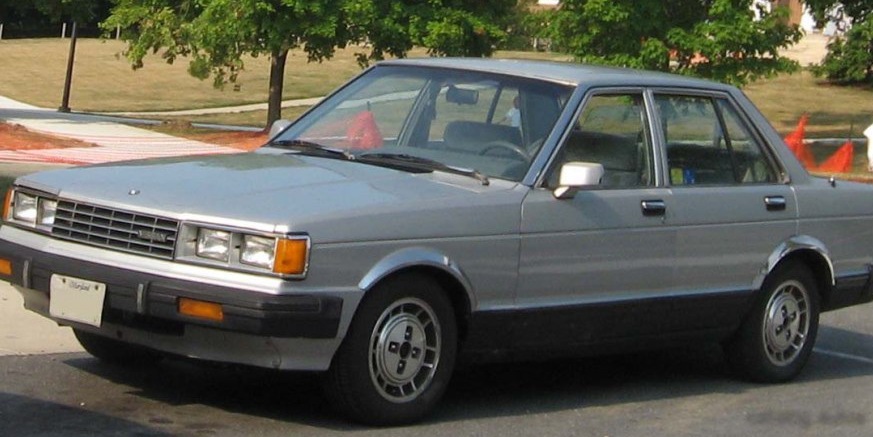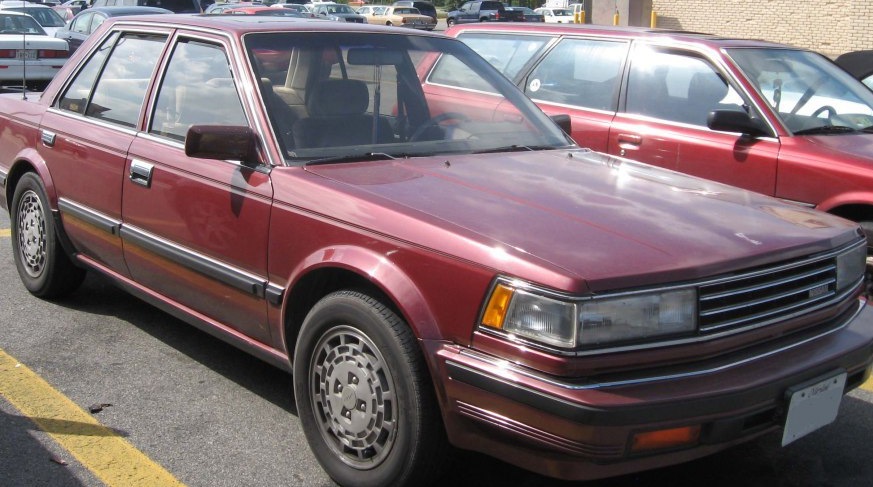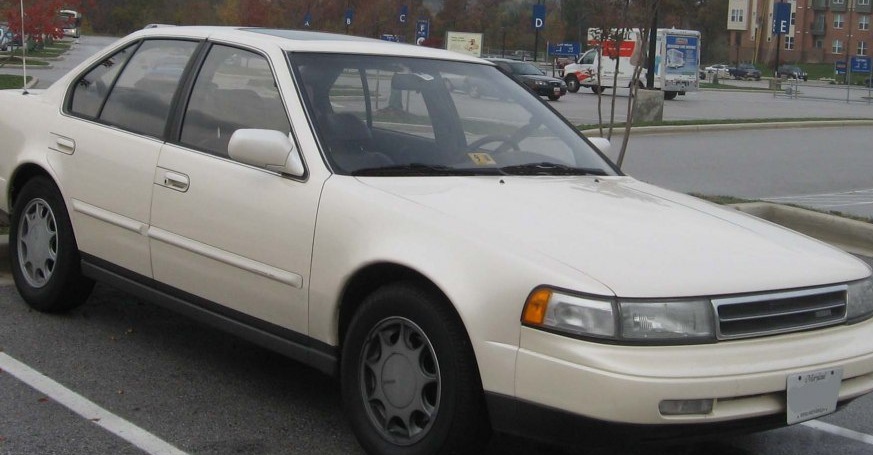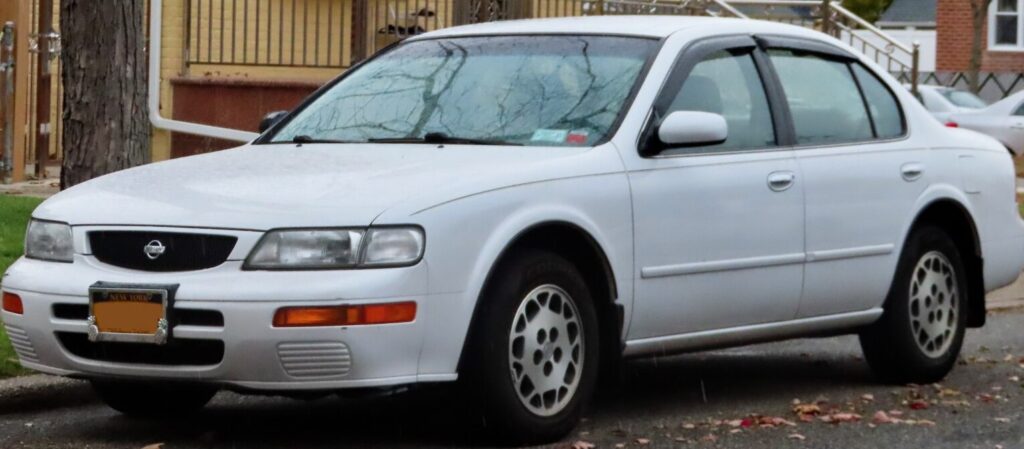
The Nissan Maxima QX IV (A32), specifically the 3.0-liter variant producing 193 horsepower and paired with an automatic transmission, was a significant model in Nissan’s lineup from 1995 to 2000. Representing the fourth generation of the Maxima, the A32 chassis aimed to elevate the brand’s presence in the mid-size sedan segment, particularly in the North American market where it was heavily marketed as a “four-door sports car.” This iteration built upon the success of previous Maximas, offering a blend of performance, comfort, and technology that appealed to a broad range of buyers. The 3.0-liter automatic model occupied a sweet spot in the range, offering a substantial power upgrade over the base 2.0-liter engine while remaining more accessible than the limited-production SE trim.
Technical Specifications
| Brand | Nissan |
| Model | Maxima |
| Generation | Maxima QX IV (A32) |
| Type (Engine) | 3.0 (193 Hp) Automatic |
| Start of production | 1995 |
| End of production | 2000 |
| Powertrain Architecture | Internal Combustion engine |
| Body type | Sedan |
| Seats | 5 |
| Doors | 4 |
| Fuel consumption (urban) | 12.1 l/100 km (19.4 US mpg) |
| Fuel consumption (extra urban) | 7.4 l/100 km (31.8 US mpg) |
| Fuel consumption (combined) | 9.4 l/100 km (25 US mpg) |
| Fuel Type | Petrol (Gasoline) |
| Acceleration 0 – 100 km/h | 9.6 sec |
| Acceleration 0 – 62 mph | 9.6 sec |
| Acceleration 0 – 60 mph | 9.1 sec |
| Maximum speed | 210 km/h (130.49 mph) |
| Weight-to-power ratio | 7.6 kg/Hp |
| Weight-to-torque ratio | 5.8 kg/Nm |
| Power | 193 Hp @ 6400 rpm |
| Torque | 255 Nm @ 4000 rpm (188.08 lb.-ft. @ 4000 rpm) |
| Engine layout | Front, Transverse |
| Engine displacement | 2988 cm3 (182.34 cu. in.) |
| Number of cylinders | 6 |
| Engine configuration | V-engine |
| Cylinder Bore | 93 mm (3.66 in.) |
| Piston Stroke | 73.3 mm (2.89 in.) |
| Compression ratio | 10:1 |
| Number of valves per cylinder | 4 |
| Fuel injection system | Multi-port manifold injection |
| Engine aspiration | Naturally aspirated engine |
| Valvetrain | DOHC |
| Kerb Weight | 1468 kg (3236.39 lbs.) |
| Max. weight | 2005 kg (4420.27 lbs.) |
| Max load | 537 kg (1183.88 lbs.) |
| Trunk (boot) space | 440 l (15.54 cu. ft.) |
| Fuel tank capacity | 70 l (18.49 US gal | 15.4 UK gal) |
| Length | 4770 mm (187.8 in.) |
| Width | 1770 mm (69.69 in.) |
| Height | 1415 mm (55.71 in.) |
| Wheelbase | 2700 mm (106.3 in.) |
| Front track | 1520 mm (59.84 in.) |
| Rear track | 1500 mm (59.06 in.) |
| Drivetrain Architecture | Front wheel drive |
| Number of gears | 4 |
| Gearbox type | Automatic transmission |
| Front suspension | Independent type McPherson |
| Rear suspension | Coil spring |
| Front brakes | Ventilated discs |
| Rear brakes | Disc |
| Assisting systems | ABS (Anti-lock braking system) |
| Steering type | Steering rack and pinion |
| Power steering | Hydraulic Steering |
| Tires size | 205/65 R15 |
| Wheel rims size | 15 |
Powertrain & Engine Architecture
The heart of the Maxima QX IV 3.0 was the VG30DE V6 engine. This 3.0-liter (2988 cc) engine featured a 60-degree V-angle, contributing to its smooth operation. It utilized a cast iron block with an aluminum cylinder head, incorporating dual overhead camshafts (DOHC) and four valves per cylinder. The engine employed multi-port fuel injection, delivering precise fuel metering for improved efficiency and performance. The VG30DE produced 193 horsepower at 6400 rpm and 255 Nm (188 lb-ft) of torque at 4000 rpm. This engine was known for its reliability and relatively simple design. The automatic transmission was a four-speed unit, designed to provide smooth shifts and adequate acceleration. While not as sporty as a manual transmission, it catered to the preferences of a wider audience seeking convenience and ease of driving.
Driving Characteristics
The 3.0-liter automatic Maxima offered a comfortable and capable driving experience. Acceleration from 0-60 mph took approximately 9.1 seconds, which was respectable for the time. The automatic transmission, while smooth, did result in some power loss compared to the five-speed manual version. Gear ratios were tuned for a balance between fuel economy and responsiveness. The engine provided ample torque for everyday driving and passing maneuvers, but it lacked the outright punch of the higher-performance SE trim. The suspension was tuned for comfort, absorbing bumps and providing a stable ride. However, it wasn’t as firm or sporty as some competitors.
Equipment & Trim Levels
The 3.0-liter automatic Maxima typically came standard with features such as air conditioning, power windows and locks, a CD player, and cruise control. Upholstery was usually cloth, though leather was available as an option. Higher trim levels could include features like a sunroof, upgraded sound system, and alloy wheels. The Maxima was positioned as a well-equipped mid-size sedan, offering a premium feel without the high price tag of luxury brands. Optional extras included a Bose audio system, automatic climate control, and traction control.
Chassis & Braking
The A32 Maxima utilized an independent McPherson strut suspension in the front and a coil spring suspension in the rear. This setup provided a comfortable ride and decent handling characteristics. The front brakes were ventilated discs, offering good stopping power, while the rear brakes were solid discs. Anti-lock brakes (ABS) were standard, enhancing safety. The chassis was designed to provide a balance between rigidity and weight, contributing to the car’s overall stability. Stabilizer bars were included to reduce body roll during cornering.
Market Reception & Comparison
The Nissan Maxima QX IV 3.0 automatic was generally well-received by critics and consumers. It was praised for its comfortable ride, spacious interior, and reliable engine. Fuel economy was considered average for its class, with combined figures around 25 mpg. Compared to the base 2.0-liter Maxima, the 3.0-liter offered a significant performance boost. However, the higher-performance SE trim, with its manual transmission and sport-tuned suspension, provided a more engaging driving experience. The Maxima competed with other mid-size sedans such as the Honda Accord, Toyota Camry, and Ford Taurus.
Legacy
The VG30DE engine, found in the 1995-2000 Maxima 3.0, is known for its durability and longevity. With proper maintenance, these engines can reliably exceed 200,000 miles. The A32 Maxima, in general, has developed a reputation as a dependable and affordable used car. While not as sought-after as some other classic Japanese cars, it remains a popular choice for those seeking a comfortable and reliable mid-size sedan. Parts availability is generally good, and the car’s relatively simple design makes it relatively easy to maintain. The 4-speed automatic transmission, while not the most modern, has proven to be fairly robust over time.