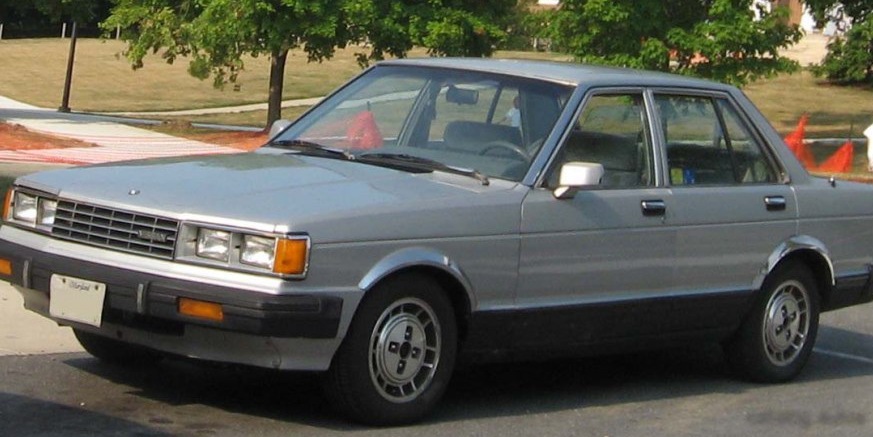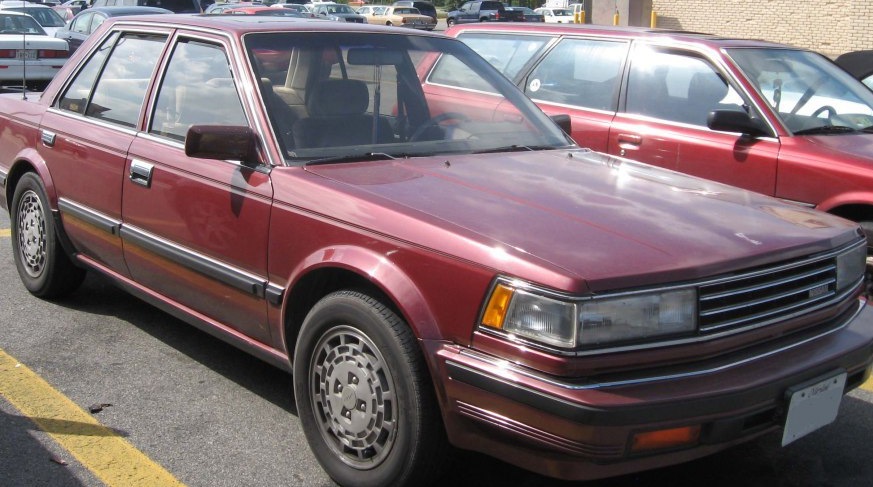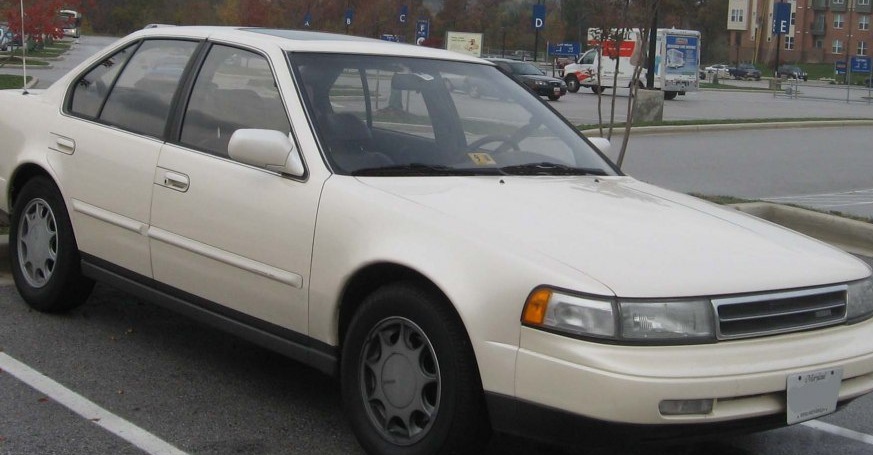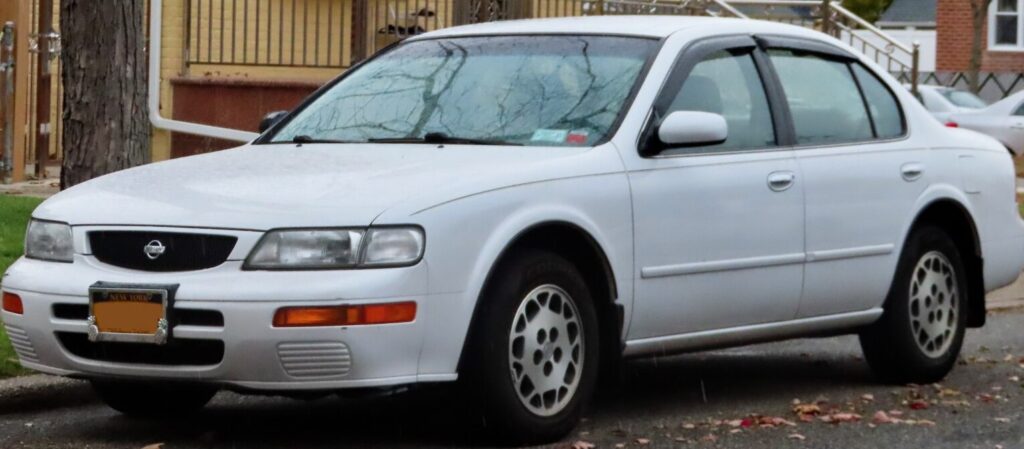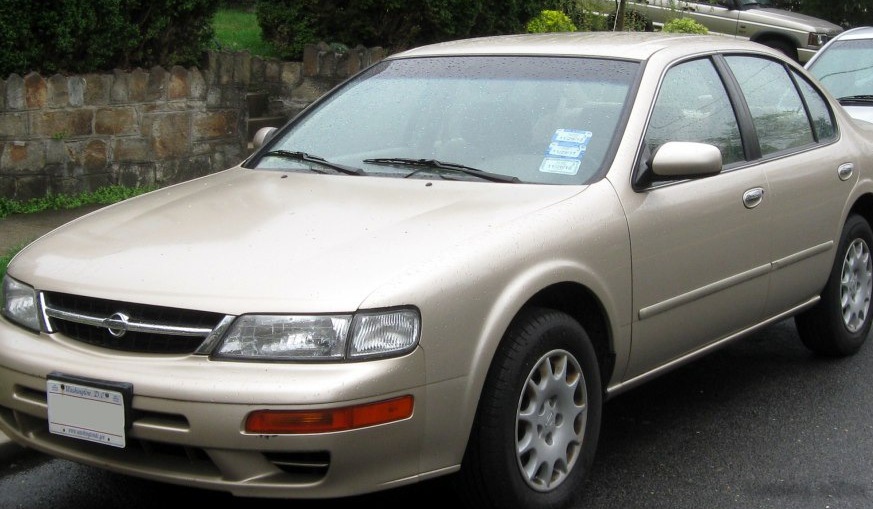
The Nissan Maxima QX IV (A32), specifically the facelifted version produced from 1997 to 2000, represented a significant evolution of Nissan’s flagship sedan. Positioned as a near-luxury import, the A32 Maxima aimed to deliver a blend of performance, comfort, and value in the highly competitive American market. This generation, and particularly the 3.0-liter variant, was a key player in establishing Nissan’s reputation for reliable and sporty vehicles. The 1997-2000 facelift brought subtle but important styling updates and refinements to the already successful A32 platform, solidifying its appeal to a broad range of buyers.
Technical Specifications
| Brand | Nissan |
| Model | Maxima |
| Generation | Maxima QX IV (A32, facelift 1997) |
| Type (Engine) | 3.0 (193 Hp) |
| Start of production | 1997 |
| End of production | 2000 |
| Powertrain Architecture | Internal Combustion engine |
| Body type | Sedan |
| Seats | 5 |
| Doors | 4 |
| Fuel consumption (urban) | 12.1 l/100 km (19.4 US mpg) |
| Fuel consumption (extra urban) | 7.4 l/100 km (31.8 US mpg) |
| Fuel consumption (combined) | 9.4 l/100 km (25 US mpg) |
| Fuel Type | Petrol (Gasoline) |
| Acceleration 0 – 100 km/h | 8.3 sec |
| Acceleration 0 – 62 mph | 8.3 sec |
| Acceleration 0 – 60 mph | 7.9 sec |
| Maximum speed | 230 km/h (142.92 mph) |
| Weight-to-power ratio | 7.6 kg/Hp |
| Weight-to-torque ratio | 5.7 kg/Nm |
| Power | 193 Hp @ 6400 rpm |
| Power per litre | 64.6 Hp/l |
| Torque | 255 Nm @ 4000 rpm (188.08 lb.-ft. @ 4000 rpm) |
| Engine layout | Front, Transverse |
| Engine displacement | 2988 cm3 (182.34 cu. in.) |
| Number of cylinders | 6 |
| Engine configuration | V-engine |
| Cylinder Bore | 93 mm (3.66 in.) |
| Piston Stroke | 73.3 mm (2.89 in.) |
| Compression ratio | 10:1 |
| Number of valves per cylinder | 4 |
| Fuel injection system | Multi-port manifold injection |
| Engine aspiration | Naturally aspirated engine |
| Valvetrain | DOHC |
| Kerb Weight | 1460 kg (3218.75 lbs.) |
| Trunk (boot) space | 440 l (15.54 cu. ft.) |
| Fuel tank capacity | 70 l (18.49 US gal | 15.4 UK gal) |
| Length | 4800 mm (188.98 in.) |
| Width | 1770 mm (69.69 in.) |
| Height | 1450 mm (57.09 in.) |
| Wheelbase | 2700 mm (106.3 in.) |
| Front track | 1520 mm (59.84 in.) |
| Rear track | 1500 mm (59.06 in.) |
| Drivetrain Architecture | Front wheel drive |
| Number of gears | 5 |
| Gearbox type | Manual transmission |
| Front suspension | Wishbone |
| Rear suspension | Spring Strut |
| Front brakes | Ventilated discs |
| Rear brakes | Disc |
| Assisting systems | ABS (Anti-lock braking system) |
| Steering type | Steering rack and pinion |
| Power steering | Hydraulic Steering |
| Tires size | 195/65 R15 |
Powertrain & Engine Architecture
The heart of the 1997-2000 Maxima 3.0 was the VG30DE V6 engine. This 2,988cc (182.34 cubic inch) engine featured a 60-degree V-angle, contributing to its smooth operation. The VG30DE utilized a cast iron block with an aluminum cylinder head, a common configuration for durability and weight reduction. It employed multi-port fuel injection and a double overhead camshaft (DOHC) valvetrain with four valves per cylinder, allowing for efficient combustion and a respectable power output of 193 horsepower at 6,400 rpm and 255 Nm (188 lb-ft) of torque at 4,000 rpm. The engine’s design prioritized smooth power delivery over outright peak performance. The five-speed manual transmission offered a direct and engaging driving experience, while the optional four-speed automatic provided convenience, though at the expense of some responsiveness.
Driving Characteristics
The Maxima 3.0 with the manual transmission offered a reasonably sporty driving experience. Acceleration to 60 mph was achieved in around 7.9 seconds, making it competitive with other mid-size sedans of the era. The automatic transmission, while smooth, added approximately half a second to the 0-60 mph time. The suspension, tuned for comfort, provided a compliant ride, but body roll was noticeable during aggressive cornering. Steering was precise and well-weighted, contributing to a confident feel behind the wheel. Compared to the earlier 1995-1996 models, the facelifted version benefited from minor suspension tweaks that improved handling balance. The 3.0-liter engine provided ample power for everyday driving and highway passing, but it lacked the outright punch of some of its V6 competitors.
Equipment & Trim Levels
The 1997-2000 Maxima QX IV offered a generous level of standard equipment. Base models typically included air conditioning, power windows and locks, a CD player, and alloy wheels. Higher trim levels, such as the GXE and SE, added features like a sunroof, upgraded audio systems, leather upholstery, and automatic climate control. The SE trim, in particular, was geared towards enthusiasts, featuring a sport-tuned suspension and unique styling cues. Optional extras included a Bose audio system, traction control, and side airbags. Interior materials were generally of good quality, and the cabin offered ample space for passengers and cargo.
Chassis & Braking
The A32 Maxima utilized a front-engine, front-wheel-drive layout. The front suspension employed independent wishbones, while the rear suspension featured a multi-link setup. This configuration provided a good balance of ride comfort and handling. Braking duties were handled by ventilated discs at the front and solid discs at the rear. Anti-lock brakes (ABS) were standard equipment, enhancing safety and control during emergency braking situations. The chassis was relatively rigid, contributing to the car’s overall stability. The steering system utilized a rack-and-pinion setup with hydraulic power assistance, providing precise and responsive steering feel.
Market Reception & Comparison
The 1997-2000 Nissan Maxima 3.0 was generally well-received by automotive critics. It was praised for its comfortable ride, spacious interior, and strong engine. However, some reviewers noted that its handling wasn’t as sharp as some of its competitors, such as the Honda Accord or Toyota Camry. Fuel economy was respectable, averaging around 25 mpg in combined driving. Compared to the earlier 1995-1996 models, the facelifted version offered improved refinement and a slightly more modern appearance. The 3.0-liter engine provided a good balance of performance and fuel efficiency, making it a popular choice among buyers. The Maxima consistently ranked highly in reliability surveys, further enhancing its reputation.
Legacy
The Nissan Maxima QX IV (A32) 3.0 remains a popular choice among used car buyers. The VG30DE engine is known for its durability and reliability, provided it has been properly maintained. Common issues include oil leaks and occasional sensor failures, but these are generally inexpensive to repair. The A32 Maxima offers a compelling combination of comfort, performance, and value, making it a practical and enjoyable daily driver. Parts availability is generally good, and the car’s relatively simple mechanical design makes it accessible to DIY mechanics. Today, the A32 Maxima is appreciated by enthusiasts for its classic styling and robust powertrain, representing a high point in Nissan’s sedan history.