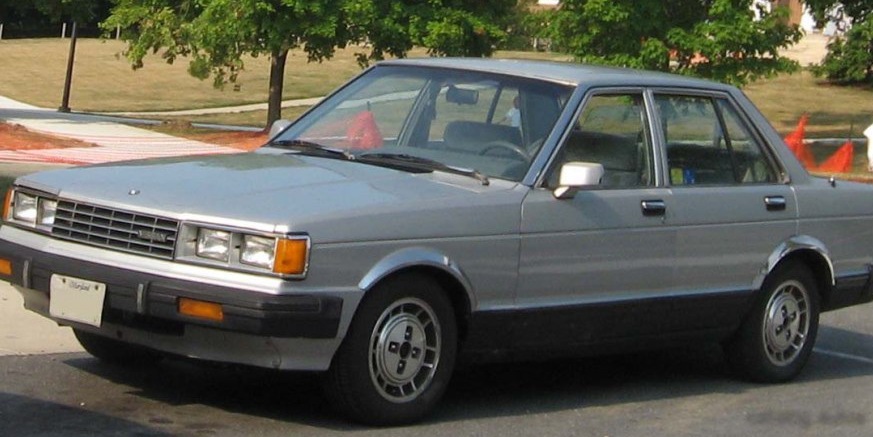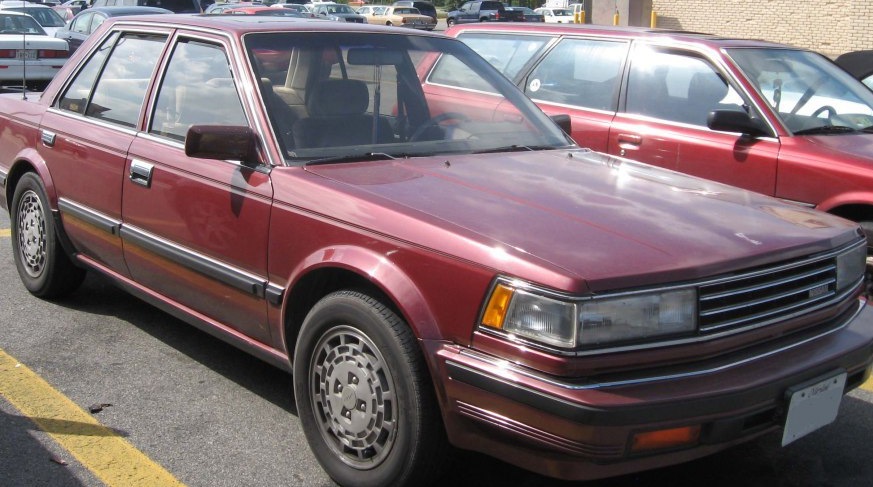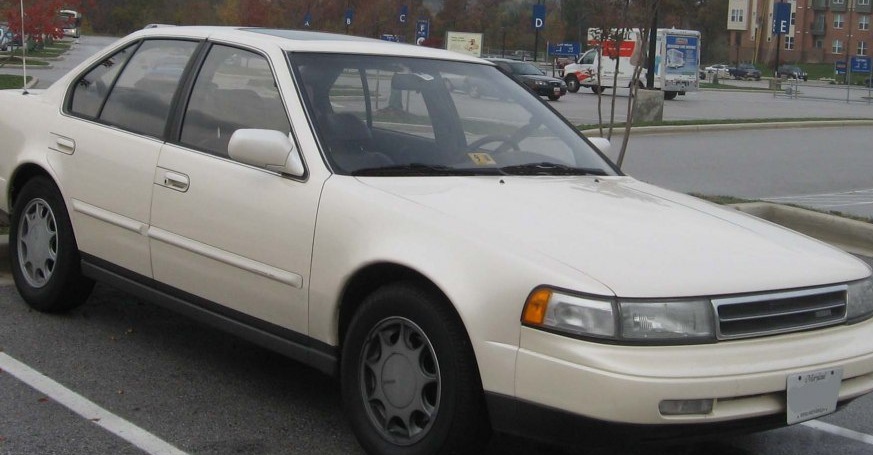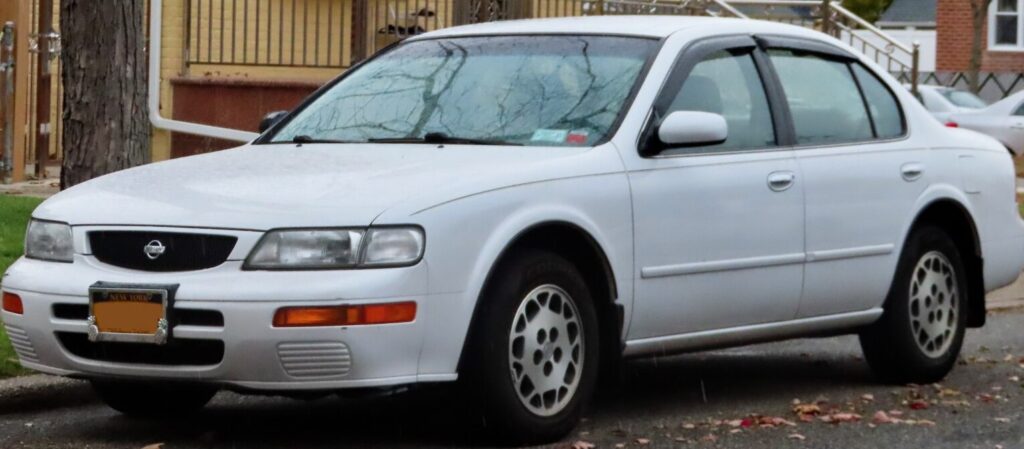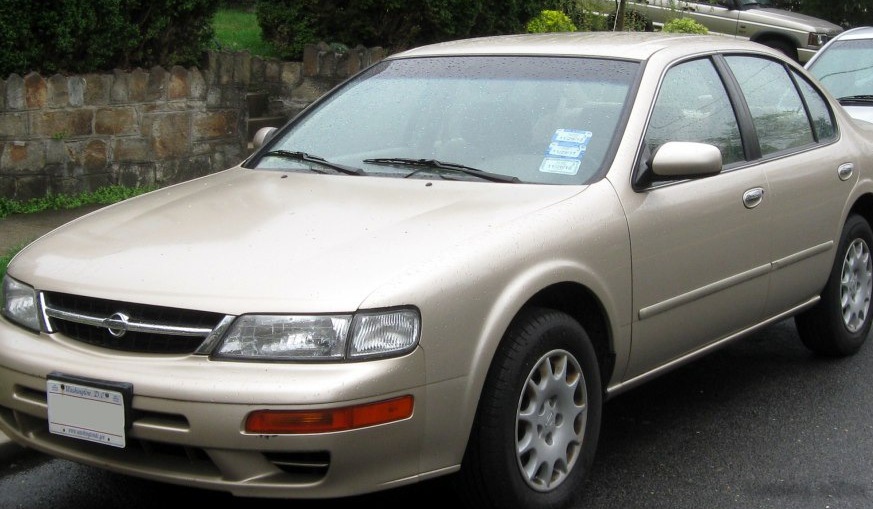
The Nissan Maxima QX IV, specifically the 3.0-liter variant produced from 1997 to 2000, represented a significant evolution of Nissan’s flagship sedan. This iteration, part of the A32 chassis series which received a facelift in 1997, aimed to blend sporty performance with refined comfort, targeting a buyer seeking a premium, yet accessible, four-door experience. Positioned as a mid-to-upper trim level within the Maxima lineup, the 3.0 Automatic offered a step up in power and features compared to the base 2.0-liter models, while remaining more attainable than potential future performance-oriented trims. It was primarily marketed towards North American consumers, where the Maxima had established a strong reputation as a reliable and well-equipped family sedan.
Technical Specifications
| Brand | Nissan |
| Model | Maxima |
| Generation | Maxima QX IV (A32, facelift 1997) |
| Type (Engine) | 3.0 (193 Hp) Automatic |
| Start of production | 1997 |
| End of production | 2000 |
| Powertrain Architecture | Internal Combustion engine |
| Body type | Sedan |
| Seats | 5 |
| Doors | 4 |
| Fuel consumption (urban) | 12.6 l/100 km (18.7 US mpg, 22.4 UK mpg, 7.9 km/l) |
| Fuel consumption (extra urban) | 7.1 l/100 km (33.1 US mpg, 39.8 UK mpg, 14.1 km/l) |
| Fuel consumption (combined) | 9 l/100 km (26.1 US mpg, 31.4 UK mpg, 11.1 km/l) |
| Fuel Type | Petrol (Gasoline) |
| Acceleration 0 – 100 km/h | 9.6 sec |
| Acceleration 0 – 62 mph | 9.6 sec |
| Acceleration 0 – 60 mph | 9.1 sec |
| Maximum speed | 210 km/h (130.49 mph) |
| Weight-to-power ratio | 7.6 kg/Hp, 132.2 Hp/tonne |
| Weight-to-torque ratio | 5.7 kg/Nm, 174.7 Nm/tonne |
| Power | 193 Hp @ 6400 rpm |
| Power per litre | 64.6 Hp/l |
| Torque | 255 Nm @ 4000 rpm (188.08 lb.-ft. @ 4000 rpm) |
| Engine layout | Front, Transverse |
| Engine displacement | 2988 cm3 (182.34 cu. in.) |
| Number of cylinders | 6 |
| Engine configuration | V-engine |
| Cylinder Bore | 93 mm (3.66 in.) |
| Piston Stroke | 73.3 mm (2.89 in.) |
| Compression ratio | 10:1 |
| Number of valves per cylinder | 4 |
| Fuel injection system | Multi-port manifold injection |
| Engine aspiration | Naturally aspirated engine |
| Valvetrain | DOHC |
| Kerb Weight | 1460 kg (3218.75 lbs.) |
| Trunk (boot) space – minimum | 440 l (15.54 cu. ft.) |
| Fuel tank capacity | 70 l (18.49 US gal | 15.4 UK gal) |
| Length | 4800 mm (188.98 in.) |
| Width | 1770 mm (69.69 in.) |
| Height | 1450 mm (57.09 in.) |
| Wheelbase | 2700 mm (106.3 in.) |
| Front track | 1520 mm (59.84 in.) |
| Rear (Back) track | 1500 mm (59.06 in.) |
| Drivetrain Architecture | The Internal combustion engine (ICE) drives the front wheels of the vehicle. |
| Drive wheel | Front wheel drive |
| Number of gears and type of gearbox | 4 gears, automatic transmission |
| Front suspension | Wishbone |
| Rear suspension | Spring Strut |
| Front brakes | Ventilated discs |
| Rear brakes | Disc |
| Assisting systems | ABS (Anti-lock braking system) |
| Steering type | Steering rack and pinion |
| Power steering | Hydraulic Steering |
| Tires size | 195/65 R15 |
| Wheel rims size | 15 |
Powertrain & Engine Architecture
The heart of the 1997-2000 Maxima 3.0 was the VQ30DE engine, a 3.0-liter, naturally aspirated V6. This engine was a cornerstone of Nissan’s VQ engine family, renowned for its smooth operation, reliability, and relatively high output. The VQ30DE featured a 60-degree V-angle, contributing to its compact size and balance. It employed multi-port fuel injection and a double overhead camshaft (DOHC) valvetrain with four valves per cylinder. This configuration allowed for efficient cylinder filling and optimized airflow, resulting in a respectable 193 horsepower and 255 lb-ft of torque. The engine’s block was constructed from cast iron, while the cylinder heads were made of aluminum, a common practice to reduce weight. Paired with the VQ30DE was a four-speed automatic transmission. While not as technologically advanced as some contemporary transmissions, it was known for its durability and smooth shifting characteristics. The transmission was electronically controlled, adapting shift points based on throttle position and vehicle speed.
Driving Characteristics
The 3.0-liter Maxima Automatic offered a comfortable and capable driving experience. Acceleration from 0-60 mph took approximately 9.1 seconds, making it reasonably quick for its time. The automatic transmission, while providing convenience, did result in some power loss compared to the available five-speed manual transmission. The gear ratios were tuned for everyday drivability, prioritizing smooth transitions and fuel efficiency over outright performance. The engine delivered a broad torque curve, providing ample power for merging onto highways and passing maneuvers. However, it lacked the aggressive responsiveness of some competitors, particularly those equipped with larger displacement engines or forced induction. The steering was light and precise, making the Maxima easy to maneuver in urban environments. Overall, the driving experience was geared towards comfort and refinement, rather than sporty handling.
Equipment & Trim Levels
The 1997-2000 Maxima 3.0 Automatic typically came standard with a generous array of features. These included air conditioning, power windows and locks, a CD player, cruise control, and an anti-lock braking system (ABS). Interior upholstery was typically cloth, although leather options were available. Higher trim levels offered features such as a sunroof, upgraded audio systems (often Bose), and automatic climate control. Optional extras included alloy wheels, a power driver’s seat, and side airbags. The dashboard layout was functional and well-designed, with easy-to-read gauges and intuitive controls.
Chassis & Braking
The Maxima QX IV utilized a front-engine, front-wheel-drive layout. The front suspension consisted of independent wishbones, while the rear suspension employed a spring strut design. This setup provided a good balance between ride comfort and handling. Braking duties were handled by ventilated discs at the front and solid discs at the rear. The ABS system helped to maintain steering control during hard braking. The chassis was relatively rigid, contributing to the car’s overall stability. Stabilizer bars were fitted to both the front and rear suspensions to reduce body roll during cornering.
Market Reception & Comparison
The 1997-2000 Nissan Maxima 3.0 Automatic was generally well-received by automotive critics. It was praised for its comfortable ride, spacious interior, and strong value proposition. However, some reviewers noted that the automatic transmission dulled the engine’s performance somewhat. Compared to the base 2.0-liter Maxima, the 3.0 offered a significant boost in power and a more refined driving experience. Compared to the five-speed manual version, the automatic sacrificed some performance but gained convenience. Fuel economy was respectable for its class, averaging around 26 mpg in combined driving. Reliability was also a strong point, with the VQ30DE engine proving to be exceptionally durable.
Legacy
The VQ30DE engine and the A32 Maxima platform have proven to be remarkably durable. Even today, well-maintained examples of the 1997-2000 Maxima 3.0 Automatic can be found on the used car market, often with high mileage. The VQ30DE is known for its longevity and relatively low maintenance costs. Common issues are typically related to age and wear, such as oil leaks and sensor failures. The Maxima’s reputation for reliability has helped it maintain a loyal following among enthusiasts and budget-conscious buyers. The A32 Maxima, and particularly the 3.0 variant, remains a popular choice for those seeking a comfortable, reliable, and affordable mid-size sedan.