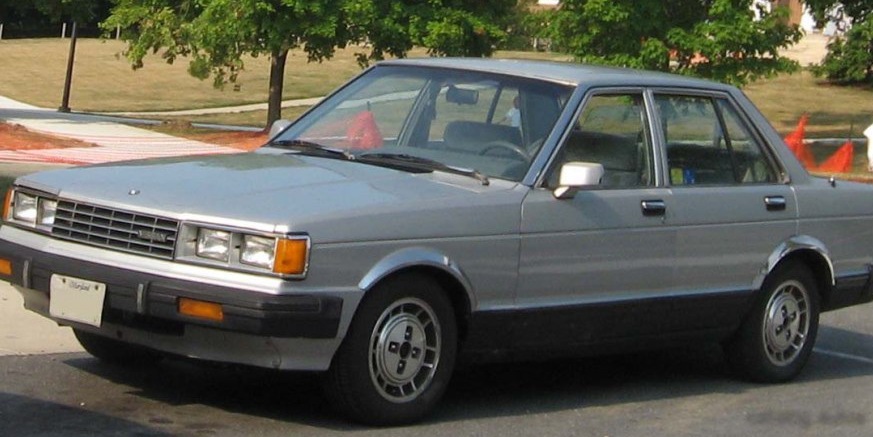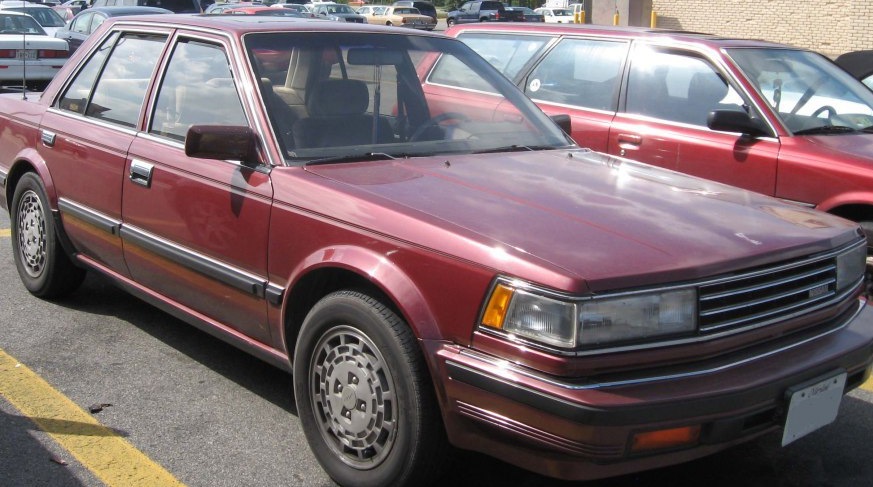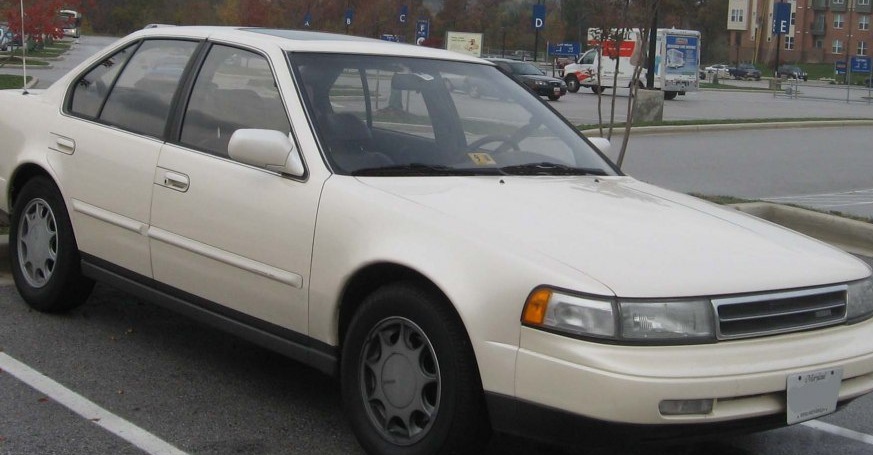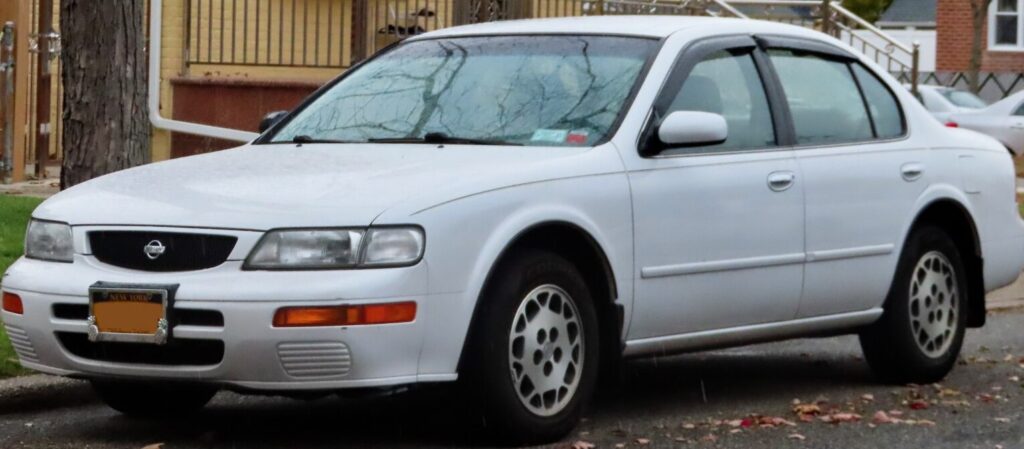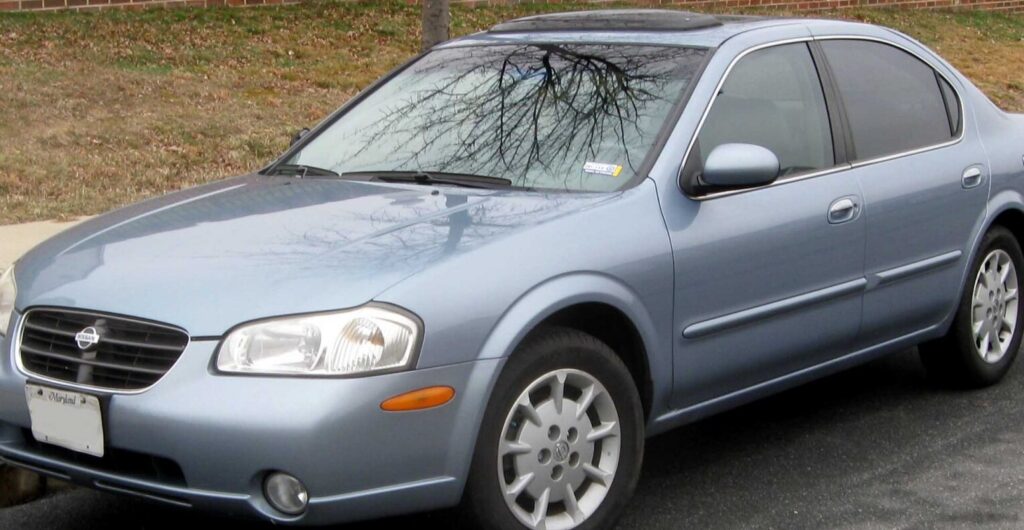
The Nissan Maxima QX V (A33), produced between 2000 and 2004, represented a continuation of Nissan’s popular mid-size sedan, specifically tailored for certain markets outside of North America. This variant featured a 2.0-liter V6 engine paired with a four-speed automatic transmission. Within the A33 Maxima range, the QX V with this engine and transmission combination typically occupied a mid-range position, offering a balance between performance and affordability. It was positioned below the more powerful 3.0-liter V6 models, and often served as an entry point into the Maxima lineup for buyers prioritizing fuel efficiency and a smoother driving experience.
Technical Specifications
| Brand | Nissan |
| Model | Maxima |
| Generation | Maxima QX V (A33) |
| Type (Engine) | 2.0 V6 24V (140 Hp) Automatic |
| Start of production | 2000 year |
| End of production | 2004 year |
| Powertrain Architecture | Internal Combustion engine |
| Body type | Sedan |
| Seats | 5 |
| Doors | 4 |
| Fuel consumption (urban) | 13.5 l/100 km (17.4 US mpg, 20.9 UK mpg, 7.4 km/l) |
| Fuel consumption (extra urban) | 7.5 l/100 km (31.4 US mpg, 37.7 UK mpg, 13.3 km/l) |
| Fuel consumption (combined) | 9.7 l/100 km (24.2 US mpg, 29.1 UK mpg, 10.3 km/l) |
| Fuel Type | Petrol (Gasoline) |
| Acceleration 0 – 100 km/h | 14.1 sec |
| Acceleration 0 – 62 mph | 14.1 sec |
| Acceleration 0 – 60 mph | 13.4 sec |
| Maximum speed | 184 km/h (114.33 mph) |
| Weight-to-power ratio | 10.6 kg/Hp, 94 Hp/tonne |
| Weight-to-torque ratio | 8.4 kg/Nm, 118.8 Nm/tonne |
| Power | 140 Hp @ 6400 rpm |
| Power per litre | 70.2 Hp/l |
| Torque | 177 Nm @ 4400 rpm (130.55 lb.-ft. @ 4400 rpm) |
| Engine layout | Front, Transverse |
| Engine Model/Code | VQ20DE |
| Engine displacement | 1995 cm3 (121.74 cu. in.) |
| Number of cylinders | 6 |
| Engine configuration | V-engine |
| Cylinder Bore | 76 mm (2.99 in.) |
| Piston Stroke | 73.3 mm (2.89 in.) |
| Compression ratio | 9.5:1 |
| Number of valves per cylinder | 4 |
| Fuel injection system | Multi-port manifold injection |
| Engine aspiration | Naturally aspirated engine |
| Valvetrain | DOHC |
| Engine oil capacity | 4 l (4.23 US qt | 3.52 UK qt) |
| Coolant | 8.5 l (8.98 US qt | 7.48 UK qt) |
| Kerb Weight | 1490 kg (3284.89 lbs.) |
| Max. weight | 2015 kg (4442.31 lbs.) |
| Max load | 525 kg (1157.43 lbs.) |
| Trunk (boot) space – minimum | 520 l (18.36 cu. ft.) |
| Fuel tank capacity | 70 l (18.49 US gal | 15.4 UK gal) |
| Length | 4920 mm (193.7 in.) |
| Width | 1780 mm (70.08 in.) |
| Height | 1435 mm (56.5 in.) |
| Wheelbase | 2750 mm (108.27 in.) |
| Front track | 1530 mm (60.24 in.) |
| Rear (Back) track | 1510 mm (59.45 in.) |
| Drivetrain Architecture | The Internal combustion engine (ICE) drives the front wheels of the vehicle. |
| Drive wheel | Front wheel drive |
| Number of gears and type of gearbox | 4 gears, automatic transmission |
| Front suspension | Independent type McPherson |
| Rear suspension | Spring Strut |
| Front brakes | Ventilated discs |
| Rear brakes | Disc |
| Assisting systems | ABS (Anti-lock braking system) |
| Steering type | Steering rack and pinion |
| Power steering | Hydraulic Steering |
| Tires size | 205/65R15 |
| Wheel rims size | 15 |
Powertrain & Engine Architecture
The heart of the Maxima QX V was the VQ20DE engine, a 2.0-liter V6. This engine was part of Nissan’s highly regarded VQ engine family, known for its smooth operation and relatively high power output for its displacement. The VQ20DE featured a double overhead camshaft (DOHC) valvetrain with four valves per cylinder, and utilized multi-port fuel injection. This configuration allowed for efficient combustion and a broad powerband. The engine produced 140 horsepower at 6400 rpm and 177 Nm (130.55 lb-ft) of torque at 4400 rpm. Paired with this engine was a four-speed automatic transmission, designed for comfortable and convenient shifting. This transmission wasn’t known for its sportiness, prioritizing smooth transitions over aggressive downshifts.
Driving Characteristics
The 2.0-liter engine and four-speed automatic combination delivered a comfortable, but not particularly sporty, driving experience. Acceleration from 0-60 mph took around 13.4 seconds, and top speed was limited to 184 km/h (114.33 mph). The automatic transmission’s gear ratios were tuned for fuel efficiency and smooth cruising, rather than rapid acceleration. Compared to the 3.0-liter V6 Maxima models, this variant felt noticeably less powerful, especially during overtaking maneuvers or when climbing hills. However, the 2.0-liter engine offered better fuel economy, making it a more practical choice for daily commuting.
Equipment & Trim Levels
The QX V trim level generally included standard features such as air conditioning, power windows and locks, and a basic audio system. Interior upholstery was typically cloth, although leather options were sometimes available as upgrades. Depending on the specific market, additional features like alloy wheels, a sunroof, and upgraded audio systems could be included. The QX V aimed to provide a good level of comfort and convenience without the higher price tag of the more luxurious trims.
Chassis & Braking
The A33 Maxima utilized an independent McPherson strut suspension in the front and a spring strut suspension in the rear. This setup provided a comfortable ride, absorbing bumps and irregularities in the road surface effectively. Braking duties were handled by ventilated discs in the front and solid discs in the rear. An Anti-lock Braking System (ABS) was standard, enhancing safety by preventing wheel lockup during hard braking. The suspension tuning was geared towards comfort rather than aggressive handling, reflecting the car’s overall focus on practicality and ease of driving.
Market Reception & Comparison
The Maxima QX V with the 2.0-liter engine was generally well-received as a practical and affordable mid-size sedan. Critics noted its comfortable ride, spacious interior, and relatively good fuel economy. However, the engine’s lack of outright power was a common criticism, particularly when compared to the more potent 3.0-liter V6 options. In terms of reliability, the VQ20DE engine proved to be quite durable, with relatively few major issues reported. Fuel economy figures were competitive for the time, averaging around 9.7 l/100 km (24.2 US mpg) in combined driving conditions.
Legacy
The Nissan Maxima QX V (A33) 2.0 V6 Automatic remains a relatively common sight on used car markets. The VQ20DE engine is known for its longevity and relatively low maintenance costs. While not a performance icon, this variant offers a reliable and comfortable driving experience, making it a sensible choice for buyers seeking an affordable and practical mid-size sedan. Parts availability is generally good, and the car’s simple mechanical design makes it relatively easy to maintain and repair. Its enduring reputation for reliability has helped it maintain a modest following among enthusiasts seeking a dependable and economical vehicle.