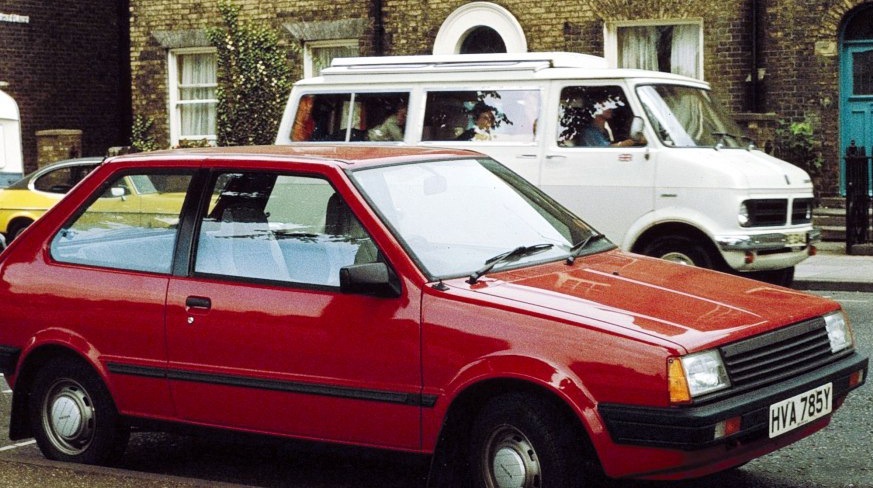
The Nissan Micra K10, produced from 1982 to 1989, represented a significant step forward for Nissan’s small car offerings in Europe and other international markets. This generation Micra, designated K10, was a supermini designed to compete with established rivals like the Fiat Uno, Renault 5, and Ford Fiesta. The 1.0-liter (54 hp) variant was a mainstay of the lineup, particularly in markets where affordability and fuel economy were paramount. It served as the entry point into the K10 range, offering basic transportation with Nissan’s reputation for reliability. The K10 was a front-wheel-drive hatchback, available primarily as a three-door, though a five-door version was offered in some markets.
Technical Specifications
| Brand | Nissan |
| Model | Micra |
| Generation | Micra (K10) |
| Type (Engine) | 1.0 (54 Hp) |
| Start of production | 1982 |
| End of production | 1989 |
| Powertrain Architecture | Internal Combustion engine |
| Body type | Hatchback |
| Doors | 3 |
| Fuel Type | Petrol (Gasoline) |
| Maximum speed | 160 km/h (99.42 mph) |
| Power | 54 Hp |
| Power per litre | 54 Hp/l |
| Engine displacement | 1000 cm3 (61.02 cu. in.) |
| Engine configuration | Inline |
| Fuel injection system | Carburettor |
| Engine aspiration | Naturally aspirated engine |
| Engine oil capacity | 2.7 l (2.85 US qt | 2.38 UK qt) |
| Coolant | 3.5 l (3.7 US qt | 3.08 UK qt) |
| Drivetrain Architecture | The Internal combustion engine (ICE) drives the front wheels of the vehicle. |
| Drive wheel | Front wheel drive |
| Front suspension | Independent type McPherson |
| Front brakes | Disc |
| Rear brakes | Drum |
Powertrain & Engine Architecture
The heart of the K10 1.0 was the A10S engine, a 998cc inline-four cylinder petrol engine. This engine was a relatively simple design, utilizing a single overhead camshaft and a two-valve per cylinder configuration. Fuel delivery was managed by a carburetor, a common feature for vehicles of this era, prioritizing simplicity and cost-effectiveness over the more complex fuel injection systems. The A10S engine produced 54 horsepower at approximately 6000 rpm and 66 lb-ft of torque at 3600 rpm. The engine was transversely mounted in the front of the vehicle, driving the front wheels. The transmission was a four-speed manual, though a three-speed automatic transmission was also available, albeit less common. The automatic option significantly impacted performance, as described later.
Driving Characteristics
The 1.0-liter Micra K10 was not designed for outright speed. Its performance was best described as adequate for urban and suburban driving. Acceleration was leisurely, taking approximately 16 seconds to reach 60 mph. The top speed was around 99 mph, but sustaining that speed for extended periods was not practical. The four-speed manual transmission allowed drivers to make the most of the engine’s limited power, while the three-speed automatic resulted in noticeably slower acceleration and reduced fuel economy. The gear ratios were geared towards maximizing fuel efficiency rather than performance. The steering was light and easy, making it maneuverable in tight spaces, but lacked significant feedback. The ride quality was acceptable for a supermini of its time, absorbing bumps reasonably well, though it could become unsettled on rougher road surfaces.
Equipment & Trim Levels
The 1.0-liter Micra K10 typically represented the base trim level. Standard equipment was fairly basic, including cloth upholstery, vinyl floor covering, and simple steel wheels with hubcaps. The dashboard was functional but lacked extensive instrumentation. A basic AM/FM radio was often included, but more advanced features like power windows or central locking were rare. Optional extras included a sunroof, upgraded upholstery, and a more comprehensive instrument cluster. The interior was designed for practicality and durability, rather than luxury. The K10’s interior space was surprisingly good for a supermini, offering reasonable headroom and legroom for both front and rear passengers.
Chassis & Braking
The K10 utilized a front-wheel-drive layout with an independent McPherson strut suspension at the front and a torsion beam suspension at the rear. The front brakes were disc brakes, providing adequate stopping power, while the rear brakes were drum brakes, a cost-saving measure common in this class of vehicle. The steering was a rack-and-pinion system, providing light and precise steering. The chassis was relatively lightweight, contributing to the car’s fuel efficiency. Stabilizer bars were not standard on the base 1.0-liter model, further emphasizing its focus on affordability. The suspension setup prioritized ride comfort over handling precision.
Market Reception & Comparison
The Nissan Micra K10 1.0 was generally well-received by critics as a practical and reliable city car. It was praised for its fuel economy, ease of driving, and relatively spacious interior. However, it was also criticized for its lack of performance and basic equipment levels. Compared to other trims in the K10 lineup, such as the 1.2-liter or 1.5-liter models, the 1.0-liter version offered significantly less power and performance. The 1.2-liter provided a noticeable improvement in acceleration and overall drivability, while the 1.5-liter was considered the performance variant. In terms of reliability, the 1.0-liter engine proved to be very durable, with many examples exceeding high mileage with minimal issues. Fuel economy was a key selling point, averaging around 45-50 mpg in real-world driving conditions.
Legacy
The Nissan Micra K10 1.0 remains a popular choice among classic car enthusiasts and those seeking an affordable and reliable vintage vehicle. The A10S engine is known for its durability and relatively simple maintenance requirements. Parts availability is generally good, although some components may be becoming increasingly difficult to find. The K10’s simple design and robust construction have contributed to its longevity. In the used car market, well-maintained examples of the 1.0-liter K10 can fetch reasonable prices, particularly those with low mileage or desirable options. The K10 laid the foundation for the Micra’s continued success as a popular supermini, and its reputation for reliability continues to endure today. It represents a significant chapter in Nissan’s history and a testament to the enduring appeal of simple, practical automotive engineering.