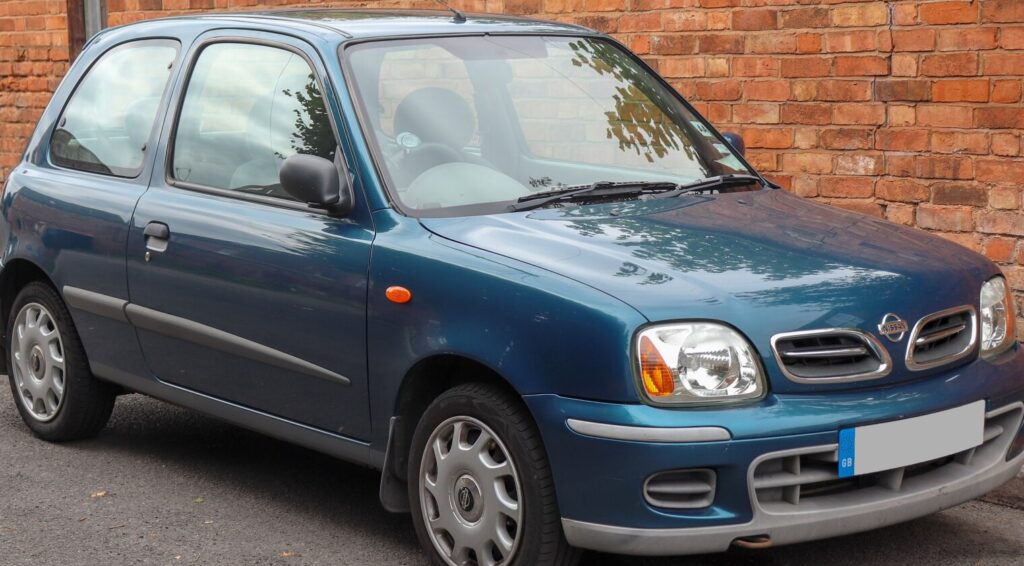
The Nissan Micra K11, specifically the 1.0-liter (60 horsepower) variant, was a mainstay of the supermini segment, particularly in Europe, from 2000 to 2002. Positioned as the entry-level model within the K11 generation (produced from 1992-2002), it offered affordable transportation and a reputation for reliability. The K11 Micra represented Nissan’s attempt to create a truly global small car, and while it didn’t achieve massive sales in the US market, it was a significant player in Europe and Japan. This particular engine and transmission combination was aimed at buyers prioritizing fuel economy and low running costs over outright performance.
Technical Specifications
| Brand | Nissan |
| Model | Micra |
| Generation | Micra (K11) |
| Type (Engine) | 1.0 (60 Hp) |
| Start of production | 2000 year |
| End of production | 2002 year |
| Powertrain Architecture | Internal Combustion engine |
| Body type | Hatchback |
| Seats | 5 |
| Doors | 3 |
| Fuel consumption (urban) | 7 l/100 km (33.6 US mpg, 40.4 UK mpg, 14.3 km/l) |
| Fuel consumption (extra urban) | 4.8 l/100 km (49 US mpg, 58.9 UK mpg, 20.8 km/l) |
| Fuel Type | Petrol (Gasoline) |
| Acceleration 0 – 100 km/h | 15.5 sec |
| Acceleration 0 – 62 mph | 15.5 sec |
| Acceleration 0 – 60 mph | 14.7 sec |
| Maximum speed | 150 km/h (93.21 mph) |
| Weight-to-power ratio | 13.9 kg/Hp, 71.9 Hp/tonne |
| Weight-to-torque ratio | 10.4 kg/Nm, 95.8 Nm/tonne |
| Power | 60 Hp @ 6000 rpm |
| Power per litre | 60.1 Hp/l |
| Torque | 80 Nm @ 4000 rpm (59 lb.-ft. @ 4000 rpm) |
| Engine layout | Front, Transverse |
| Engine Model/Code | CG10DE |
| Engine displacement | 998 cm3 (60.9 cu. in.) |
| Number of cylinders | 4 |
| Engine configuration | Inline |
| Cylinder Bore | 71 mm (2.8 in.) |
| Piston Stroke | 63 mm (2.48 in.) |
| Compression ratio | 9.5:1 |
| Number of valves per cylinder | 4 |
| Fuel injection system | Multi-port manifold injection |
| Engine aspiration | Naturally aspirated engine |
| Engine oil capacity | 3.1 l (3.28 US qt, 2.73 UK qt) |
| Coolant capacity | 4 l (4.23 US qt, 3.52 UK qt) |
| Kerb Weight | 835 kg (1840.86 lbs.) |
| Max. weight | 1340 kg (2954.19 lbs.) |
| Max load | 505 kg (1113.33 lbs.) |
| Trunk (boot) space – minimum | 205 l (7.24 cu. ft.) |
| Trunk (boot) space – maximum | 960 l (33.9 cu. ft.) |
| Fuel tank capacity | 42 l (11.1 US gal, 9.24 UK gal) |
| Length | 3746 mm (147.48 in.) |
| Width | 1595 mm (62.8 in.) |
| Height | 1440 mm (56.69 in.) |
| Wheelbase | 2360 mm (92.91 in.) |
| Front track | 1360 mm (53.54 in.) |
| Rear track | 1325 mm (52.17 in.) |
| Drivetrain Architecture | The Internal combustion engine (ICE) drives the front wheels of the vehicle. |
| Drive wheel | Front wheel drive |
| Number of gears and type of gearbox | 5 gears, manual transmission |
| Front suspension | Wishbone |
| Rear suspension | Spring Strut |
| Front brakes | Ventilated discs |
| Rear brakes | Drum |
| Assisting systems | ABS (Anti-lock braking system) |
| Steering type | Steering rack and pinion |
| Power steering | Hydraulic Steering |
| Tires size | 175/70 R13 |
| Wheel rims size | 13 |
Introduction
The K11 Nissan Micra, launched in 1992 and receiving updates through 2002, was a significant departure for Nissan in terms of small car design. The 2000-2002 models, including the 1.0-liter 60 hp version, benefited from minor cosmetic and mechanical refinements. This variant served as the entry point to the Micra range, appealing to buyers seeking a practical, economical, and reliable city car. It was particularly popular with first-time drivers, urban commuters, and those on a tight budget. The K11 platform was notable for its relatively spacious interior for its exterior dimensions, a characteristic that contributed to its success.
Powertrain & Engine Architecture
The heart of this Micra variant is the CG10DE engine, a 998cc inline-four cylinder petrol engine. This engine is a naturally aspirated unit utilizing a multi-port fuel injection system. The CG10DE is known for its simplicity and durability, though it doesn’t offer particularly high performance. The engine features a single overhead camshaft (SOHC) and four valves per cylinder. The 60 horsepower output is achieved at 6000 rpm, with a torque figure of 80 Nm (59 lb-ft) at 4000 rpm. The engine is transversely mounted in the front of the vehicle. Paired with the engine is a five-speed manual transmission, which was the standard offering for this trim level. The transmission is designed for efficiency and smooth operation, prioritizing fuel economy over sporty gear changes.
Driving Characteristics
The 1.0-liter Micra is not a performance car. Acceleration is leisurely, taking around 15.5 seconds to reach 62 mph (100 km/h). However, the engine is surprisingly willing and provides adequate power for urban driving and slower country roads. The five-speed gearbox allows for reasonable control, although the gear ratios are geared towards maximizing fuel efficiency. Compared to the more powerful 1.4-liter variants, the 1.0-liter feels noticeably slower, especially when fully loaded or climbing hills. The light weight of the vehicle (around 835 kg) helps to mitigate the lack of power to some extent. The steering is light and precise, making it easy to maneuver in tight spaces.
Equipment & Trim Levels
The 1.0-liter Micra was typically offered in a basic trim level, focusing on essential features. Standard equipment generally included power steering, central locking, and an AM/FM radio. Interior upholstery was typically cloth, and the dashboard featured a simple, functional design. Optional extras, depending on the market, could include air conditioning, electric windows, and alloy wheels. The interior space is surprisingly generous for a car of this size, offering comfortable seating for four adults. Safety features were relatively basic for the time, typically including a driver’s airbag and ABS (Anti-lock Braking System).
Chassis & Braking
The K11 Micra utilizes a front-wheel-drive layout with independent wishbone suspension at the front and a spring strut rear suspension. This suspension setup provides a comfortable ride, although it’s not particularly sporty. The front brakes are ventilated discs, while the rear brakes are drums. The ABS system provides enhanced braking performance, particularly on slippery surfaces. The relatively narrow tires (175/70 R13) contribute to fuel efficiency but limit grip in cornering. The chassis is relatively lightweight, contributing to the car’s nimble handling.
Market Reception & Comparison
The 1.0-liter Micra was generally well-received by critics as an affordable and reliable city car. It was praised for its fuel economy, ease of driving, and spacious interior. However, it was often criticized for its lack of power and basic equipment levels. Compared to other superminis of the time, such as the Ford Fiesta and Peugeot 206, the Micra offered a more practical and economical option, but lacked the same level of refinement or driving excitement. The 1.4-liter Micra offered significantly more performance, but at a higher price point. The 1.0-liter version was often seen as the sensible choice for budget-conscious buyers.
Legacy
The Nissan Micra K11, particularly the 1.0-liter variant, has earned a reputation for long-term reliability. The CG10DE engine is known to be durable and relatively easy to maintain. Today, these cars are increasingly sought after by enthusiasts and collectors, particularly those looking for a classic and affordable city car. While parts availability may be becoming more challenging, the simplicity of the engine and chassis makes them relatively easy to repair. The K11 Micra remains a testament to Nissan’s ability to create a practical and reliable small car that continues to provide affordable transportation even decades after its production ended.