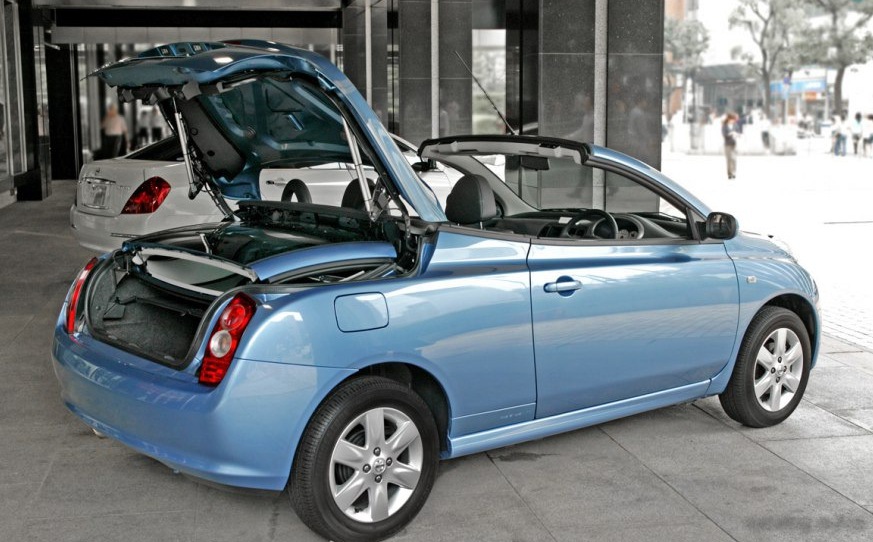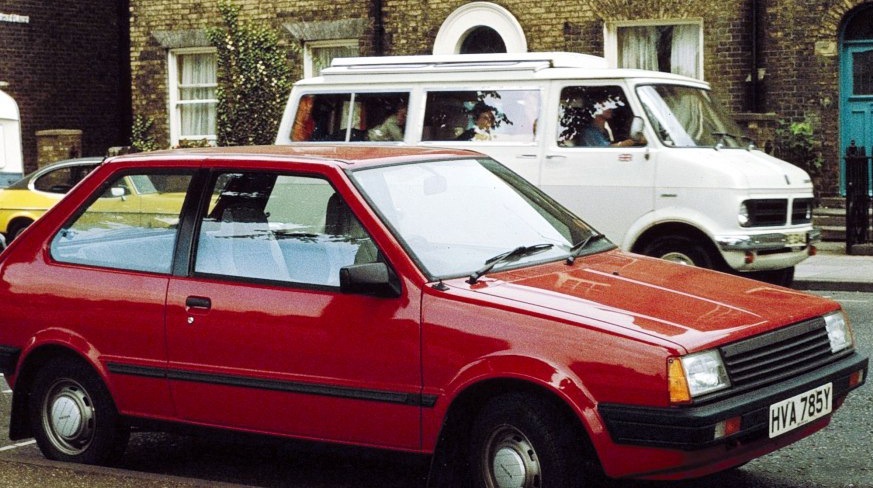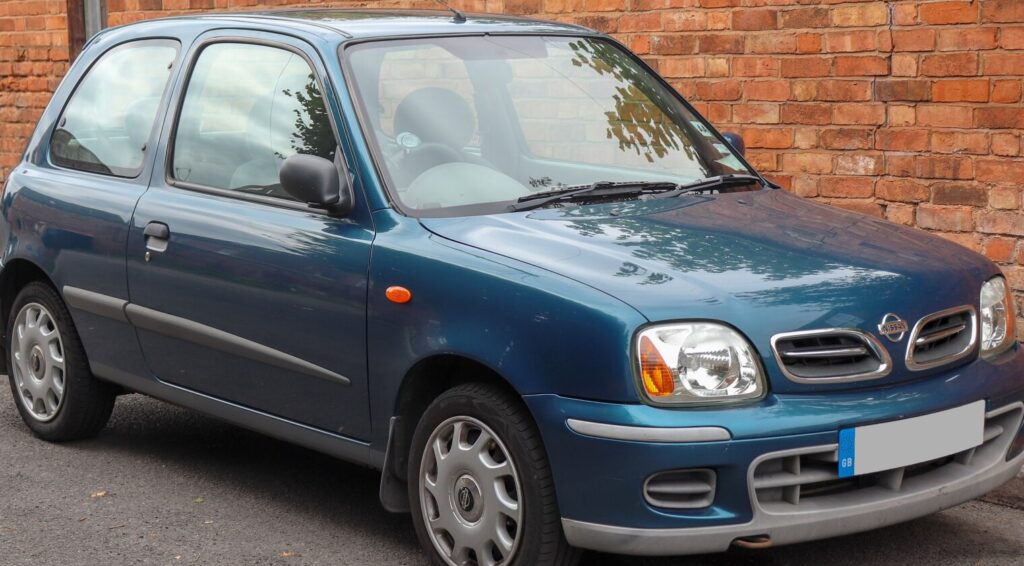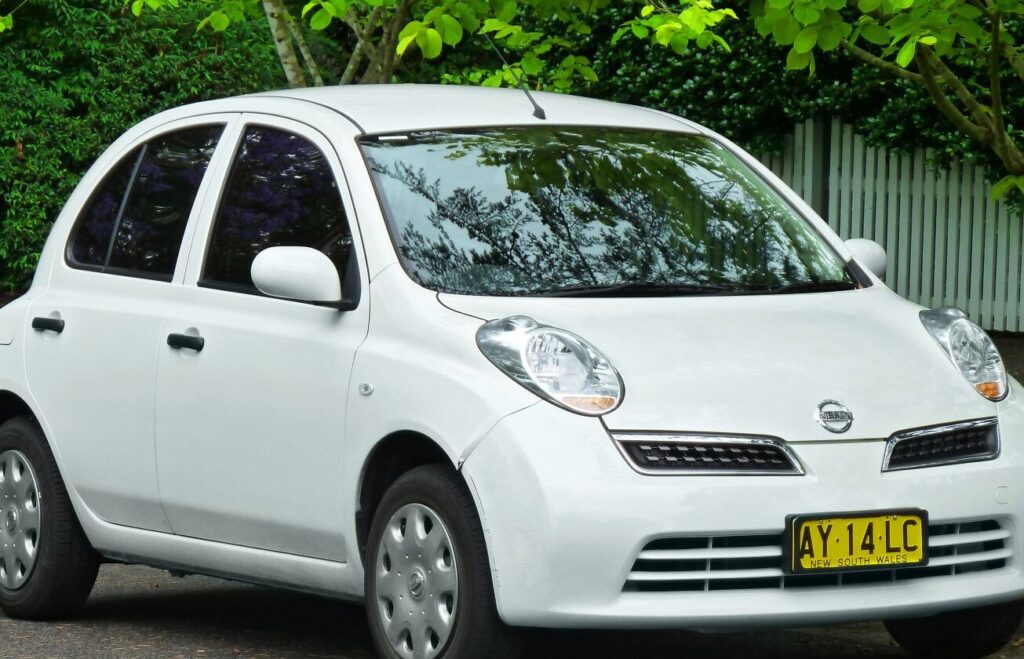
The Nissan Micra K12, produced from 2003 to 2010, represented a significant departure from its predecessors, embracing a more contemporary and rounded design. Within the K12 generation, the 1.0 i 16V variant, producing 65 horsepower, served as the entry point into the Micra lineup, particularly in European and Asian markets. This model, available in both three and five-door configurations, was aimed at buyers prioritizing fuel efficiency and affordability over outright performance. Production of this specific engine and trim combination ran from 2003 to 2005, before being superseded by minor revisions within the K12 range.
Technical Specifications
| Brand | Nissan |
| Model | Micra |
| Generation | Micra (K12) |
| Type (Engine) | 1.0 i 16V (65 Hp) |
| Start of production | 2003 |
| End of production | 2005 |
| Powertrain Architecture | Internal Combustion engine |
| Body type | Hatchback |
| Seats | 5 |
| Doors | 3/5 |
| Fuel consumption (urban) | 7.1 l/100 km (33.1 US mpg, 39.8 UK mpg, 14.1 km/l) |
| Fuel consumption (extra urban) | 5.1 l/100 km (46.1 US mpg, 55.4 UK mpg, 19.6 km/l) |
| Fuel consumption (combined) | 5.8 l/100 km (40.6 US mpg, 48.7 UK mpg, 17.2 km/l) |
| Fuel Type | Petrol (Gasoline) |
| Acceleration 0 – 100 km/h | 15.7 sec |
| Acceleration 0 – 62 mph | 15.7 sec |
| Acceleration 0 – 60 mph | 14.9 sec |
| Maximum speed | 154 km/h (95.69 mph) |
| Weight-to-power ratio | 14.5 kg/Hp, 69.1 Hp/tonne |
| Weight-to-torque ratio | 10.6 kg/Nm, 94.7 Nm/tonne |
| Power | 65 Hp @ 5600 rpm |
| Power per litre | 65.1 Hp/l |
| Torque | 89 Nm @ 3600 rpm (65.64 lb.-ft. @ 3600 rpm) |
| Engine layout | Front, Transverse |
| Engine Model/Code | CR10DE |
| Engine displacement | 998 cm3 (60.9 cu. in.) |
| Number of cylinders | 4 |
| Engine configuration | Inline |
| Cylinder Bore | 71 mm (2.8 in.) |
| Piston Stroke | 63 mm (2.48 in.) |
| Compression ratio | 10.1:1 |
| Number of valves per cylinder | 4 |
| Fuel injection system | Multi-port manifold injection |
| Engine aspiration | Naturally aspirated engine |
| Valvetrain | DOHC |
| Engine oil capacity | 3 l (3.17 US qt | 2.64 UK qt) |
| Coolant capacity | 4.9 l (5.18 US qt | 4.31 UK qt) |
| Kerb Weight | 940 kg (2072.35 lbs.) |
| Max. weight | 1430 kg (3152.61 lbs.) |
| Max load | 490 kg (1080.27 lbs.) |
| Trunk (boot) space – minimum | 371 l (13.1 cu. ft.) |
| Trunk (boot) space – maximum | 584 l (20.62 cu. ft.) |
| Fuel tank capacity | 46 l (12.15 US gal | 10.12 UK gal) |
| Length | 3715 mm (146.26 in.) |
| Width | 1660 mm (65.35 in.) |
| Height | 1525 mm (60.04 in.) |
| Wheelbase | 2430 mm (95.67 in.) |
| Front track | 1470 mm (57.87 in.) |
| Rear track | 1445 mm (56.89 in.) |
| Minimum turning circle | 9.8 m (32.15 ft.) |
| Drivetrain Architecture | Front wheel drive |
| Number of gears | 5 gears, manual transmission |
| Front suspension | Spring Strut |
| Rear suspension | Torsion |
| Front brakes | Ventilated discs |
| Rear brakes | Disc |
| Assisting systems | ABS (Anti-lock braking system) |
| Steering type | Steering rack and pinion |
| Tires size | 165/70 R14 |
| Wheel rims size | 5.5J x 14 |
Powertrain & Engine Architecture
The heart of the K12 Micra 1.0 i 16V is the CR10DE engine, a 998cc inline-four cylinder petrol engine. This engine utilizes a multi-port fuel injection system and a double overhead camshaft (DOHC) valvetrain, contributing to its relatively efficient operation. The CR10DE is a naturally aspirated engine, meaning it doesn’t employ turbocharging or supercharging. The 16-valve configuration (four valves per cylinder) aids in improved breathing and, consequently, a slightly broader powerband for its displacement. The engine’s 10.1:1 compression ratio is typical for a naturally aspirated engine of this era, balancing efficiency and performance. The engine was paired with a five-speed manual transmission as standard, although a four-speed automatic transmission was also offered, albeit less commonly. The automatic transmission, while providing convenience, noticeably impacted acceleration and fuel economy.
Driving Characteristics
The 1.0-liter engine in the Micra K12 delivers modest performance. Acceleration is best described as leisurely, with 0-60 mph taking around 14.9 seconds. The engine feels most comfortable in city driving, where its light weight and responsive steering make it easy to maneuver. On the highway, overtaking requires careful planning. The five-speed manual transmission allows drivers to keep the engine in its optimal power range, while the four-speed automatic tends to feel sluggish, particularly when climbing hills or accelerating quickly. The gear ratios in the manual transmission are well-spaced, providing adequate acceleration in each gear. Compared to the more powerful 1.4 and 1.6-liter variants, the 1.0-liter model prioritizes fuel economy over outright speed.
Equipment & Trim Levels
The 1.0 i 16V Micra typically came with a basic level of equipment, reflecting its position as the entry-level model. Standard features generally included power steering, central locking, and an immobilizer. Interior upholstery was typically cloth, and the dashboard featured a simple, functional design. Optional extras included air conditioning, electric windows, and alloy wheels. Higher trim levels, such as the Visia and Acenta, added more features as standard, but the base 1.0 i 16V was intentionally kept spartan to maintain its affordability.
Chassis & Braking
The K12 Micra utilizes a front-wheel-drive layout with a MacPherson strut suspension in the front and a torsion beam suspension in the rear. The front brakes are ventilated discs, providing adequate stopping power, while the rear brakes are typically solid discs. The suspension setup is tuned for comfort, providing a relatively smooth ride over uneven surfaces. The relatively light weight of the 1.0-liter model contributes to its nimble handling. Stabilizer bars were often omitted on the base models to further reduce cost, impacting body roll during cornering.
Market Reception & Comparison
The Micra K12 1.0 i 16V was generally well-received as an affordable and economical city car. Critics praised its fuel efficiency and ease of driving, but noted its lack of power. Compared to other small cars of the time, such as the Fiat Panda and the Renault Clio, the Micra offered a good balance of practicality and affordability. The 1.4-liter and 1.6-liter Micra variants offered significantly more performance but came at a higher price point and with reduced fuel economy. The automatic transmission version of the 1.0L was often criticized for its slow acceleration and reduced fuel efficiency compared to the manual.
Legacy
The CR10DE engine, while not known for its high performance, proved to be a reliable and durable unit. The K12 Micra, in general, has a reputation for being a dependable and relatively inexpensive car to maintain. In the used car market, the 1.0 i 16V models are often sought after by first-time drivers or those looking for a cheap and cheerful runabout. Parts availability remains good, and the simple mechanical design makes it relatively easy to repair. While not a performance icon, the Micra K12 1.0 i 16V played a significant role in providing affordable transportation to a wide range of buyers.