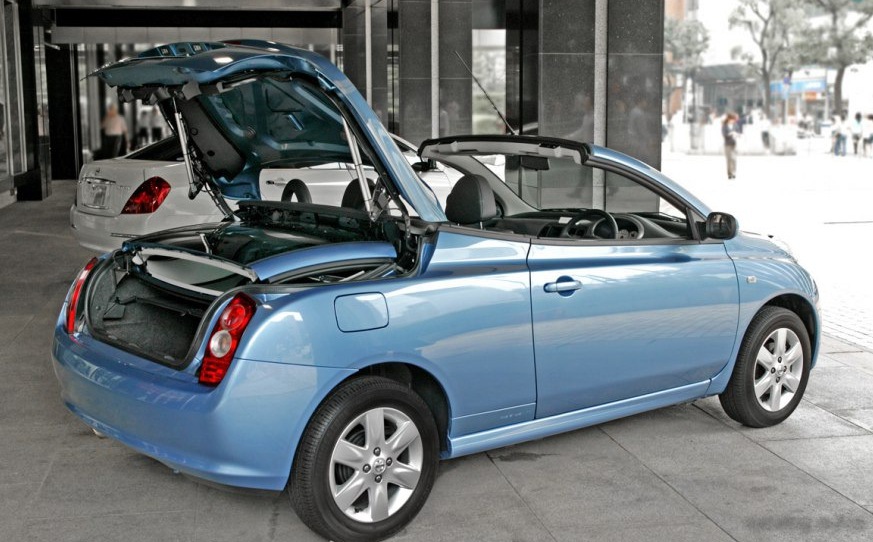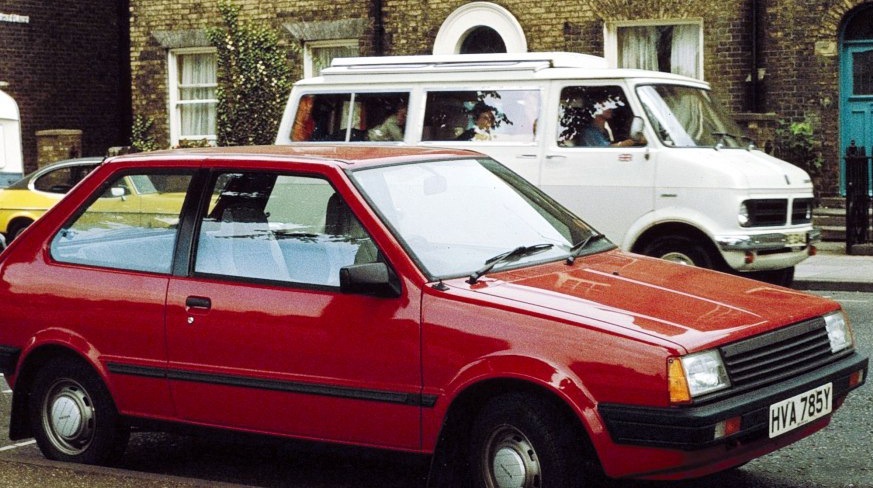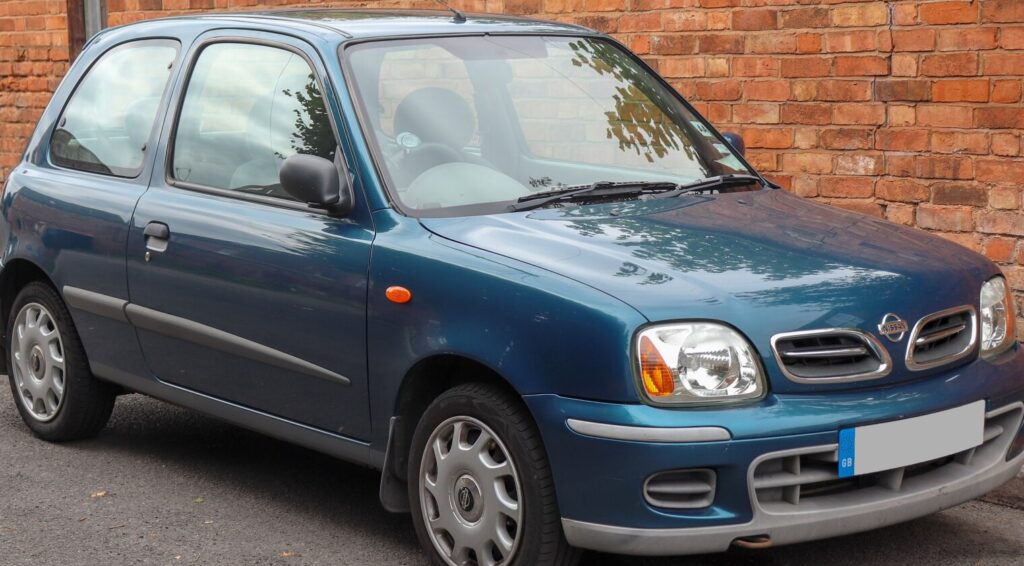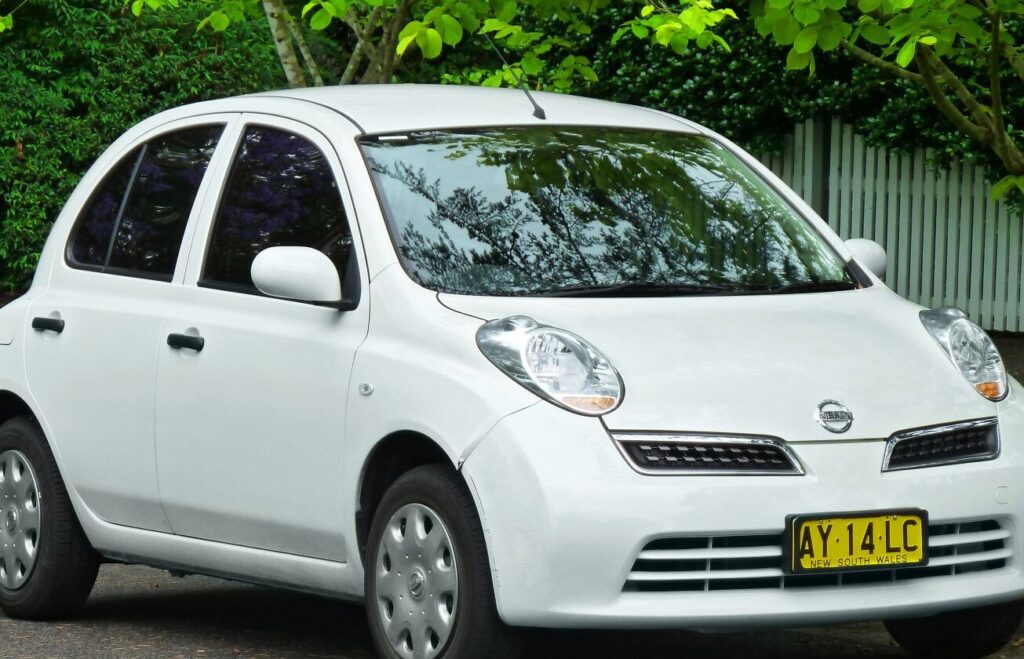
The Nissan Micra K12, produced from 2005 to 2010, represented a significant step forward for Nissan’s supermini offering. Within the K12 generation, the 1.2 i 16V variant, producing 65 horsepower, served as the entry point into the range, particularly in European and Asian markets. This model aimed to provide affordable and economical transportation, appealing to first-time car buyers, city dwellers, and those seeking a practical and reliable vehicle. It was available in both three and five-door body styles, offering flexibility to suit different needs. The K12 platform was a departure from its predecessor, offering increased interior space and improved refinement.
Technical Specifications
| Brand | Nissan |
| Model | Micra |
| Generation | Micra (K12) |
| Type (Engine) | 1.2 i 16V (65 Hp) |
| Start of production | 2005 |
| End of production | 2010 |
| Powertrain Architecture | Internal Combustion engine |
| Body type | Hatchback |
| Seats | 5 |
| Doors | 3/5 |
| Fuel consumption (urban) | 7.4 l/100 km (31.8 US mpg) |
| Fuel consumption (extra urban) | 5.1 l/100 km (46.1 US mpg) |
| Fuel Type | Petrol (Gasoline) |
| Acceleration 0 – 100 km/h | 16.3 sec |
| Acceleration 0 – 62 mph | 16.3 sec |
| Acceleration 0 – 60 mph | 15.5 sec |
| Maximum speed | 154 km/h (95.69 mph) |
| Weight-to-power ratio | 15.1 kg/Hp |
| Weight-to-torque ratio | 8.9 kg/Nm |
| Power | 65 Hp @ 5200 rpm |
| Torque | 110 Nm @ 3600 rpm (81.13 lb.-ft. @ 3600 rpm) |
| Engine layout | Front, Transverse |
| Engine Model/Code | CR12DE |
| Engine displacement | 1240 cm3 (75.67 cu. in.) |
| Number of cylinders | 4 |
| Engine configuration | Inline |
| Cylinder Bore | 71 mm (2.8 in.) |
| Piston Stroke | 78.3 mm (3.08 in.) |
| Compression ratio | 9.9:1 |
| Number of valves per cylinder | 4 |
| Fuel injection system | Multi-port manifold injection |
| Engine aspiration | Naturally aspirated engine |
| Valvetrain | DOHC |
| Engine oil capacity | 3 l (3.17 US qt | 2.64 UK qt) |
| Coolant capacity | 5.3 l (5.6 US qt | 4.66 UK qt) |
| Kerb Weight | 980 kg (2160.53 lbs.) |
| Max. weight | 1475 kg (3251.82 lbs.) |
| Max load | 495 kg (1091.29 lbs.) |
| Trunk (boot) space – minimum | 371 l (13.1 cu. ft.) |
| Trunk (boot) space – maximum | 584 l (20.62 cu. ft.) |
| Fuel tank capacity | 46 l (12.15 US gal | 10.12 UK gal) |
| Length | 3715 mm (146.26 in.) |
| Width | 1660 mm (65.35 in.) |
| Height | 1525 mm (60.04 in.) |
| Wheelbase | 2430 mm (95.67 in.) |
| Front track | 1470 mm (57.87 in.) |
| Rear track | 1445 mm (56.89 in.) |
| Minimum turning circle | 9.8 m (32.15 ft.) |
| Drivetrain | Front wheel drive |
| Number of gears | 5 |
| Gearbox type | Manual transmission |
| Front suspension | Spring Strut |
| Rear suspension | Torsion |
| Front brakes | Ventilated discs |
| Rear brakes | Disc |
| Assisting systems | ABS (Anti-lock braking system) |
| Steering type | Steering rack and pinion |
| Tires size | 165/70 R14 |
| Wheel rims size | 5.5J x 14 |
Powertrain & Engine Architecture
The heart of the Micra 1.2 i 16V is the CR12DE engine, a 1.2-liter inline-four cylinder gasoline engine. This engine utilizes a multi-point fuel injection system, delivering fuel directly to the intake ports. The engine features a double overhead camshaft (DOHC) valvetrain, operating 16 valves (four per cylinder) to optimize airflow and improve combustion efficiency. The CR12DE is a naturally aspirated engine, meaning it doesn’t rely on a turbocharger or supercharger for increased power. This design prioritizes reliability and fuel economy over outright performance. The engine’s 9.9:1 compression ratio is a compromise between efficiency and the need to run on readily available fuel grades. The five-speed manual transmission was the standard offering, providing a relatively long gearing setup to maximize fuel efficiency. The transmission was chosen to complement the engine’s torque curve, prioritizing smooth operation and economy over sporty acceleration.
Driving Characteristics
The 1.2L engine paired with the five-speed manual transmission delivers modest performance. Acceleration from 0-60 mph takes around 15.5 seconds, and top speed is approximately 95.69 mph. The power delivery is linear, but requires the driver to utilize the engine’s rev range to achieve reasonable acceleration. Compared to higher-spec Micras equipped with larger engines (like the 1.6L), the 1.2L feels noticeably slower, particularly when fully loaded or tackling inclines. However, the gearing is well-suited to urban driving, providing adequate responsiveness for navigating city streets. The long gearing also contributes to good fuel economy on the highway. The steering is light and precise, making it easy to maneuver in tight spaces. The suspension is tuned for comfort, absorbing bumps and imperfections in the road surface reasonably well.
Equipment & Trim Levels
The 1.2 i 16V typically represented the base trim level in many markets. Standard equipment generally included power steering, central locking, electric front windows, and an adjustable steering column. Safety features included ABS brakes and driver and passenger airbags. Interior upholstery was typically a durable cloth material. Optional extras included air conditioning, alloy wheels, and a CD player. Higher trim levels, such as the Visia, Acenta, and Tekna, added features like air conditioning, electric rear windows, and upgraded interior trim.
Chassis & Braking
The Micra K12 utilizes a front-wheel-drive layout with a MacPherson strut suspension at the front and a torsion beam suspension at the rear. This setup provides a good balance between ride comfort and handling. The front brakes are ventilated discs, offering good stopping power, while the rear brakes are solid discs. The ABS system helps to prevent wheel lockup during hard braking, enhancing safety. The relatively lightweight construction of the K12 contributes to its nimble handling characteristics.
Market Reception & Comparison
The Micra 1.2 i 16V was generally well-received as an affordable and economical city car. Critics praised its fuel efficiency, ease of driving, and practicality. However, some reviewers noted its lack of power and relatively basic interior. Compared to rivals like the Ford Fiesta and Volkswagen Polo, the Micra offered a competitive price point and a spacious interior, but lacked the same level of refinement and driving engagement. The 1.6L Micra offered significantly more performance, but at a higher price. The diesel variants (typically 1.5 dCi) provided superior fuel economy but were more expensive to purchase and maintain.
Legacy
The CR12DE engine, while not known for its performance, proved to be a reliable and durable unit. The Micra K12, particularly the 1.2L variant, remains a popular choice in the used car market due to its affordability and low running costs. Common issues are generally limited to wear and tear items such as brakes, suspension components, and exhaust systems. The engine itself is relatively robust, but regular maintenance, including oil changes and timing chain inspection, is crucial for long-term reliability. The K12 generation Micra established a reputation for being a practical and dependable supermini, and continues to provide affordable transportation for many drivers today.