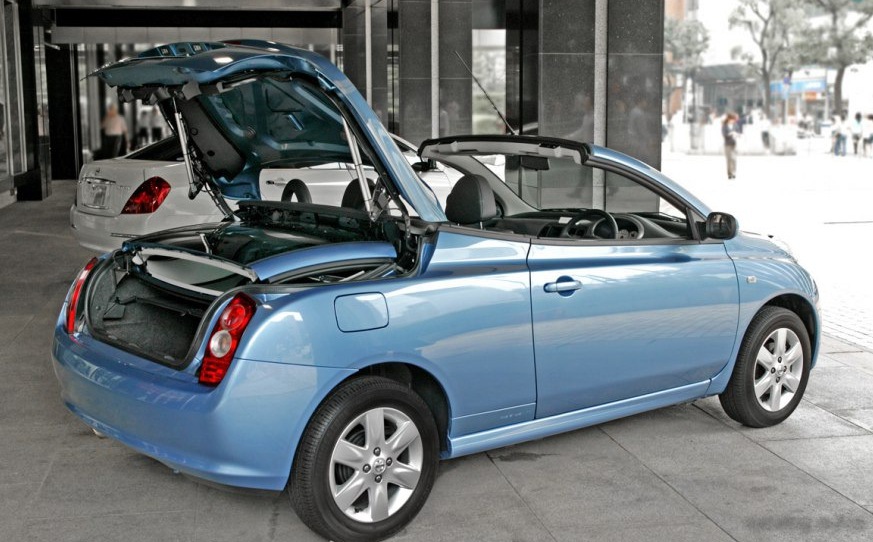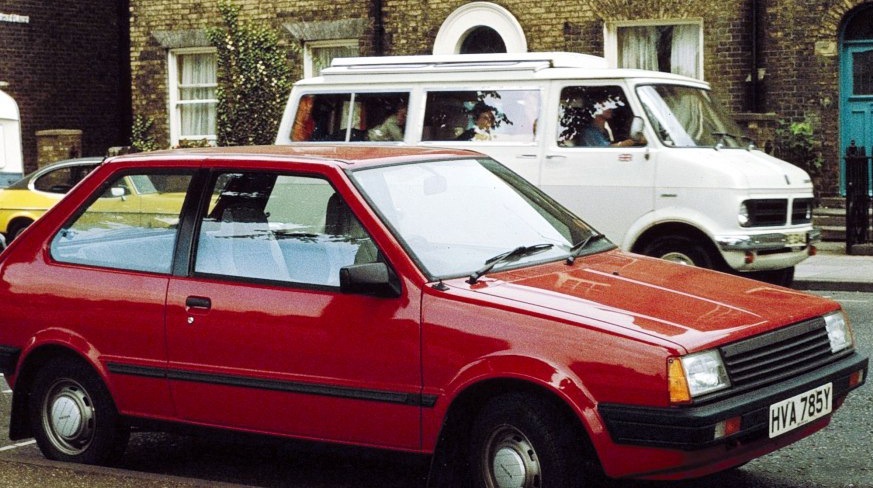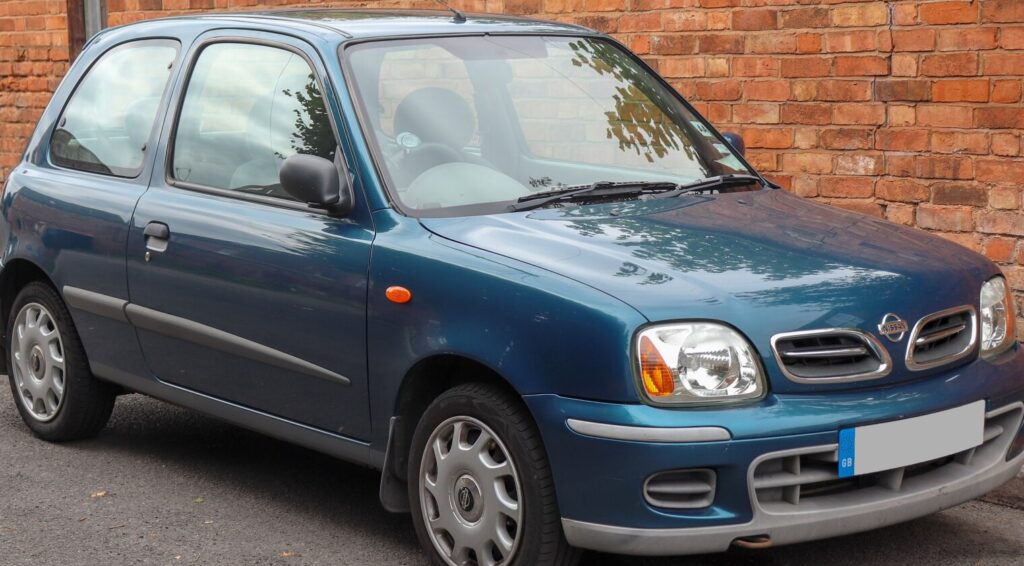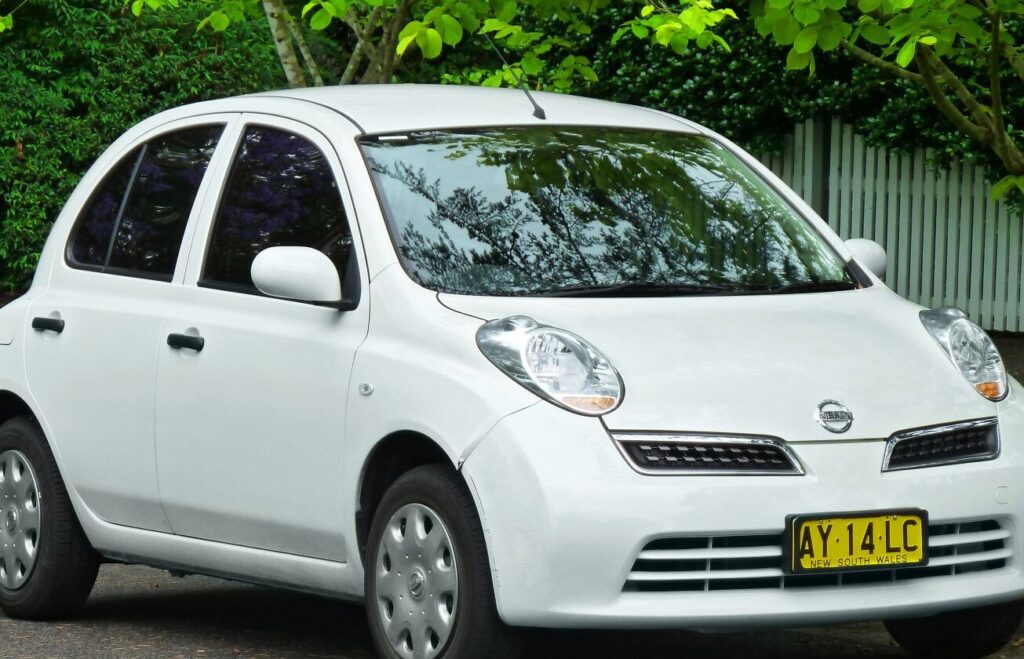
The Nissan Micra K12, produced from 2003 to 2010, represented a significant departure from its predecessors, embracing a more contemporary and rounded design. Within the K12 generation, the 1.4 i 16V variant, producing 88 horsepower, served as a popular entry point into the range, particularly in European and Asian markets. Offered with both 3-door and 5-door body styles, this model aimed to balance affordability with reasonable performance and fuel efficiency. Production of this specific engine and transmission combination spanned from 2003 to 2005, before being superseded by minor revisions within the K12 lineup.
Technical Specifications
| Brand | Nissan |
| Model | Micra |
| Generation | Micra (K12) |
| Type (Engine) | 1.4 i 16V (88 Hp) |
| Start of production | 2003 |
| End of production | 2005 |
| Powertrain Architecture | Internal Combustion engine |
| Body type | Hatchback |
| Seats | 5 |
| Doors | 3/5 |
| Fuel consumption (urban) | 7.9 l/100 km (29.8 US mpg) |
| Fuel consumption (extra urban) | 5.4 l/100 km (43.6 US mpg) |
| Fuel consumption (combined) | 6.3 l/100 km (37.3 US mpg) |
| Fuel Type | Petrol (Gasoline) |
| Acceleration 0 – 100 km/h | 11.9 sec |
| Acceleration 0 – 62 mph | 11.9 sec |
| Acceleration 0 – 60 mph | 11.3 sec |
| Maximum speed | 172 km/h (106.88 mph) |
| Weight-to-power ratio | 11.1 kg/Hp |
| Weight-to-torque ratio | 7.6 kg/Nm |
| Power | 88 Hp @ 5600 rpm |
| Torque | 128 Nm @ 3200 rpm (94.41 lb.-ft. @ 3200 rpm) |
| Engine layout | Front, Transverse |
| Engine Model/Code | CR14DE |
| Engine displacement | 1386 cm3 (84.58 cu. in.) |
| Number of cylinders | 4 |
| Engine configuration | Inline |
| Cylinder Bore | 73 mm (2.87 in.) |
| Piston Stroke | 82.8 mm (3.26 in.) |
| Compression ratio | 9.9:1 |
| Number of valves per cylinder | 4 |
| Fuel injection system | Multi-port manifold injection |
| Engine aspiration | Naturally aspirated engine |
| Valvetrain | DOHC |
| Engine oil capacity | 3 l (3.17 US qt | 2.64 UK qt) |
| Coolant capacity | 5.3 l (5.6 US qt | 4.66 UK qt) |
| Kerb Weight | 975 kg (2149.51 lbs.) |
| Max. weight | 1475 kg (3251.82 lbs.) |
| Max load | 500 kg (1102.31 lbs.) |
| Trunk (boot) space – minimum | 371 l (13.1 cu. ft.) |
| Trunk (boot) space – maximum | 584 l (20.62 cu. ft.) |
| Fuel tank capacity | 46 l (12.15 US gal | 10.12 UK gal) |
| Length | 3715 mm (146.26 in.) |
| Width | 1660 mm (65.35 in.) |
| Height | 1525 mm (60.04 in.) |
| Wheelbase | 2430 mm (95.67 in.) |
| Front track | 1470 mm (57.87 in.) |
| Rear track | 1445 mm (56.89 in.) |
| Minimum turning circle | 9.8 m (32.15 ft.) |
| Drivetrain Architecture | Front wheel drive |
| Number of gears | 5 |
| Gearbox type | Manual transmission |
| Front suspension | Spring Strut |
| Rear suspension | Torsion |
| Front brakes | Disc |
| Rear brakes | Drum |
| Assisting systems | ABS (Anti-lock braking system) |
| Steering type | Steering rack and pinion |
| Tires size | 175/60 R15 |
INTRODUCTION
The K12 Nissan Micra, launched in 2003, marked a significant shift in the Micra’s design philosophy. Moving away from the boxy aesthetics of the K11 generation, the K12 adopted a more fluid, rounded shape, appealing to a broader audience. The 1.4 i 16V model, producing 88 horsepower, was positioned as a mainstream offering, balancing performance, economy, and price. It was a key variant in European and Asian markets, where smaller, fuel-efficient hatchbacks were highly sought after. This engine and transmission combination was available with both 3-door and 5-door configurations, catering to different lifestyle needs.
Powertrain & Engine Architecture
The heart of the 1.4 i 16V Micra is the CR14DE engine, a 1.4-liter inline-four cylinder gasoline engine. This engine utilizes a single overhead camshaft (SOHC) design, with four valves per cylinder (16V), contributing to improved breathing and efficiency. Fuel delivery is managed by a multi-point fuel injection system, ensuring precise fuel metering for optimal combustion. The engine’s 9.9:1 compression ratio strikes a balance between performance and fuel economy. The 1.4L engine was paired with a 5-speed manual transmission, offering a relatively direct driving experience. The transmission was chosen for its simplicity and reliability, contributing to lower maintenance costs. The CR14DE engine is known for its relatively simple design, making it easier to maintain and repair compared to more complex engine architectures.
Driving Characteristics
The 1.4 i 16V Micra, with its 88 horsepower and 128 Nm of torque, offered adequate performance for urban driving and occasional highway trips. Acceleration from 0 to 60 mph took around 11.3 seconds, and the top speed was approximately 107 mph. While not particularly sporty, the engine provided sufficient power for everyday commuting and maneuvering in city traffic. The 5-speed manual transmission allowed drivers to effectively utilize the engine’s powerband. Compared to the more powerful 1.6-liter variants, the 1.4L felt less strained at higher speeds, but lacked the same level of outright acceleration. The gear ratios were tuned for fuel efficiency, resulting in a slightly less engaging driving experience than the sportier trims. The relatively light weight of the K12 Micra helped to mitigate the effects of the modest power output.
Equipment & Trim Levels
The 1.4 i 16V Micra typically came equipped with a reasonable level of standard features. These included power steering, central locking, electric front windows, and an adjustable steering column. Interior upholstery was typically cloth, with a functional and durable design. Air conditioning was often an optional extra, as were alloy wheels and a CD player. Higher trim levels, such as the ‘Visia’ or ‘Acenta’, added features like remote central locking, electric door mirrors, and a more comprehensive audio system. The dashboard layout was straightforward and user-friendly, prioritizing practicality over aesthetics. Safety features included driver and passenger airbags, and ABS brakes were often standard, depending on the market.
Chassis & Braking
The K12 Micra utilized a front-wheel-drive layout with a MacPherson strut suspension at the front and a torsion beam suspension at the rear. This suspension setup provided a comfortable ride quality, well-suited for everyday driving conditions. The front brakes were disc brakes, offering good stopping power, while the rear brakes were typically drum brakes to keep costs down. ABS (Anti-lock Braking System) was often included as standard equipment, enhancing safety during emergency braking situations. The steering was rack and pinion, providing precise and responsive handling. The relatively lightweight construction of the K12 Micra contributed to its nimble handling characteristics.
Market Reception & Comparison
The 1.4 i 16V Micra was generally well-received by automotive critics as a practical and affordable city car. It was praised for its fuel efficiency, comfortable ride, and ease of driving. However, some critics noted its lack of outright performance and somewhat basic interior. Compared to other small hatchbacks of the time, such as the Ford Fiesta and the Volkswagen Polo, the Micra offered a competitive price point and a strong focus on practicality. The 1.6-liter Micra offered more performance, but at a higher price and with slightly lower fuel economy. The 1.4L model represented a sweet spot for buyers seeking a balance between cost, efficiency, and usability.
Legacy
The Nissan Micra K12, particularly the 1.4 i 16V variant, has proven to be a reliable and durable vehicle. The CR14DE engine is known for its longevity, and with regular maintenance, can provide many years of trouble-free service. In the used car market, these models remain relatively affordable and are often sought after by first-time drivers or those seeking a dependable and economical city car. While not a performance icon, the K12 Micra 1.4 i 16V holds a respectable place as a practical and efficient hatchback that served a significant role in Nissan’s global lineup.