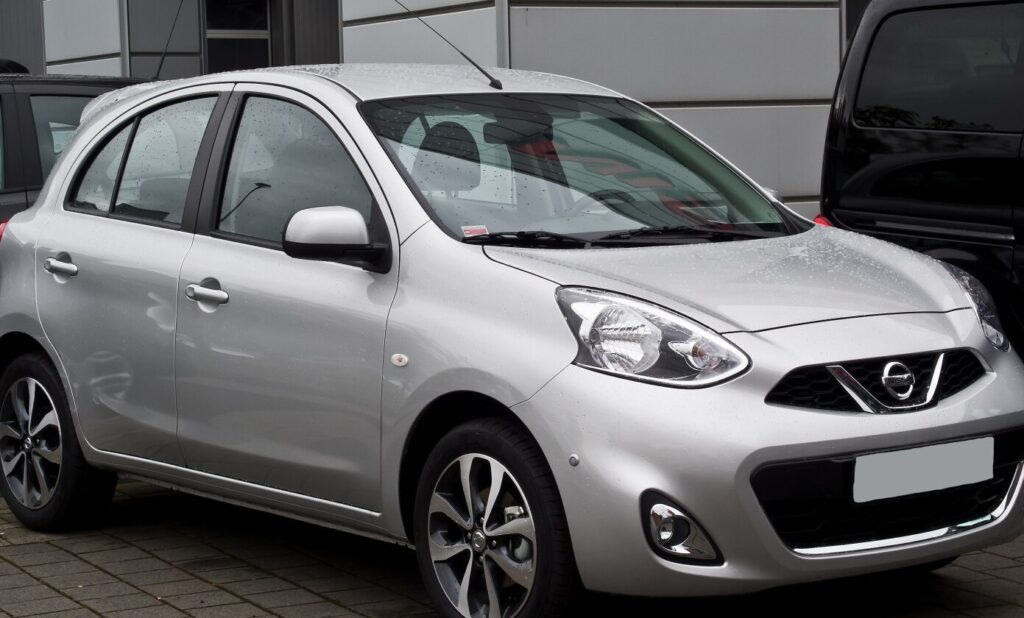
The Nissan Micra K13, specifically the 1.2-liter 80 horsepower variant produced from 2013 to 2017, represented an entry-level offering within the fourth generation of Nissan’s supermini. This facelifted version of the K13, introduced in 2013, aimed to refresh the model’s styling and improve its appeal in the competitive European and Asian small car segments. Positioned as the most affordable option in the Micra lineup, it targeted budget-conscious buyers seeking a practical and economical city car. The K13 series, built primarily in India and Mexico, was designed to offer a more global product than its predecessors, with a focus on affordability and ease of maintenance.
Technical Specifications
| Brand | Nissan |
| Model | Micra |
| Generation | Micra (K13, facelift 2013) |
| Type (Engine) | 1.2 (80 Hp) |
| Start of production | 2013 |
| End of production | 2017 |
| Powertrain Architecture | Internal Combustion engine |
| Body type | Hatchback |
| Seats | 5 |
| Doors | 5 |
| Fuel consumption (urban) | 6.1 l/100 km (38.6 US mpg, 46.3 UK mpg, 16.4 km/l) |
| Fuel consumption (extra urban) | 4.3 l/100 km (54.7 US mpg, 65.7 UK mpg, 23.3 km/l) |
| Fuel consumption (combined) | 5 l/100 km (47 US mpg, 56.5 UK mpg, 20 km/l) |
| CO2 emissions | 115 g/km |
| Fuel Type | Petrol (Gasoline) |
| Acceleration 0 – 100 km/h | 13.7 sec |
| Acceleration 0 – 62 mph | 13.7 sec |
| Acceleration 0 – 60 mph | 13 sec |
| Maximum speed | 170 km/h (105.63 mph) |
| Emission standard | Euro 5 |
| Weight-to-power ratio | 13.2 kg/Hp, 75.8 Hp/tonne |
| Weight-to-torque ratio | 9.6 kg/Nm, 104.3 Nm/tonne |
| Power | 80 Hp |
| Power per litre | 66.8 Hp/l |
| Torque | 110 Nm @ 4000 rpm (81.13 lb.-ft. @ 4000 rpm) |
| Engine layout | Front, Transverse |
| Engine Model/Code | HR12DE |
| Engine displacement | 1198 cm3 (73.11 cu. in.) |
| Number of cylinders | 3 |
| Engine configuration | Inline |
| Fuel injection system | Multi-port manifold injection |
| Engine aspiration | Naturally aspirated engine |
| Engine oil capacity | 3.4 l (3.59 US qt | 2.99 UK qt) |
| Coolant capacity | 5.5 l (5.81 US qt | 4.84 UK qt) |
| Kerb Weight | 1055 kg (2325.88 lbs.) |
| Max. weight | 1425 kg (3141.59 lbs.) |
| Max load | 370 kg (815.71 lbs.) |
| Length | 3825 mm (150.59 in.) |
| Width | 1670 mm (65.75 in.) |
| Height | 1525 mm (60.04 in.) |
| Wheelbase | 2450 mm (96.46 in.) |
| Front track | 1470 mm (57.87 in.) |
| Rear track | 1475 mm (58.07 in.) |
| Drivetrain Architecture | Front wheel drive |
| Number of gears | 5 |
| Gearbox type | Manual transmission |
| Assisting systems | ABS (Anti-lock braking system) |
| Steering type | Steering rack and pinion |
| Power steering | Electric Steering |
| Tires size | 165/70 R14 |
| Wheel rims size | 14 |
Powertrain & Engine Architecture
The heart of this Micra variant is the HR12DE, a 1.2-liter inline three-cylinder gasoline engine. This engine is known for its simplicity and relatively low production costs. It utilizes a multi-point fuel injection system, delivering fuel directly into the intake ports. The HR12DE features a single overhead camshaft (SOHC) valvetrain with two valves per cylinder. This configuration contributes to its smooth operation, though it doesn’t offer the performance potential of more complex, multi-cam designs. The engine’s 80 horsepower output at around 6000 rpm and 110 Nm (81 lb-ft) of torque at 4000 rpm are modest, but sufficient for urban driving. The engine is paired with a five-speed manual transmission, chosen for its affordability and efficiency. The transmission’s gear ratios are tuned for fuel economy rather than outright acceleration.
Driving Characteristics
The 1.2-liter Micra with a manual transmission delivers a predictable, if uninspiring, driving experience. Acceleration is leisurely, taking approximately 13.7 seconds to reach 62 mph (100 km/h). The engine feels strained at higher speeds, and highway overtaking requires careful planning. The five-speed gearbox is light and easy to use, but the long gearing emphasizes fuel efficiency over responsiveness. The car’s light weight (around 1055 kg or 2326 lbs) helps to mitigate the lack of power, making it feel nimble in city traffic. Compared to higher-spec Micras equipped with larger engines, this variant feels significantly slower and less refined. However, its simplicity and predictable handling make it a forgiving car for new drivers.
Equipment & Trim Levels
The 1.2-liter Micra typically came with a basic level of equipment. Standard features generally included power steering, central locking, electric front windows, and an ABS anti-lock braking system. Air conditioning was often an optional extra, as were alloy wheels and a basic audio system. Interior upholstery was typically cloth, with a functional but unremarkable dashboard design. Higher trim levels, available with larger engines, offered features like climate control, upgraded audio systems, and more premium interior materials. The base 1.2 model was deliberately stripped down to offer the lowest possible price point.
Chassis & Braking
The Micra K13 utilizes a front MacPherson strut suspension and a rear torsion beam suspension. This setup provides a comfortable ride quality, particularly on smooth roads. The torsion beam rear suspension is a cost-effective solution that prioritizes space efficiency over sophisticated handling. Braking is handled by disc brakes on the front wheels and drum brakes on the rear. While adequate for everyday driving, the rear drum brakes lack the stopping power and fade resistance of disc brakes. The steering is light and easy to use, making it well-suited for maneuvering in tight urban environments.
Market Reception & Comparison
The 1.2-liter Micra was generally well-received as an affordable and economical city car. Critics praised its fuel efficiency and ease of driving, but noted its lack of power and refinement. Compared to rivals like the Volkswagen Polo, Ford Fiesta, and Toyota Yaris, the Micra offered a lower price point but lacked the overall sophistication and driving dynamics of those competitors. Its fuel economy, averaging around 5 liters per 100 kilometers (47 US mpg), was competitive within its class. Reliability was generally good, although some owners reported minor issues with the engine’s timing chain.
Legacy
The 1.2-liter Micra K13 remains a popular choice in the used car market, particularly for first-time buyers and those seeking a low-cost, reliable vehicle. The HR12DE engine is known for its durability, and routine maintenance is relatively inexpensive. While not a performance car, the Micra’s simplicity and fuel efficiency have ensured its continued relevance. Parts availability is generally good, and the car’s straightforward design makes it relatively easy to repair. As a budget-friendly option, the 1.2-liter Micra K13 continues to offer a practical and economical transportation solution.