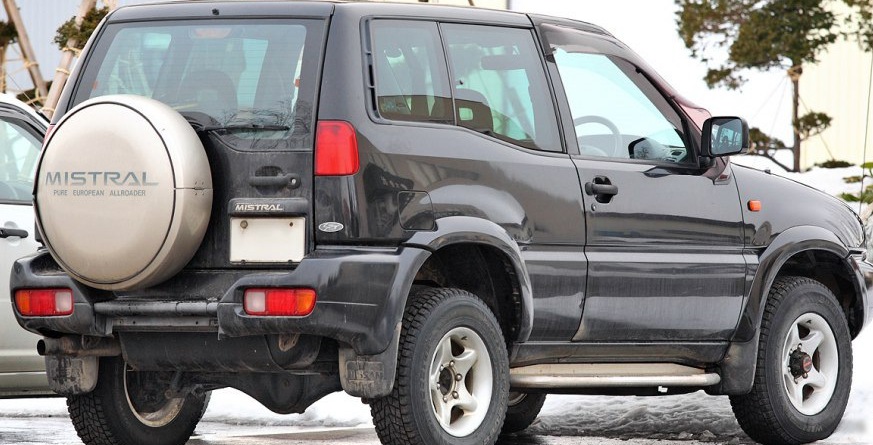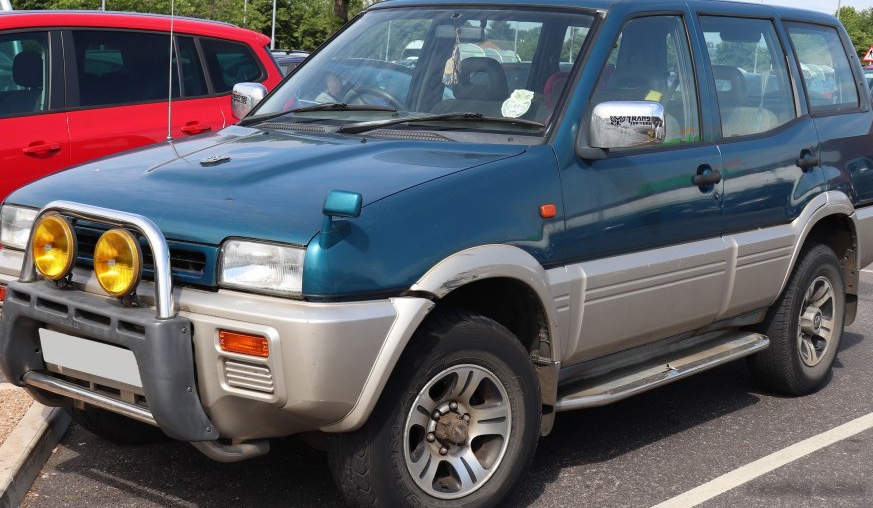
The Nissan Mistral, known internally as the R20 series, was a mid-size SUV produced by Nissan from 1994 to 1999. Positioned as a robust, all-terrain vehicle, the Mistral was primarily marketed in Europe and Japan, filling a niche for a practical and capable SUV. It was based on the Nissan Patrol chassis, offering a blend of off-road capability and on-road comfort. The 2.7 TDi variant, producing 100 horsepower, represented an entry-level option within the Mistral lineup, aimed at buyers prioritizing fuel efficiency and durability over outright performance. This model occupied a space below the more powerful gasoline-powered versions and served as a workhorse alternative.
Technical Specifications
| Brand | Nissan |
| Model | Mistral |
| Generation | Mistral (R20) 5D |
| Type (Engine) | 2.7 TDi (100 Hp) |
| Start of production | 1994 |
| End of production | 1999 |
| Powertrain Architecture | Internal Combustion engine |
| Body type | SUV |
| Seats | 5 |
| Doors | 5 |
| Fuel consumption (combined) | 11.2 l/100 km |
| Fuel consumption (US mpg) | 21 US mpg |
| Fuel consumption (UK mpg) | 25.2 UK mpg |
| Fuel consumption (km/l) | 8.9 km/l |
| Fuel Type | Diesel |
| Acceleration 0 – 100 km/h | 19 sec |
| Acceleration 0 – 62 mph | 19 sec |
| Acceleration 0 – 60 mph | 18.1 sec |
| Maximum speed | 145 km/h (90.1 mph) |
| Weight-to-power ratio | 18.5 kg/Hp |
| Weight-to-torque ratio | 8.4 kg/Nm |
| Power | 100 Hp @ 4000 rpm |
| Power per litre | 37.6 Hp/l |
| Torque | 221 Nm @ 2200 rpm (163 lb.-ft. @ 2200 rpm) |
| Engine layout | Front, Longitudinal |
| Engine displacement | 2663 cm3 (162.51 cu. in.) |
| Number of cylinders | 4 |
| Engine configuration | Inline |
| Cylinder Bore | 96 mm (3.78 in.) |
| Piston Stroke | 92 mm (3.62 in.) |
| Compression ratio | 21.9:1 |
| Number of valves per cylinder | 2 |
| Fuel injection system | Precombustion chamber injection |
| Engine aspiration | Turbocharger |
| Kerb Weight | 1850 kg (4078.55 lbs.) |
| Max. weight | 2580 kg (5687.93 lbs.) |
| Max load | 730 kg (1609.37 lbs.) |
| Trunk (boot) space – minimum | 115 l (4.06 cu. ft.) |
| Trunk (boot) space – maximum | 1900 l (67.1 cu. ft.) |
| Fuel tank capacity | 80 l (21.13 US gal | 17.6 UK gal) |
| Length | 4585 mm (180.51 in.) |
| Width | 1735 mm (68.31 in.) |
| Height | 1810 mm (71.26 in.) |
| Wheelbase | 2650 mm (104.33 in.) |
| Front track | 1455 mm (57.28 in.) |
| Rear (Back) track | 1430 mm (56.3 in.) |
| Drive wheel | All wheel drive (4×4) |
| Number of gears and type of gearbox | 5 gears, manual transmission |
| Front suspension | Double wishbone |
| Rear suspension | Coil spring |
| Front brakes | Ventilated discs |
| Rear brakes | Drum |
| Assisting systems | ABS (Anti-lock braking system) |
| Power steering | Hydraulic Steering |
| Tires size | 215/85 R15 S |
Powertrain & Engine Architecture
The heart of the Mistral 2.7 TDi is a 2.7-liter inline-four cylinder diesel engine. This engine, often identified by codes such as RD28T, utilizes a precombustion chamber injection system. This system, common in older diesel engines, involves injecting fuel into a precombustion chamber connected to the main cylinder, promoting more complete combustion. The engine is turbocharged, which helps to increase power output and improve torque delivery. The turbocharger provides approximately 7.2 psi of boost. The 5-speed manual transmission was the only transmission option available with this engine. The transmission’s gear ratios were tuned for both on-road cruising and off-road capability, with a relatively low first gear for tackling challenging terrain.
Driving Characteristics
The 100 horsepower and 221 Nm (163 lb-ft) of torque delivered by the 2.7 TDi engine resulted in a driving experience focused on practicality rather than performance. Acceleration was leisurely, taking approximately 19 seconds to reach 100 km/h (62 mph). The engine’s torque peak at 2200 rpm provided adequate pulling power for everyday driving and towing, but it lacked the responsiveness of higher-output gasoline engines or more modern diesel variants. The manual transmission, while offering driver control, required frequent shifting to maintain momentum, especially when loaded or climbing hills. Compared to the gasoline-powered Mistrals, the 2.7 TDi offered significantly better fuel economy, but at the expense of outright speed and refinement.
Equipment & Trim Levels
The 2.7 TDi Mistral typically came with a relatively basic level of equipment, reflecting its position as the entry-level model. Standard features generally included power steering, ABS brakes, and a basic audio system. Interior upholstery was typically cloth, and the dashboard featured a functional, utilitarian design. Optional extras, such as air conditioning, power windows, and upgraded audio systems, were available, but often added significantly to the vehicle’s price. The trim level was often differentiated by minor cosmetic details, such as wheel covers and interior trim materials.
Chassis & Braking
The Mistral’s chassis was based on the rugged Nissan Patrol platform, providing a robust foundation for both on-road and off-road driving. The front suspension utilized a double wishbone setup, while the rear suspension employed coil springs. This configuration offered a good balance of ride comfort and off-road articulation. Braking duties were handled by ventilated discs at the front and drum brakes at the rear. While adequate for normal driving conditions, the braking system lacked the stopping power of more modern vehicles. The all-wheel-drive system, selectable via a transfer case, provided enhanced traction in slippery conditions.
Market Reception & Comparison
The Nissan Mistral 2.7 TDi was generally well-received in its target markets as a practical and reliable SUV. Critics praised its durability, off-road capability, and fuel efficiency. However, the engine’s lack of power and the vehicle’s somewhat basic interior were often cited as drawbacks. Compared to other SUVs in its class, such as the Toyota Land Cruiser Prado and the Mitsubishi Pajero, the Mistral offered a more affordable price point, but lacked some of the refinement and features of its competitors. The 2.7 TDi variant was particularly popular among buyers who prioritized functionality and economy over performance.
Legacy
The Nissan Mistral, particularly the 2.7 TDi variant, has developed a reputation for long-term reliability. The robust diesel engine, while not particularly powerful, is known for its durability and ability to withstand high mileage. Today, well-maintained examples of the Mistral 2.7 TDi are sought after by enthusiasts and those looking for a dependable and affordable SUV. Parts availability can be a challenge in some regions, but the vehicle’s relatively simple mechanical design makes it relatively easy to repair. The Mistral remains a testament to Nissan’s commitment to building durable and capable vehicles.