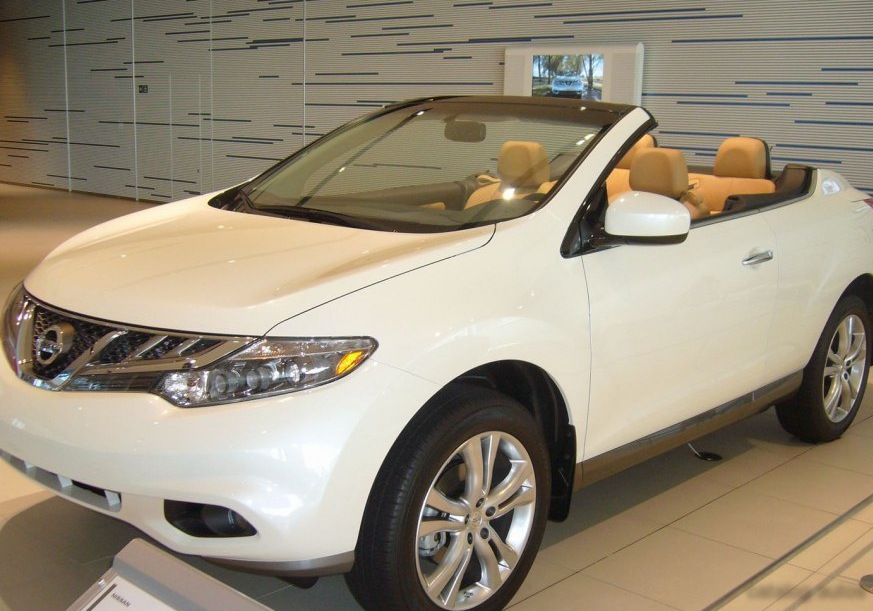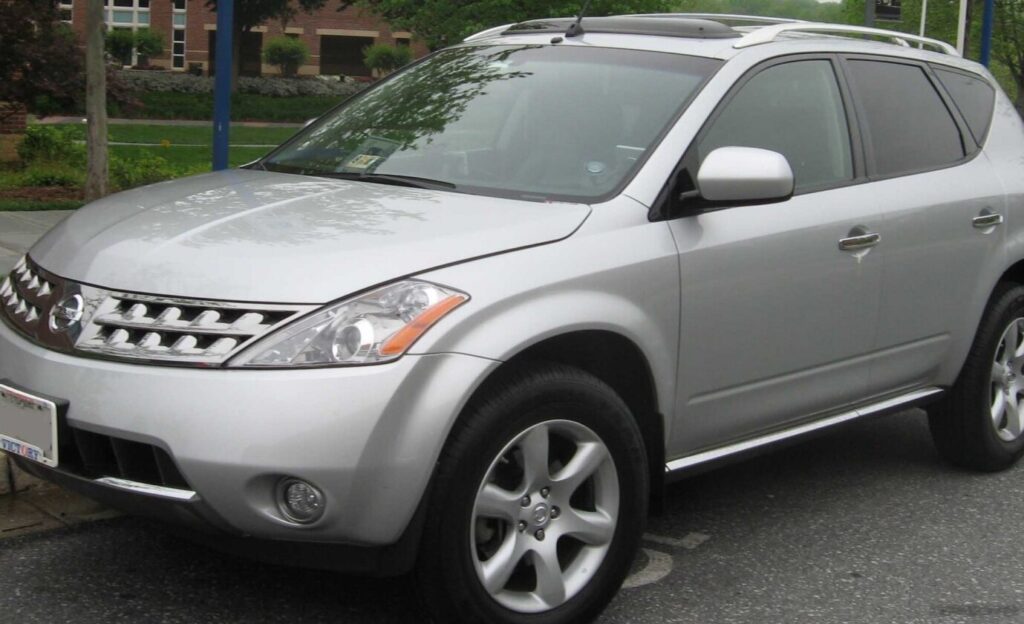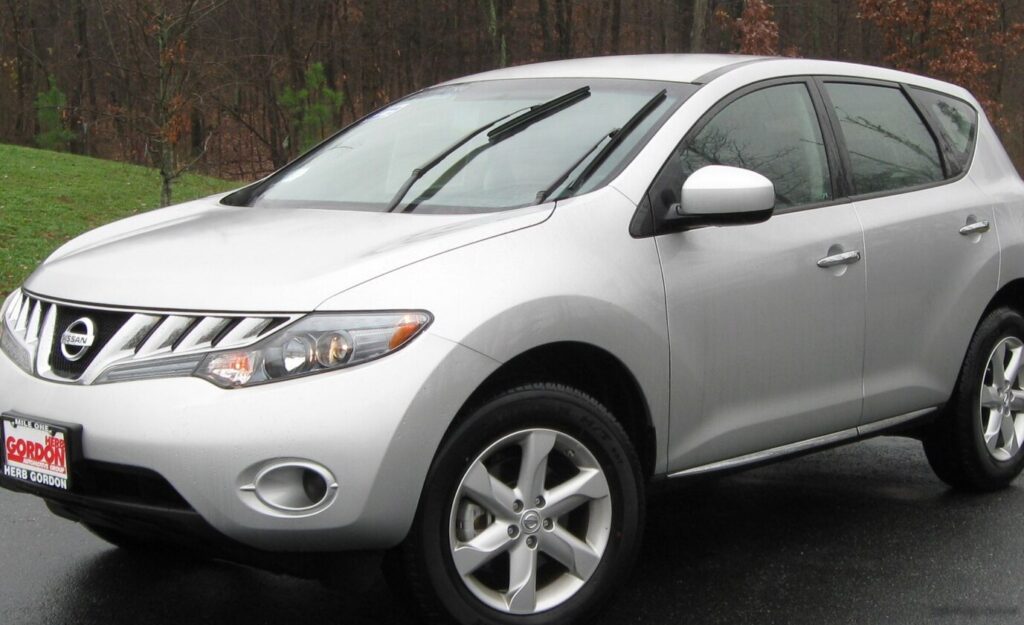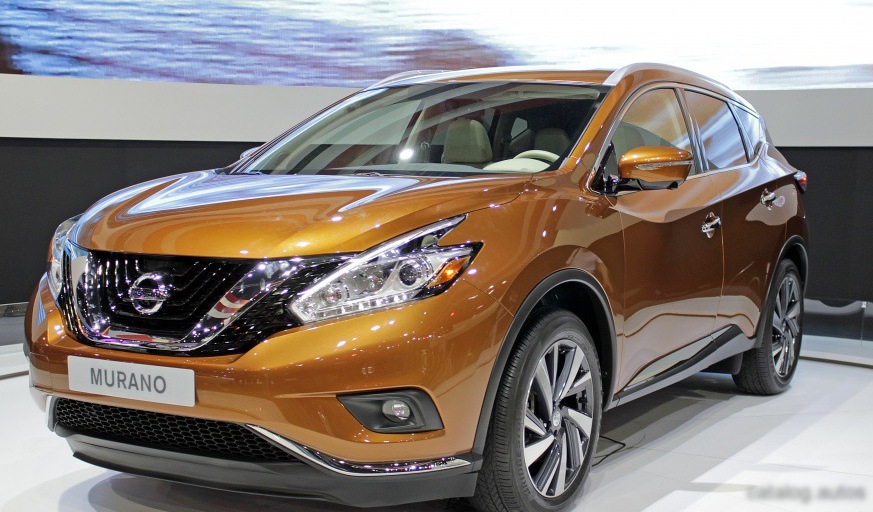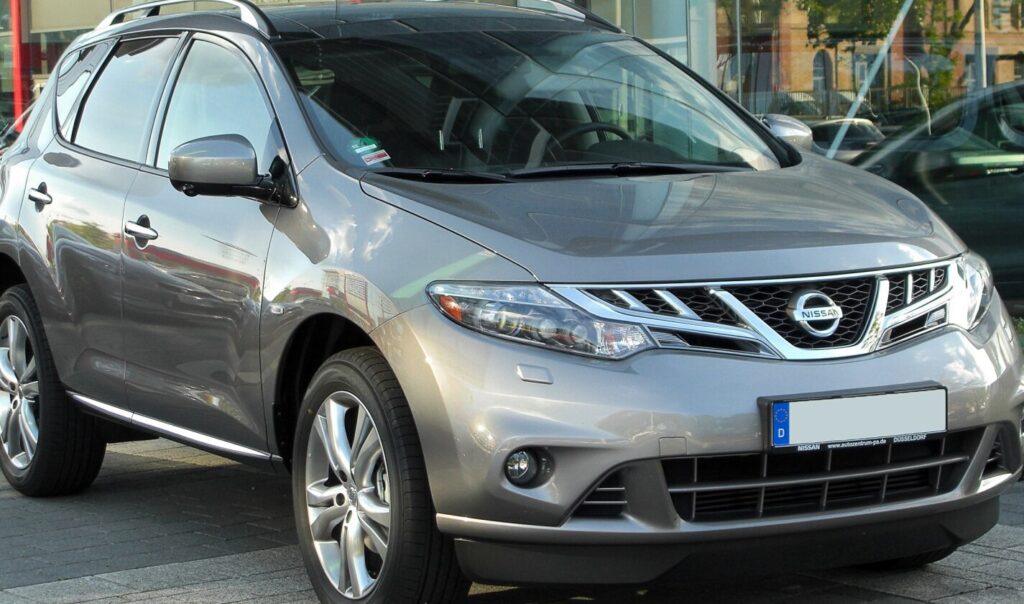
The Nissan Murano II, specifically the 2.5 dCi (190 hp) 4WD Automatic variant produced from 2010 to 2014, represents a significant iteration of Nissan’s mid-size crossover SUV. This version, part of the Z51 series and benefitting from a 2010 facelift, was primarily aimed at the European market, offering a blend of comfort, practicality, and all-weather capability. It occupied a middle ground within the Murano II lineup, positioned between the base petrol models and potentially higher-trim level options with more luxurious appointments. The 2.5 dCi model aimed to provide a more fuel-efficient and torque-rich alternative to the gasoline engines, appealing to drivers prioritizing economy and towing capacity.
Technical Specifications
| Brand | Nissan |
| Model | Murano |
| Generation | Murano II (Z51, facelift 2010) |
| Type (Engine) | 2.5 dCi (190 Hp) 4WD Automatic |
| Start of production | 2010 |
| End of production | 2014 |
| Powertrain Architecture | Internal Combustion engine |
| Body type | SUV |
| Seats | 5 |
| Doors | 5 |
| Fuel consumption (urban) | 10.1 l/100 km (23.3 US mpg, 28 UK mpg, 9.9 km/l) |
| Fuel consumption (extra urban) | 6.8 l/100 km (34.6 US mpg, 41.5 UK mpg, 14.7 km/l) |
| Fuel consumption (combined) | 8 l/100 km (29.4 US mpg, 35.3 UK mpg, 12.5 km/l) |
| CO2 emissions | 210 g/km |
| Fuel Type | Diesel |
| Acceleration 0 – 100 km/h | 10.5 sec |
| Acceleration 0 – 62 mph | 10.5 sec |
| Acceleration 0 – 60 mph | 10 sec |
| Maximum speed | 196 km/h (121.79 mph) |
| Emission standard | Euro 5 |
| Weight-to-power ratio | 9.9 kg/Hp, 101.3 Hp/tonne |
| Weight-to-torque ratio | 4.2 kg/Nm, 240 Nm/tonne |
| Power | 190 Hp @ 4000 rpm |
| Power per litre | 76.4 Hp/l |
| Torque | 450 Nm @ 2000 rpm (331.9 lb.-ft. @ 2000 rpm) |
| Engine layout | Front, Transverse |
| Engine Model/Code | YD25DDTi |
| Engine displacement | 2488 cm3 (151.83 cu. in.) |
| Number of cylinders | 4 |
| Engine configuration | Inline |
| Cylinder Bore | 89 mm (3.5 in.) |
| Piston Stroke | 100 mm (3.94 in.) |
| Compression ratio | 15:1 |
| Number of valves per cylinder | 4 |
| Fuel injection system | Diesel Commonrail |
| Engine aspiration | Turbocharger, Intercooler |
| Engine oil capacity | 6.9 l (7.29 US qt | 6.07 UK qt) |
| Coolant | 11 l (11.62 US qt | 9.68 UK qt) |
| Kerb Weight | 1875 kg (4133.67 lbs.) |
| Max. weight | 2495 kg (5500.53 lbs.) |
| Max load | 620 kg (1366.87 lbs.) |
| Trunk (boot) space – minimum | 402 l (14.2 cu. ft.) |
| Trunk (boot) space – maximum | 1825 l (64.45 cu. ft.) |
| Fuel tank capacity | 82 l (21.66 US gal | 18.04 UK gal) |
| Max. roof load | 100 kg (220.46 lbs.) |
| Permitted trailer load with brakes (12%) | 1585 kg (3494.33 lbs.) |
| Permitted trailer load without brakes | 750 kg (1653.47 lbs.) |
| Permitted towbar download | 100 kg (220.46 lbs.) |
| Length | 4860 mm (191.34 in.) |
| Width | 1885 mm (74.21 in.) |
| Height | 1720 mm (67.72 in.) |
| Wheelbase | 2825 mm (111.22 in.) |
| Front track | 1610 mm (63.39 in.) |
| Rear (Back) track | 1610 mm (63.39 in.) |
| Ride height (ground clearance) | 165 mm (6.5 in.) |
| Minimum turning circle (turning diameter) | 11.8 m (38.71 ft.) |
| Approach angle | 15.5° |
| Departure angle | 27° |
| Ramp-over (brakeover) angle | 17° |
| Drive wheel | All wheel drive (4×4) |
| Number of gears and type of gearbox | 6 gears, automatic transmission |
| Front suspension | Independent, type McPherson with coil spring and anti-roll bar |
| Rear suspension | Independent multi-link spring suspension with stabilizer |
| Front brakes | Ventilated discs |
| Rear brakes | Ventilated discs |
| Assisting systems | ABS (Anti-lock braking system) |
| Steering type | Steering rack and pinion |
| Power steering | Hydraulic Steering |
| Tires size | 235/55 R20 |
| Wheel rims size | 7.5J x 20 |
Powertrain & Engine Architecture
The heart of this Murano variant is the YD25DDTi 2.5-liter inline-four diesel engine. This engine, a mainstay in Nissan’s European lineup for several years, utilizes a common-rail direct injection system, delivering fuel at extremely high pressure for optimized combustion. The YD25DDTi is equipped with a turbocharger and intercooler, boosting power output to 190 horsepower at 4000 rpm and a substantial 450 Nm (331.9 lb-ft) of torque at 2000 rpm. This torque peak, available relatively low in the rev range, is a key characteristic of this engine, providing strong pulling power for everyday driving and towing. The engine features a cast iron block and aluminum cylinder head, contributing to its durability. The automatic transmission is a six-speed unit, chosen for its smooth operation and convenience. While not known for being the sportiest transmission, it was well-suited to the engine’s torque characteristics and the Murano’s intended role as a comfortable cruiser.
Driving Characteristics
The 2.5 dCi Automatic Murano offers a relaxed and comfortable driving experience. The abundance of low-end torque from the diesel engine means that brisk acceleration is readily available without needing to rev the engine aggressively. The six-speed automatic transmission shifts smoothly, although it can sometimes feel hesitant during quick downshifts. Compared to the petrol-powered Muranos, the diesel version provides significantly better fuel economy, making it a more economical choice for long-distance driving. However, it lacks the responsiveness and higher-revving nature of the gasoline engines. Against other diesel variants within the Murano range (if available in certain markets), the 190 hp version strikes a balance between performance and economy, offering more power than lower-output options but not quite matching the performance of any potential higher-spec diesel models.
Equipment & Trim Levels
The 2.5 dCi Automatic Murano typically came well-equipped, reflecting its positioning as a mid-range offering. Standard features generally included climate control, power windows and locks, a CD/radio system with auxiliary input, alloy wheels, and a comprehensive safety package including ABS, traction control, and multiple airbags. Higher trim levels, often denoted by specific package names, added features such as leather upholstery, a sunroof, navigation system, and premium audio system. Interior upholstery was typically cloth on the base models, with leather available as an upgrade. Dashboard configuration was consistent across the range, featuring a user-friendly layout with logically placed controls.
Chassis & Braking
The Murano II utilizes an independent suspension system all around, with a McPherson strut setup at the front and a multi-link arrangement at the rear. This provides a comfortable ride quality, effectively absorbing bumps and irregularities in the road surface. Stabilizer bars are fitted to both axles to reduce body roll during cornering. Braking duties are handled by ventilated discs on all four wheels, providing ample stopping power. The hydraulic power steering offers a light and precise feel, making it easy to maneuver the vehicle in urban environments.
Market Reception & Comparison
The Nissan Murano II 2.5 dCi Automatic was generally well-received by automotive critics in Europe. It was praised for its comfortable ride, spacious interior, and fuel-efficient diesel engine. However, some reviewers noted that the automatic transmission could feel sluggish at times, and the overall driving experience lacked the dynamism of some competitors. Compared to other diesel SUVs in its class, the Murano offered a competitive combination of features, performance, and price. Its fuel economy was generally comparable to rivals, and its reliability proved to be reasonably good.
Legacy
The YD25DDTi engine, while generally robust, is known to require regular maintenance, particularly regarding the diesel particulate filter (DPF). Ensuring the DPF is properly maintained and that the engine oil is changed at the recommended intervals is crucial for long-term reliability. In the used car market, the 2.5 dCi Automatic Murano represents a good value proposition, offering a comfortable and practical SUV at an affordable price. However, potential buyers should be aware of the potential maintenance costs associated with the diesel engine and DPF system. Overall, this variant remains a popular choice for those seeking a capable and comfortable crossover SUV with good fuel economy.