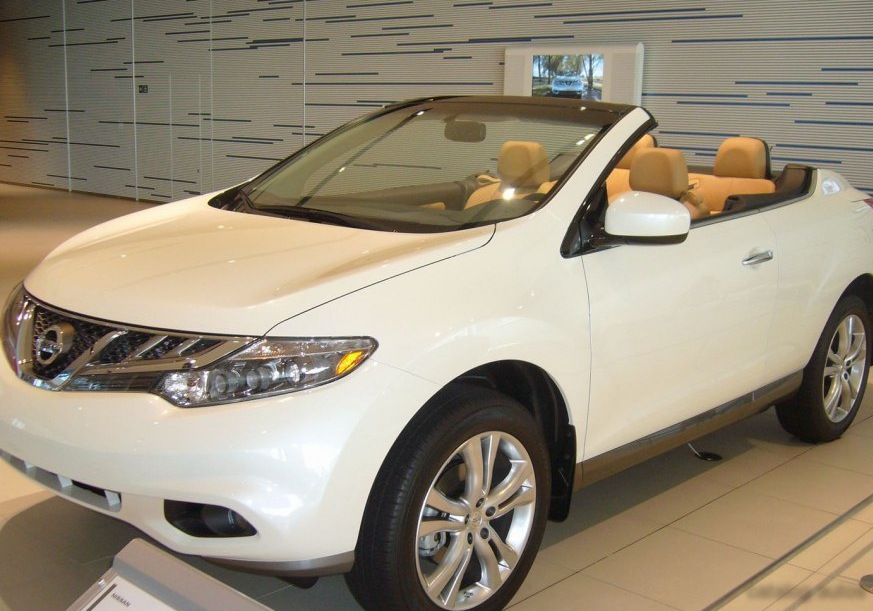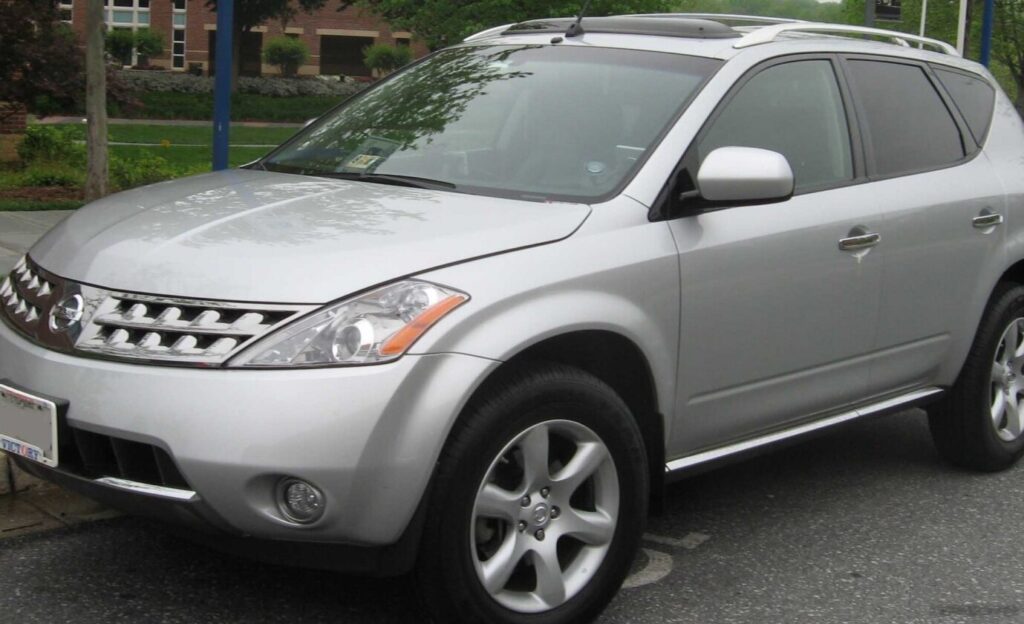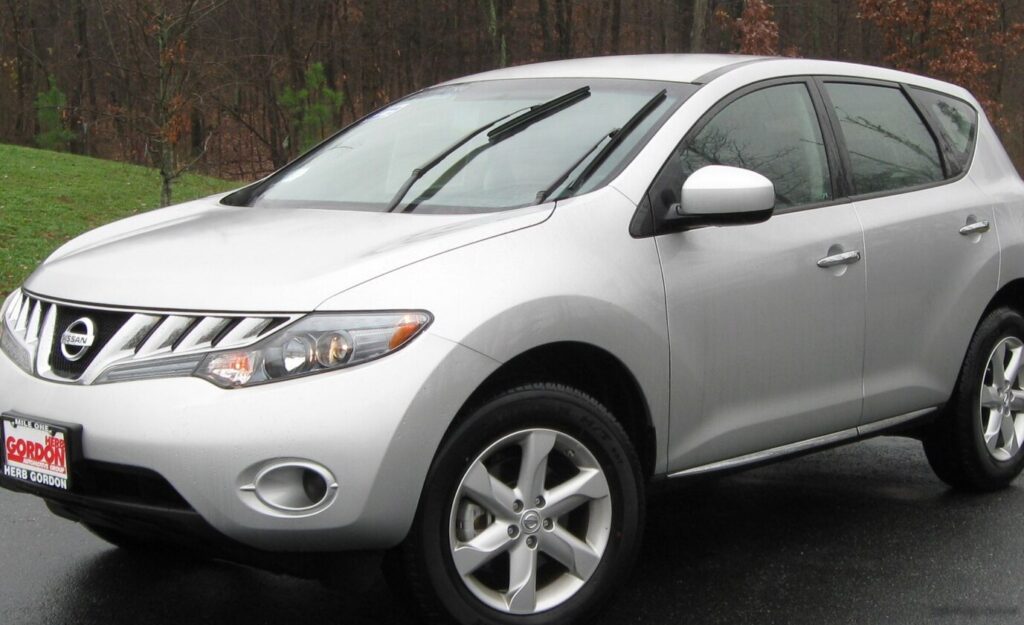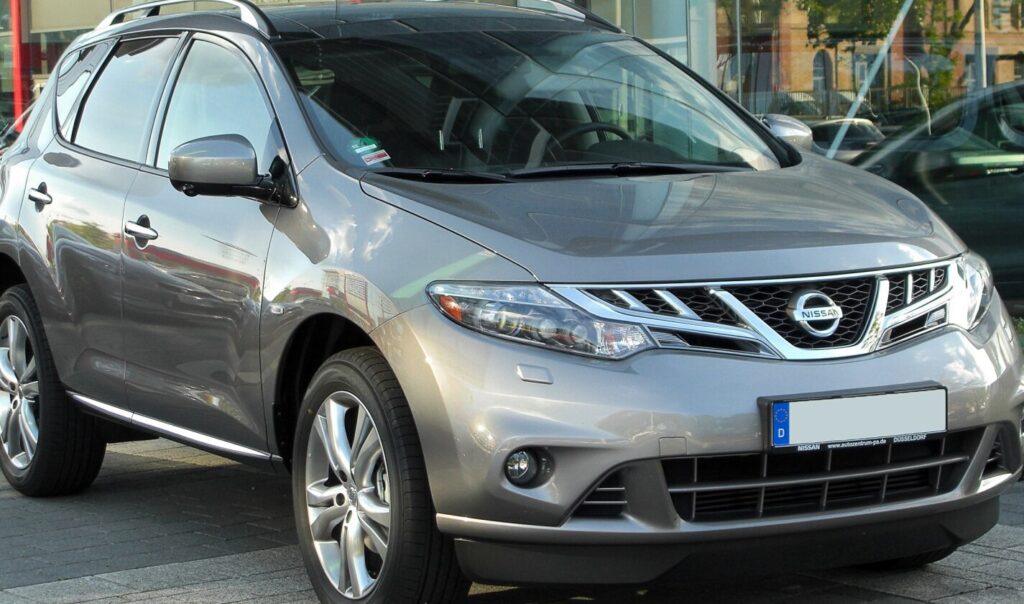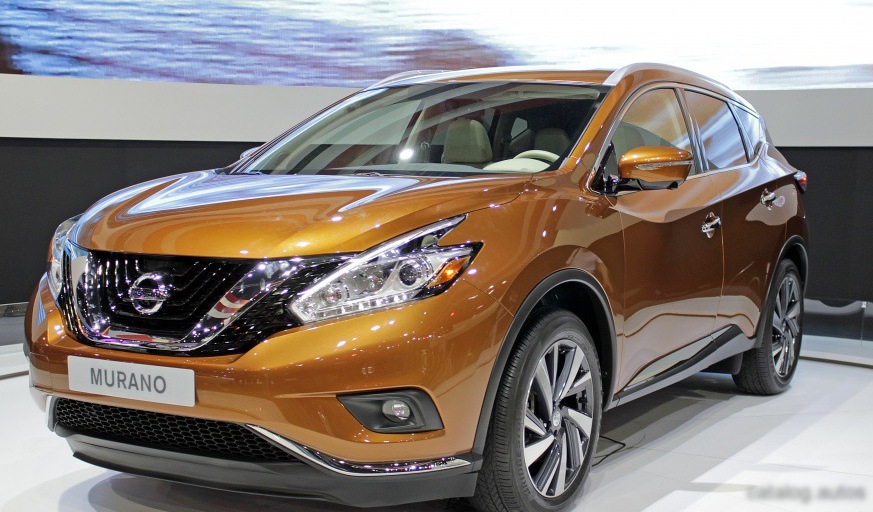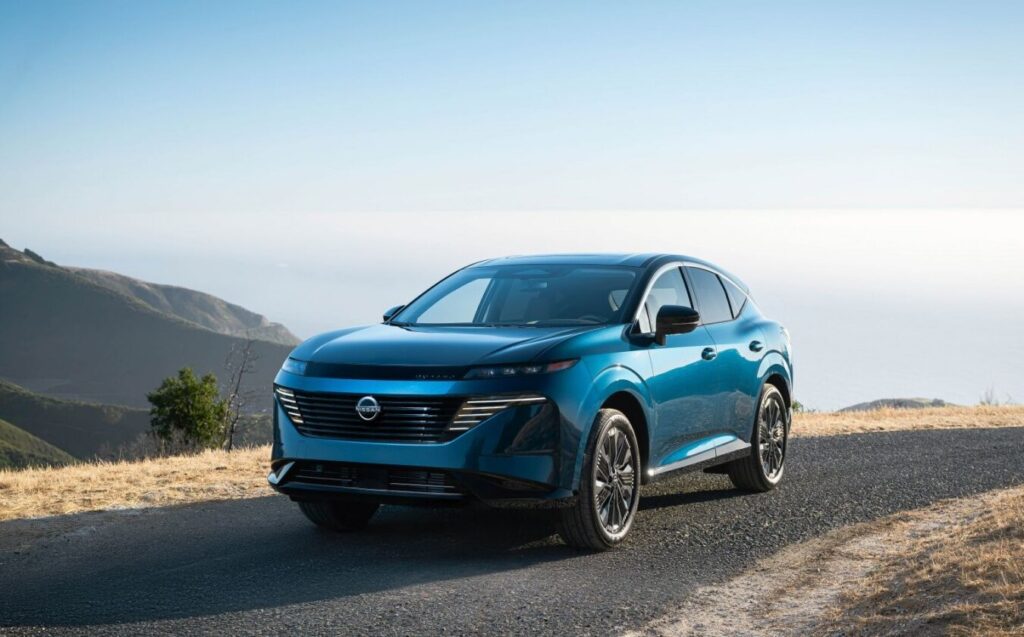
The Nissan Murano IV, designated as the Z53 series, represents the fourth generation of Nissan’s mid-size crossover SUV. Introduced in October 2024, the Z53 Murano continues Nissan’s tradition of offering a comfortable and technologically advanced SUV for the North American market, where it primarily competes with vehicles like the Ford Edge, Honda Passport, and Toyota Venza. The 2.0 VC-Turbo (241 Hp) Automatic variant occupies a key position in the lineup, offering a balance of performance and efficiency aimed at buyers seeking a more engaging driving experience than the base engine provides. This model is exclusively offered with a continuously variable transmission (CVT) and front-wheel drive.
Technical Specifications
| Brand | Nissan |
| Model | Murano |
| Generation | Murano IV (Z53) |
| Type (Engine) | 2.0 VC-Turbo (241 Hp) Automatic |
| Start of production | October, 2024 |
| Powertrain Architecture | Internal Combustion engine |
| Body type | SUV |
| Seats | 5 |
| Doors | 5 |
| Fuel consumption (economy) – urban (EPA) | 10.2 l/100 km (23.1 US mpg, 27.7 UK mpg, 9.8 km/l) |
| Fuel consumption (economy) – extra urban (EPA) | 9.8 l/100 km (24 US mpg, 28.8 UK mpg, 10.2 km/l) |
| Fuel consumption (economy) – combined (EPA) | 10.2 l/100 km (23.1 US mpg, 27.7 UK mpg, 9.8 km/l) |
| Fuel Type | Petrol (Gasoline) |
| Emission standard | LEV3-ULEV50 |
| Weight-to-power ratio | 7.9 kg/Hp, 126.7 Hp/tonne |
| Weight-to-torque ratio | 5.4 kg/Nm, 185.6 Nm/tonne |
| Power | 241 Hp @ 5600 rpm |
| Power per litre | 120.7 Hp/l |
| Torque | 353 Nm @ 4400 rpm (260.36 lb.-ft. @ 4400 rpm) |
| Maximum engine speed | 6000 rpm |
| Engine layout | Front, Transverse |
| Engine Model/Code | KR20DDET |
| Engine displacement | 1997 cm3 (121.86 cu. in.) |
| Number of cylinders | 4 |
| Engine configuration | Inline |
| Cylinder Bore | 84 mm (3.31 in.) |
| Piston Stroke | 90.1 mm (3.55 in.) |
| Compression ratio | 14:1 |
| Number of valves per cylinder | 4 |
| Fuel injection system | Direct injection and Multi-port manifold injection |
| Engine aspiration | Twin-scroll turbo, Intercooler |
| Valvetrain | DOHC, VTCS |
| Kerb Weight | 1902 kg (4193.19 lbs.) |
| Max. weight | 2540 kg (5599.74 lbs.) |
| Max load | 638 kg (1406.55 lbs.) |
| Trunk (boot) space – minimum | 932 l (32.91 cu. ft.) |
| Trunk (boot) space – maximum | 1798 l (63.5 cu. ft.) |
| Fuel tank capacity | 71 l (18.76 US gal, 15.62 UK gal) |
| Permitted trailer load with brakes (12%) | 680 kg (1499.14 lbs.) |
| Length | 4900 mm (192.91 in.) |
| Width | 1981 mm (77.99 in.) |
| Height | 1725 mm (67.91 in.) |
| Wheelbase | 2824 mm (111.18 in.) |
| Front track | 1694 mm (66.69 in.) |
| Rear (Back) track | 1694 mm (66.69 in.) |
| Ride height (ground clearance) | 211 mm (8.31 in.) |
| Drag coefficient (Cd) | 0.34 |
| Approach angle | 17.4° |
| Departure angle | 23.8° |
| Ramp-over (brakeover) angle | 17.4° |
| Drivetrain Architecture | The Internal combustion engine (ICE) drives the front wheels of the vehicle. |
| Drive wheel | Front wheel drive |
| Number of gears and type of gearbox | 9 gears, automatic transmission |
| Front suspension | Independent, type McPherson with coil spring and anti-roll bar |
| Rear suspension | Independent multi-link spring suspension with stabilizer |
| Front brakes | Ventilated discs, 350×30 mm |
| Rear brakes | Ventilated discs, 330×16 mm |
| Assisting systems | ABS (Anti-lock braking system) |
| Steering type | Steering rack and pinion |
| Power steering | Electric Steering |
| Tires size | 255/55 R20; 255/50 R21 |
| Wheel rims size | 20; 21 |
INTRODUCTION
The Nissan Murano IV Z53 2.0 VC-Turbo Automatic represents a significant step forward in the Murano lineage, particularly in terms of powertrain technology. Introduced for the 2024 model year, this variant is built on Nissan’s D platform, shared with models like the Altima and Pathfinder. It aims to deliver a more refined and responsive driving experience compared to the base 3.5-liter V6 engine, while maintaining the Murano’s reputation for comfort and spaciousness. The “VC-Turbo” designation refers to Nissan’s Variable Compression-Ratio (VCR) turbocharged engine, a key innovation designed to optimize both power and fuel efficiency.
Powertrain & Engine Architecture
At the heart of the Murano 2.0 VC-Turbo is the KR20DDET engine, a 1.997-liter inline-four cylinder powerplant. The defining feature of this engine is its variable compression ratio technology, which allows the piston stroke to be adjusted dynamically between 8:1 and 14:1. This adjustment is controlled by a sophisticated system of actuators and sensors, optimizing combustion for different driving conditions. Lower compression ratios are used for high-load situations to prevent knocking, while higher ratios are employed during cruising to maximize fuel economy. The engine utilizes direct injection and multi-port fuel injection, further enhancing efficiency and performance. A twin-scroll turbocharger with an intercooler provides forced induction, boosting output to 241 horsepower and 353 Nm (260.36 lb-ft) of torque. The engine is paired exclusively with a Jatco-sourced 9-speed automatic transmission, which delivers smooth and efficient power delivery. This transmission is tuned for comfort and fuel economy, with gear ratios optimized for everyday driving.
Driving Characteristics
The 2.0 VC-Turbo Automatic Murano offers a noticeably different driving experience compared to the V6 model. While the V6 provides more raw power, the VC-Turbo engine delivers a broader, more usable powerband. The continuously variable transmission (CVT) contributes to smooth acceleration, although it lacks the traditional gear changes of a conventional automatic. The 9-speed CVT is programmed to mimic traditional gear shifts under hard acceleration, providing a more engaging feel. The variable compression technology is largely transparent to the driver, but it contributes to improved fuel economy and a quieter engine note. Compared to manual transmission options (not available with this engine), the CVT prioritizes efficiency and ease of use over outright performance. The front-wheel-drive configuration provides adequate traction for most driving conditions, but all-weather tires are recommended for areas with significant snow or ice.
Equipment & Trim Levels
The 2.0 VC-Turbo Automatic trim typically sits in the mid-range of the Murano lineup. Standard features generally include Nissan’s Safety Shield 360 suite of driver-assistance technologies, which encompasses automatic emergency braking, blind-spot monitoring, lane departure warning, and rear cross-traffic alert. Interior amenities typically include leather upholstery, heated front seats, a power-adjustable driver’s seat, and a touchscreen infotainment system with Apple CarPlay and Android Auto compatibility. Optional extras often include a panoramic sunroof, premium audio system, and navigation system. The dashboard layout is modern and user-friendly, with a focus on intuitive controls and a comfortable cabin environment.
Chassis & Braking
The Murano Z53 utilizes an independent suspension system at all four corners. The front suspension employs a McPherson strut design with coil springs and an anti-roll bar, while the rear suspension features a multi-link setup with a stabilizer bar. This configuration provides a comfortable ride quality and predictable handling. Braking duties are handled by ventilated discs on all four wheels, with the front discs measuring 350x30mm and the rear discs measuring 330x16mm. The braking system is augmented by an anti-lock braking system (ABS) and electronic brake-force distribution (EBD). Steering is provided by an electric power steering system, which offers light and precise control.
Market Reception & Comparison
The 2.0 VC-Turbo engine has been generally well-received by automotive critics, who praise its innovative technology and fuel efficiency. However, some reviewers have noted that the CVT transmission can feel somewhat disconnected, and the engine’s performance, while adequate, doesn’t quite match the V6 model in terms of outright acceleration. Compared to the 3.5-liter V6, the 2.0 VC-Turbo offers improved fuel economy, particularly in city driving. Reliability has been generally good, although some early reports suggested potential issues with the variable compression system. Nissan has addressed these concerns with software updates and revised components.
Legacy
The KR20DDET engine represents a significant technological achievement for Nissan, showcasing the company’s commitment to innovation in powertrain design. The Murano 2.0 VC-Turbo Automatic is likely to hold its value reasonably well in the used car market, particularly as the benefits of the variable compression technology become more widely recognized. The long-term reliability of the VC-Turbo engine remains to be fully assessed, but early indications suggest that it is a durable and dependable powerplant when properly maintained. The Z53 Murano, with its blend of comfort, technology, and efficiency, continues to be a competitive offering in the mid-size crossover SUV segment.