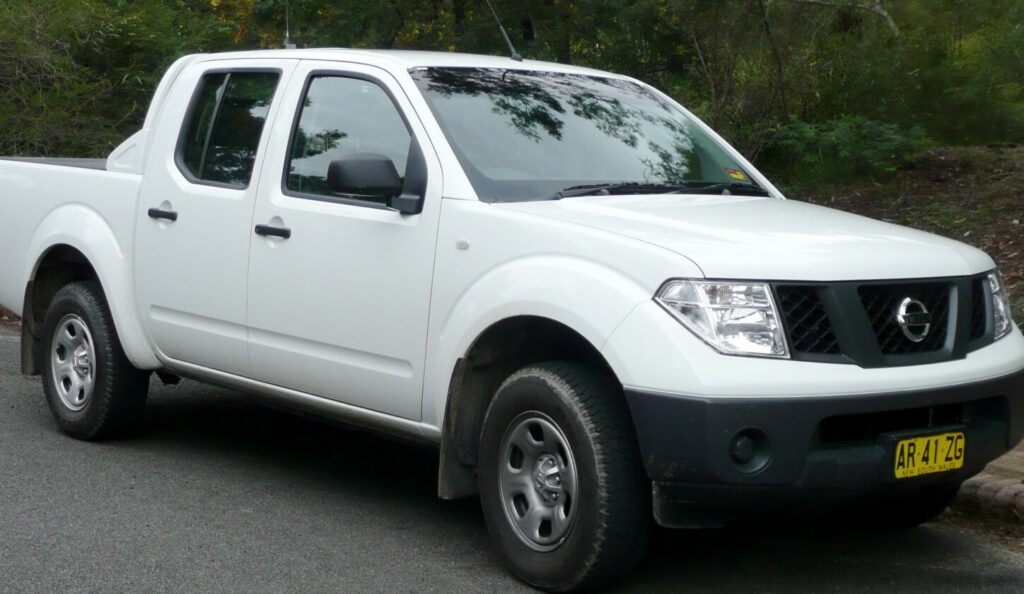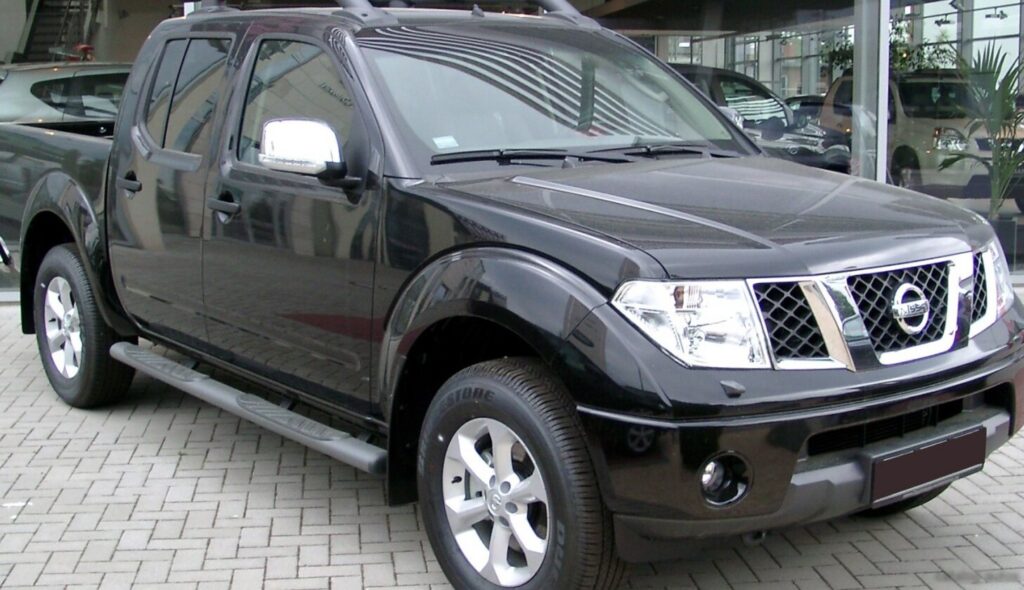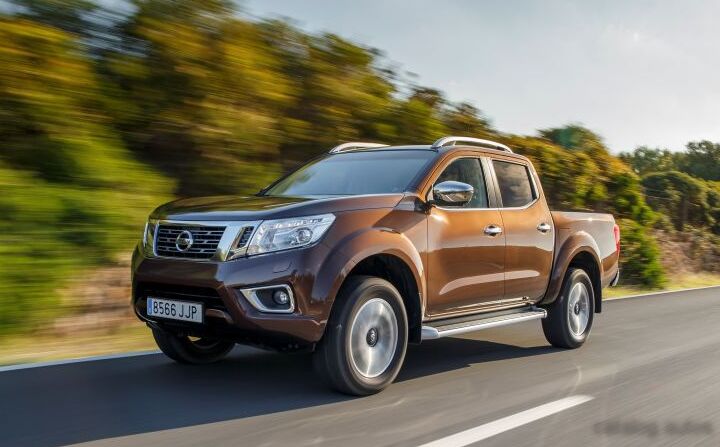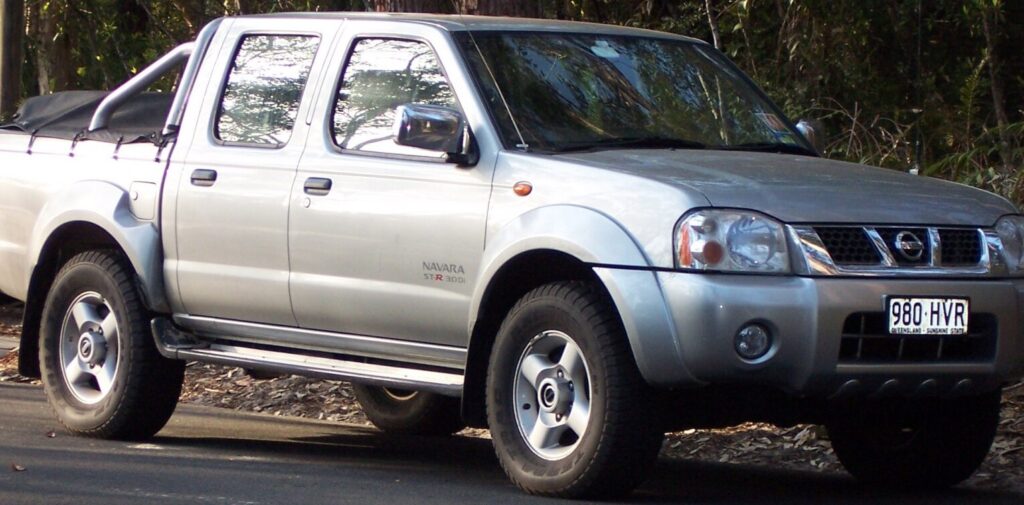
The Nissan Navara II, designated the D22 series, was a mid-size pickup truck produced by Nissan from 1998 to 2004. Representing the second generation of the Navara (known as the Frontier in North America), the D22 aimed to modernize Nissan’s presence in the increasingly competitive pickup truck market. The 3.0 Td Double Cab 4WD variant, producing 148 horsepower, occupied a significant position within the D22 lineup, offering a balance between capability, passenger space, and fuel efficiency. This model was particularly important in markets outside of North America, where diesel engines were favored for their torque and economy.
Technical Specifications
| Brand | Nissan |
| Model | Navara |
| Generation | Navara II (D22) |
| Type | 3.0 Td Double Cab 4WD (148 Hp) |
| Start of production | 1998 |
| End of production | 2004 |
| Powertrain Architecture | Internal Combustion engine |
| Body type | Pick-up |
| Seats | 5 |
| Doors | 4 |
| Fuel Type | Diesel |
| Power | 148 Hp @ 3400 rpm |
| Power per litre | 50.1 Hp/l |
| Torque | 314 Nm @ 2000 rpm / 231.59 lb.-ft. @ 2000 rpm |
| Engine layout | Front, Longitudinal |
| Engine displacement | 2953 cm3 / 180.2 cu. in. |
| Number of cylinders | 4 |
| Engine configuration | Inline |
| Cylinder Bore | 96 mm / 3.78 in. |
| Piston Stroke | 102 mm / 4.02 in. |
| Number of valves per cylinder | 4 |
| Fuel injection system | Diesel Commonrail |
| Engine aspiration | Turbocharger |
| Valvetrain | DOHC |
| Fuel tank capacity | 80 l / 21.13 US gal | 17.6 UK gal |
| Length | 5220 mm / 205.51 in. |
| Width | 1850 mm / 72.83 in. |
| Height | 1774 mm / 69.84 in. |
| Wheelbase | 3200 mm / 125.98 in. |
| Front track | 1570 mm / 61.81 in. |
| Rear track | 1570 mm / 61.81 in. |
| Minimum turning circle | 13.4 m / 43.96 ft. |
| Drive wheel | All wheel drive (4×4) |
| Number of gears | 5 |
| Gearbox type | Manual transmission |
| Front suspension | Double wishbone |
| Rear suspension | Leaf spring |
| Front brakes | Ventilated discs |
| Rear brakes | Drum |
| Assisting systems | ABS (Anti-lock braking system) |
| Steering type | Steering rack and pinion |
Powertrain & Engine Architecture
The heart of the Navara II 3.0 Td Double Cab 4WD was the YD30DDTi 3.0-liter inline-four cylinder diesel engine. This engine utilized a common rail direct injection system, a significant advancement over earlier diesel designs. Common rail injection allowed for more precise fuel delivery, resulting in improved combustion efficiency, reduced noise, and increased power output. The engine was turbocharged, further enhancing performance. The DOHC (Double Overhead Camshaft) valvetrain, with four valves per cylinder, contributed to improved breathing and overall engine efficiency. The YD30 engine was known for its robust construction and relatively simple design, making it easier to maintain compared to some of its more technologically advanced competitors. The five-speed manual transmission was the standard offering for this variant, providing a direct connection between the engine and the wheels.
Driving Characteristics
The 148 horsepower and 314 Nm (231.59 lb-ft) of torque delivered by the 3.0 Td engine provided a good balance of power and usability. While not a performance-oriented pickup, the Navara II 3.0 Td offered sufficient power for everyday driving and hauling moderate loads. The torque curve was relatively flat, providing strong pulling power from low engine speeds, which was particularly beneficial when towing or navigating challenging terrain. Compared to the gasoline-powered versions of the D22, the diesel offered significantly better fuel economy and a more relaxed driving experience on the highway. The manual transmission allowed for greater driver control, but the gear ratios were tuned more for fuel efficiency and durability than outright acceleration. Compared to later, more powerful iterations of the YD30 engine, this 148 hp version felt less strained under heavy loads, potentially contributing to its longevity.
Equipment & Trim Levels
The Double Cab configuration of the Navara II provided seating for five passengers, making it a practical choice for families or work crews. Standard equipment on the 3.0 Td 4WD variant typically included air conditioning, power steering, and a basic audio system. Higher trim levels offered features such as alloy wheels, upgraded interior upholstery, and a more comprehensive audio system. Optional extras included a limited-slip differential, a tow hitch, and various accessories for the cargo bed. The interior design was functional and durable, prioritizing practicality over luxury. The dashboard layout was straightforward, with easy-to-read gauges and logically placed controls.
Chassis & Braking
The D22 Navara II utilized a body-on-frame construction, providing a robust and durable platform for demanding applications. The front suspension featured a double wishbone design, offering a comfortable ride and good handling characteristics. The rear suspension employed leaf springs, which were well-suited for carrying heavy loads. The 4WD system offered selectable four-wheel drive, allowing drivers to switch between two-wheel drive for fuel efficiency and four-wheel drive for increased traction in off-road conditions. Braking duties were handled by ventilated discs at the front and drum brakes at the rear. ABS (Anti-lock Braking System) was standard, enhancing safety by preventing wheel lockup during hard braking.
Market Reception & Comparison
The Nissan Navara II 3.0 Td Double Cab 4WD was generally well-received in markets where diesel-powered pickups were popular. Critics praised its robust construction, fuel efficiency, and capable 4WD system. Compared to other pickups in its class, such as the Toyota Hilux and Mitsubishi L200, the Navara II offered a competitive combination of features and value. The 148 hp diesel engine was considered adequate for most tasks, but some reviewers noted that it lacked the outright power of some of its rivals. However, the Navara II’s relatively simple design and durable components contributed to its reputation for reliability.
Legacy
The Nissan Navara II, particularly the 3.0 Td variants, has maintained a solid reputation for reliability and durability in the used car market. The YD30 engine, while not without its potential issues (such as potential for timing chain wear if maintenance is neglected), is generally considered a robust and long-lasting powerplant. These vehicles are often sought after by those looking for a capable and affordable pickup truck for work or recreational purposes. The D22 Navara II represents a significant step forward in Nissan’s pickup truck offerings, laying the foundation for the more refined and technologically advanced Navara models that followed. Today, well-maintained examples of the 3.0 Td Double Cab 4WD continue to provide reliable service to owners around the world.