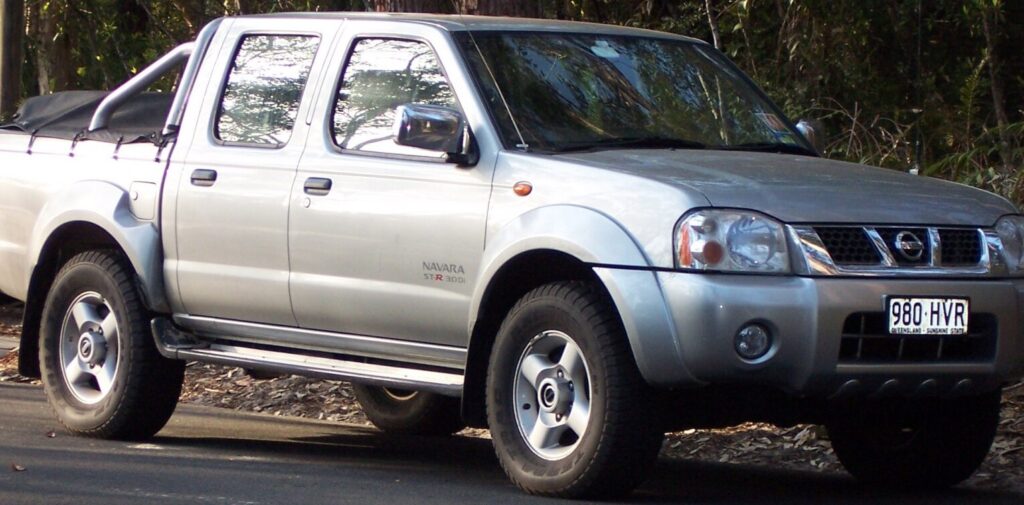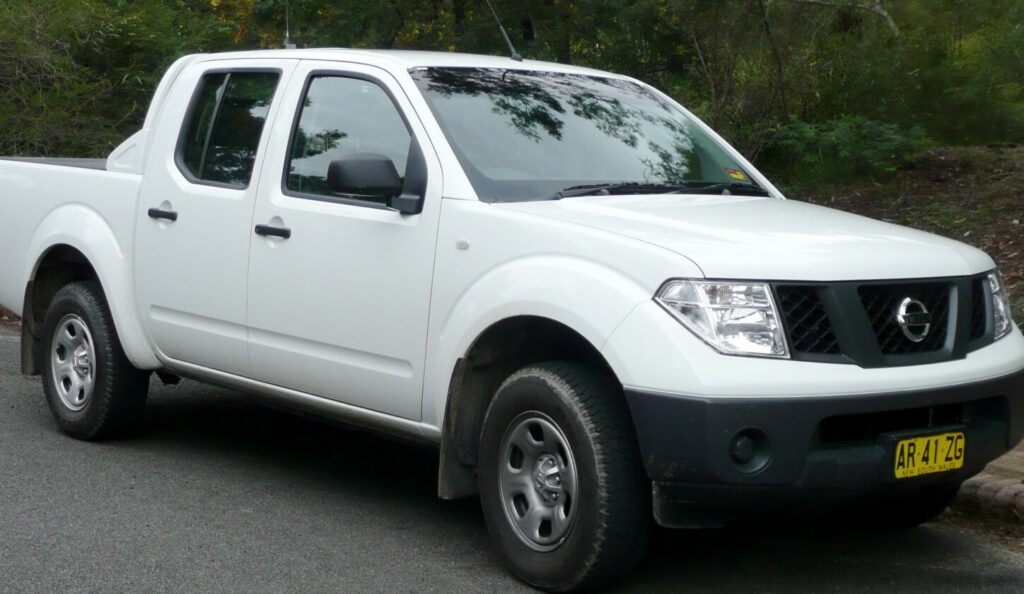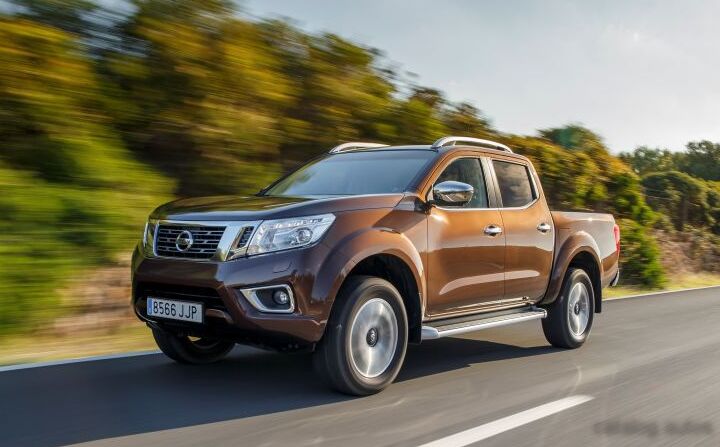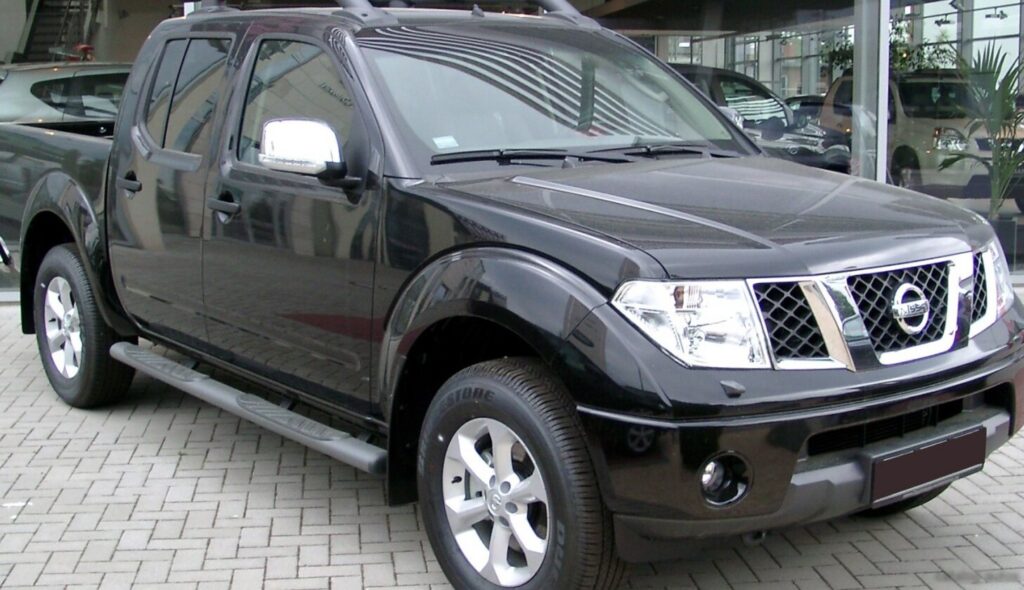
The Nissan Navara III, specifically the facelifted version introduced in 2010, represented a significant update to Nissan’s mid-size pickup truck offering. The 2.5 dCi variant, producing 190 horsepower, was a key engine option during the 2010-2015 production run. This model aimed to balance performance, fuel efficiency, and practicality for both commercial and personal use, primarily targeting the European, Australian, and Latin American markets. The D40 series Navara was known for its robust build and relatively comfortable ride compared to some of its competitors, and the 2010 facelift brought styling revisions and improvements to the interior.
Technical Specifications
| Brand | Nissan |
| Model | Navara |
| Generation | Navara III (D40 facelift 2010) |
| Type (Engine) | 2.5 dCi (190 Hp) |
| Start of production | 2010 |
| End of production | 2015 |
| Powertrain Architecture | Internal Combustion engine |
| Body type | Pick-up |
| Seats | 4 |
| Doors | 4 |
| Fuel consumption (urban) | 10.6 l/100 km (22.2 US mpg, 26.6 UK mpg, 9.4 km/l) |
| Fuel consumption (extra urban) | 7 l/100 km (33.6 US mpg, 40.4 UK mpg, 14.3 km/l) |
| Fuel consumption (combined) | 8.3 l/100 km (28.3 US mpg, 34 UK mpg, 12 km/l) |
| Fuel Type | Diesel |
| Acceleration 0 – 100 km/h | 11.7 sec |
| Acceleration 0 – 62 mph | 11.7 sec |
| Acceleration 0 – 60 mph | 11.1 sec |
| Maximum speed | 172 km/h (106.88 mph) |
| Emission standard | Euro 5 |
| Weight-to-power ratio | 9.6 kg/Hp, 104.7 Hp/tonne |
| Weight-to-torque ratio | 4.5 kg/Nm, 222 Nm/tonne |
| Power | 190 Hp @ 4000 rpm |
| Power per litre | 76.4 Hp/l |
| Torque | 403 Nm @ 2000 rpm (297.24 lb.-ft. @ 2000 rpm) |
| Engine layout | Front, Transverse |
| Engine Model/Code | YD25DDTi |
| Engine displacement | 2488 cm3 (151.83 cu. in.) |
| Number of cylinders | 4 |
| Engine configuration | Inline |
| Number of valves per cylinder | 4 |
| Fuel injection system | Diesel Commonrail |
| Engine aspiration | Turbocharger, Intercooler |
| Engine oil capacity | 6.9 l (7.29 US qt | 6.07 UK qt) |
| Coolant capacity | 10.2 l (10.78 US qt | 8.97 UK qt) |
| Kerb Weight | 1815 kg (4001.39 lbs.) |
| Max. weight | 2805 kg (6183.97 lbs.) |
| Max load | 990 kg (2182.58 lbs.) |
| Fuel tank capacity | 80 l (21.13 US gal | 17.6 UK gal) |
| Length | 5222 mm (205.59 in.) |
| Width | 1848 mm (72.76 in.) |
| Height | 1773 mm (69.8 in.) |
| Wheelbase | 3200 mm (125.98 in.) |
| Minimum turning circle | 13.2 m (43.31 ft.) |
| Drivetrain Architecture | The Internal combustion engine (ICE) drives the front wheels of the vehicle. |
| Drive wheel | Front wheel drive |
| Number of gears | 6 gears, manual transmission |
| Front brakes | Ventilated discs |
| Rear brakes | Ventilated discs |
| Assisting systems | ABS (Anti-lock braking system) |
| Steering type | Steering rack and pinion |
| Power steering | Hydraulic Steering |
| Tires size | 235/70 R16; 255/65 R17 |
| Wheel rims size | 16; 17 |
INTRODUCTION
The Nissan Navara III (D40) facelift, launched in 2010, built upon the foundation of the original D40 platform introduced in 2005. This refresh included revised front-end styling, interior upgrades, and importantly, engine refinements. The 2.5 dCi 190 hp variant occupied a middle ground in the Navara lineup, offering a balance between the lower-powered versions geared towards utility and the higher-output models aimed at more demanding performance. It was positioned as a versatile option for both work and leisure, appealing to a broad range of buyers. The D40 Navara competed directly with popular pickups like the Toyota Hilux, Ford Ranger, and Mitsubishi L200.
Powertrain & Engine Architecture
The heart of the 2.5 dCi 190 hp Navara is the YD25DDTi engine, a 2.5-liter inline-four cylinder diesel. This engine utilizes a common rail direct injection system, delivering fuel at extremely high pressure for improved combustion efficiency and reduced emissions. The turbocharger, coupled with an intercooler, forces more air into the cylinders, boosting power output. The engine features four valves per cylinder (DOHC) and is known for its relatively robust construction. The 190 hp version represents an increase in power over earlier iterations of the YD25 engine, achieved through refinements to the fuel injection system and turbocharger mapping. This particular variant was exclusively offered with a six-speed manual transmission, providing precise control and efficient gear changes. The transmission’s gear ratios were tuned to maximize both towing capacity and fuel economy.
Driving Characteristics
The 190 hp 2.5 dCi Navara offered a noticeable step up in performance compared to the lower-powered versions. While not a sports truck, it provided ample torque for hauling loads and navigating challenging terrain. The 403 Nm (297 lb-ft) of torque, available from 2000 rpm, made it particularly adept at towing. The six-speed manual transmission allowed drivers to keep the engine in its optimal power band. Compared to the lower-powered models, the 190 hp version felt more relaxed on the highway and offered quicker acceleration. However, it didn’t possess the outright speed of some of its competitors with larger displacement engines. The ride quality, while improved over earlier Navaras, remained typical for a body-on-frame pickup truck – firm but generally comfortable for everyday use.
Equipment & Trim Levels
The 2.5 dCi 190 hp Navara was typically offered in mid-range trim levels, often designated as “SE” or “LE” depending on the specific market. Standard equipment generally included air conditioning, power windows, power mirrors, a CD player with auxiliary input, and basic safety features like ABS and driver/passenger airbags. Higher trim levels added features such as alloy wheels, a leather-wrapped steering wheel, upgraded audio systems, and climate control. Optional extras included a navigation system, rear parking sensors, and a bed liner. Interior upholstery was typically cloth, with leather options available on higher-spec models. The dashboard layout was functional and straightforward, prioritizing usability over luxury.
Chassis & Braking
The Navara III utilized a traditional body-on-frame construction, providing a robust and durable platform. The suspension consisted of double wishbones at the front and a multi-leaf spring setup at the rear. The rear leaf springs were designed to handle heavy loads. Braking duties were handled by ventilated discs on all four wheels, providing adequate stopping power. ABS (Anti-lock Braking System) was standard, enhancing safety during emergency braking situations. Steering was rack-and-pinion with hydraulic power assistance, offering a reasonable level of precision and feedback. The chassis was designed to accommodate both two-wheel drive and four-wheel drive configurations, with the 2.5 dCi 190 hp model commonly available in both.
Market Reception & Comparison
The Nissan Navara III 2.5 dCi 190 hp received generally positive reviews from automotive critics. It was praised for its strong engine, comfortable ride (for a pickup), and practical interior. However, some critics noted that the interior materials weren’t as refined as those found in some of its competitors. Compared to the lower-powered Navara variants, the 190 hp model offered a significant improvement in performance, making it a more appealing option for those who frequently tow or carry heavy loads. Fuel economy was competitive within its class, averaging around 28.3 US mpg in combined driving. Reliability was generally good, although some owners reported issues with the diesel particulate filter (DPF) system, a common concern with modern diesel engines.
Legacy
The Nissan Navara III 2.5 dCi 190 hp remains a popular choice in the used car market. Its robust engine and durable construction have proven to be reliable over time. While the DPF system can require maintenance, the engine itself is generally considered to be long-lasting. The availability of parts is good, and repair costs are relatively reasonable. The D40 Navara, including the 2.5 dCi 190 hp variant, has earned a reputation as a capable and practical pickup truck, making it a solid option for buyers seeking a dependable workhorse or a versatile vehicle for both work and play.