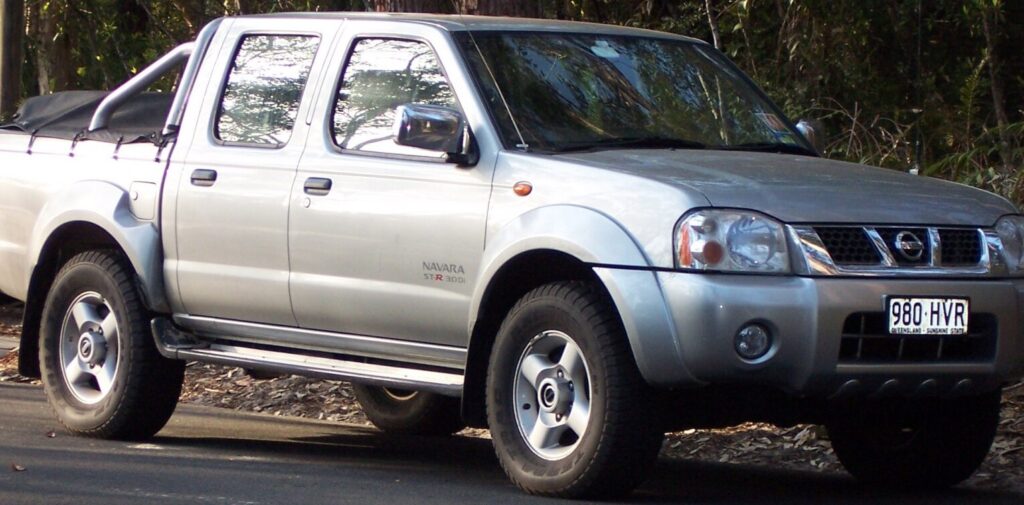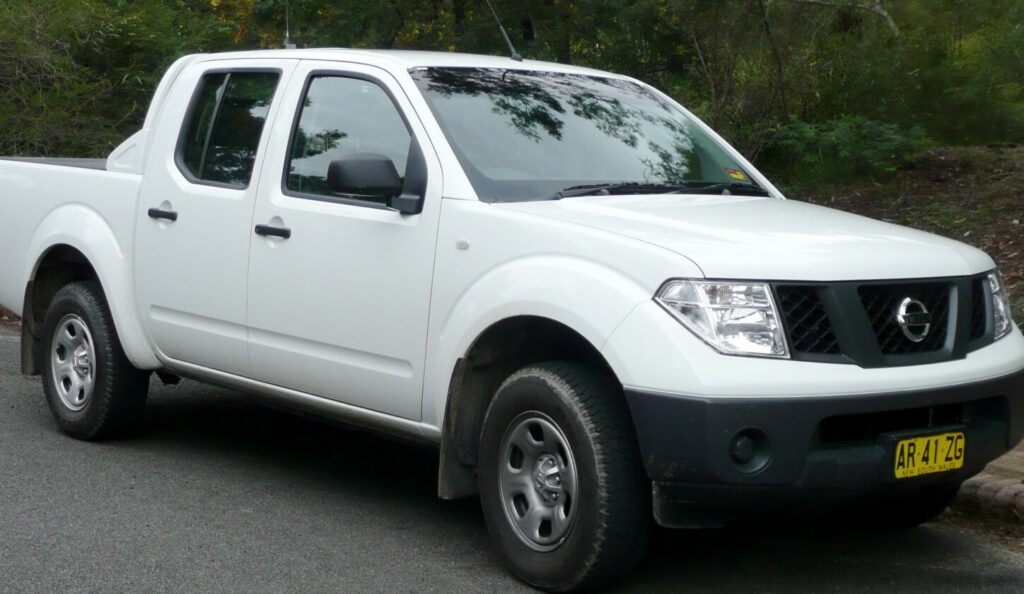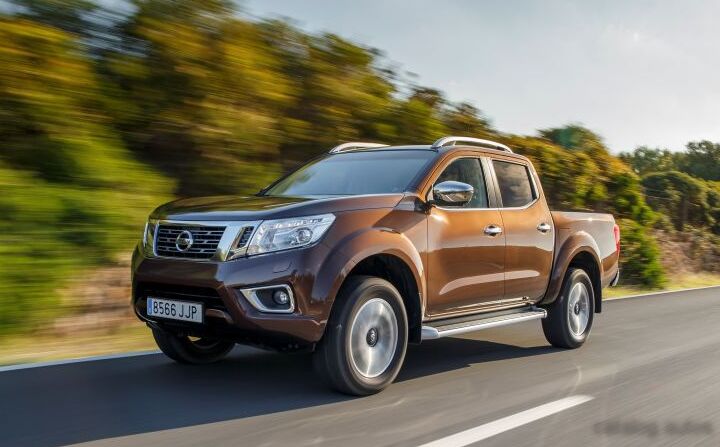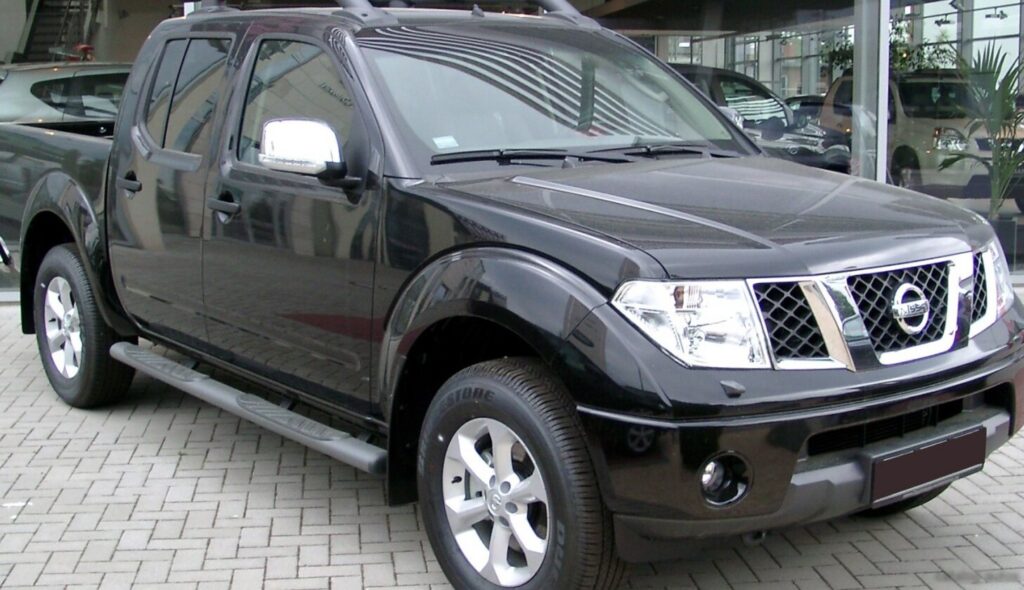
The Nissan Navara III (D40) facelift, produced from 2010 to 2015, represented a significant refresh of Nissan’s mid-size pickup truck. The 3.0 V6 variant, generating 231 horsepower, was a key offering within the Navara range, particularly in markets outside of North America where diesel engines were favored. This version aimed to balance robust performance with reasonable fuel efficiency, catering to buyers needing a capable workhorse with a degree of refinement. The D40 facelift brought updated styling, improved interior materials, and enhanced safety features compared to the original D40 released in 2004. It competed directly with other mid-size pickups like the Toyota Hilux, Ford Ranger, and Mitsubishi Triton.
Technical Specifications
| Brand | Nissan |
| Model | Navara |
| Generation | Navara III (D40 facelift 2010) |
| Type (Engine) | 3.0 V6 (231 Hp) |
| Start of production | 2010 |
| End of production | 2015 |
| Powertrain Architecture | Internal Combustion engine |
| Body type | Pick-up |
| Seats | 5 |
| Doors | 4 |
| Fuel consumption (urban) | 12.7 l/100 km (18.5 US mpg, 22.2 UK mpg, 7.9 km/l) |
| Fuel consumption (extra urban) | 7.6 l/100 km (30.9 US mpg, 37.2 UK mpg, 13.2 km/l) |
| Fuel consumption (combined) | 9.5 l/100 km (24.8 US mpg, 29.7 UK mpg, 10.5 km/l) |
| Fuel Type | Diesel |
| Acceleration 0 – 100 km/h | 9.3 sec |
| Acceleration 0 – 62 mph | 9.3 sec |
| Acceleration 0 – 60 mph | 8.8 sec |
| Maximum speed | 195 km/h (121.17 mph) |
| Emission standard | Euro 5 |
| Weight-to-power ratio | 9.1 kg/Hp, 109.5 Hp/tonne |
| Weight-to-torque ratio | 3.8 kg/Nm, 260.7 Nm/tonne |
| Power | 231 Hp @ 3750 rpm |
| Power per litre | 77.2 Hp/l |
| Torque | 550 Nm @ 1750 rpm (405.66 lb.-ft. @ 1750 rpm) |
| Engine layout | Front, Transverse |
| Engine Model/Code | V9X |
| Engine displacement | 2991 cm3 (182.52 cu. in.) |
| Number of cylinders | 6 |
| Engine configuration | V-engine |
| Number of valves per cylinder | 4 |
| Fuel injection system | Precombustion chamber injection |
| Engine aspiration | Turbocharger, Intercooler |
| Engine oil capacity | 7.1 l (7.5 US qt | 6.25 UK qt) |
| Coolant capacity | 13.2 l (13.95 US qt | 11.61 UK qt) |
| Kerb Weight | 2110 kg (4651.75 lbs.) |
| Max. weight | 2805 kg (6183.97 lbs.) |
| Max load | 695 kg (1532.21 lbs.) |
| Fuel tank capacity | 80 l (21.13 US gal | 17.6 UK gal) |
| Length | 5222 mm (205.59 in.) |
| Width | 1848 mm (72.76 in.) |
| Height | 1795 mm (70.67 in.) |
| Wheelbase | 3200 mm (125.98 in.) |
| Minimum turning circle | 13.3 m (43.64 ft.) |
| Drivetrain Architecture | The Internal combustion engine (ICE) drives the front wheels of the vehicle. |
| Drive wheel | Front wheel drive |
| Number of gears | 7 |
| Gearbox type | automatic transmission |
| Front brakes | Ventilated discs |
| Rear brakes | Ventilated discs |
| Assisting systems | ABS (Anti-lock braking system) |
| Steering type | Steering rack and pinion |
| Power steering | Hydraulic Steering |
| Tires size | 255/65 R17; 255/60 R18 |
| Wheel rims size | 17; 18 |
INTRODUCTION
The Nissan Navara D40 facelift, specifically the 3.0 V6 231 hp model, was introduced in 2010 as part of a comprehensive update to the D40 series. Built on the D40 platform, this iteration aimed to enhance the Navara’s appeal by offering a more powerful engine option alongside the existing diesel variants. Positioned as a mid-to-upper trim level, it provided a step up in performance and refinement compared to the base models, targeting buyers who required a pickup for both work and leisure. The facelift brought revised front-end styling, interior upgrades, and improvements to the vehicle’s overall build quality. This model was primarily sold in Europe, Australia, and other international markets, with limited availability in North America.
Powertrain & Engine Architecture
The heart of this Navara variant is the V9X 3.0-liter V6 diesel engine. This engine utilizes a precombustion chamber injection system, a design choice common in European diesel engines of the era. This system involves a small pre-chamber where fuel is partially combusted, then ignited in the main cylinder, promoting more complete combustion and reducing noise. The engine is turbocharged and intercooled, boosting power output to 231 horsepower at 3750 rpm and a substantial 550 Nm (405.66 lb-ft) of torque at 1750 rpm. The torque curve is relatively flat, providing strong pulling power across a wide range of engine speeds. Paired with this engine is a 7-speed automatic transmission, offering smooth gear changes and contributing to improved fuel efficiency compared to a manual transmission. The transmission is designed to handle the engine’s torque output effectively, providing adequate acceleration and towing capacity.
Driving Characteristics
The 3.0 V6 automatic Navara delivers a noticeably different driving experience compared to the lower-powered diesel variants. The increased horsepower and torque translate to quicker acceleration and more effortless highway cruising. The 7-speed automatic transmission is well-matched to the engine, providing smooth and timely gear changes. While not a sports truck, the V6 offers ample power for overtaking and tackling challenging terrain. Compared to the manual transmission versions, the automatic sacrifices some driver engagement but gains in convenience, particularly in urban driving. The gear ratios are tuned for a balance between fuel economy and performance, with lower gears providing strong pulling power for towing or off-road use, and higher gears optimized for efficient highway travel. The overall driving experience is refined for a pickup truck, with reduced engine noise and vibration compared to some of its competitors.
Equipment & Trim Levels
The 3.0 V6 automatic Navara typically came equipped with a generous level of standard features. These often included air conditioning, power windows and locks, a CD/MP3 stereo system, and alloy wheels. Higher trim levels added features such as leather upholstery, a sunroof, a navigation system, and parking sensors. Interior appointments were generally well-finished for a pickup truck, with a focus on durability and practicality. Optional extras included a tow bar, bed liner, and upgraded audio systems. The specific trim levels and available options varied depending on the market.
Chassis & Braking
The Navara D40 utilized a body-on-frame construction, providing a robust and durable chassis. The suspension system consisted of double wishbones at the front and a multi-link setup at the rear, offering a comfortable ride quality both on and off-road. Braking duties were handled by ventilated discs on all four wheels, providing ample stopping power. An Anti-lock Braking System (ABS) was standard, enhancing safety and control during emergency braking situations. The steering system employed a hydraulic rack and pinion setup, providing precise and responsive steering feel. Stabilizer bars were fitted to both the front and rear axles to reduce body roll during cornering.
Market Reception & Comparison
The Nissan Navara 3.0 V6 automatic was generally well-received by automotive critics. It was praised for its powerful engine, smooth transmission, and comfortable ride. However, some reviewers noted that the fuel economy was not as competitive as some of the smaller diesel engines in the lineup. Compared to the 2.5-liter diesel variants, the V6 offered significantly more power but at the cost of slightly higher fuel consumption and a higher purchase price. The V6 was often seen as a more premium option, appealing to buyers who prioritized performance and refinement over outright fuel efficiency. Against competitors like the Toyota Hilux and Ford Ranger, the Navara V6 offered a compelling combination of power, comfort, and features.
Legacy
The Nissan Navara D40 facelift, including the 3.0 V6 automatic variant, has proven to be a relatively reliable vehicle in the used car market. The V9X engine, while complex, is generally durable if properly maintained. Common issues include turbocharger wear and potential problems with the precombustion chamber injection system. Regular servicing and the use of high-quality oil are crucial for ensuring long-term reliability. Today, these Navaras are sought after by buyers looking for a capable and comfortable pickup truck at an affordable price. The D40 remains a popular choice for those needing a workhorse vehicle that can also handle occasional off-road adventures.