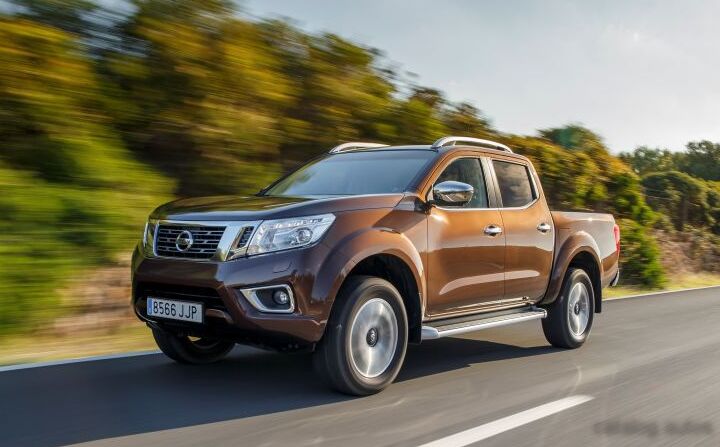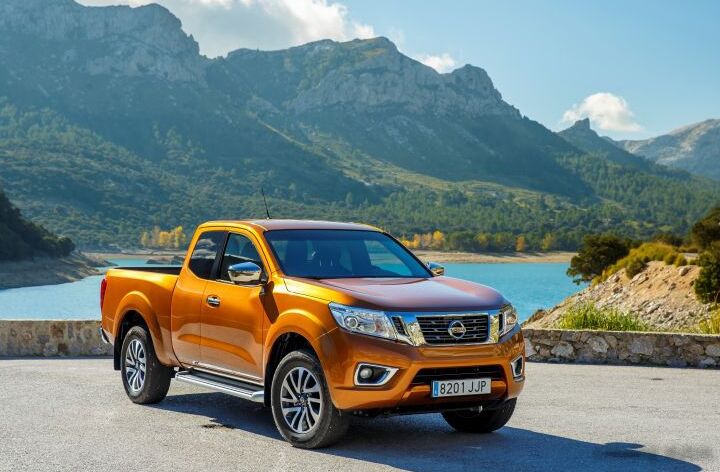
The Nissan Navara IV King Cab 2.3 dCi (160 hp) AWD, produced from 2015 to 2019, represents a significant iteration in Nissan’s popular mid-size pickup truck lineage. Part of the D23 series, this variant occupied a crucial position within the Navara IV range, offering a balance between capability, fuel efficiency, and affordability. The King Cab configuration, with its extended cab offering limited rear seating, catered to buyers needing both passenger and cargo flexibility. This model was primarily marketed in Europe, Australia, and Latin America, serving as a workhorse for both commercial and private users. It built upon the foundation of the D40 Navara, introducing a more refined chassis and updated engine technology.
Technical Specifications
| Brand | Nissan |
| Model | Navara |
| Generation | Navara IV King Cab |
| Type (Engine) | 2.3 dCi (160 Hp) AWD |
| Start of production | 2015 |
| End of production | 2019 |
| Powertrain Architecture | Internal Combustion engine |
| Body type | Pick-up |
| Seats | 4 |
| Doors | 4 |
| Fuel consumption (urban) | 7 l/100 km (33.6 US mpg, 40.4 UK mpg, 14.3 km/l) |
| Fuel consumption (extra urban) | 6.1 l/100 km (38.6 US mpg, 46.3 UK mpg, 16.4 km/l) |
| Fuel consumption (combined) | 6.4 l/100 km (36.8 US mpg, 44.1 UK mpg, 15.6 km/l) |
| CO2 emissions | 169 g/km |
| Fuel Type | Diesel |
| Acceleration 0 – 100 km/h | 12 sec |
| Acceleration 0 – 62 mph | 12 sec |
| Acceleration 0 – 60 mph | 11.4 sec |
| Maximum speed | 172 km/h (106.88 mph) |
| Emission standard | Euro 5b |
| Weight-to-power ratio | 11.4 kg/Hp, 87.7 Hp/tonne |
| Weight-to-torque ratio | 4.5 kg/Nm, 220.9 Nm/tonne |
| Power | 160 Hp @ 3750 rpm |
| Power per litre | 69.6 Hp/l |
| Torque | 403 Nm @ 1500-2500 rpm (297.24 lb.-ft. @ 1500-2500 rpm) |
| Engine layout | Front, Transverse |
| Engine Model/Code | YS23DDT |
| Engine displacement | 2299 cm3 (140.29 cu. in.) |
| Number of cylinders | 4 |
| Engine configuration | Inline |
| Cylinder Bore | 85 mm (3.35 in.) |
| Piston Stroke | 101.3 mm (3.99 in.) |
| Compression ratio | 15.4:1 |
| Number of valves per cylinder | 4 |
| Fuel injection system | Diesel Commonrail |
| Engine aspiration | Turbocharger, Intercooler |
| Valvetrain | DOHC |
| Engine oil capacity | 6.4 l (6.76 US qt | 5.63 UK qt) |
| Coolant | 11.1 l (11.73 US qt | 9.77 UK qt) |
| Kerb Weight | 1824 kg (4021.23 lbs.) |
| Max. weight | 3010 kg (6635.91 lbs.) |
| Max load | 1186 kg (2614.68 lbs.) |
| Fuel tank capacity | 80 l (21.13 US gal | 17.6 UK gal) |
| Permitted trailer load with brakes (12%) | 3500 kg (7716.18 lbs.) |
| Permitted trailer load without brakes | 750 kg (1653.47 lbs.) |
| Permitted towbar download | 140 kg (308.65 lbs.) |
| Length | 5255 mm (206.89 in.) |
| Width | 1850 mm (72.83 in.) |
| Width including mirrors | 2085 mm (82.09 in.) |
| Height | 1780-1790 mm (70.08 – 70.47 in.) |
| Wheelbase | 3150 mm (124.02 in.) |
| Front track | 1570 mm (61.81 in.) |
| Rear track | 1570 mm (61.81 in.) |
| Front overhang | 870 mm (34.25 in.) |
| Rear overhang | 1235 mm (48.62 in.) |
| Ride height (ground clearance) | 208-223 mm (8.19 – 8.78 in.) |
| Minimum turning circle | 11.8 m (38.71 ft.) |
| Approach angle | 29.4-30.4° |
| Departure angle | 24.6-25.6° |
| Ramp-over angle | 22° |
| Wading depth | 600 mm (23.62 in.) |
| Drive wheel | All wheel drive (4×4) |
| Number of gears and type of gearbox | 6 gears, manual transmission |
| Front suspension | Double wishbone |
| Rear suspension | Leaf spring |
| Front brakes | Ventilated discs |
| Rear brakes | Drum |
| Assisting systems | ABS (Anti-lock braking system) |
| Steering type | Steering rack and pinion |
| Power steering | Electric Steering |
| Tires size | 255/70 R16; 255/60 R18 |
| Wheel rims size | 7J x 16; 7J x 18 |
Powertrain & Engine Architecture
The heart of the Navara IV King Cab 2.3 dCi (160 hp) AWD is the YS23DDT engine, a 2.3-liter inline-four cylinder diesel. This engine is a member of Nissan’s dCi family, known for its robust construction and relatively efficient operation. The YS23DDT utilizes a common rail direct injection system, delivering fuel at extremely high pressures for optimized combustion. A turbocharger with an intercooler further enhances performance by forcing more air into the cylinders. The engine features a double overhead camshaft (DOHC) valvetrain with four valves per cylinder, contributing to improved breathing and power output. The 160 horsepower peak is achieved at 3750 rpm, while the substantial 403 Nm (297.24 lb-ft) of torque is available between 1500 and 2500 rpm, making it well-suited for hauling and towing. This particular variant was paired with a six-speed manual transmission, providing drivers with precise control over gear selection.
Driving Characteristics
The 160 hp 2.3 dCi engine, coupled with the six-speed manual transmission, offered a practical and capable driving experience. While not exceptionally quick – 0-60 mph took around 11.4 seconds – the engine’s strong low-end torque made it feel responsive in everyday driving situations. The gear ratios were well-chosen to maximize fuel efficiency and provide adequate power for both on-road and off-road use. Compared to higher-output versions of the Navara IV, such as those with 190 hp, this variant prioritized fuel economy and ease of driving over outright performance. The manual transmission allowed for greater driver engagement, but it lacked the convenience of an automatic option. The all-wheel-drive system provided enhanced traction on slippery surfaces, making it a capable work vehicle in various conditions.
Equipment & Trim Levels
The King Cab 2.3 dCi (160 hp) AWD typically came equipped with a reasonable level of standard features. These included air conditioning, power windows, central locking, and an audio system with USB connectivity. Safety features such as ABS (Anti-lock Braking System) and multiple airbags were also standard. Higher trim levels offered additional features like alloy wheels, a touchscreen infotainment system, navigation, and parking sensors. Interior upholstery was typically cloth, with options for leather upgrades. The King Cab configuration featured a smaller rear seat compared to the Double Cab models, making it more suitable for occasional passengers or cargo.
Chassis & Braking
The Navara IV King Cab utilized a robust ladder-frame chassis, providing a solid foundation for its work-oriented design. The front suspension consisted of double wishbones, offering a comfortable ride and good handling characteristics. The rear suspension employed leaf springs, which were well-suited for carrying heavy loads. Braking duties were handled by ventilated discs at the front and drum brakes at the rear. The braking system provided adequate stopping power for the vehicle’s weight and performance capabilities. The all-wheel-drive system featured a selectable 4H and 4L mode, allowing drivers to engage four-wheel drive for enhanced traction in challenging conditions.
Market Reception & Comparison
The Nissan Navara IV King Cab 2.3 dCi (160 hp) AWD was generally well-received by critics and buyers alike. It was praised for its practicality, fuel efficiency, and robust construction. Compared to other mid-size pickups in its class, such as the Toyota Hilux and Ford Ranger, the Navara offered a comfortable ride and a well-equipped interior. However, some critics noted that the engine lacked the refinement of some of its competitors. The 160 hp variant offered a good balance between performance and fuel economy, making it a popular choice for buyers who didn’t require the extra power of the higher-output models. Fuel economy figures of around 36.8 US mpg combined were competitive for its class.
Legacy
The YS23DDT engine, while generally reliable, has been known to exhibit issues with the fuel injectors and turbocharger over time. Regular maintenance, including oil changes and filter replacements, is crucial for ensuring long-term reliability. Today, the Navara IV King Cab 2.3 dCi (160 hp) AWD remains a popular choice in the used car market, particularly among buyers seeking a capable and affordable pickup truck. Its robust construction and relatively simple mechanicals make it a relatively easy vehicle to maintain and repair. The combination of all-wheel drive, a practical King Cab configuration, and a fuel-efficient diesel engine continues to make it a compelling option for those needing a versatile workhorse.