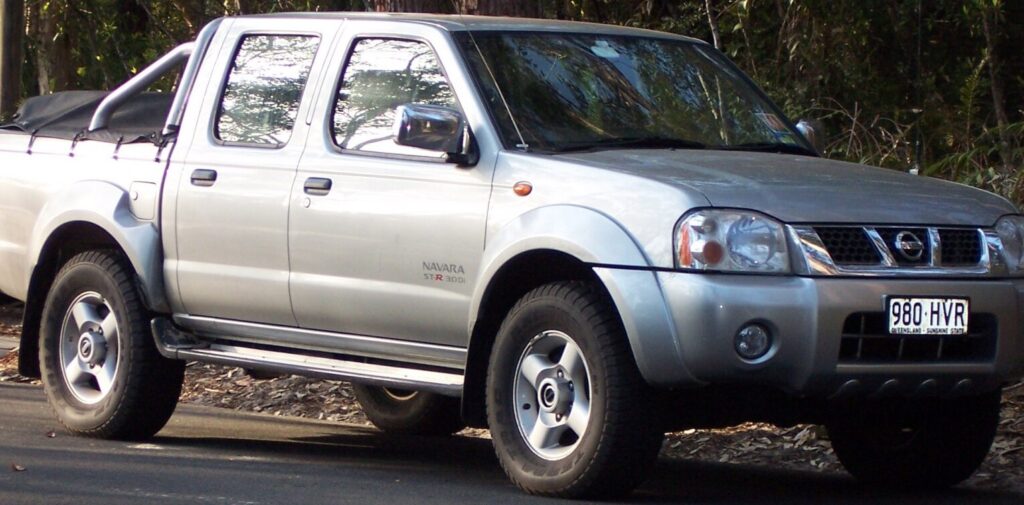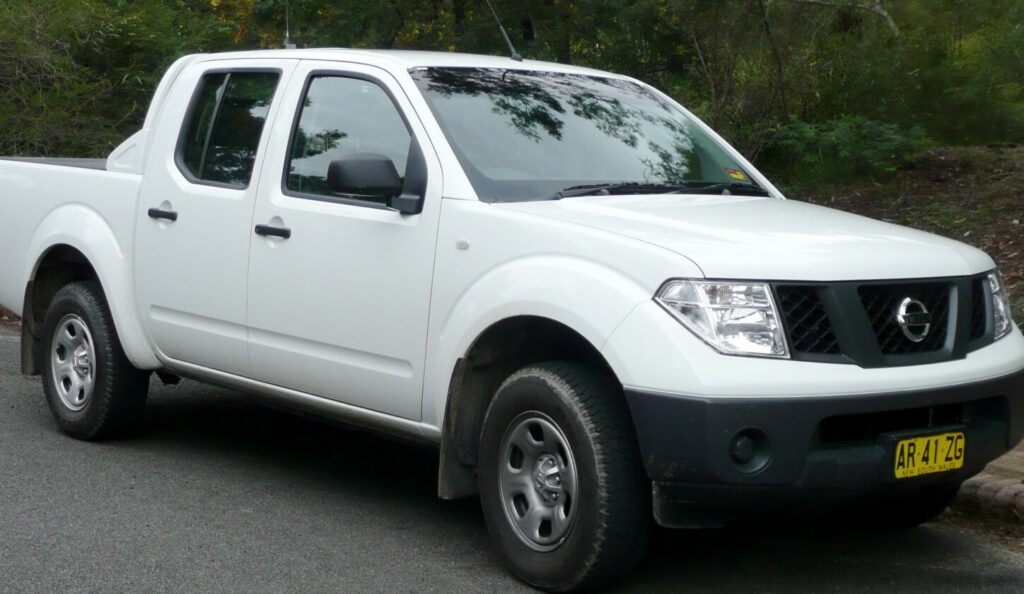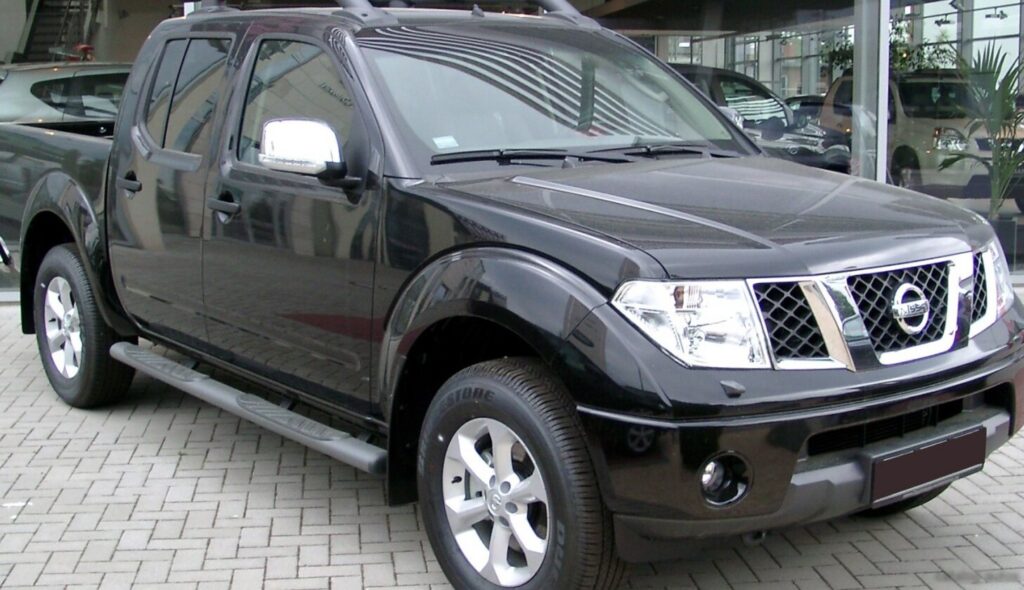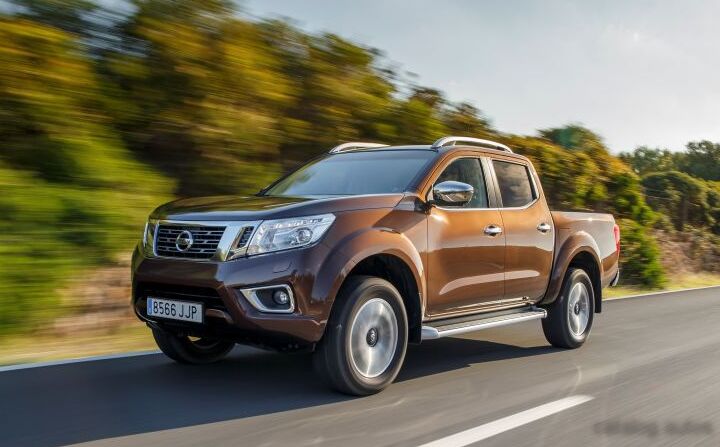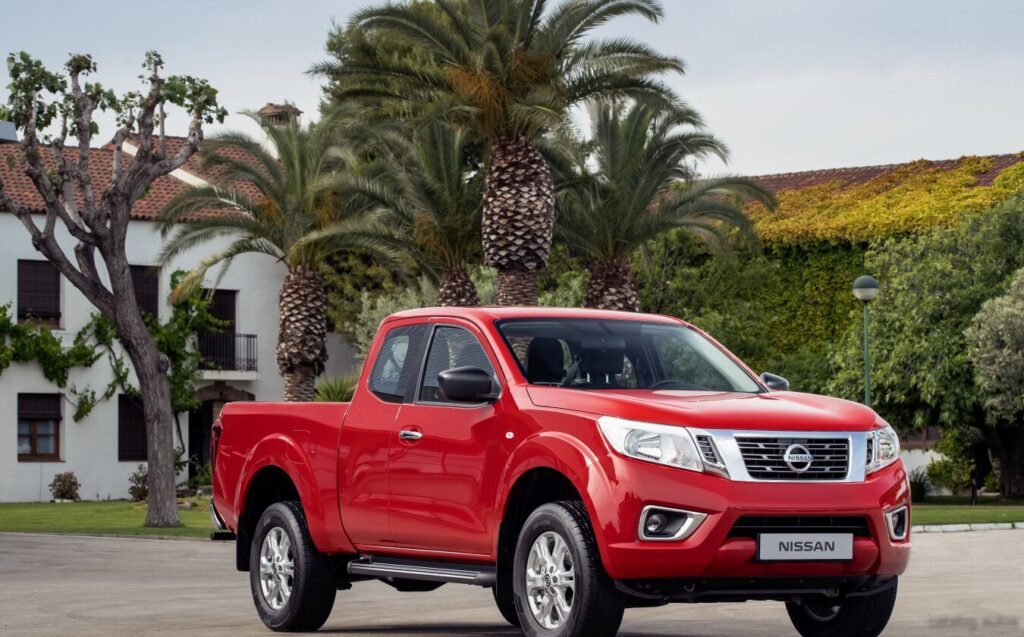
The Nissan Navara IV King Cab, specifically the facelifted version introduced in July 2019 with the 2.3 dCi engine producing 163 horsepower, represents a significant iteration of Nissan’s mid-size pickup truck. This variant, positioned within the broader Navara IV (D23) generation produced from 2016-2021, aimed to balance practicality, capability, and fuel efficiency for both commercial and personal use, primarily targeting the European, Australian, and Latin American markets. The King Cab configuration, offering rear-hinged rear doors and a smaller rear seating area compared to the Double Cab, catered to buyers needing occasional rear passenger space alongside a versatile cargo bed.
Technical Specifications
| Brand | Nissan |
| Model | Navara |
| Generation | Navara IV King Cab (facelift 2019) |
| Type (Engine) | 2.3 dCi (163 Hp) 4WD |
| Start of production | July, 2019 |
| Powertrain Architecture | Internal Combustion engine |
| Body type | Pick-up |
| Seats | 4 |
| Doors | 4 |
| Fuel consumption at Low speed (WLTP) | 10.7 l/100 km (22 US mpg, 26.4 UK mpg, 9.3 km/l) |
| Fuel consumption at Medium speed (WLTP) | 8.3 l/100 km (28.3 US mpg, 34 UK mpg, 12 km/l) |
| Fuel consumption at high speed (WLTP) | 7.7 l/100 km (30.5 US mpg, 36.7 UK mpg, 13 km/l) |
| Fuel consumption at very high speed (WLTP) | 9.6 l/100 km (24.5 US mpg, 29.4 UK mpg, 10.4 km/l) |
| Combined fuel consumption (WLTP) | 8.9 l/100 km (26.4 US mpg, 31.7 UK mpg, 11.2 km/l) |
| CO2 emissions (WLTP) | 234 g/km |
| Fuel Type | Diesel |
| Acceleration 0 – 100 km/h | 12.5 sec |
| Acceleration 0 – 62 mph | 12.5 sec |
| Acceleration 0 – 60 mph | 11.9 sec |
| Maximum speed | 171 km/h (106.25 mph) |
| Emission standard | Euro 6d-TEMP |
| Weight-to-power ratio | 12.5 kg/Hp, 80.1 Hp/tonne |
| Weight-to-torque ratio | 4.8 kg/Nm, 208.8 Nm/tonne |
| Power | 163 Hp @ 3750 rpm |
| Torque | 425 Nm @ 1250-2500 rpm (313.46 lb.-ft. @ 1250-2500 rpm) |
| Engine layout | Front, Longitudinal |
| Engine Model/Code | YS23DDT |
| Engine displacement | 2299 cm3 (140.29 cu. in.) |
| Number of cylinders | 4 |
| Engine configuration | Inline |
| Compression ratio | 15.1:1 |
| Number of valves per cylinder | 4 |
| Fuel injection system | Diesel Commonrail |
| Engine aspiration | Turbocharger, Intercooler |
| Valvetrain | DOHC |
| Engine oil capacity | 6.7 l (7.08 US qt, 5.9 UK qt) |
| Coolant | 11.1 l (11.73 US qt, 9.77 UK qt) |
| Kerb Weight | 2035 kg (4486.41 lbs.) |
| Max. weight | 3200 kg (7054.79 lbs.) |
| Max load | 1165 kg (2568.39 lbs.) |
| Fuel tank capacity | 73 l (19.28 US gal, 16.06 UK gal) |
| AdBlue tank | 18.4 l (4.86 US gal, 4.05 UK gal) |
| Max. roof load | 100 kg (220.46 lbs.) |
| Permitted trailer load with brakes (12%) | 3500 kg (7716.18 lbs.) |
| Permitted towbar download | 140 kg (308.65 lbs.) |
| Length | 5210 mm (205.12 in.) |
| Width | 1850 mm (72.83 in.) |
| Width including mirrors | 2078 mm (81.81 in.) |
| Height | 1822 mm (71.73 in.) |
| Wheelbase | 3150 mm (124.02 in.) |
| Front track | 1570 mm (61.81 in.) |
| Rear (Back) track | 1570 mm (61.81 in.) |
| Front overhang | 880 mm (34.65 in.) |
| Rear overhang | 1225 mm (48.23 in.) |
| Ride height (ground clearance) | 219 mm (8.62 in.) |
| Minimum turning circle (turning diameter) | 12.4 m (40.68 ft.) |
| Approach angle | 31.0° |
| Departure angle | 28.0° |
| Ramp-over (brakeover) angle | 23.0° |
| Wading depth | 600 mm (23.62 in.) |
| Drive wheel | All wheel drive (4×4) |
| Number of gears and type of gearbox | 6 gears, manual transmission |
| Front suspension | Double wishbone, Transverse stabilizer |
| Rear suspension | Independent multi-link spring suspension with stabilizer |
| Front brakes | Ventilated discs, 320 mm |
| Rear brakes | Ventilated discs, 308 mm |
| Assisting systems | ABS (Anti-lock braking system) |
| Steering type | Steering rack and pinion |
| Power steering | Electric Steering |
| Tires size | 255/65 R17 |
| Wheel rims size | 7.0J x 17 |
Powertrain & Engine Architecture
The heart of this Navara variant is the YS23DDT 2.3-liter four-cylinder diesel engine. This engine, a member of Nissan’s dCi family, utilizes a common-rail direct injection system, delivering fuel at extremely high pressure for optimized combustion. The engine features a single turbocharger with an intercooler, boosting power and torque while managing exhaust gas temperatures. The DOHC (Double Overhead Camshaft) valvetrain, with four valves per cylinder, enhances volumetric efficiency. A compression ratio of 15.1:1 contributes to the engine’s efficiency. The 425 Nm (313.46 lb.-ft.) of torque, available from a low 1250 rpm, is a key characteristic, providing strong pulling power for towing and off-road driving. This engine is longitudinally mounted in the chassis, driving all four wheels through a six-speed manual transmission.
Driving Characteristics
The 163 horsepower and 425 Nm of torque provide adequate, though not exceptional, performance for the Navara King Cab. Acceleration from 0-100 km/h takes around 12.5 seconds. The engine’s strong low-end torque makes it well-suited for hauling loads and navigating challenging terrain. Compared to higher-output versions of the 2.3 dCi (like the 190 hp variant), this version feels less responsive during quick acceleration. The six-speed manual transmission offers precise shifts, but the gear ratios are tuned more for fuel economy and towing capacity than outright performance. The 4WD system provides enhanced traction in slippery conditions, making it a capable off-road vehicle.
Equipment & Trim Levels
The 2.3 dCi 163 hp 4WD King Cab typically came with a reasonable level of standard equipment. This included air conditioning, power windows, central locking, and an audio system with Bluetooth connectivity. Safety features such as ABS, electronic brakeforce distribution (EBD), and multiple airbags were standard. Higher trim levels offered features like alloy wheels, a touchscreen infotainment system with navigation, leather upholstery, and parking sensors. The King Cab configuration itself offered a compromise between passenger space and cargo bed length, appealing to those who occasionally needed to carry passengers in the rear but prioritized bed utility.
Chassis & Braking
The Navara IV utilizes a robust ladder-frame chassis, providing a solid foundation for both on-road and off-road driving. The front suspension consists of double wishbones with a transverse stabilizer, while the rear features an independent multi-link spring suspension, also with a stabilizer bar. This setup aims to balance ride comfort with handling stability. Braking duties are handled by ventilated discs on all four wheels, providing ample stopping power. The ABS (Anti-lock Braking System) helps maintain steering control during emergency braking situations.
Market Reception & Comparison
The Navara IV King Cab 2.3 dCi 163 hp 4WD was generally well-received as a practical and capable pickup truck. Critics praised its strong torque output, comfortable ride, and robust build quality. However, some noted that the engine could feel underpowered when fully loaded or driving uphill. Compared to the more powerful 190 hp version, this variant offered better fuel economy but at the expense of performance. Against competitors like the Toyota Hilux and Ford Ranger, the Navara offered a compelling combination of features and value.
Legacy
The YS23DDT engine, while generally reliable, has been known to exhibit issues with the diesel particulate filter (DPF) if not properly maintained, particularly with frequent short trips. The Navara IV King Cab, in this configuration, remains a popular choice in the used car market, offering a durable and versatile vehicle at a relatively affordable price. Its robust construction and capable 4WD system ensure it remains a viable option for those needing a workhorse pickup truck.