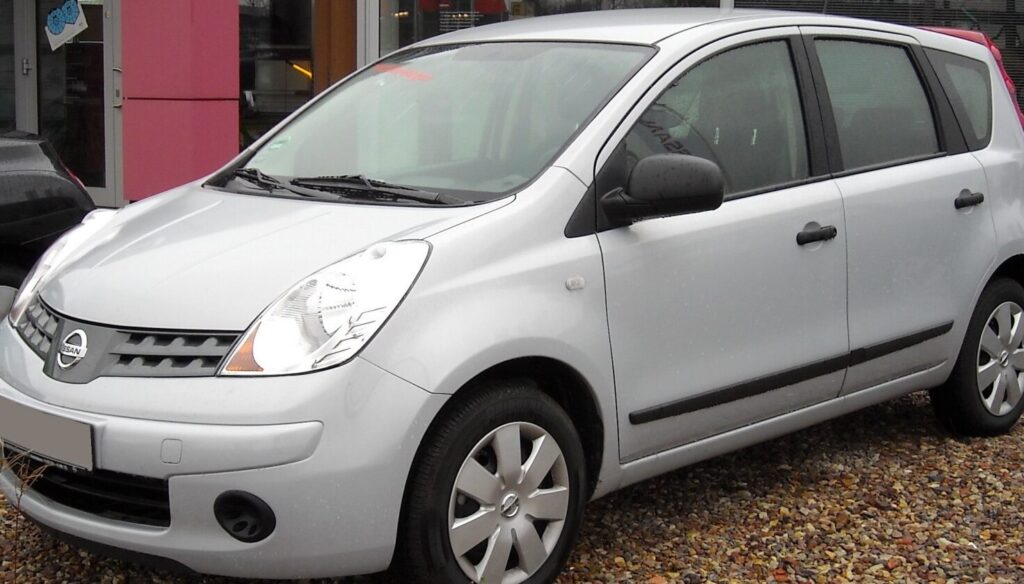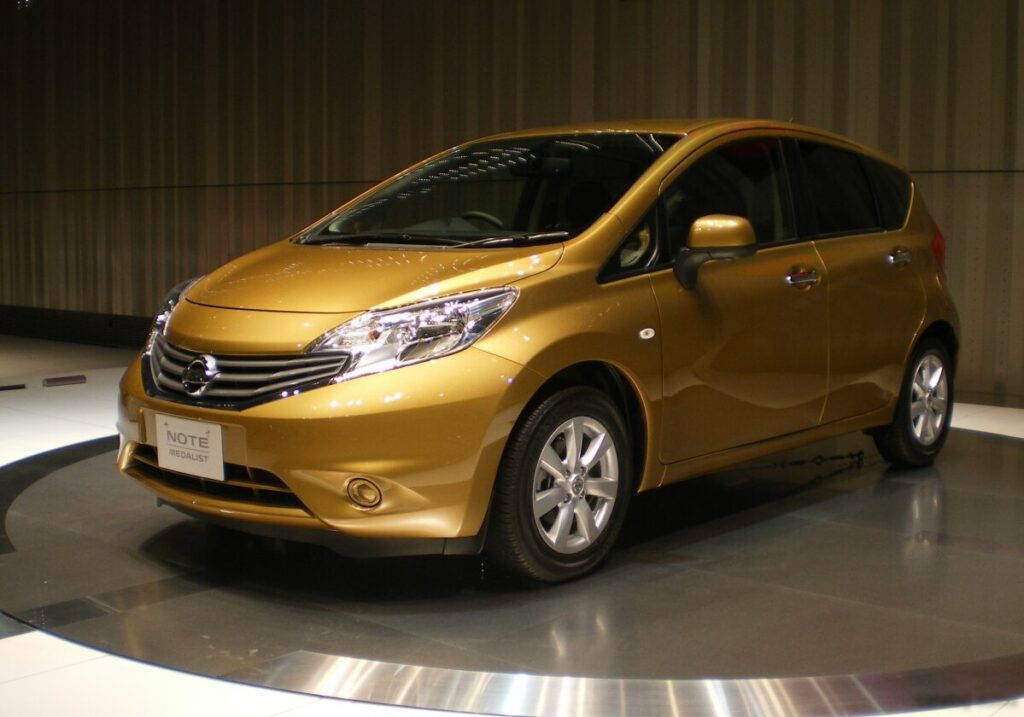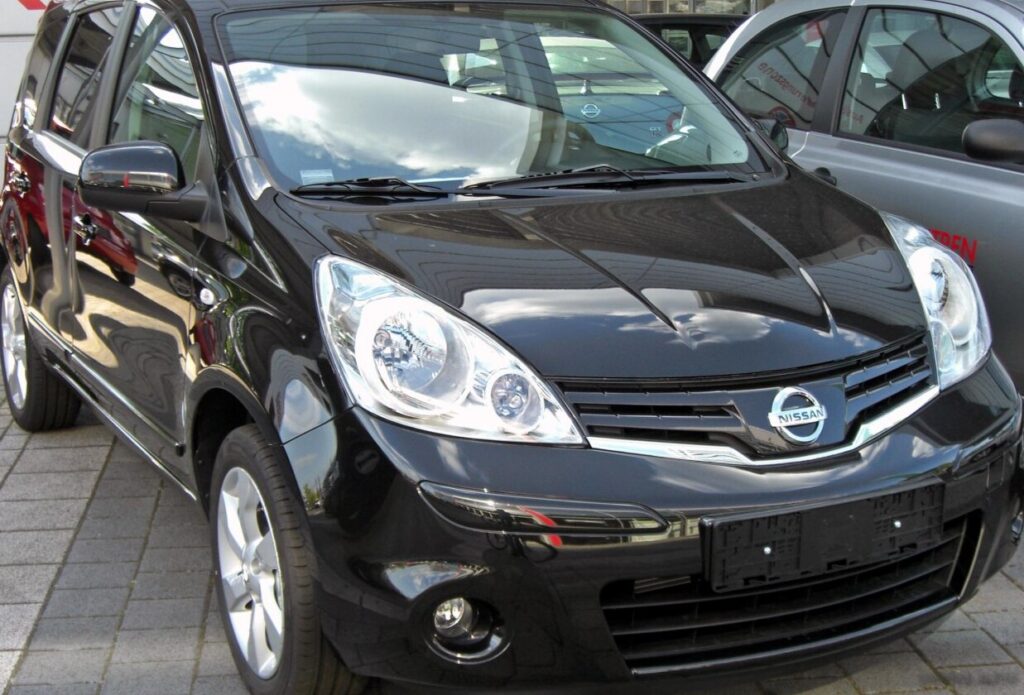
The Nissan Note I (E11) facelift, produced from 2010 to 2012, represented a mid-cycle refresh of Nissan’s popular supermini, marketed primarily in Europe. This generation Note, built on the B-platform, aimed to provide a practical and affordable option in the increasingly competitive small hatchback segment. The 1.5 dCi variant, powered by Renault-sourced diesel engine producing 90 horsepower, was a significant offering within the Note lineup, positioned as a fuel-efficient choice for drivers prioritizing economy over outright performance. It served as a key model in Nissan’s European strategy, offering a diesel alternative in a market increasingly focused on fuel efficiency and lower emissions.
Technical Specifications
| Brand | Nissan |
| Model | Note |
| Generation | Note I (E11, facelift 2010) |
| Type (Engine) | 1.5 dCi (90 Hp) |
| Start of production | 2010 |
| End of production | 2012 |
| Powertrain Architecture | Internal Combustion engine |
| Body type | Hatchback |
| Seats | 5 |
| Doors | 5 |
| Fuel consumption (urban) | 5 l/100 km (47 US mpg, 56.5 UK mpg, 20 km/l) |
| Fuel consumption (extra urban) | 3.7 l/100 km (63.6 US mpg, 76.3 UK mpg, 27 km/l) |
| Fuel consumption (combined) | 4.2 l/100 km (56 US mpg, 67.3 UK mpg, 23.8 km/l) |
| Fuel Type | Diesel |
| Acceleration 0 – 100 km/h | 12.8 sec |
| Acceleration 0 – 62 mph | 12.8 sec |
| Acceleration 0 – 60 mph | 12.2 sec |
| Maximum speed | 168 km/h (104.39 mph) |
| Emission standard | Euro 5 |
| Weight-to-power ratio | 13.1 kg/Hp, 76.3 Hp/tonne |
| Weight-to-torque ratio | 5.9 kg/Nm, 169.5 Nm/tonne |
| Power | 90 Hp @ 4000 rpm |
| Power per litre | 61.6 Hp/l |
| Torque | 200 Nm @ 1750 rpm (147.51 lb.-ft. @ 1750 rpm) |
| Engine layout | Front, Transverse |
| Engine Model/Code | K9K 276, K9K 400 |
| Engine displacement | 1461 cm3 (89.16 cu. in.) |
| Number of cylinders | 4 |
| Engine configuration | Inline |
| Number of valves per cylinder | 2 |
| Fuel injection system | Diesel Commonrail |
| Engine aspiration | Turbocharger, Intercooler |
| Engine oil capacity | 4.4 l (4.65 US qt | 3.87 UK qt) |
| Coolant capacity | 6.7 l (7.08 US qt | 5.9 UK qt) |
| Kerb Weight | 1180 kg (2601.45 lbs.) |
| Max. weight | 1615 kg (3560.47 lbs.) |
| Max load | 435 kg (959.01 lbs.) |
| Trunk (boot) space – minimum | 280 l (9.89 cu. ft.) |
| Trunk (boot) space – maximum | 437 l (15.43 cu. ft.) |
| Fuel tank capacity | 46 l (12.15 US gal | 10.12 UK gal) |
| Length | 4100 mm (161.42 in.) |
| Width | 1690 mm (66.54 in.) |
| Height | 1550 mm (61.02 in.) |
| Wheelbase | 2600 mm (102.36 in.) |
| Minimum turning circle | 11 m (36.09 ft.) |
| Drivetrain Architecture | Front wheel drive |
| Number of gears | 5 |
| Gearbox type | Manual transmission |
| Front suspension | Independent, type McPherson with coil spring and anti-roll bar |
| Rear suspension | Rigid axle suspension |
| Front brakes | Disc |
| Rear brakes | Drum |
| Assisting systems | ABS (Anti-lock braking system) |
| Steering type | Steering rack and pinion |
| Power steering | Electric Steering |
| Tires size | 175/65 R15; 185/65 R15; 185/55 R16 |
| Wheel rims size | 15; 16 |
INTRODUCTION
The Nissan Note I (E11) facelift, specifically the 1.5 dCi 90 hp variant, was introduced in 2010 as part of a broader update to the first-generation Note. This model aimed to broaden the Note’s appeal by offering a diesel engine option, catering to European drivers seeking fuel economy and lower running costs. The Note, positioned as a compact MPV (Multi-Purpose Vehicle) or mini-MPV, distinguished itself with its relatively spacious interior and practical design. The facelift brought subtle styling changes, improved interior materials, and refinements to the engine range, including the 1.5 dCi. This variant occupied the lower-mid range of the Note lineup, offering a balance between affordability and efficiency.
Powertrain & Engine Architecture
The heart of the 1.5 dCi Note is the K9K engine, a series of inline-four cylinder diesel engines developed jointly by Renault and Nissan. The specific engine codes used in this variant were K9K 276 and K9K 400. This engine utilizes a common rail direct injection system, delivering fuel directly into the combustion chamber at high pressure for improved efficiency and reduced emissions. A turbocharger with an intercooler is employed to boost power output and enhance torque. The engine features two valves per cylinder and a relatively simple valvetrain design, contributing to its reliability and ease of maintenance. The 90 hp output is achieved at 4000 rpm, while peak torque of 200 Nm (147.51 lb.-ft.) is available from 1750 rpm, providing good low-end responsiveness. The engine is paired with a five-speed manual transmission, chosen for its simplicity and efficiency. While an automatic transmission was offered on other Note variants, it wasn’t available with the 1.5 dCi engine.
Driving Characteristics
The 1.5 dCi 90 hp Note offered a practical, if not particularly exciting, driving experience. Acceleration from 0-60 mph took around 12.2 seconds, and top speed was limited to 104.39 mph. The engine’s strength lay in its mid-range torque, making it suitable for everyday driving and overtaking maneuvers. The five-speed manual transmission was well-matched to the engine’s characteristics, providing adequate gear spacing. Compared to the 1.6-liter petrol variants, the 1.5 dCi offered significantly better fuel economy, but at the expense of outright performance. The manual gearbox allowed for greater driver control, unlike the continuously variable transmissions (CVTs) found in some other Note models. The relatively low power output meant that the engine needed to be revved to maintain speed on inclines or when fully loaded.
Equipment & Trim Levels
The 1.5 dCi Note typically came equipped with a reasonable level of standard features. Base models included central locking, electric front windows, a basic audio system, and ABS brakes. Higher trim levels, such as Visia, Acenta, and Tekna, added features like air conditioning, alloy wheels, a trip computer, and upgraded interior trim. Interior upholstery was typically cloth, with a functional and durable design. Optional extras included parking sensors, a navigation system, and climate control. The dashboard layout was straightforward and user-friendly, prioritizing practicality over aesthetics.
Chassis & Braking
The Note I (E11) utilized a front-wheel-drive layout with a McPherson strut suspension setup at the front and a rigid axle suspension at the rear. This configuration provided a comfortable ride quality, although it wasn’t particularly sporty. Front brakes were disc brakes, while rear brakes were drum brakes – a cost-saving measure common in this segment. ABS (Anti-lock Braking System) was standard, enhancing safety. The suspension was tuned for comfort, prioritizing ride quality over handling precision. Stabilizer bars were included to reduce body roll during cornering, but the Note was not designed for aggressive driving.
Market Reception & Comparison
The Nissan Note 1.5 dCi was generally well-received by critics for its fuel efficiency and practicality. It was seen as a sensible choice for urban commuters and small families. Compared to the petrol-powered Note variants, the 1.5 dCi offered significantly better fuel economy, making it a more cost-effective option for high-mileage drivers. However, some reviewers noted the engine’s lack of refinement and the somewhat agricultural feel of the manual transmission. Compared to rivals like the Renault Clio, Peugeot 207, and Ford Fiesta, the Note offered a unique blend of MPV-like practicality and compact dimensions. The diesel engine provided a competitive edge in terms of fuel economy, but the Note didn’t quite match the driving dynamics of some of its rivals.
Legacy
The K9K engine, used in the 1.5 dCi Note, has proven to be a relatively reliable powertrain, although it’s not without its potential issues. Common problems include turbocharger failure, injector issues, and occasional problems with the diesel particulate filter (DPF). However, with regular maintenance and careful driving, these engines can cover high mileages. On the used car market, the 1.5 dCi Note remains a popular choice for budget-conscious buyers seeking a fuel-efficient and practical hatchback. Its reputation for reliability and low running costs continues to make it a viable option, even after more than a decade since its production ended. The Note I (E11) laid the foundation for subsequent generations of the Note, establishing it as a key model in Nissan’s European lineup.