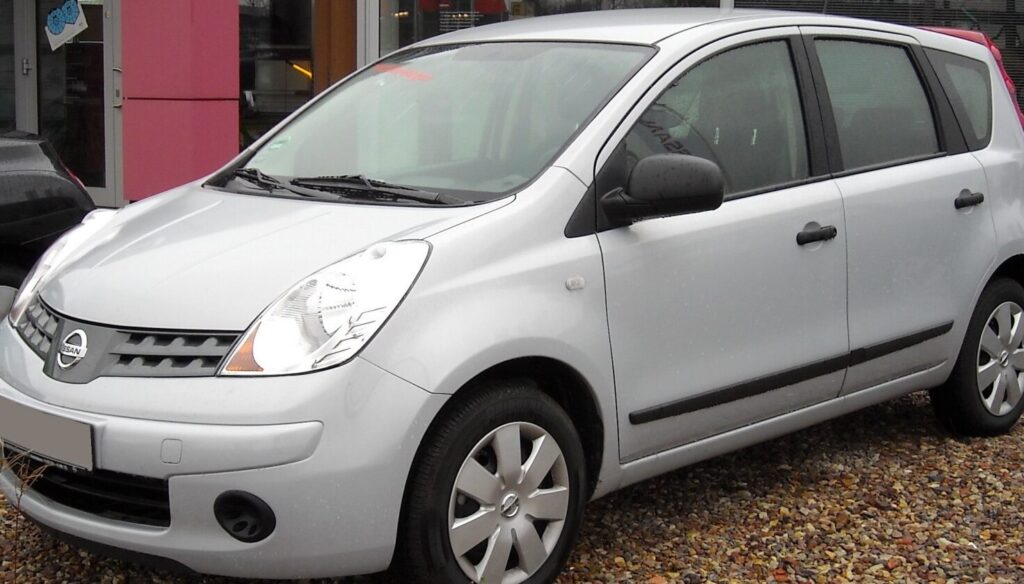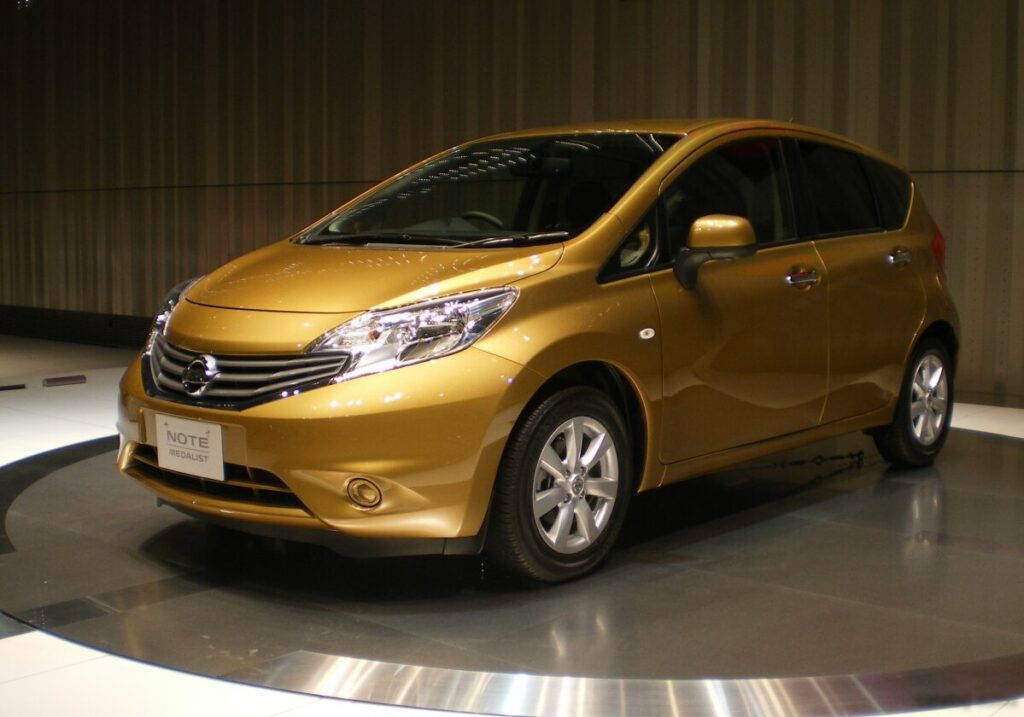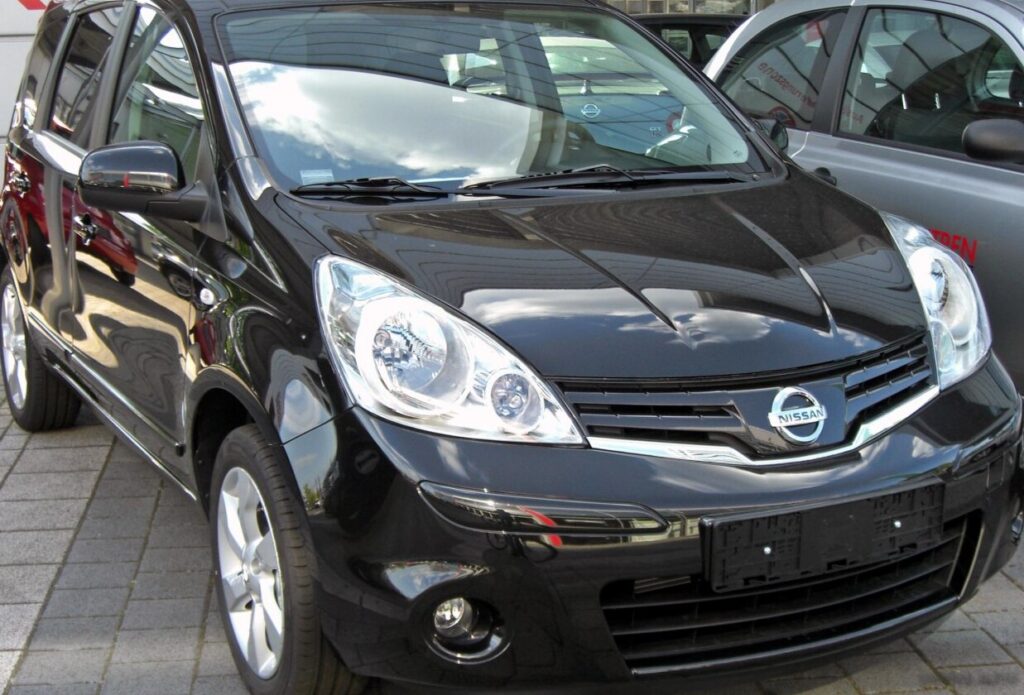
The Nissan Note I (E11) facelift, produced from 2010 to 2012, represented a mid-cycle refresh of Nissan’s popular supermini, marketed as a compact hatchback. This generation Note, built on the B-platform, aimed to provide a practical and affordable option within the increasingly competitive European and Asian small car segments. The 1.6-liter engine paired with an automatic transmission was a significant offering within the Note lineup, positioned as a comfortable and convenient choice for drivers prioritizing ease of use over outright performance. It served as a step up from the base 1.4-liter engine, offering more power for highway driving and carrying passengers.
Technical Specifications
| Brand | Nissan |
| Model | Note |
| Generation | Note I (E11, facelift 2010) |
| Type (Engine) | 1.6 (110 Hp) automatic |
| Start of production | 2010 |
| End of production | 2012 |
| Powertrain Architecture | Internal Combustion engine |
| Body type | Hatchback |
| Seats | 5 |
| Doors | 5 |
| Fuel consumption (urban) | 9.3 l/100 km (25.3 US mpg) |
| Fuel consumption (extra urban) | 5.8 l/100 km (40.6 US mpg) |
| Fuel consumption (combined) | 7 l/100 km (33.6 US mpg) |
| Fuel Type | Petrol (Gasoline) |
| Acceleration 0 – 100 km/h | 11.7 sec |
| Acceleration 0 – 62 mph | 11.7 sec |
| Acceleration 0 – 60 mph | 11.1 sec |
| Maximum speed | 174 km/h (108.12 mph) |
| Emission standard | Euro 5 |
| Weight-to-power ratio | 10.3 kg/Hp |
| Weight-to-torque ratio | 7.4 kg/Nm |
| Power | 110 Hp @ 6000 rpm |
| Torque | 153 Nm @ 4400 rpm (112.85 lb.-ft. @ 4400 rpm) |
| Engine layout | Front, Transverse |
| Engine Model/Code | HR16DE |
| Engine displacement | 1598 cm3 (97.52 cu. in.) |
| Number of cylinders | 4 |
| Engine configuration | Inline |
| Number of valves per cylinder | 4 |
| Fuel injection system | Multi-port manifold injection |
| Engine aspiration | Naturally aspirated |
| Engine oil capacity | 4.6 l (4.86 US qt | 4.05 UK qt) |
| Coolant capacity | 5.4 l (5.71 US qt | 4.75 UK qt) |
| Kerb Weight | 1131 kg (2493.43 lbs) |
| Max. weight | 1580 kg (3483.3 lbs) |
| Max load | 449 kg (989.88 lbs) |
| Trunk (boot) space – minimum | 280 l (9.89 cu. ft.) |
| Trunk (boot) space – maximum | 437 l (15.43 cu. ft.) |
| Fuel tank capacity | 46 l (12.15 US gal | 10.12 UK gal) |
| Length | 4100 mm (161.42 in) |
| Width | 1690 mm (66.54 in) |
| Height | 1550 mm (61.02 in) |
| Wheelbase | 2600 mm (102.36 in) |
| Minimum turning circle | 11 m (36.09 ft) |
| Drivetrain Architecture | Front wheel drive |
| Number of gears | 4 |
| Gearbox type | automatic transmission |
| Front suspension | Independent, McPherson with coil spring and anti-roll bar |
| Rear suspension | Rigid axle |
| Front brakes | Disc |
| Rear brakes | Drum |
| Assisting systems | ABS |
| Steering type | Steering rack and pinion |
| Power steering | Electric |
| Tires size | 175/65 R15; 185/65 R15; 185/55 R16 |
| Wheel rims size | 15; 16 |
Introduction
The 2010-2012 Nissan Note 1.6 automatic represented a practical and accessible entry point into the compact hatchback market. Positioned within the E11 series, which debuted in 2005 and received a facelift in 2010, this variant aimed to appeal to buyers seeking a comfortable and easy-to-drive vehicle for urban commuting and family use. The facelift brought revised styling, improved interior materials, and updated technology, enhancing the Note’s overall appeal. The 1.6-liter engine and automatic transmission combination was a key offering, designed to broaden the Note’s customer base beyond those specifically seeking a manual transmission or the smaller displacement engine.
Powertrain & Engine Architecture
At the heart of the Note 1.6 automatic lies the HR16DE engine, a 1.6-liter inline-four cylinder gasoline engine. This engine utilizes multi-point fuel injection and a dual overhead camshaft (DOHC) valvetrain with four valves per cylinder. The HR16DE is known for its relatively simple and robust design, contributing to its reliability. The engine produces 110 horsepower at 6000 rpm and 153 Nm (113 lb-ft) of torque at 4400 rpm. Paired with this engine is a four-speed automatic transmission. While not the most modern transmission available at the time, it provided smooth and convenient gear changes, prioritizing comfort over sporty performance. The transmission’s gear ratios were tuned for fuel efficiency and everyday drivability, rather than rapid acceleration.
Driving Characteristics
The driving experience in the Note 1.6 automatic is characterized by its smoothness and ease of use. Acceleration from 0-60 mph takes approximately 11.1 seconds, and the top speed is around 108 mph. While these figures aren’t particularly impressive, they are adequate for most everyday driving situations. The automatic transmission contributes to a relaxed driving experience, particularly in urban traffic. Compared to the manual transmission version of the 1.6, the automatic offers less driver engagement but greater convenience. The 1.6-liter engine provides noticeably more power than the base 1.4-liter engine, making highway merging and overtaking maneuvers easier. However, it lacks the responsiveness of higher-performance engines found in some competitors.
Equipment & Trim Levels
The Note 1.6 automatic typically came equipped with a reasonable level of standard features. These generally included air conditioning, power windows, power door locks, and a basic audio system with CD player. Higher trim levels, such as the Visia, Acenta, and Tekna, added features like alloy wheels, climate control, a more advanced audio system with Bluetooth connectivity, and parking sensors. Interior upholstery was typically cloth, with options for upgraded materials on higher trims. The dashboard layout was functional and straightforward, prioritizing usability over aesthetic flair.
Chassis & Braking
The Note 1.6 automatic features a front-wheel-drive layout with an independent McPherson strut suspension in the front and a rigid axle suspension in the rear. This suspension setup provides a comfortable ride quality, absorbing bumps and imperfections in the road reasonably well. The front brakes are disc brakes, while the rear brakes are drum brakes – a common configuration for vehicles in this class. Anti-lock Braking System (ABS) was standard, enhancing safety during emergency braking situations. Steering is rack and pinion with electric power assistance, providing light and easy steering feel.
Market Reception & Comparison
The Nissan Note 1.6 automatic was generally well-received by critics as a practical and affordable small car. It was praised for its comfortable ride, spacious interior, and ease of use. However, some reviewers noted that the engine lacked refinement and the automatic transmission could feel sluggish at times. Compared to other small cars in its class, such as the Ford Fiesta, Volkswagen Polo, and Toyota Yaris, the Note offered a competitive level of equipment and value for money. Its fuel economy, averaging around 33.6 US mpg, was respectable but not class-leading. Reliability was generally considered good, although some owners reported minor issues with the automatic transmission over time.
Legacy
The Nissan Note I (E11) 1.6 automatic has proven to be a relatively reliable and durable vehicle. On the used car market, these models are often sought after for their affordability and practicality. The HR16DE engine is known for its longevity, and with regular maintenance, it can provide many years of service. While the four-speed automatic transmission is not as sophisticated as more modern units, it has generally proven to be dependable. The Note’s spacious interior and comfortable ride continue to make it a viable option for buyers seeking a budget-friendly and practical small car.