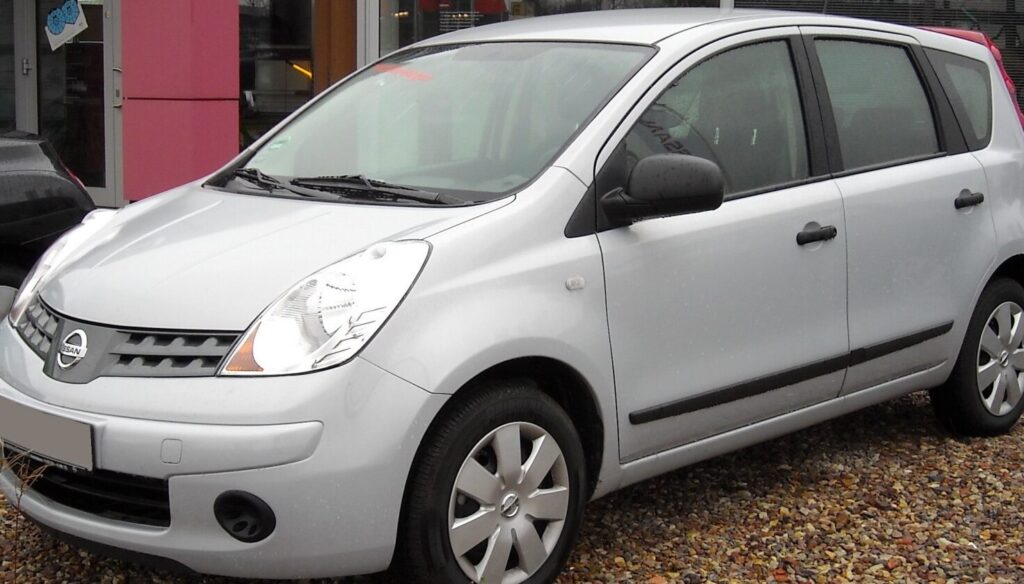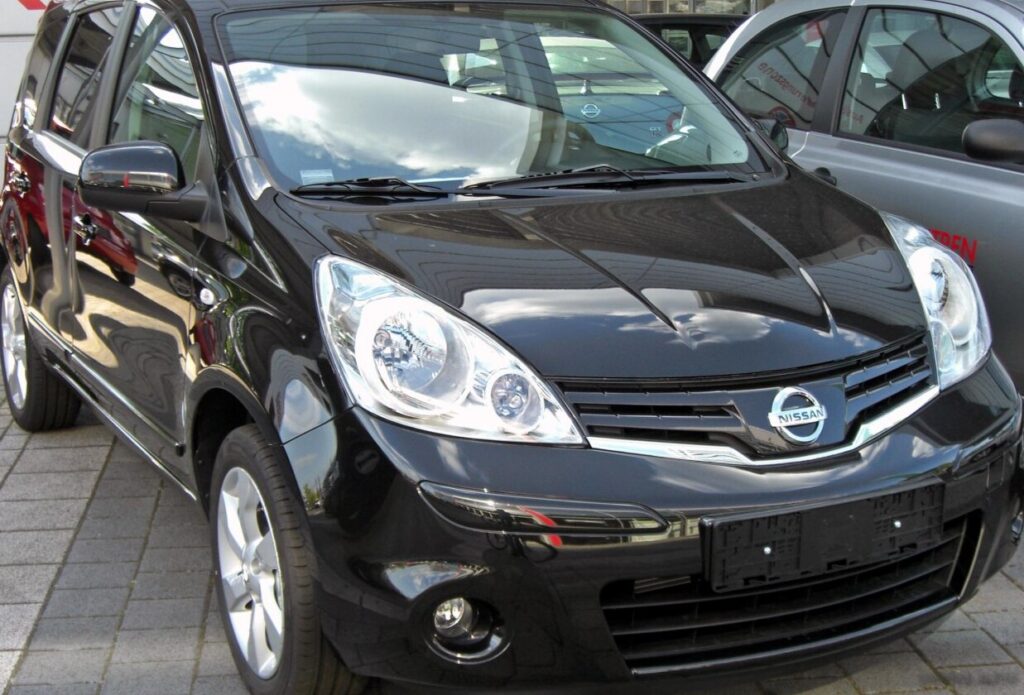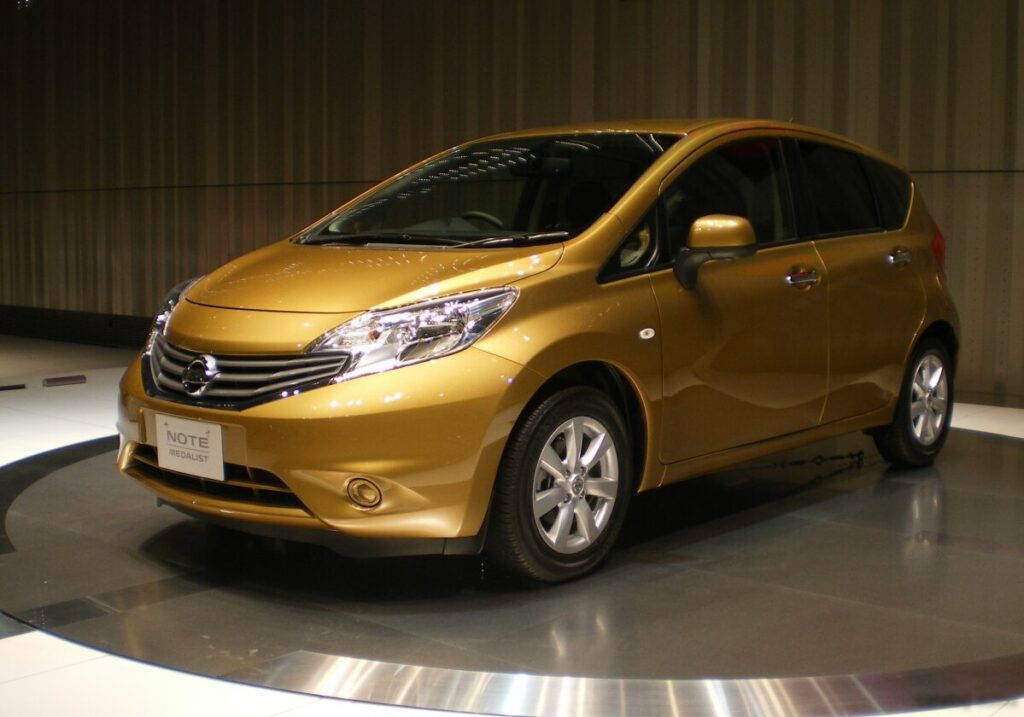
The Nissan Note II (E12), specifically the 1.2-liter 80 horsepower variant, was a subcompact hatchback produced from 2012 to 2017. Positioned as an entry-level offering within the E12 Note range, this model aimed to provide affordable and fuel-efficient transportation, primarily targeting urban commuters and first-time car buyers. The E12 generation represented a significant redesign of the original Note, moving to a more conventional hatchback shape and offering increased interior space. It was primarily sold in European and Asian markets, where the demand for small, economical vehicles was high. This particular engine and transmission combination represented a core part of the Note II’s sales volume, emphasizing practicality over outright performance.
Technical Specifications
| Brand | Nissan |
| Model | Note |
| Generation | Note II (E12) |
| Type (Engine) | 1.2 (80 Hp) |
| Start of production | 2012 |
| End of production | 2017 |
| Powertrain Architecture | Internal Combustion engine |
| Body type | Hatchback |
| Seats | 5 |
| Doors | 5 |
| Fuel consumption (urban) | 5.9 l/100 km (39.9 US mpg, 47.9 UK mpg, 16.9 km/l) |
| Fuel consumption (extra urban) | 4 l/100 km (58.8 US mpg, 70.6 UK mpg, 25 km/l) |
| Fuel consumption (combined) | 4.7 l/100 km (50 US mpg, 60.1 UK mpg, 21.3 km/l) |
| CO2 emissions | 109 g/km |
| Fuel Type | Petrol (Gasoline) |
| Acceleration 0 – 100 km/h | 13.7 sec |
| Acceleration 0 – 62 mph | 13.7 sec |
| Acceleration 0 – 60 mph | 13 sec |
| Maximum speed | 170 km/h (105.63 mph) |
| Emission standard | Euro 5 |
| Weight-to-power ratio | 14.8 kg/Hp, 67.5 Hp/tonne |
| Weight-to-torque ratio | 10.8 kg/Nm, 92.8 Nm/tonne |
| Power | 80 Hp |
| Power per litre | 66.8 Hp/l |
| Torque | 110 Nm @ 4000 rpm (81.13 lb.-ft. @ 4000 rpm) |
| Engine layout | Front, Transverse |
| Engine Model/Code | HR12DE |
| Engine displacement | 1198 cm3 (73.11 cu. in.) |
| Number of cylinders | 3 |
| Engine configuration | Inline |
| Fuel injection system | Multi-port manifold injection |
| Engine aspiration | Naturally aspirated engine |
| Engine oil capacity | 3.4 l (3.59 US qt | 2.99 UK qt) |
| Coolant capacity | 5.7 l (6.02 US qt | 5.02 UK qt) |
| Kerb Weight | 1185 kg (2612.48 lbs.) |
| Max. weight | 1510 kg (3328.98 lbs.) |
| Max load | 325 kg (716.5 lbs.) |
| Trunk (boot) space – minimum | 325 l (11.48 cu. ft.) |
| Trunk (boot) space – maximum | 1495 l (52.8 cu. ft.) |
| Length | 4100 mm (161.42 in.) |
| Width | 1695 mm (66.73 in.) |
| Height | 1535 mm (60.43 in.) |
| Wheelbase | 2600 mm (102.36 in.) |
| Front track | 1480 mm (58.27 in.) |
| Rear (Back) track | 1485 mm (58.46 in.) |
| Drivetrain Architecture | The Internal combustion engine (ICE) drives the front wheels of the vehicle. |
| Drive wheel | Front wheel drive |
| Number of gears and type of gearbox | 5 gears, manual transmission |
| Assisting systems | ABS (Anti-lock braking system) |
| Steering type | Steering rack and pinion |
| Power steering | Electric Steering |
| Tires size | 195/55 R16 |
| Wheel rims size | 16 |
INTRODUCTION
The Nissan Note II (E12) 1.2, launched in 2012, represented a shift in Nissan’s approach to the subcompact segment. Designed to appeal to a broader audience than its predecessor, the E12 Note prioritized interior space, fuel efficiency, and ease of driving. The 1.2-liter engine, producing 80 horsepower, was the base engine option, making it the most affordable variant. It was built on the Nissan V platform (also known as the 1HX0 platform), shared with other small Nissan and Renault models. This platform allowed for a relatively lightweight and compact vehicle, contributing to its fuel economy. The Note II was primarily marketed in Europe and Asia, where smaller cars are favored due to factors like congested city streets and higher fuel costs.
Powertrain & Engine Architecture
The heart of this Note variant is the HR12DE, a 1.2-liter inline three-cylinder petrol engine. This engine is known for its simplicity and efficiency, rather than outright power. It utilizes a multi-port fuel injection system, delivering fuel directly into the intake ports. The HR12DE features a single overhead camshaft (SOHC) valvetrain, keeping the engine design relatively uncomplicated. The engine’s modest output of 80 hp and 110 Nm (81 lb-ft) of torque is delivered at 4000 rpm. Paired with a five-speed manual transmission, the powertrain was designed for maximizing fuel economy and providing adequate performance for everyday driving. The transmission itself is a standard manual gearbox, chosen for its cost-effectiveness and simplicity. It’s not known for particularly quick shifts, but it’s durable and reliable.
Driving Characteristics
The 1.2-liter Note II is not a performance-oriented vehicle. Acceleration is leisurely, taking approximately 13.7 seconds to reach 62 mph (100 km/h). The engine feels strained when pushed hard, and overtaking maneuvers require careful planning. However, in typical urban driving conditions, the engine provides sufficient power for merging into traffic and maintaining a reasonable pace. The five-speed manual transmission is geared to prioritize fuel efficiency, with relatively tall gear ratios. This means that the engine operates at lower RPMs at highway speeds, contributing to better fuel economy. Compared to higher-spec Note II models with larger engines, this 1.2L version feels significantly slower and less refined. The manual transmission offers more driver engagement than the optional CVT (Continuously Variable Transmission) available on some trims.
Equipment & Trim Levels
The 1.2-liter Note II typically came with a basic level of equipment. Standard features generally included power steering, ABS (Anti-lock Braking System), front airbags, and a basic audio system with CD player. Interior upholstery was typically cloth, and the dashboard featured a functional but somewhat plain design. Optional extras included air conditioning, alloy wheels, and a more advanced audio system with Bluetooth connectivity. Trim levels varied depending on the market, but the 1.2-liter model generally represented the entry point to the Note II range. Higher trim levels added features like climate control, parking sensors, and upgraded interior materials.
Chassis & Braking
The Note II’s chassis is a typical front-wheel-drive configuration, utilizing a MacPherson strut suspension in the front and a torsion beam suspension in the rear. This setup provides a comfortable ride quality, although it’s not particularly sporty. The torsion beam rear suspension is a cost-effective solution that helps to minimize weight and complexity. Braking on the 1.2-liter model typically consisted of disc brakes in the front and drum brakes in the rear. ABS was standard, providing enhanced braking performance in emergency situations. The suspension tuning was geared towards comfort and stability, rather than aggressive handling. Stabilizer bars were present, but relatively thin, contributing to a slight degree of body roll in corners.
Market Reception & Comparison
The Nissan Note II 1.2 received generally positive reviews for its fuel efficiency, spacious interior, and practicality. Critics praised its affordability and ease of driving, making it a good choice for urban commuters. However, the engine’s lack of power was a common criticism. Compared to other trims in the Note II lineup, such as the 1.5-liter models, the 1.2-liter version offered significantly less performance. However, it also offered better fuel economy and a lower purchase price. In terms of reliability, the HR12DE engine proved to be generally dependable, with few major issues reported. Its fuel economy was competitive with other subcompact hatchbacks in its class, such as the Volkswagen Polo and the Ford Fiesta.
Legacy
The Nissan Note II 1.2 remains a popular choice in the used car market, particularly for buyers seeking an affordable and fuel-efficient vehicle. The HR12DE engine has proven to be relatively durable, and maintenance costs are generally low. While it may not offer the performance or refinement of more expensive vehicles, the Note II 1.2 provides a practical and reliable transportation solution. Its simplicity and fuel efficiency continue to appeal to budget-conscious buyers. Parts availability is generally good, and the vehicle’s straightforward design makes it relatively easy to repair. The Note II 1.2 represents a solid, if unspectacular, entry in the subcompact hatchback segment.