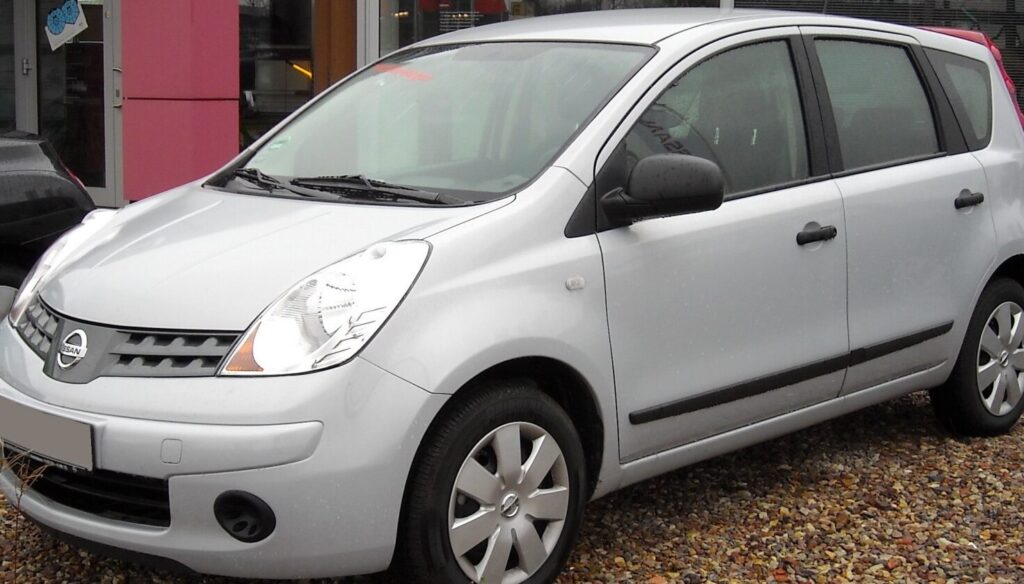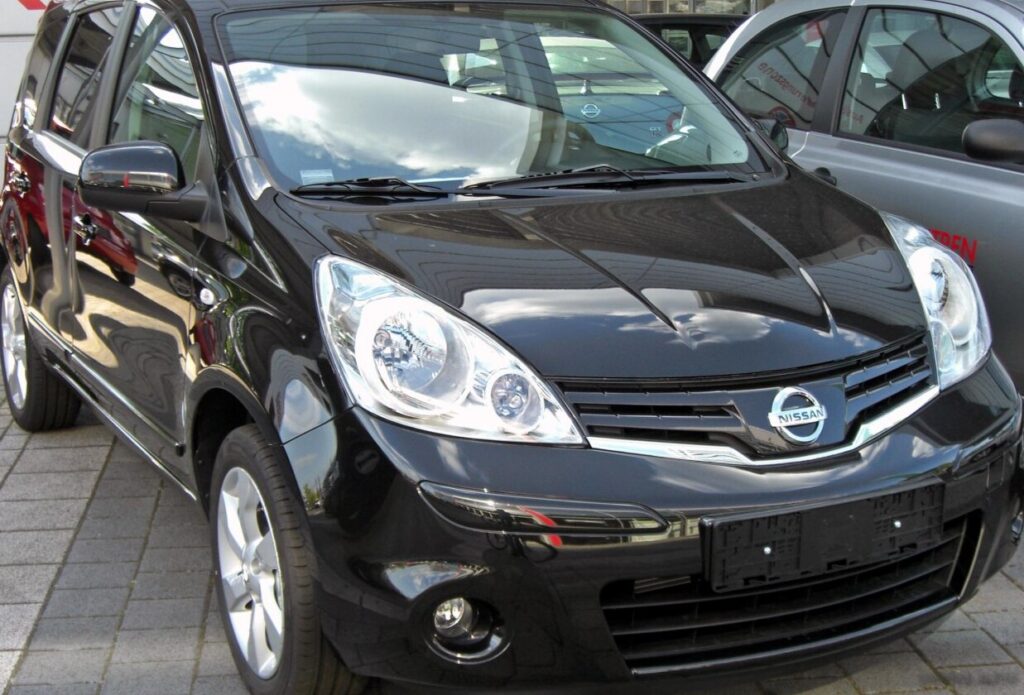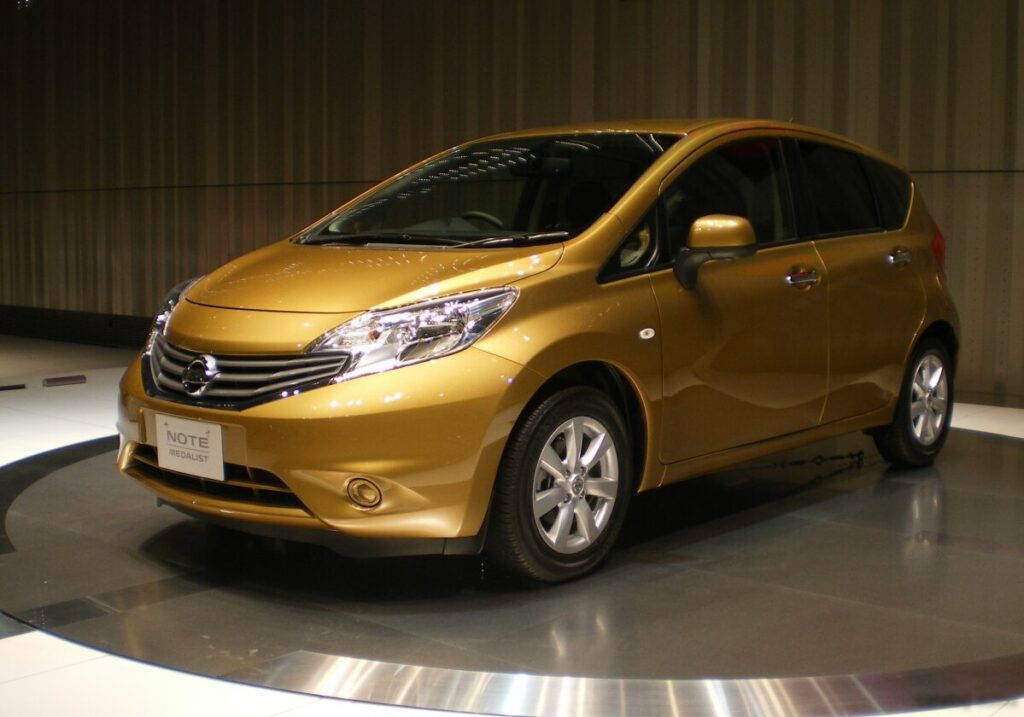
The Nissan Note II (E12) 1.5 dCi 90 hp variant, produced between 2012 and 2017, represented an entry-level diesel option within the second generation of Nissan’s popular supermini. Positioned as a fuel-efficient and practical choice, this model aimed to appeal to buyers prioritizing economy and everyday usability. The E12 Note was primarily marketed in Europe, where compact hatchbacks with diesel engines were highly sought after due to favorable tax regulations and fuel costs. This particular configuration, combining the 1.5-liter dCi engine with a five-speed manual transmission, offered a balance between affordability and reasonable performance, making it a common sight on European roads.
Technical Specifications
| Brand | Nissan |
| Model | Note |
| Generation | Note II (E12) |
| Type (Engine) | 1.5 dCi (90 Hp) |
| Start of production | 2012 |
| End of production | 2017 |
| Powertrain Architecture | Internal Combustion engine |
| Body type | Hatchback |
| Seats | 5 |
| Doors | 5 |
| Fuel consumption (urban) | 4.2 l/100 km (56 US mpg, 67.3 UK mpg, 23.8 km/l) |
| Fuel consumption (extra urban) | 3.2 l/100 km (73.5 US mpg, 88.3 UK mpg, 31.3 km/l) |
| Fuel consumption (combined) | 3.6 l/100 km (65.3 US mpg, 78.5 UK mpg, 27.8 km/l) |
| CO2 emissions | 92 g/km |
| Fuel Type | Diesel |
| Acceleration 0 – 100 km/h | 11.9 sec |
| Acceleration 0 – 62 mph | 11.9 sec |
| Acceleration 0 – 60 mph | 11.3 sec |
| Maximum speed | 179 km/h (111.23 mph) |
| Emission standard | Euro 5 |
| Weight-to-power ratio | 13.2 kg/Hp, 75.9 Hp/tonne |
| Weight-to-torque ratio | 5.9 kg/Nm, 168.8 Nm/tonne |
| Power | 90 Hp |
| Power per litre | 61.6 Hp/l |
| Torque | 200 Nm @ 2000 rpm (147.51 lb.-ft. @ 2000 rpm) |
| Engine layout | Front, Transverse |
| Engine Model/Code | K9K 608, K9K 892 |
| Engine displacement | 1461 cm3 (89.16 cu. in.) |
| Number of cylinders | 4 |
| Engine configuration | Inline |
| Fuel injection system | Diesel Commonrail |
| Engine aspiration | Turbocharger, Intercooler |
| Engine oil capacity | 4.8 l (5.07 US qt | 4.22 UK qt) |
| Coolant capacity | 6.2 l (6.55 US qt | 5.46 UK qt) |
| Kerb Weight | 1185 kg (2612.48 lbs.) |
| Max. weight | 1510 kg (3328.98 lbs.) |
| Max load | 325 kg (716.5 lbs.) |
| Trunk (boot) space – minimum | 325 l (11.48 cu. ft.) |
| Trunk (boot) space – maximum | 1495 l (52.8 cu. ft.) |
| Length | 4100 mm (161.42 in.) |
| Width | 1695 mm (66.73 in.) |
| Height | 1535 mm (60.43 in.) |
| Wheelbase | 2600 mm (102.36 in.) |
| Front track | 1480 mm (58.27 in.) |
| Rear (Back) track | 1485 mm (58.46 in.) |
| Drivetrain Architecture | The Internal combustion engine (ICE) drives the front wheels of the vehicle. |
| Drive wheel | Front wheel drive |
| Number of gears and type of gearbox | 5 gears, manual transmission |
| Assisting systems | ABS (Anti-lock braking system) |
| Steering type | Steering rack and pinion |
| Power steering | Electric Steering |
| Tires size | 195/55 R16 |
| Wheel rims size | 16 |
INTRODUCTION
The Nissan Note II, launched in 2012, represented a significant step forward for the brand’s supermini offering. Built on the V platform (also known as the 1HX0/A3 platform shared with Renault), the second-generation Note prioritized practicality, fuel efficiency, and innovative features. The 1.5 dCi 90 hp variant was a key component of the lineup, offering a diesel engine option for customers seeking low running costs. This model served as a direct competitor to other small diesel hatchbacks like the Volkswagen Polo, Peugeot 208, and Renault Clio, all popular choices in the European B-segment.
Powertrain & Engine Architecture
The heart of the Note II 1.5 dCi 90 is the K9K engine family, specifically the K9K 608 or K9K 892 code depending on the exact production year and market. This 1.5-liter, four-cylinder diesel engine utilizes a common rail direct injection system, delivering fuel at high pressure for optimized combustion. A turbocharger with an intercooler further enhances performance and efficiency. The engine produces 90 horsepower and 200 Nm (147.51 lb-ft) of torque at 2000 rpm. The five-speed manual transmission was the standard offering for this variant, providing a relatively direct and engaging driving experience. The engine’s architecture is a traditional inline configuration, known for its simplicity and reliability. The diesel particulate filter (DPF) was a standard feature to meet Euro 5 emission standards.
Driving Characteristics
The 1.5 dCi 90 hp Note II offered a practical and economical driving experience. While not particularly sporty, the engine provided sufficient power for everyday driving, including urban commutes and highway cruising. Acceleration from 0 to 60 mph took around 11.3 seconds, and the top speed was approximately 111.23 mph. The five-speed gearbox was well-matched to the engine’s torque curve, allowing for smooth gear changes and reasonable in-gear acceleration. Compared to higher-output versions of the Note or those equipped with automatic transmissions, this variant felt less responsive but offered superior fuel economy. The gear ratios were optimized for fuel efficiency rather than outright performance.
Equipment & Trim Levels
The 1.5 dCi 90 hp Note II typically came with a reasonable level of standard equipment. This included air conditioning, power steering, electric front windows, a basic audio system with USB connectivity, and ABS brakes. Higher trim levels, such as Visia, Acenta, and Tekna, added features like alloy wheels, climate control, rear parking sensors, and a more advanced infotainment system. Interior upholstery was typically cloth, with a functional and durable design. Optional extras included a panoramic glass roof, navigation system, and automatic headlights and wipers.
Chassis & Braking
The Note II’s chassis was designed to prioritize comfort and stability. The front suspension utilized MacPherson struts, while the rear employed a torsion beam setup. This configuration provided a good balance between ride quality and handling. Braking was typically handled by disc brakes on the front wheels and drum brakes on the rear, adequate for the vehicle’s weight and performance. Electric power steering provided light and easy steering, making it ideal for urban driving. Stabilizer bars were fitted to both the front and rear axles to reduce body roll during cornering.
Market Reception & Comparison
The Nissan Note II 1.5 dCi 90 hp was generally well-received by critics for its fuel efficiency and practicality. It was praised for its comfortable ride and spacious interior, making it a good choice for families. However, some reviewers noted that the engine could feel underpowered, especially when fully loaded. Compared to the petrol-powered versions of the Note, the diesel offered significantly better fuel economy but came with a higher purchase price. Against competitors like the Volkswagen Polo and Peugeot 208, the Note offered a competitive package in terms of price and features, but often lagged behind in terms of driving dynamics.
Legacy
The K9K engine family, including the 1.5 dCi 90 hp variant, has proven to be relatively reliable over the long term. While diesel particulate filters can require maintenance or replacement, the engine itself is generally robust. In the used car market, the Note II 1.5 dCi 90 hp remains a popular choice for buyers seeking an affordable and fuel-efficient supermini. Its reputation for reliability and low running costs continues to make it a viable option, although potential buyers should be aware of the potential costs associated with DPF maintenance and the increasing scrutiny of diesel vehicles in some urban areas.