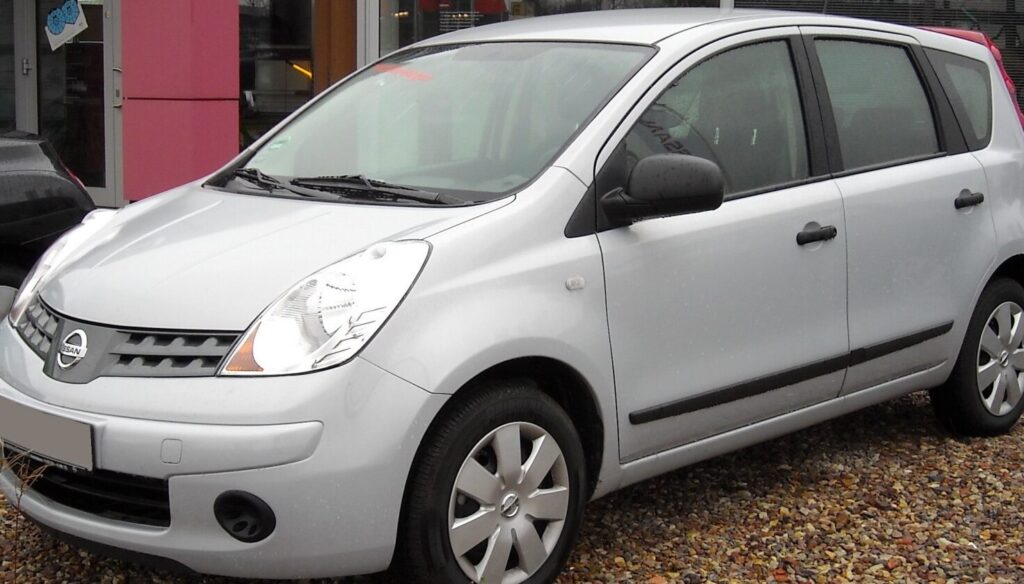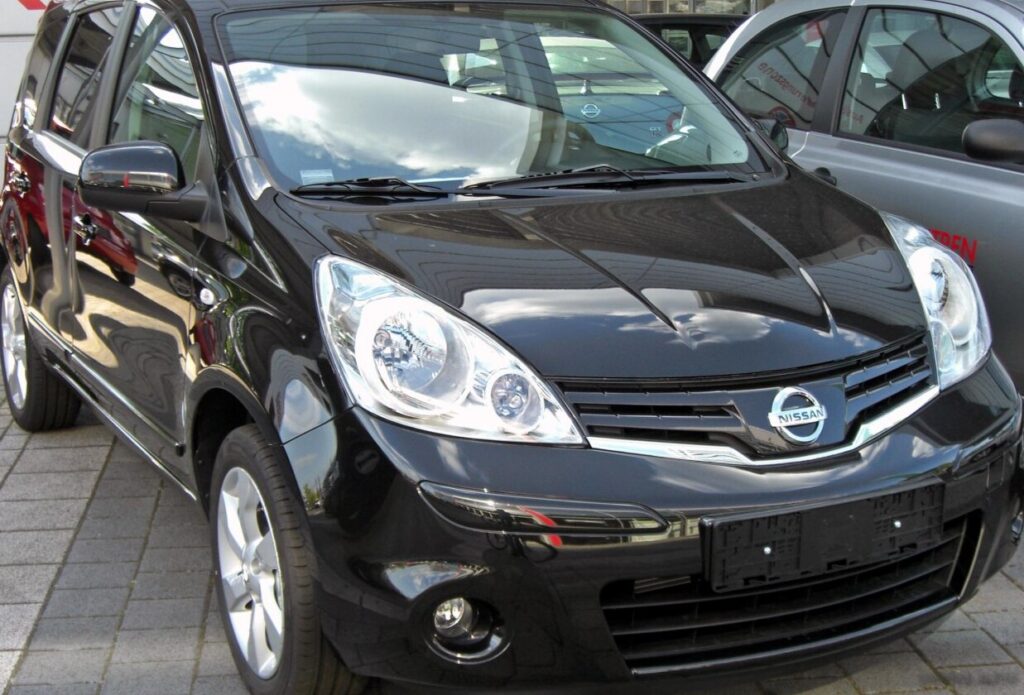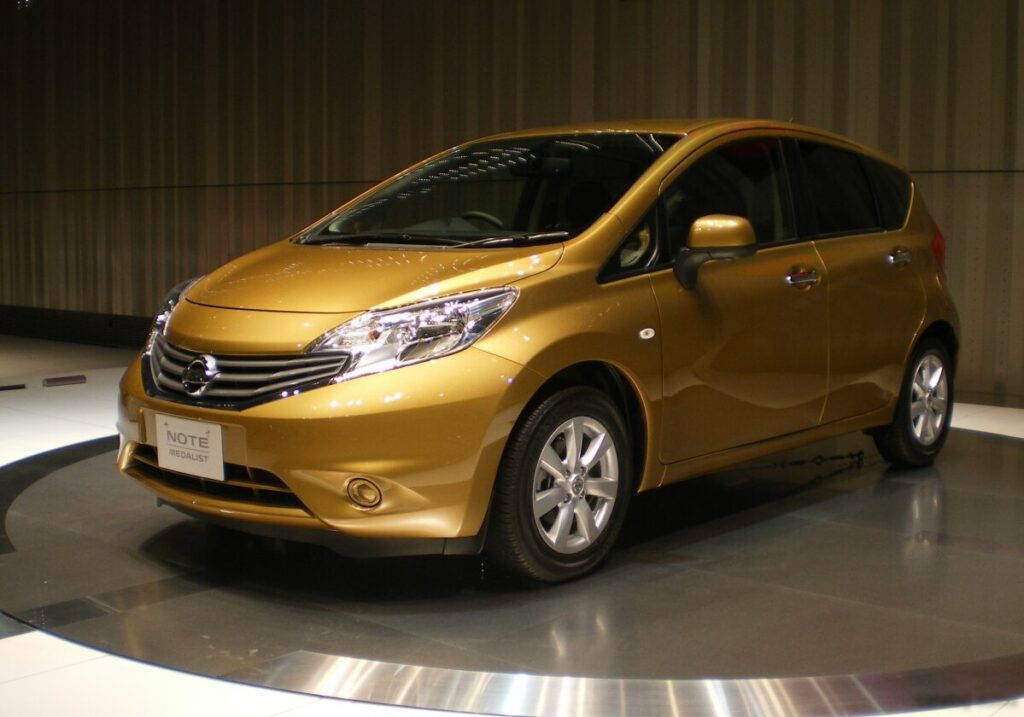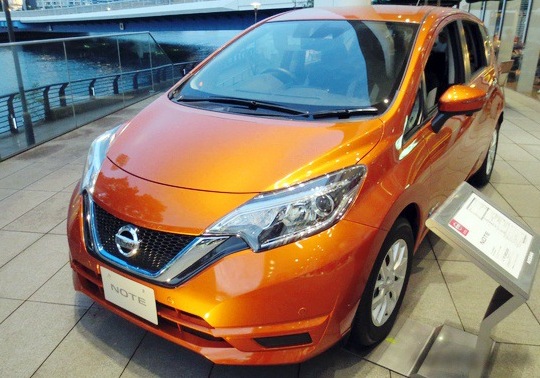
The Nissan Note II (E12 series, facelifted in 2017) 1.2L 4WD CVT represents a specific configuration within the second generation of Nissan’s popular supermini, the Note. Produced from 2017 to 2020, this variant was primarily aimed at the European and Japanese markets, offering a blend of affordability, fuel efficiency, and all-weather capability through its four-wheel-drive system. It occupied a mid-range position within the Note II lineup, slotting below the more powerful engine options while offering a more accessible price point than the higher-specification trims. This model was designed to appeal to buyers seeking a practical and economical city car with added security for inclement weather conditions.
Technical Specifications
| Brand | Nissan |
| Model | Note |
| Generation | Note II (E12, facelift 2017) |
| Type (Engine) | 1.2 (79 Hp) 4WD CVT |
| Start of production | 2017 |
| End of production | 2020 |
| Powertrain Architecture | Internal Combustion engine |
| Body type | Hatchback |
| Seats | 5 |
| Doors | 5 |
| Fuel consumption (combined) | 5.4 l/100 km (43.6 US mpg, 52.3 UK mpg, 18.5 km/l) |
| Fuel Type | Petrol (Gasoline) |
| Weight-to-power ratio | 14.1 kg/Hp, 71.2 Hp/tonne |
| Weight-to-torque ratio | 10.5 kg/Nm, 95.5 Nm/tonne |
| Power | 79 Hp @ 6000 rpm |
| Power per litre | 65.9 Hp/l |
| Torque | 106 Nm @ 4400 rpm (78.18 lb.-ft. @ 4400 rpm) |
| Engine layout | Front, Transverse |
| Engine Model/Code | HR12DE |
| Engine displacement | 1198 cm3 (73.11 cu. in.) |
| Number of cylinders | 3 |
| Engine configuration | Inline |
| Cylinder Bore | 78 mm (3.07 in.) |
| Piston Stroke | 83.6 mm (3.29 in.) |
| Compression ratio | 10.2:1 |
| Number of valves per cylinder | 4 |
| Fuel injection system | Multi-port manifold injection |
| Engine aspiration | Naturally aspirated engine |
| Valvetrain | DOHC |
| Engine oil capacity | 3.4 l (3.59 US qt | 2.99 UK qt) |
| Kerb Weight | 1110 kg (2447.13 lbs.) |
| Max. weight | 1385 kg (3053.4 lbs.) |
| Max load | 275 kg (606.27 lbs.) |
| Fuel tank capacity | 41 l (10.83 US gal | 9.02 UK gal) |
| Length | 4100 mm (161.42 in.) |
| Width including mirrors | 1695 mm (66.73 in.) |
| Height | 1535 mm (60.43 in.) |
| Wheelbase | 2600 mm (102.36 in.) |
| Front track | 1480 mm (58.27 in.) |
| Rear (Back) track | 1485 mm (58.46 in.) |
| Ride height (ground clearance) | 155 mm (6.1 in.) |
| Minimum turning circle | 9.4 m (30.84 ft.) |
| Drive wheel | All wheel drive (4×4) |
| Number of gears and type of gearbox | automatic transmission CVT |
| Front suspension | Independent coil spring |
| Rear suspension | Elastic beam |
| Front brakes | Ventilated discs |
| Rear brakes | Drum |
| Assisting systems | ABS (Anti-lock braking system) |
| Steering type | Steering rack and pinion |
| Power steering | Electric Steering |
| Tires size | 185/70 R14 88S |
| Wheel rims size | 5.5J x 14 ET40 |
Powertrain & Engine Architecture
The heart of this Note variant is the HR12DE, a 1.2-liter inline three-cylinder petrol engine. This engine is a member of Nissan’s HR series, known for its compact design and relatively efficient operation. The HR12DE utilizes multi-point fuel injection and a double overhead camshaft (DOHC) valvetrain with four valves per cylinder. Its 10.2:1 compression ratio contributes to its modest power output. The engine is transversely mounted at the front of the vehicle. Paired with this engine is a Continuously Variable Transmission (CVT), which prioritizes fuel economy over outright acceleration. The CVT lacks fixed gear ratios, instead offering a seamless range of ratios to keep the engine operating at its most efficient point. The 4WD system is typically a part-time system, engaging the rear wheels when wheel slip is detected, enhancing traction in slippery conditions.
Driving Characteristics
The 1.2L engine with 79 horsepower and the CVT transmission delivers adequate, but not exhilarating, performance. Acceleration is best described as leisurely, with a 0-60 mph time likely exceeding 12 seconds. The CVT contributes to a smooth, if somewhat uninspiring, driving experience. The transmission tends to hold the engine at a constant RPM during acceleration, which can feel and sound somewhat monotonous to drivers accustomed to traditional automatic gearboxes. The 4WD system provides enhanced grip, particularly on loose surfaces, but adds to the vehicle’s weight and slightly impacts fuel economy. The gear ratios within the CVT are optimized for fuel efficiency, meaning the engine often operates at lower RPMs during cruising, contributing to a quiet cabin experience. Compared to the 1.5L engine options available in the Note II range, this 1.2L variant offers significantly less power, but also lower running costs.
Equipment & Trim Levels
The 1.2L 4WD CVT Note II typically came equipped with a reasonable level of standard features. These generally included air conditioning, power windows, central locking, and an audio system with USB connectivity. Safety features such as ABS (Anti-lock Braking System) and multiple airbags were also standard. Higher trim levels offered options like alloy wheels, a touchscreen infotainment system with navigation, and parking sensors. Interior upholstery was typically cloth, with a functional and durable design. The dashboard layout was straightforward and user-friendly, prioritizing practicality over luxury.
Chassis & Braking
The Note II utilizes a front independent coil spring suspension and a rear elastic beam suspension. This setup provides a comfortable ride quality, well-suited for city driving. The front brakes are ventilated discs, offering good stopping power, while the rear brakes are drums, a cost-saving measure common in this segment. The electric power steering provides light and easy steering, making maneuvering in tight spaces effortless. The 4WD system adds weight to the vehicle, which can slightly affect handling, but the benefits in terms of traction outweigh this drawback for many drivers.
Market Reception & Comparison
The Nissan Note II 1.2L 4WD CVT was generally well-received as a practical and economical city car. Critics praised its fuel efficiency and the added security of the all-wheel-drive system. However, the engine’s modest power output was often noted as a drawback, particularly when fully loaded or driving on inclines. Compared to other trims in the Note II lineup, such as the 1.5L variants, this model offered lower performance but superior fuel economy. Against competitors like the Toyota Yaris and Volkswagen Polo, the Note II offered a compelling combination of features and value, particularly in markets where all-wheel drive was highly desirable.
Legacy
The HR12DE engine, while not known for being particularly powerful, has proven to be a relatively reliable unit. Common issues are generally minor and related to routine maintenance items. The CVT transmission, if properly maintained with regular fluid changes, is also generally durable. In the used car market, the Note II 1.2L 4WD CVT remains a popular choice for buyers seeking an affordable and economical small car with all-weather capability. Its reputation for reliability and low running costs contributes to its continued appeal. However, potential buyers should be aware of the engine’s limited power output and the CVT’s potential for needing specialized servicing.