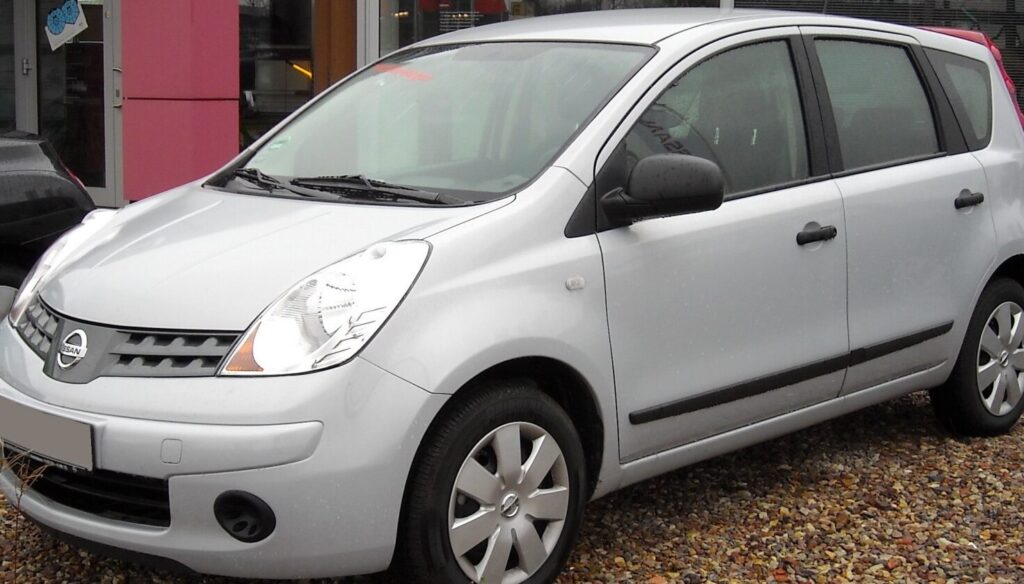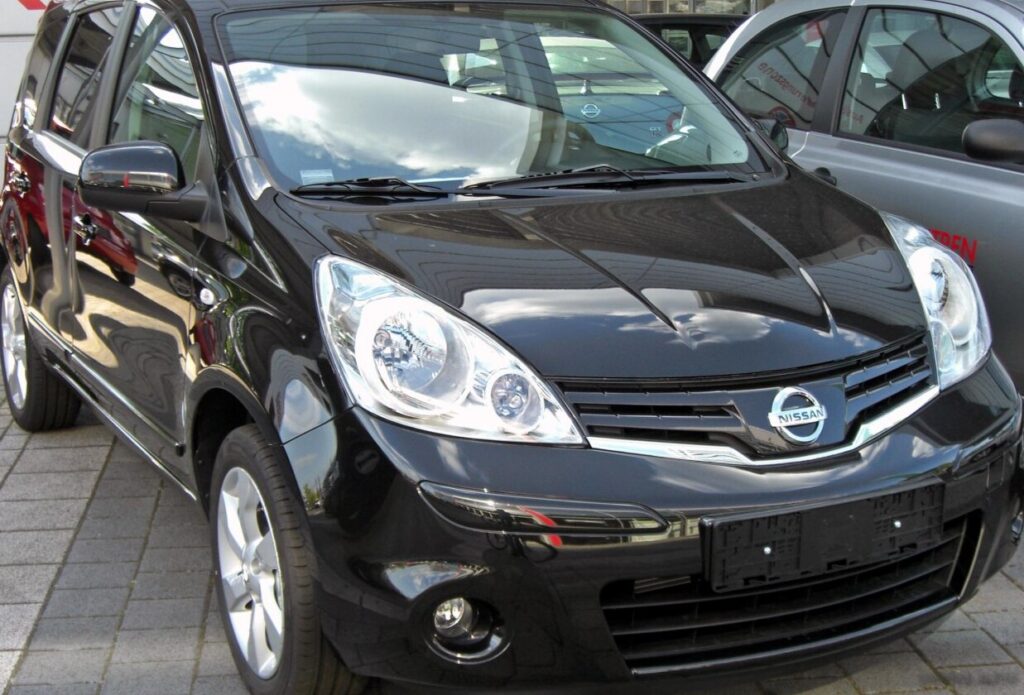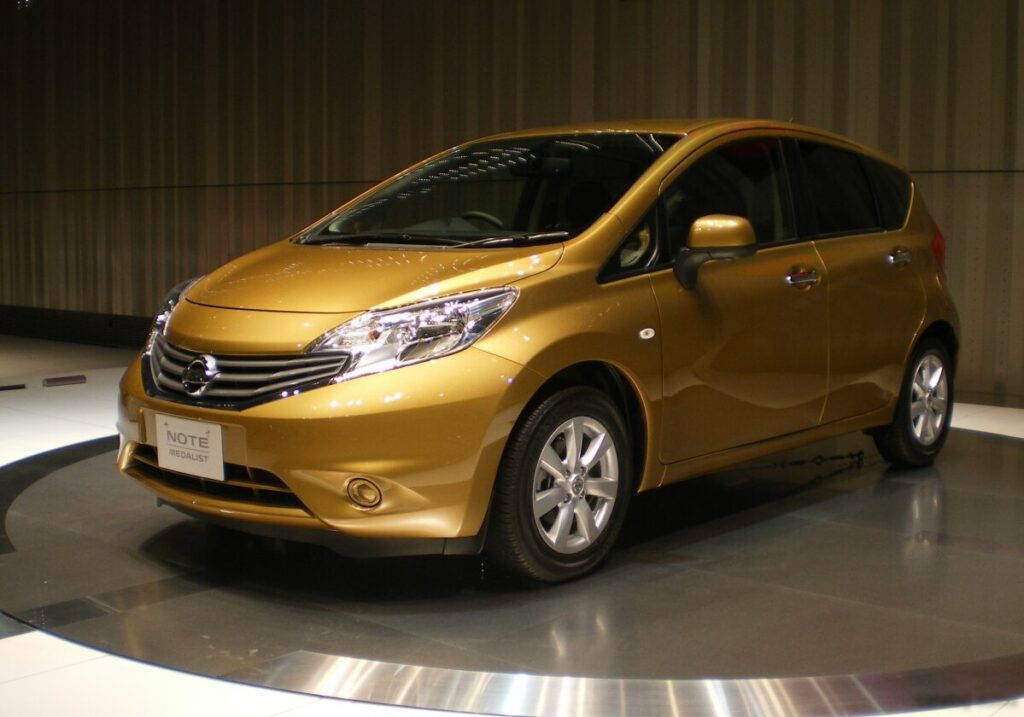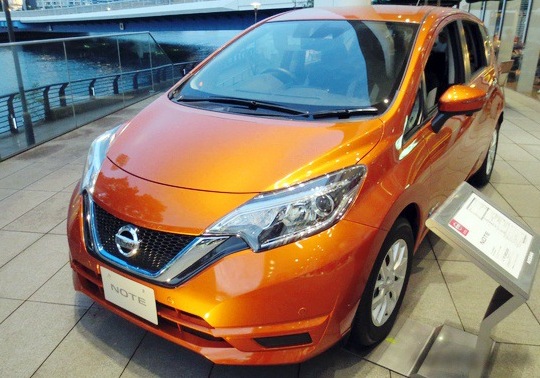
The Nissan Note II (E12 series, facelifted in 2017) with the 1.2-liter engine producing 79 horsepower and paired with a Continuously Variable Transmission (CVT) represents an entry-level offering within the second generation Note lineup, sold primarily in European and Asian markets from 2017 to 2020. Positioned as a fuel-efficient and affordable city car, this variant aimed to provide practical transportation for budget-conscious buyers. The E12 Note, a successor to the original Note (E11), was built on the Nissan V platform and sought to improve upon its predecessor’s space efficiency and practicality. The 2017 facelift brought styling updates and minor equipment revisions.
Technical Specifications
| Brand | Nissan |
| Model | Note |
| Generation | Note II (E12, facelift 2017) |
| Type (Engine) | 1.2 (79 Hp) CVT |
| Start of production | 2017 |
| End of production | 2020 |
| Powertrain Architecture | Internal Combustion engine |
| Body type | Hatchback |
| Seats | 5 |
| Doors | 5 |
| Fuel consumption (combined) | 4.3 l/100 km (54.7 US mpg, 65.7 UK mpg, 23.3 km/l) |
| Fuel Type | Petrol (Gasoline) |
| Weight-to-power ratio | 13 kg/Hp, 76.7 Hp/tonne |
| Weight-to-torque ratio | 9.7 kg/Nm, 102.9 Nm/tonne |
| Power | 79 Hp @ 6000 rpm |
| Power per litre | 65.9 Hp/l |
| Torque | 106 Nm @ 4400 rpm (78.18 lb.-ft. @ 4400 rpm) |
| Engine layout | Front, Transverse |
| Engine Model/Code | HR12DE |
| Engine displacement | 1198 cm3 (73.11 cu. in.) |
| Number of cylinders | 3 |
| Engine configuration | Inline |
| Cylinder Bore | 78 mm (3.07 in.) |
| Piston Stroke | 83.6 mm (3.29 in.) |
| Compression ratio | 10.2:1 |
| Number of valves per cylinder | 4 |
| Fuel injection system | Multi-port manifold injection |
| Engine aspiration | Naturally aspirated engine |
| Valvetrain | DOHC |
| Engine oil capacity | 3.4 l (3.59 US qt | 2.99 UK qt) |
| Kerb Weight | 1030-1040 kg (2270.76 – 2292.81 lbs.) |
| Max. weight | 1315 kg (2899.08 lbs.) |
| Max load | 275-285 kg (606.27 – 628.32 lbs.) |
| Fuel tank capacity | 41 l (10.83 US gal | 9.02 UK gal) |
| Length | 4100 mm (161.42 in.) |
| Width including mirrors | 1695 mm (66.73 in.) |
| Height | 1525 mm (60.04 in.) |
| Wheelbase | 2600 mm (102.36 in.) |
| Front track | 1480 mm (58.27 in.) |
| Rear (Back) track | 1485 mm (58.46 in.) |
| Ride height (ground clearance) | 150 mm (5.91 in.) |
| Minimum turning circle (turning diameter) | 9.4 m (30.84 ft.) |
| Drivetrain Architecture | Front wheel drive |
| Number of gears and type of gearbox | automatic transmission CVT |
| Front suspension | Independent coil spring |
| Rear suspension | Elastic beam |
| Front brakes | Ventilated discs |
| Rear brakes | Drum |
| Assisting systems | ABS (Anti-lock braking system) |
| Steering type | Steering rack and pinion |
| Power steering | Electric Steering |
| Tires size | 185/70 R14 88S |
| Wheel rims size | 5.5J x 14 ET40 |
Powertrain & Engine Architecture
The heart of this Note variant is the HR12DE, a 1.2-liter inline three-cylinder gasoline engine. This engine is part of Nissan’s ‘HR’ series, known for its compact design and relatively efficient operation. The HR12DE utilizes multi-point fuel injection and a double overhead camshaft (DOHC) valvetrain with four valves per cylinder. The engine’s 10.2:1 compression ratio contributes to its modest power output. The engine is transversely mounted at the front of the vehicle. Paired with this engine is a Continuously Variable Transmission (CVT), which Nissan branded as ‘X-TRONIC’. This CVT is designed to provide smooth, stepless gear changes, prioritizing fuel economy over outright performance. The CVT lacks fixed gear ratios, instead utilizing a belt and pulley system to continuously adjust the transmission ratio based on driving conditions.
Driving Characteristics
The 1.2L 79 hp/CVT combination in the Note II delivers adequate, but not exhilarating, performance. Acceleration is best described as leisurely, with a 0-60 mph time estimated to be around 14-15 seconds. The CVT contributes to a smooth driving experience, but can sometimes feel ‘elastic’ under hard acceleration, with the engine revving to maintain speed. The CVT’s programming prioritizes fuel efficiency, meaning the engine often operates at lower RPMs during cruising. Compared to the higher-output 1.5-liter engine option available in some markets, this 1.2L variant feels noticeably slower. Manual transmission versions, where available, offered a more engaging driving experience, but the CVT was favored by many buyers for its ease of use, especially in urban environments. The relatively light weight of the Note helps mitigate the engine’s modest power output.
Equipment & Trim Levels
The 1.2L CVT Note II typically came with a base level of equipment, focusing on essential features. Standard amenities generally included air conditioning, power steering, electric front windows, a basic audio system with USB connectivity, and ABS brakes. Safety features such as airbags were also standard. Higher trim levels, such as Visia, Acenta, and Tekna (depending on the market), added features like alloy wheels, climate control, a touchscreen infotainment system, rear parking sensors, and Nissan’s Safety Shield technologies (including lane departure warning and emergency braking). Interior upholstery was typically cloth, with a functional, if somewhat basic, dashboard layout. Optional extras included navigation systems and metallic paint finishes.
Chassis & Braking
The Note II utilizes a front-wheel-drive layout with an independent coil spring suspension at the front and an elastic beam (torsion beam) suspension at the rear. This suspension setup is designed to provide a comfortable ride, prioritizing smoothness over sporty handling. The front brakes are ventilated discs, providing adequate stopping power, while the rear brakes are drums, a cost-saving measure common in this segment. Electric power steering provides light and easy steering, making it ideal for city driving. The relatively narrow tires (typically 185/70 R14) contribute to fuel efficiency but limit grip in more demanding driving situations.
Market Reception & Comparison
The Nissan Note II 1.2L CVT was generally well-received as an affordable and practical city car. Critics praised its fuel efficiency and spacious interior for its size. However, the engine’s lack of power was a common criticism, particularly when fully loaded or on inclines. Compared to rivals like the Renault Clio, Peugeot 208, and Volkswagen Polo, the Note offered a competitive level of equipment and fuel economy, but often lacked the refinement and driving dynamics of some European competitors. The CVT transmission was also a point of contention for some reviewers, who preferred the more direct feel of a traditional automatic or manual gearbox. Reliability was generally good, with few major issues reported.
Legacy
The HR12DE engine, while not known for its performance, proved to be a reliable and durable unit. The Note II, particularly the 1.2L CVT variant, remains a relatively affordable option in the used car market. Its fuel efficiency and practicality continue to appeal to buyers seeking a low-cost, economical vehicle for urban commuting. While not a particularly exciting car, the Note II 1.2L CVT fulfilled its intended purpose as a sensible and dependable mode of transportation. Maintenance costs are generally low, and parts availability is good, making it a practical choice for budget-conscious drivers.