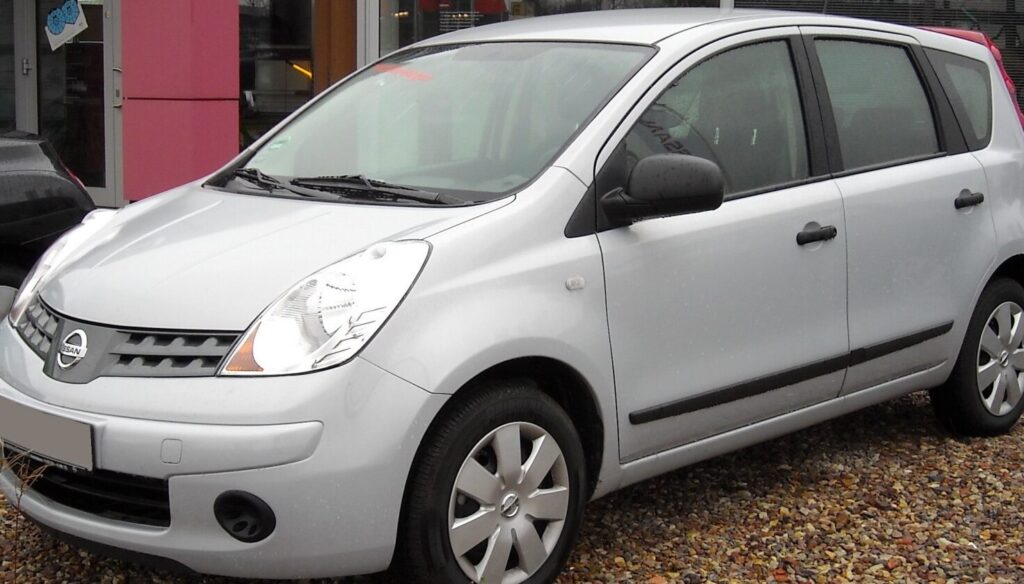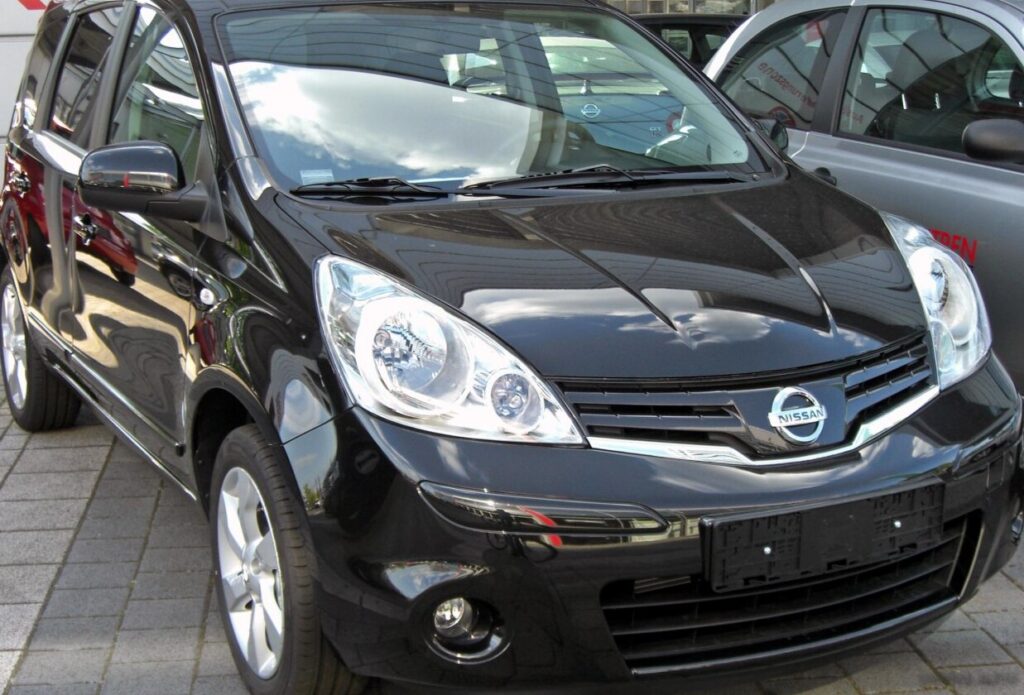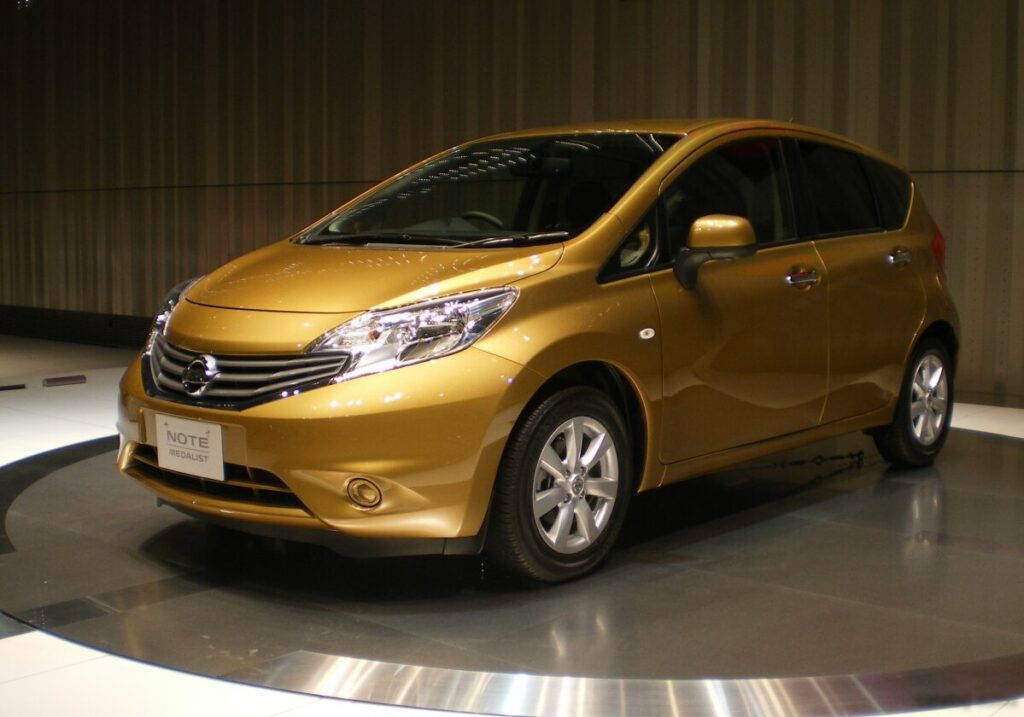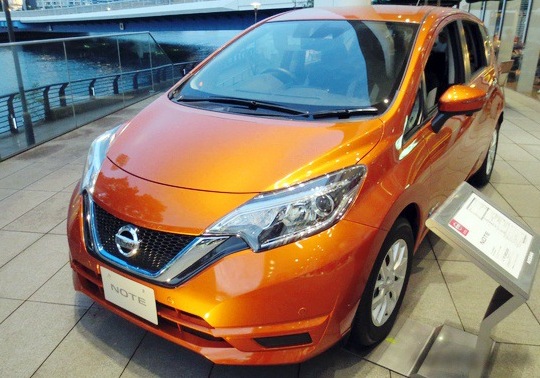
The Nissan Note II (E12), particularly the facelifted version introduced in 2017, represented a significant step forward for Nissan’s supermini offerings in global markets, especially in Japan and Europe. The e-POWER 1.2 variant, producing 109 horsepower, was a key model within the E12 range from 2017 to 2020. This version distinguished itself through its unique hybrid powertrain, offering a different driving experience compared to traditional gasoline or diesel-powered competitors. It aimed to provide the benefits of an electric vehicle – quiet operation and instant torque – without the range anxiety associated with pure EVs at the time.
Technical Specifications
| Brand | Nissan |
| Model | Note |
| Generation | Note II (E12, facelift 2017) |
| Type (Engine) | e-POWER 1.2 (109 Hp) Hybrid Automatic |
| Start of production | 2017 |
| End of production | 2020 |
| Powertrain Architecture | FHEV (Full Hybrid Electric Vehicle) |
| Body type | Hatchback |
| Seats | 5 |
| Doors | 5 |
| Fuel consumption (combined) | 2.6 l/100 km (90.5 US mpg, 108.6 UK mpg, 38.5 km/l) |
| Fuel Type | Petrol (Gasoline) |
| Weight-to-power ratio | 10.9 kg/Hp, 91.6 Hp/tonne |
| Weight-to-torque ratio | 4.7 kg/Nm, 213.4 Nm/tonne |
| Electric motor power | 109 Hp @ 3008-10000 rpm |
| Electric motor Torque | 254 Nm @ 0-3008 rpm (187.34 lb.-ft. @ 0-3008 rpm) |
| System power | 109 Hp @ 3008-10000 rpm |
| System torque | 254 Nm @ 0-3008 rpm (187.34 lb.-ft. @ 0-3008 rpm) |
| Internal combustion engine power | 79 Hp @ 5400 rpm |
| Power per litre | 65.9 Hp/l |
| Engine torque | 103 Nm @ 3600-5200 rpm (75.97 lb.-ft. @ 3600-5200 rpm) |
| Engine layout | Front, Transverse |
| Engine Model/Code | HR12DE |
| Engine displacement | 1198 cm3 (73.11 cu. in.) |
| Number of cylinders | 3 |
| Engine configuration | Inline |
| Cylinder Bore | 78 mm (3.07 in.) |
| Piston Stroke | 83.6 mm (3.29 in.) |
| Compression ratio | 12:1 |
| Number of valves per cylinder | 4 |
| Fuel injection system | Multi-port manifold injection |
| Valvetrain | DOHC |
| Engine oil capacity | 3.4 l (3.59 US qt | 2.99 UK qt) |
| Coolant capacity | 6.96 l (7.35 US qt | 6.12 UK qt) |
| Kerb Weight | 1190-1230 kg (2623.5 – 2711.69 lbs.) |
| Max. weight | 1505 kg (3317.96 lbs.) |
| Max load | 275-315 kg (606.27 – 694.46 lbs.) |
| Fuel tank capacity | 35 l (9.25 US gal | 7.7 UK gal) |
| Length | 4100 mm (161.42 in.) |
| Width including mirrors | 1695 mm (66.73 in.) |
| Height | 1520 mm (59.84 in.) |
| Wheelbase | 2600 mm (102.36 in.) |
| Front track | 1480 mm (58.27 in.) |
| Rear track | 1485 mm (58.46 in.) |
| Ride height (ground clearance) | 130 mm (5.12 in.) |
| Minimum turning circle | 10.4 m (34.12 ft.) |
| Drive wheel | Front wheel drive |
| Number of gears and type of gearbox | 1 gears, automatic transmission |
| Front suspension | Independent coil spring |
| Rear suspension | Elastic beam |
| Front brakes | Ventilated discs |
| Rear brakes | Drum |
| Assisting systems | ABS (Anti-lock braking system) |
| Steering type | Steering rack and pinion |
| Power steering | Electric Steering |
| Tires size | 185/65 R15 88H |
| Wheel rims size | 5.5J x 15 ET40 |
INTRODUCTION
The Nissan Note II (E12) facelift, launched in 2017, built upon the success of the original E12 generation, offering a refreshed design and, crucially, the innovative e-POWER hybrid system. Positioned as a mid-range trim, the 1.2 e-POWER Automatic model aimed to appeal to buyers seeking fuel efficiency and a smooth driving experience without the commitment to a fully electric vehicle. The E12 Note was primarily targeted at the European and Japanese markets, where demand for compact, economical, and technologically advanced hatchbacks was high. It competed directly with vehicles like the Toyota Yaris, Volkswagen Polo, and Renault Clio.
Powertrain & Engine Architecture
The e-POWER system is the defining feature of this Note variant. It’s not a traditional hybrid where the electric motor assists the gasoline engine. Instead, the 1.2-liter HR12DE three-cylinder gasoline engine acts *solely* as a generator, charging a battery which then powers an electric motor that drives the wheels. This configuration allows the engine to operate at its most efficient RPM, regardless of vehicle speed. The HR12DE engine itself is a relatively simple unit, featuring multi-point fuel injection and a double overhead camshaft (DOHC) valvetrain. It produces 79 horsepower and 103 Nm of torque. The electric motor, however, delivers 109 horsepower and a significantly more substantial 254 Nm of torque. The transmission is a single-speed automatic, optimized for the electric motor’s characteristics. This setup provides a seamless and linear acceleration experience.
Driving Characteristics
The e-POWER Note 1.2 Automatic offers a unique driving experience. The instant torque from the electric motor provides brisk acceleration, particularly in urban environments. While not a performance car, it feels surprisingly responsive. The single-speed transmission means there are no gear changes, contributing to a smooth and refined ride. Compared to the standard 1.2-liter gasoline Note, the e-POWER version feels considerably more powerful and refined. Against higher-output gasoline variants, it lacks outright top-end speed, but its strong low-end torque makes it more enjoyable for everyday driving. The regenerative braking system, which captures energy during deceleration, adds to the efficiency and provides a slightly different brake pedal feel.
Equipment & Trim Levels
The 1.2 e-POWER Automatic trim typically included standard features such as air conditioning, power windows, central locking, and a basic audio system with USB connectivity. Higher trim levels added features like alloy wheels, a touchscreen infotainment system with navigation, a rearview camera, and advanced safety features like automatic emergency braking. Interior upholstery was generally cloth, with options for upgraded materials on higher trims. The dashboard layout was functional and modern, with a focus on ease of use. Optional extras included parking sensors, climate control, and a premium audio system.
Chassis & Braking
The Note II utilized a front-wheel-drive platform with an independent coil spring suspension at the front and an elastic beam (torsion beam) suspension at the rear. This setup provided a comfortable ride, well-suited for city driving. The front brakes were ventilated discs, offering good stopping power, while the rear brakes were drums, a cost-saving measure common in this segment. Anti-lock Braking System (ABS) was standard. The steering was electrically assisted, providing light and precise control. Stabilizer bars were fitted to both the front and rear axles to reduce body roll during cornering.
Market Reception & Comparison
The Nissan Note II e-POWER received generally positive reviews from automotive critics. Its fuel efficiency was consistently praised, with real-world figures often exceeding the official 2.6 l/100km. The unique driving experience offered by the e-POWER system was also well-received. Compared to the standard gasoline Note, the e-POWER version commanded a higher price, but many buyers considered the improved fuel economy and driving experience worth the extra cost. Compared to diesel-powered competitors, the e-POWER offered a quieter and more refined driving experience, although it lacked the long-distance cruising range of some diesel models. Reliability reports have been generally favorable, with few major issues reported with the e-POWER powertrain.
Legacy
The Nissan Note II e-POWER played a significant role in popularizing hybrid technology and paving the way for Nissan’s broader electrification strategy. The e-POWER system has since been adopted in other Nissan models, demonstrating its success and versatility. On the used car market, the Note II e-POWER 1.2 Automatic remains a popular choice for buyers seeking a fuel-efficient and reliable compact hatchback. The powertrain has proven to be durable, and parts availability is generally good. Its unique hybrid system continues to appeal to those looking for a different driving experience, and its fuel economy remains competitive even by today’s standards. The E12 Note, and particularly the e-POWER variant, represents a notable step in the evolution of compact hybrid vehicles.