
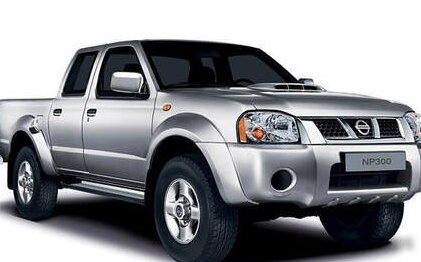
The Nissan NP300 Pickup, specifically the D22 generation produced between 2008 and 2015, represented Nissan’s mid-size truck offering, primarily targeted towards commercial and utility users. The 2.5 dCi (133 hp) King Cab variant occupied a middle ground within the D22 lineup, offering a balance between capability, fuel efficiency, and affordability. This model was particularly significant in markets outside of North America, where mid-size trucks maintain a strong presence due to their versatility and practicality. The King Cab configuration, with its extended cab, provided additional passenger space compared to the standard cab models, making it suitable for both work and family needs.
Technical Specifications
| Brand | Nissan |
| Model | NP 300 Pickup |
| Generation | NP 300 Pickup (D22) |
| Type (Engine) | 2.5 dCi (133 Hp) King Cab |
| Start of production | 2008 |
| End of production | 2015 |
| Powertrain Architecture | Internal Combustion engine |
| Body type | Pick-up |
| Seats | 2 |
| Doors | 2 |
| Fuel consumption (urban) | 10.4 l/100 km (22.6 US mpg, 27.2 UK mpg, 9.6 km/l) |
| Fuel consumption (extra urban) | 8.2 l/100 km (28.7 US mpg, 34.4 UK mpg, 12.2 km/l) |
| Fuel consumption (combined) | 9.1 l/100 km (25.8 US mpg, 31 UK mpg, 11 km/l) |
| Fuel Type | Diesel |
| Maximum speed | 160 km/h (99.42 mph) |
| Emission standard | Euro 3 |
| Weight-to-power ratio | 13.8 kg/Hp, 72.3 Hp/tonne |
| Weight-to-torque ratio | 6.1 kg/Nm, 165.2 Nm/tonne |
| Power | 133 Hp @ 3600 rpm |
| Power per litre | 53.5 Hp/l |
| Torque | 304 Nm @ 2000 rpm (224.22 lb.-ft. @ 2000 rpm) |
| Engine layout | Front, Longitudinal |
| Engine Model/Code | YD25DDTi |
| Engine displacement | 2488 cm3 (151.83 cu. in.) |
| Number of cylinders | 4 |
| Engine configuration | Inline |
| Cylinder Bore | 89 mm (3.5 in.) |
| Piston Stroke | 100 mm (3.94 in.) |
| Compression ratio | 18:1 |
| Number of valves per cylinder | 4 |
| Fuel injection system | Diesel Commonrail |
| Engine aspiration | Turbocharger, Intercooler |
| Engine oil capacity | 4.3 l (4.54 US qt, 3.78 UK qt) |
| Coolant capacity | 9.4 l (9.93 US qt, 8.27 UK qt) |
| Kerb Weight | 1840 kg (4056.51 lbs.) |
| Max. weight | 2860 kg (6305.22 lbs.) |
| Max load | 1020 kg (2248.72 lbs.) |
| Fuel tank capacity | 75 l (19.81 US gal, 16.5 UK gal) |
| Length | 5020 mm (197.64 in.) |
| Width | 1825 mm (71.85 in.) |
| Height | 1695 mm (66.73 in.) |
| Wheelbase | 2950 mm (116.14 in.) |
| Front track | 1525 mm (60.04 in.) |
| Rear track | 1530 mm (60.24 in.) |
| Minimum turning circle | 12 m (39.37 ft.) |
| Drive wheel | All wheel drive (4×4) |
| Number of gears | 5 |
| Gearbox type | Manual transmission |
| Front suspension | Independent coil spring |
| Rear suspension | Leaf spring |
| Assisting systems | ABS (Anti-lock braking system), Hydraulic Power Steering |
| Tires size | 205/85 R16; 255/70R16 |
| Wheel rims size | 6J x 16; 7J x 16 |
INTRODUCTION
The Nissan NP300 Pickup (D22) series, launched in 2008, was a significant update to Nissan’s popular mid-size truck. The 2.5 dCi 133 hp King Cab variant was a key offering, designed to appeal to buyers needing a versatile vehicle for both work and personal use. The “King Cab” designation refers to the extended cab body style, offering limited rear seating and additional storage space behind the front seats. This model was primarily sold in Europe, Asia, Australia, and Latin America, where the demand for practical and durable pickup trucks remained strong. It built upon the foundation of the previous D22 generation, incorporating improvements in engine technology, safety features, and overall refinement.
Powertrain & Engine Architecture
The heart of the NP300 2.5 dCi King Cab is the YD25DDTi engine, a 2.5-liter inline-four cylinder diesel. This engine utilizes a common rail direct injection system, which delivers fuel directly into the combustion chamber at extremely high pressure, improving efficiency and reducing emissions. The YD25DDTi is also equipped with a turbocharger and intercooler, boosting power output and torque. The engine’s 18:1 compression ratio is typical for a diesel engine, contributing to its efficiency. The 133 horsepower peak is achieved at 3600 rpm, while the 304 Nm (224.22 lb-ft) of torque is available from 2000 rpm, providing ample pulling power for hauling and towing. The engine is longitudinally mounted in the chassis. The transmission is a robust 5-speed manual gearbox, chosen for its durability and suitability for demanding work conditions. While an automatic transmission was available on some D22 models, it wasn’t commonly paired with this specific engine and power output.
Driving Characteristics
The 2.5 dCi 133 hp engine, coupled with the 5-speed manual transmission, provides a practical, if not exhilarating, driving experience. The engine delivers usable torque from low rpm, making it well-suited for hauling loads and navigating challenging terrain. However, it’s not a particularly fast truck; acceleration is modest, and overtaking requires planning. The gear ratios are optimized for fuel efficiency and towing capacity rather than outright performance. Compared to higher-output versions of the D22, such as those equipped with more powerful diesel engines, the 133 hp variant feels noticeably less responsive. The manual transmission allows for greater driver control, but requires more effort than an automatic, especially in stop-and-go traffic. The King Cab configuration adds some weight compared to the standard cab models, slightly impacting acceleration and fuel economy.
Equipment & Trim Levels
The NP300 2.5 dCi King Cab typically came with a fairly basic level of equipment, reflecting its work-oriented focus. Standard features generally included power steering, ABS brakes, and a relatively simple interior with durable cloth upholstery. Air conditioning was often an optional extra, as were power windows and central locking. The dashboard layout is functional and straightforward, prioritizing practicality over aesthetics. Higher trim levels might have included features like alloy wheels, a more sophisticated audio system, and upgraded interior trim. The King Cab’s extended cab offered limited rear seating, typically suitable for occasional use or for carrying smaller items. The bed of the pickup was typically equipped with a durable plastic liner to protect the metal floor.
Chassis & Braking
The D22 NP300 Pickup utilizes a body-on-frame construction, providing a robust and durable chassis capable of withstanding heavy loads and rough terrain. The front suspension consists of independent coil springs, offering a reasonable level of ride comfort. The rear suspension employs leaf springs, which are well-suited for carrying heavy loads but can result in a firmer ride when unladen. Braking duties are handled by disc brakes at the front and drum brakes at the rear, a common configuration for this class of vehicle. ABS (Anti-lock Braking System) was standard, enhancing safety during emergency braking situations. The 4×4 drivetrain provides excellent traction in off-road conditions, making it suitable for use in a variety of environments.
Market Reception & Comparison
The Nissan NP300 2.5 dCi King Cab was generally well-received in its target markets. Critics praised its durability, practicality, and fuel efficiency. However, some reviewers noted its relatively basic interior and lack of refinement compared to some of its competitors. Compared to other trims in the D22 lineup, the 133 hp variant offered a more affordable entry point, making it attractive to budget-conscious buyers. It provided a good balance between performance and economy, but lacked the outright power of the higher-output diesel engines. Fuel economy was a strong point, with combined fuel consumption figures around 9.1 l/100 km (25.8 US mpg), making it a relatively economical workhorse.
Legacy
The Nissan NP300 D22 2.5 dCi 133 hp King Cab has proven to be a reliable and durable vehicle, with many examples still in service today. The YD25DDTi engine, while not known for being particularly high-tech, is generally considered to be robust and relatively easy to maintain. Common issues include wear and tear on suspension components and potential problems with the fuel injection system, but these are typically manageable with regular maintenance. In the used car market, these trucks are often sought after by those needing a dependable and affordable pickup for work or recreational purposes. Its simplicity and durability continue to make it a popular choice for those who prioritize practicality over luxury.
