
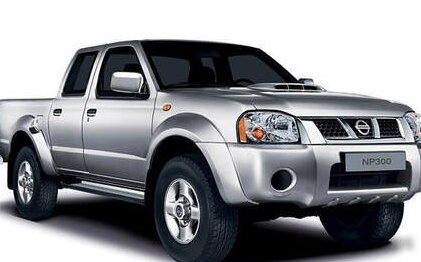
The Nissan NP300 Pickup, specifically the D22 generation produced between 2008 and 2015, represented Nissan’s mid-size truck offering, primarily targeted towards commercial and fleet buyers. This variant, equipped with the 2.5 dCi engine producing 133 horsepower and paired with a five-speed manual transmission, was a popular choice in markets outside of North America, where the NP300 served as a robust and practical workhorse. The Double Cab configuration offered increased passenger capacity, making it suitable for crews and families alongside its utility functions. It sat within the D22 range as a balance between affordability and capability, positioned below the more powerful engine options but offering a more economical alternative.
Technical Specifications
| Brand | Nissan |
| Model | NP 300 Pick up |
| Generation | NP 300 Pick up (D22) |
| Type | 2.5 dCi (133 Hp) Pickup Double Cab |
| Start of production | 2008 |
| End of production | 2015 |
| Powertrain Architecture | Internal Combustion engine |
| Body type | Pick-up |
| Seats | 5 |
| Doors | 4 |
| Fuel consumption (urban) | 10.4 l/100 km (22.6 US mpg, 27.2 UK mpg, 9.6 km/l) |
| Fuel consumption (extra urban) | 8.5 l/100 km (27.7 US mpg, 33.2 UK mpg, 11.8 km/l) |
| Fuel consumption (combined) | 9.2 l/100 km (25.6 US mpg, 30.7 UK mpg, 10.9 km/l) |
| Fuel Type | Diesel |
| Maximum speed | 160 km/h (99.42 mph) |
| Emission standard | Euro 3 |
| Weight-to-power ratio | 14.1 kg/Hp, 70.9 Hp/tonne |
| Weight-to-torque ratio | 6.2 kg/Nm, 162.1 Nm/tonne |
| Power | 133 Hp @ 3600 rpm |
| Power per litre | 53.5 Hp/l |
| Torque | 304 Nm @ 2000 rpm (224.22 lb.-ft. @ 2000 rpm) |
| Engine layout | Front, Longitudinal |
| Engine Model/Code | YD25DDTi |
| Engine displacement | 2488 cm3 (151.83 cu. in.) |
| Number of cylinders | 4 |
| Engine configuration | Inline |
| Cylinder Bore | 89 mm (3.5 in.) |
| Piston Stroke | 100 mm (3.94 in.) |
| Compression ratio | 18:1 |
| Number of valves per cylinder | 4 |
| Fuel injection system | Diesel Commonrail |
| Engine aspiration | Turbocharger, Intercooler |
| Engine oil capacity | 4.3 l (4.54 US qt | 3.78 UK qt) |
| Coolant capacity | 9.4 l (9.93 US qt | 8.27 UK qt) |
| Kerb Weight | 1875 kg (4133.67 lbs.) |
| Max. weight | 2860 kg (6305.22 lbs.) |
| Max load | 985 kg (2171.55 lbs.) |
| Fuel tank capacity | 75 l (19.81 US gal | 16.5 UK gal) |
| Length | 5020 mm (197.64 in.) |
| Width | 1825 mm (71.85 in.) |
| Height | 1710 mm (67.32 in.) |
| Wheelbase | 2920 mm (114.96 in.) |
| Front track | 1525 mm (60.04 in.) |
| Rear track | 1530 mm (60.24 in.) |
| Minimum turning circle | 12 m (39.37 ft.) |
| Drive wheel | All wheel drive (4×4) |
| Number of gears | 5 |
| Gearbox type | Manual transmission |
| Front suspension | Independent coil spring |
| Rear suspension | Leaf spring |
| Assisting systems | ABS (Anti-lock braking system), Hydraulic Power Steering |
| Tires size | 205/85 R16; 255/70R16 |
| Wheel rims size | 6J x 16; 7J x 16 |
Powertrain & Engine Architecture
The heart of this NP300 variant is the YD25DDTi 2.5-liter inline-four cylinder diesel engine. This engine, a staple in Nissan’s commercial vehicle lineup, utilizes a common rail direct injection system to deliver fuel directly into the cylinders at extremely high pressure. This technology, combined with a turbocharger and intercooler, optimizes combustion for improved power and efficiency. The YD25DDTi features four valves per cylinder, contributing to its breathing efficiency. The engine’s 18:1 compression ratio is typical for a diesel engine, maximizing thermal efficiency. The five-speed manual transmission was a robust unit designed to handle the engine’s torque output and the demands of hauling and towing. While not as refined as some modern automatic transmissions, it provided a direct connection between the engine and the wheels, offering good control and responsiveness.
Driving Characteristics
The 133 horsepower and 304 Nm (224 lb-ft) of torque delivered by the 2.5 dCi engine provided adequate, though not exhilarating, performance. The NP300 with this engine configuration was geared towards utility rather than speed. Acceleration was modest, but the engine’s torque peak at 2000 rpm meant it was capable of handling moderate loads and tackling inclines without excessive downshifting. Compared to the higher-output engine options available in the D22 range, such as the 170 hp version of the same engine, this variant felt noticeably less powerful, particularly when fully loaded. However, the manual transmission allowed drivers to maintain control and optimize engine braking on descents. The gear ratios were chosen to prioritize fuel economy and towing capability over outright acceleration.
Equipment & Trim Levels
The 2.5 dCi Double Cab typically came with a fairly basic level of equipment, reflecting its work-oriented nature. Standard features generally included air conditioning, power steering, and an AM/FM radio. The Double Cab configuration offered seating for five passengers, with a rear bench seat that could be folded up to create additional cargo space. Interior trim was typically durable and utilitarian, with vinyl or cloth upholstery. Optional extras could include alloy wheels, upgraded audio systems, and a limited-slip differential for improved off-road traction. The specific trim level varied depending on the market, but generally, this engine/transmission combination represented a mid-range offering, providing a balance between price and features.
Chassis & Braking
The NP300 D22 utilized a body-on-frame construction, providing a robust and durable platform for demanding applications. The front suspension consisted of independent coil springs, offering a reasonable level of ride comfort. The rear suspension employed leaf springs, which were well-suited for carrying heavy loads. Braking was typically accomplished with disc brakes on the front wheels and drum brakes on the rear, a common configuration for this class of vehicle. Anti-lock Braking System (ABS) was standard, enhancing safety during emergency braking situations. The hydraulic power steering provided reasonable assistance at low speeds, making maneuvering easier.
Market Reception & Comparison
The Nissan NP300 2.5 dCi Double Cab with a manual transmission was generally well-received as a practical and reliable work truck. Critics praised its durability, load-carrying capacity, and fuel efficiency. Compared to other mid-size pickups available at the time, such as the Toyota Hilux and Mitsubishi L200, the NP300 offered a competitive price point and a robust engine. However, some reviewers noted that the interior was somewhat basic and lacked the refinement of some competitors. Fuel economy was respectable for a diesel pickup, averaging around 25.6 US mpg in combined driving conditions. Reliability was generally good, although some owners reported issues with the turbocharger and fuel injection system over the long term.
Legacy
The YD25DDTi engine, in its various iterations, proved to be a durable and long-lasting powerplant. The NP300 D22, particularly the 2.5 dCi variants, have maintained a strong presence in the used car market, especially in regions where pickup trucks are popular. While not known for being particularly high-tech, the simplicity of the engine and drivetrain contributes to its reliability and ease of maintenance. Today, well-maintained examples of the NP300 D22 continue to be used as work vehicles and are appreciated for their ruggedness and practicality. The 2.5 dCi engine, while superseded by newer designs, remains a respected and capable unit in the world of diesel engines.
