
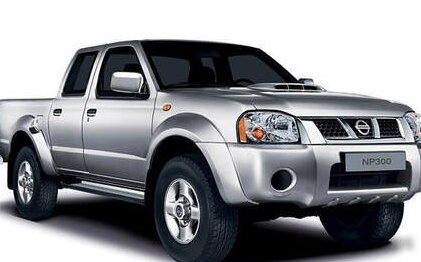
The Nissan NP300 Pickup, specifically the D22 generation produced from 2008 to 2015, represented Nissan’s offering in the mid-size pickup truck segment. This variant, equipped with the 2.5 dCi (133 horsepower) diesel engine and a single cab configuration, was primarily aimed at commercial users and those needing a robust, no-frills work vehicle. While the NP300 name was later applied to a completely redesigned model in 2015, the D22 continued to be a popular choice in many international markets during its production run, particularly in Europe, Australia, and Latin America. It served as a successor to the earlier D21 (Nissan Hardbody) and provided a practical and durable alternative to larger American pickups.
Technical Specifications
| Brand | Nissan |
| Model | NP 300 Pick up |
| Generation | NP 300 Pick up (D22) |
| Type (Engine) | 2.5 dCi (133 Hp) Single Cab |
| Start of production | 2008 year |
| End of production | 2015 year |
| Powertrain Architecture | Internal Combustion engine |
| Body type | Pick-up |
| Seats | 3 |
| Doors | 2 |
| Fuel consumption (urban) | 10.4 l/100 km (22.6 US mpg, 27.2 UK mpg, 9.6 km/l) |
| Fuel consumption (extra urban) | 8.2 l/100 km (28.7 US mpg, 34.4 UK mpg, 12.2 km/l) |
| Fuel consumption (combined) | 9.1 l/100 km (25.8 US mpg, 31 UK mpg, 11 km/l) |
| Fuel Type | Diesel |
| Maximum speed | 160 km/h (99.42 mph) |
| Emission standard | Euro 3 |
| Weight-to-power ratio | 13.7 kg/Hp, 72.9 Hp/tonne |
| Weight-to-torque ratio | 6 kg/Nm, 166.6 Nm/tonne |
| Power | 133 Hp @ 3600 rpm |
| Power per litre | 53.5 Hp/l |
| Torque | 304 Nm @ 2000 rpm (224.22 lb.-ft. @ 2000 rpm) |
| Engine layout | Front, Longitudinal |
| Engine Model/Code | YD25DDTi |
| Engine displacement | 2488 cm3 (151.83 cu. in.) |
| Number of cylinders | 4 |
| Engine configuration | Inline |
| Cylinder Bore | 89 mm (3.5 in.) |
| Piston Stroke | 100 mm (3.94 in.) |
| Compression ratio | 18:1 |
| Number of valves per cylinder | 4 |
| Fuel injection system | Diesel Commonrail |
| Engine aspiration | Turbocharger, Intercooler |
| Engine oil capacity | 4.3 l (4.54 US qt, 3.78 UK qt) |
| Coolant capacity | 9.4 l (9.93 US qt, 8.27 UK qt) |
| Kerb Weight | 1825 kg (4023.44 lbs.) |
| Max. weight | 2860 kg (6305.22 lbs.) |
| Max load | 1035 kg (2281.78 lbs.) |
| Fuel tank capacity | 75 l (19.81 US gal, 16.5 UK gal) |
| Length | 5020 mm (197.64 in.) |
| Width | 1825 mm (71.85 in.) |
| Height | 1700 mm (66.93 in.) |
| Wheelbase | 2920 mm (114.96 in.) |
| Front track | 1525 mm (60.04 in.) |
| Rear track | 1530 mm (60.24 in.) |
| Minimum turning circle | 12 m (39.37 ft.) |
| Drive wheel | All wheel drive (4×4) |
| Number of gears | 5 gears, manual transmission |
| Front suspension | Independent coil spring |
| Rear suspension | Leaf spring |
| Assisting systems | ABS (Anti-lock braking system), Hydraulic Steering |
| Tires size | 205/85 R16; 255/70R16 |
| Wheel rims size | 6J x 16; 7J x 16 |
Powertrain & Engine Architecture
The heart of this NP300 variant is the YD25DDTi 2.5-liter inline-four cylinder diesel engine. This engine, a staple in Nissan’s commercial vehicle lineup for many years, utilizes a common rail direct injection system to deliver fuel directly into the cylinders at extremely high pressure. This contributes to improved combustion efficiency and reduced emissions. The engine is turbocharged and intercooled, enhancing power output and torque. The YD25DDTi features a single overhead camshaft (SOHC) design with four valves per cylinder. The 133 horsepower output is achieved at 3600 rpm, while the more substantial 304 Nm (224 lb-ft) of torque is available from 2000 rpm, making it well-suited for hauling and towing. The engine is longitudinally mounted in the chassis. The five-speed manual transmission was the standard offering for this trim, providing a direct connection to the drivetrain.
Driving Characteristics
The 2.5 dCi engine, paired with the five-speed manual transmission, delivers a utilitarian driving experience. While not particularly fast, the engine provides ample low-end torque, making it capable of handling heavy loads and navigating challenging terrain. The gear ratios are optimized for work, rather than performance, with a focus on maximizing fuel efficiency and providing sufficient pulling power. Compared to higher-output versions of the NP300, or those equipped with automatic transmissions, this variant feels less refined and requires more driver involvement. However, the manual transmission offers greater control, especially when off-roading or towing. The relatively simple mechanicals contribute to its durability and ease of maintenance.
Equipment & Trim Levels
The single-cab 2.5 dCi NP300 was typically offered in a base or work-oriented trim level. Standard features generally included a basic dashboard layout, vinyl or cloth upholstery, manual windows and locks, and a simple audio system. Air conditioning was often an optional extra. The focus was on functionality and durability, rather than luxury. The interior was designed to withstand harsh conditions and frequent use. Options were limited, typically including power windows, upgraded audio systems, and different bed liner materials.
Chassis & Braking
The D22 NP300 utilizes a body-on-frame construction, providing a robust and durable platform. The front suspension consists of independent coil springs, while the rear suspension employs leaf springs, a traditional setup for pickup trucks designed for load-carrying capacity. This configuration prioritizes stability and durability over ride comfort. Braking duties are handled by disc brakes on the front wheels and drum brakes on the rear. Anti-lock Braking System (ABS) was standard, enhancing safety during emergency braking situations. Hydraulic power steering assists with maneuverability, although the steering feel is relatively heavy.
Market Reception & Comparison
The NP300 2.5 dCi single cab was well-received in markets where a dependable and affordable work truck was in demand. Critics praised its durability, fuel efficiency (around 25.8 US mpg combined), and load-carrying capacity. Compared to the more powerful, but also more expensive, double-cab variants, this single-cab model offered a more economical entry point into the NP300 range. It also proved to be more reliable than some of the more complex, electronically-controlled systems found in competing vehicles. However, its basic interior and utilitarian driving experience were often noted as drawbacks.
Legacy
The YD25DDTi engine, in this configuration, has proven to be a relatively reliable powertrain. While not without its potential issues (such as turbocharger wear and potential for injector problems with age), it is generally considered a durable engine when properly maintained. In the used car market, the NP300 2.5 dCi single cab remains a popular choice for those seeking a practical and affordable pickup truck. Its simplicity and robust construction make it a good option for those who need a workhorse vehicle that can withstand demanding conditions. Parts availability is generally good, and maintenance costs are relatively low, contributing to its continued appeal.
