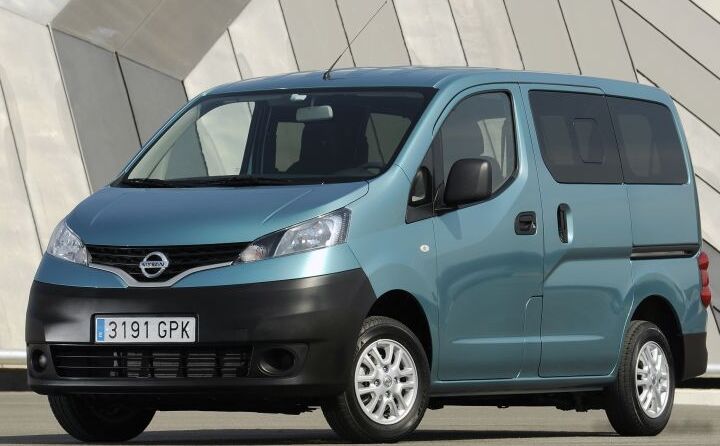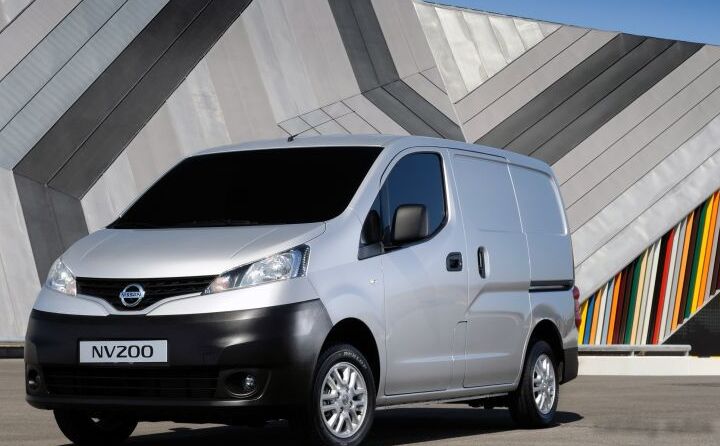
The Nissan NV200 1.5 dCi, producing 110 horsepower, was a commercially-oriented light commercial vehicle (LCV) sold primarily in Europe and other international markets from 2012 to 2019. Positioned as a compact and versatile van, the NV200 aimed to provide a practical and economical solution for small businesses and urban delivery services. It was built on Nissan’s B-platform, shared with vehicles like the Renault Kangoo and Mercedes-Benz Citan, reflecting a collaborative engineering effort within the Renault-Nissan-Mercedes-Benz alliance. This particular variant, with its 1.5-liter diesel engine and manual transmission, represented a core offering within the NV200 range, balancing affordability with reasonable performance and fuel efficiency.
Technical Specifications
| Brand | Nissan |
| Model | NV200 |
| Generation | NV200 |
| Type (Engine) | 1.5 dCi (110 Hp) |
| Start of production | 2012 |
| End of production | 2019 |
| Powertrain Architecture | Internal Combustion engine |
| Body type | Minivan |
| Seats | 2 |
| Doors | 5 |
| Fuel consumption (urban) | 5.9 l/100 km (39.9 US mpg, 47.9 UK mpg, 16.9 km/l) |
| Fuel consumption (extra urban) | 4.4 l/100 km (53.5 US mpg, 64.2 UK mpg, 22.7 km/l) |
| Fuel consumption (combined) | 4.9 l/100 km (48 US mpg, 57.6 UK mpg, 20.4 km/l) |
| CO2 emissions | 130 g/km |
| Fuel Type | Diesel |
| Maximum speed | 169 km/h (105.01 mph) |
| Emission standard | Euro 5 |
| Weight-to-power ratio | 11.6 kg/Hp, 86.3 Hp/tonne |
| Weight-to-torque ratio | 5.3 kg/Nm, 188.4 Nm/tonne |
| Power | 110 Hp @ 4000 rpm |
| Power per litre | 75.3 Hp/l |
| Torque | 240 Nm @ 2000 rpm (177.01 lb.-ft. @ 2000 rpm) |
| Engine layout | Front, Transverse |
| Engine Model/Code | K9K 636, K9K 646 |
| Engine displacement | 1461 cm3 (89.16 cu. in.) |
| Number of cylinders | 4 |
| Engine configuration | Inline |
| Number of valves per cylinder | 4 |
| Fuel injection system | Diesel Commonrail |
| Engine aspiration | Turbocharger, Intercooler |
| Engine oil capacity | 4.5 l (4.76 US qt | 3.96 UK qt) |
| Kerb Weight | 1274-1379 kg (2808.69 – 3040.17 lbs.) |
| Max. weight | 2000 kg (4409.25 lbs.) |
| Max load | 621-726 kg (1369.07 – 1600.56 lbs.) |
| Trunk (boot) space – minimum | 2300 l (81.22 cu. ft.) |
| Trunk (boot) space – maximum | 4200 l (148.32 cu. ft.) |
| Fuel tank capacity | 55 l (14.53 US gal | 12.1 UK gal) |
| Max. roof load | 100 kg (220.46 lbs.) |
| Permitted trailer load with brakes (12%) | 1100 kg (2425.08 lbs.) |
| Permitted trailer load without brakes | 640 kg (1410.96 lbs.) |
| Permitted towbar download | 44 kg (97 lbs.) |
| Length | 4400 mm (173.23 in.) |
| Width | 1695 mm (66.73 in.) |
| Height | 1860 mm (73.23 in.) |
| Wheelbase | 2725 mm (107.28 in.) |
| Front track | 1490 mm (58.66 in.) |
| Rear (Back) track | 1510 mm (59.45 in.) |
| Minimum turning circle | 10.60 m (34.78 ft.) |
| Drivetrain Architecture | Front wheel drive |
| Number of gears and type of gearbox | 6 gears, manual transmission |
| Front suspension | Independent type McPherson |
| Rear suspension | Leaf spring |
| Front brakes | Disc |
| Rear brakes | Drum |
| Assisting systems | ABS (Anti-lock braking system) |
| Steering type | Steering rack and pinion |
| Tires size | 175/70 R14C |
| Wheel rims size | 5.5JJ x 14 |
Powertrain & Engine Architecture
The NV200 1.5 dCi utilized the Renault-Nissan Alliance’s K9K engine family, specifically the K9K 636 or K9K 646 variant. This 1461cc, four-cylinder diesel engine featured a common-rail direct injection system, delivering fuel at high pressure for improved combustion efficiency and reduced emissions. A turbocharger with an intercooler was employed to boost power output and enhance torque across a wider rev range. The engine incorporated four valves per cylinder, contributing to its breathing efficiency. The 110 horsepower output was achieved at 4000 rpm, while peak torque of 240 Nm (177 lb-ft) was available from just 2000 rpm, prioritizing low-end grunt for hauling and urban driving. The engine was paired with a six-speed manual transmission, chosen for its fuel efficiency and driver engagement. The transmission’s gear ratios were tuned to maximize the engine’s torque, providing adequate acceleration and minimizing the need for frequent gear changes.
Driving Characteristics
The NV200 1.5 dCi with the manual transmission offered a practical, if not particularly exciting, driving experience. The engine’s strong low-end torque made it well-suited for city driving and carrying loads. Acceleration was adequate for most situations, but the van wasn’t designed for rapid speeds. The six-speed gearbox allowed for comfortable cruising on highways, although engine noise became more noticeable at higher speeds. Compared to potential higher-output versions (which weren’t widely available in the NV200 range), this 110 hp variant prioritized fuel economy and affordability over outright performance. The manual transmission provided more driver control than an automatic would have, but also required more effort in stop-and-go traffic.
Equipment & Trim Levels
The NV200 1.5 dCi typically came with a relatively basic level of equipment, reflecting its commercial focus. Standard features generally included power steering, a driver’s airbag, central locking, and electric front windows. The interior was functional and durable, with hard-wearing plastics and cloth upholstery. Optional extras could include air conditioning, a radio/CD player, and rear parking sensors. Trim levels varied by market, but generally offered incremental upgrades in terms of comfort and convenience features. The emphasis was on providing a practical and reliable work vehicle rather than a luxurious one.
Chassis & Braking
The NV200’s chassis was designed to provide a comfortable ride while maintaining good load-carrying capacity. The front suspension utilized an independent McPherson strut setup, while the rear suspension employed a leaf spring arrangement. This combination offered a good balance between ride quality and durability. Braking was handled by disc brakes at the front and drum brakes at the rear. Anti-lock Braking System (ABS) was standard, enhancing safety during emergency braking situations. The steering was a rack and pinion system, providing precise and responsive handling.
Market Reception & Comparison
The Nissan NV200 1.5 dCi was generally well-received by critics as a practical and economical light commercial vehicle. Its fuel efficiency was a major selling point, particularly in Europe where diesel fuel was often cheaper than gasoline. The van’s spacious interior and versatile cargo area were also praised. Compared to other vans in its class, such as the Ford Transit Connect and the Volkswagen Caddy, the NV200 offered a competitive price point and a good level of standard equipment. However, some critics noted that the interior was somewhat basic and that the ride quality could be improved. Reliability was generally considered good, with the K9K engine proving to be a durable and dependable unit.
Legacy
The Nissan NV200 1.5 dCi has established itself as a reliable and affordable workhorse in the used car market. The K9K engine, while not known for being particularly refined, is generally considered to be robust and long-lasting, provided it has been properly maintained. Parts availability is good, and maintenance costs are relatively low. The van’s simple construction and durable components contribute to its longevity. While it may not offer the same level of sophistication as some of its competitors, the NV200 1.5 dCi remains a popular choice for small businesses and individuals seeking a practical and economical van.