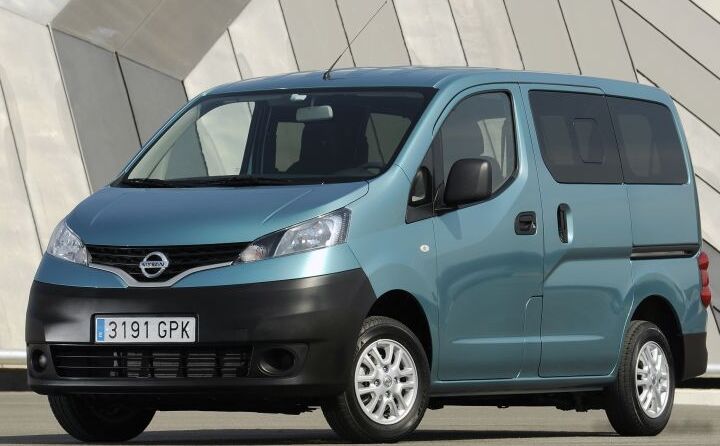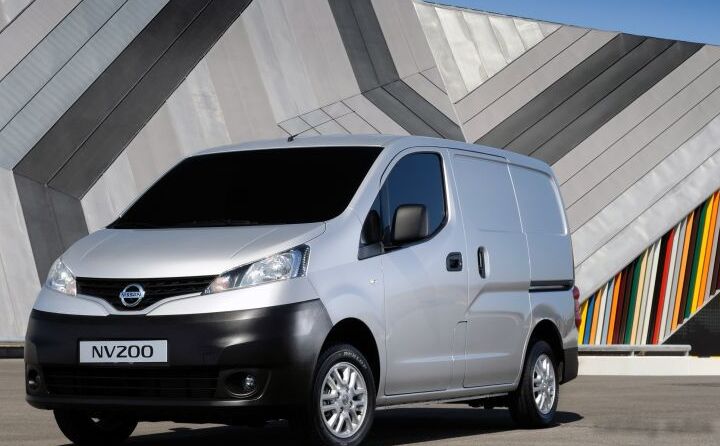
The Nissan NV200 1.5 dCi (110 hp) 5-seat configuration was a popular variant of Nissan’s compact commercial and passenger vehicle, produced from 2012 to 2019. Designed as a versatile and economical option, the NV200 aimed to bridge the gap between small vans and larger, more expensive people carriers. This particular version, powered by the Renault-sourced K9K engine and paired with a six-speed manual transmission, was primarily marketed in Europe and other international markets where compact vans and light commercial vehicles are in high demand. It served as a workhorse for small businesses and families alike, offering a practical and fuel-efficient transportation solution. The NV200 is built on the B0 platform, shared with several Renault and Dacia models.
Technical Specifications
| Brand | Nissan |
| Model | NV200 |
| Generation | NV200 |
| Type | 1.5 dCi (110 Hp) 5 Seat |
| Start of production | 2012 |
| End of production | 2019 |
| Powertrain Architecture | Internal Combustion engine |
| Body type | Minivan |
| Seats | 5 |
| Doors | 5 |
| Fuel consumption (urban) | 5.7 l/100 km (41.3 US mpg, 49.6 UK mpg, 17.5 km/l) |
| Fuel consumption (extra urban) | 4.5 l/100 km (52.3 US mpg, 62.8 UK mpg, 22.2 km/l) |
| Fuel consumption (combined) | 4.9 l/100 km (48 US mpg, 57.6 UK mpg, 20.4 km/l) |
| CO2 emissions | 130 g/km |
| Fuel Type | Diesel |
| Maximum speed | 169 km/h (105.01 mph) |
| Emission standard | Euro 5 |
| Weight-to-power ratio | 12.4 kg/Hp, 80.9 Hp/tonne |
| Weight-to-torque ratio | 5.7 kg/Nm, 176.5 Nm/tonne |
| Power | 110 Hp @ 4000 rpm |
| Power per litre | 75.3 Hp/l |
| Torque | 240 Nm @ 2000 rpm (177.01 lb.-ft. @ 2000 rpm) |
| Engine layout | Front, Transverse |
| Engine Model/Code | K9K 636, K9K 646 |
| Engine displacement | 1461 cm3 (89.16 cu. in.) |
| Number of cylinders | 4 |
| Engine configuration | Inline |
| Number of valves per cylinder | 4 |
| Fuel injection system | Diesel Commonrail |
| Engine aspiration | Turbocharger, Intercooler |
| Engine oil capacity | 4.5 l (4.76 US qt | 3.96 UK qt) |
| Kerb Weight | 1360-1450 kg (2998.29 – 3196.7 lbs.) |
| Max. weight | 2070 kg (4563.57 lbs.) |
| Max load | 620-710 kg (1366.87 – 1565.28 lbs.) |
| Trunk (boot) space – minimum | 2300 l (81.22 cu. ft.) |
| Trunk (boot) space – maximum | 4200 l (148.32 cu. ft.) |
| Fuel tank capacity | 55 l (14.53 US gal | 12.1 UK gal) |
| Max. roof load | 100 kg (220.46 lbs.) |
| Permitted trailer load with brakes (12%) | 1100 kg (2425.08 lbs.) |
| Permitted trailer load without brakes | 640 kg (1410.96 lbs.) |
| Permitted towbar download | 44 kg (97 lbs.) |
| Length | 4400 mm (173.23 in.) |
| Width | 1695 mm (66.73 in.) |
| Height | 1860 mm (73.23 in.) |
| Wheelbase | 2725 mm (107.28 in.) |
| Front track | 1490 mm (58.66 in.) |
| Rear track | 1510 mm (59.45 in.) |
| Minimum turning circle | 10.60 m (34.78 ft.) |
| Drivetrain Architecture | Front wheel drive |
| Number of gears | 6 gears, manual transmission |
| Front suspension | Independent type McPherson |
| Rear suspension | Leaf spring |
| Front brakes | Disc |
| Rear brakes | Drum |
| Assisting systems | ABS (Anti-lock braking system) |
| Steering type | Steering rack and pinion |
| Tires size | 175/70 R14C |
| Wheel rims size | 5.5JJ x 14 |
Powertrain & Engine Architecture
The heart of the NV200 1.5 dCi is the K9K engine, a 1.5-liter inline-four diesel engine developed by Renault and widely used across their and Nissan’s product lines. The K9K 636 and K9K 646 engine codes represent slight variations within the family, often relating to emissions control equipment. This engine utilizes a common rail direct injection system, delivering fuel directly into the combustion chamber at extremely high pressure for improved efficiency and reduced emissions. A turbocharger with an intercooler is employed to boost power output and enhance torque. The engine features four valves per cylinder, contributing to its relatively good breathing and power delivery. The six-speed manual transmission was the standard offering, providing a good balance between fuel economy and drivability. The transmission’s gear ratios were tuned for maximizing fuel efficiency and providing adequate acceleration for everyday driving.
Driving Characteristics
The 110 hp output of the NV200 1.5 dCi, coupled with the six-speed manual transmission, provided adequate, though not exhilarating, performance. Acceleration was modest, but sufficient for navigating urban environments and maintaining highway speeds when unladen. The engine’s 240 Nm (177 lb-ft) of torque, available from 2000 rpm, provided good low-end grunt, making it easy to pull away from a standstill and tackle inclines. Compared to higher-output versions of the NV200 (which were less common), this variant prioritized fuel economy over outright performance. The manual transmission allowed for greater driver control and engagement, but required more effort than an automatic. The gear ratios were spaced to keep the engine within its optimal torque band, contributing to a reasonably efficient driving experience.
Equipment & Trim Levels
The NV200 1.5 dCi 5-seat typically came with a fairly basic level of equipment, reflecting its commercial vehicle roots. Standard features generally included power steering, central locking, electric front windows, and an adjustable steering column. Interior upholstery was typically durable cloth. Optional extras included air conditioning, a radio/CD player, and rear parking sensors. Higher trim levels, if available, might have added features like alloy wheels, upgraded interior trim, and a more comprehensive infotainment system. Safety features typically included ABS brakes and driver/passenger airbags.
Chassis & Braking
The NV200’s chassis was designed for practicality and durability. The front suspension utilized an independent McPherson strut setup, providing a reasonable level of ride comfort and handling. The rear suspension employed a leaf spring design, a cost-effective solution commonly found in light commercial vehicles. Braking was handled by disc brakes at the front and drum brakes at the rear. ABS (Anti-lock Braking System) was standard, enhancing safety during emergency braking situations. The relatively simple suspension setup prioritized load-carrying capacity and durability over sporty handling.
Market Reception & Comparison
The Nissan NV200 1.5 dCi was generally well-received by critics for its fuel efficiency, practicality, and affordability. It was often praised as a sensible and economical choice for small businesses and families. Compared to other compact vans in its class, such as the Renault Kangoo and Citroën Berlingo, the NV200 offered a competitive combination of features and price. The 1.5 dCi engine was considered reliable and fuel-efficient, although some reviewers noted its lack of outright power. The manual transmission was appreciated by drivers who preferred greater control, but some found it less convenient than an automatic.
Legacy
The Nissan NV200, particularly the 1.5 dCi variant, has proven to be a relatively reliable and durable vehicle. The K9K engine, while not without its quirks, is generally considered robust and capable of high mileage with proper maintenance. In the used car market, the NV200 remains a popular choice for those seeking an affordable and practical van. Its fuel efficiency and low running costs continue to make it an attractive option for businesses and individuals alike. However, potential buyers should be aware of the potential for diesel particulate filter (DPF) issues, particularly on vehicles that have primarily been used for short journeys.