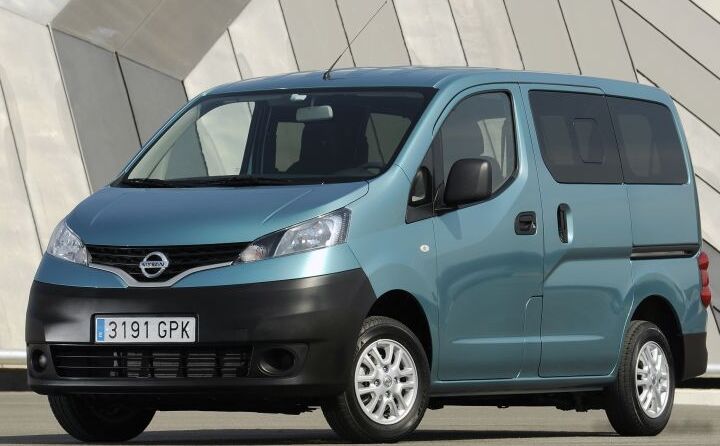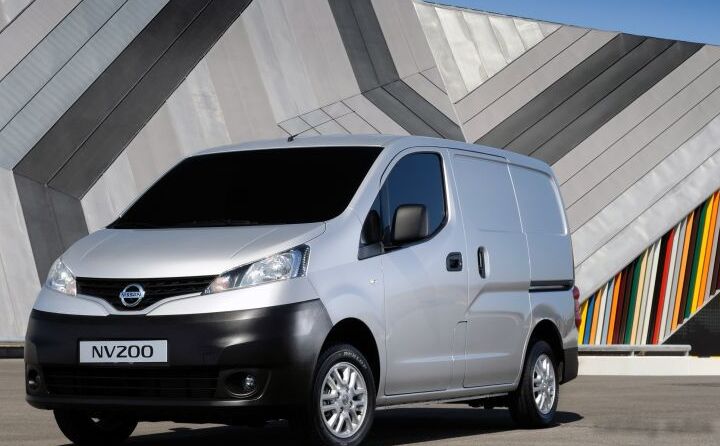
The Nissan NV200 1.5 dCi, producing 90 horsepower, was a popular choice in the European light commercial vehicle (LCV) market from its introduction in 2009 until 2019. Positioned as an entry-level workhorse within the NV200 range, this variant prioritized fuel efficiency and practicality over outright performance. It served as a versatile option for businesses and tradespeople needing a compact, economical van for urban deliveries and service applications. While not sold in significant numbers in the United States, the NV200 and this specific engine configuration were a common sight on European roads, competing with vehicles like the Renault Kangoo and Citroën Berlingo.
Technical Specifications
| Brand | Nissan |
| Model | NV200 |
| Generation | NV200 |
| Type (Engine) | 1.5 dCi (90 Hp) |
| Start of production | 2009 year |
| End of production | 2019 year |
| Powertrain Architecture | Internal Combustion engine |
| Body type | Minivan |
| Seats | 2 |
| Doors | 5 |
| Fuel consumption (urban) | 5.7 l/100 km (41.3 US mpg, 49.6 UK mpg, 17.5 km/l) |
| Fuel consumption (extra urban) | 4.3 l/100 km (54.7 US mpg, 65.7 UK mpg, 23.3 km/l) |
| Fuel consumption (combined) | 4.9 l/100 km (48 US mpg, 57.6 UK mpg, 20.4 km/l) |
| CO2 emissions | 128 g/km |
| Fuel Type | Diesel |
| Maximum speed | 158 km/h (98.18 mph) |
| Emission standard | Euro 5 |
| Weight-to-power ratio | 14 kg/Hp, 71.4 Hp/tonne |
| Weight-to-torque ratio | 6.3 kg/Nm, 158.7 Nm/tonne |
| Power | 90 Hp @ 4000 rpm |
| Power per litre | 61.6 Hp/l |
| Torque | 200 Nm @ 2000 rpm (147.51 lb.-ft. @ 2000 rpm) |
| Engine layout | Front, Transverse |
| Engine Model/Code | K9K 892 |
| Engine displacement | 1461 cm3 (89.16 cu. in.) |
| Number of cylinders | 4 |
| Engine configuration | Inline |
| Number of valves per cylinder | 4 |
| Fuel injection system | Diesel Commonrail |
| Engine aspiration | Turbocharger, Intercooler |
| Engine oil capacity | 4.5 l (4.76 US qt | 3.96 UK qt) |
| Kerb Weight | 1260-1365 kg (2777.82 – 3009.31 lbs.) |
| Max. weight | 2000 kg (4409.25 lbs.) |
| Max load | 635-740 kg (1399.94 – 1631.42 lbs.) |
| Trunk (boot) space – minimum | 2300 l (81.22 cu. ft.) |
| Trunk (boot) space – maximum | 4200 l (148.32 cu. ft.) |
| Fuel tank capacity | 55 l (14.53 US gal | 12.1 UK gal) |
| Max. roof load | 100 kg (220.46 lbs.) |
| Permitted trailer load with brakes (12%) | 1100 kg (2425.08 lbs.) |
| Permitted trailer load without brakes | 640 kg (1410.96 lbs.) |
| Permitted towbar download | 44 kg (97 lbs.) |
| Length | 4400 mm (173.23 in.) |
| Width | 1695 mm (66.73 in.) |
| Height | 1860 mm (73.23 in.) |
| Wheelbase | 2725 mm (107.28 in.) |
| Front track | 1490 mm (58.66 in.) |
| Rear (Back) track | 1510 mm (59.45 in.) |
| Minimum turning circle | 10.60 m (34.78 ft.) |
| Drivetrain Architecture | Front wheel drive |
| Number of gears and type of gearbox | 5 gears, manual transmission |
| Front suspension | Independent type McPherson |
| Rear suspension | Leaf spring |
| Front brakes | Disc |
| Rear brakes | Drum |
| Assisting systems | ABS (Anti-lock braking system) |
| Steering type | Steering rack and pinion |
| Tires size | 175/70 R14C |
| Wheel rims size | 5.5JJ x 14 |
INTRODUCTION
The Nissan NV200, launched in 2009, represented Nissan’s entry into the compact van segment, primarily aimed at the European market. Built on the B-platform (shared with vehicles like the Renault Kangoo and Mercedes-Benz Citan), the NV200 offered a practical and affordable solution for small businesses. The 1.5 dCi 90 hp variant was a mainstay of the lineup, offering a balance between fuel economy and usability. Production continued until 2019, with the van undergoing minor revisions during its lifespan. This version was particularly popular as a panel van, but also available as a passenger-carrying variant.
Powertrain & Engine Architecture
The heart of the NV200 1.5 dCi (90 hp) is the K9K 892 engine, a 1.5-liter inline-four cylinder diesel. This engine is part of the K9K family, developed jointly by Renault and Nissan. It features a turbocharger with an intercooler to boost power and efficiency. The engine utilizes a diesel common rail direct injection system, delivering fuel directly into the combustion chamber at high pressure for improved combustion and reduced emissions. The engine’s valvetrain consists of four valves per cylinder (DOHC), contributing to its relatively efficient operation. The 90 horsepower output is achieved at 4000 rpm, while peak torque of 200 Nm (147.51 lb.-ft.) is available from 2000 rpm. The NV200 1.5 dCi typically came equipped with a five-speed manual transmission, optimized for fuel economy rather than rapid acceleration. The transmission’s gear ratios are relatively long, prioritizing efficiency at cruising speeds.
Driving Characteristics
The NV200 1.5 dCi (90 hp) wasn’t designed for speed. Acceleration is modest, and the van feels most comfortable when driven at moderate speeds. The 90 hp engine provides sufficient power for urban driving and highway cruising, but overtaking maneuvers require planning. The five-speed manual transmission is geared towards maximizing fuel efficiency, meaning the engine can feel strained when climbing hills or carrying a full load. Compared to higher-output versions of the NV200 (such as those with the 110 hp engine), the 90 hp variant offers a more relaxed driving experience, but at the cost of performance. The relatively soft suspension setup prioritizes ride comfort over handling precision.
Equipment & Trim Levels
The NV200 1.5 dCi (90 hp) was typically offered in a basic trim level, focusing on functionality and affordability. Standard equipment generally included power steering, a driver’s airbag, and basic instrumentation. The interior was utilitarian, with durable plastic trim and cloth upholstery. Optional extras included air conditioning, a radio/CD player, electric windows, and central locking. Higher trim levels, if available, might have added features like body-colored bumpers and upgraded interior trim. The van’s interior is designed for practicality, with a focus on maximizing cargo space and ease of loading.
Chassis & Braking
The NV200 utilizes a front-wheel-drive layout. The front suspension consists of an independent McPherson strut setup, providing a reasonable level of ride comfort. The rear suspension employs a leaf spring design, which is a cost-effective solution for light commercial vehicles but can result in a less refined ride, especially when unladen. The braking system features disc brakes on the front wheels and drum brakes on the rear. Anti-lock Braking System (ABS) was standard, enhancing safety during emergency braking situations. The steering is a rack and pinion system, providing adequate precision for urban driving.
Market Reception & Comparison
The Nissan NV200 1.5 dCi (90 hp) was generally well-received by critics for its fuel efficiency, practicality, and affordability. However, some reviewers noted its lack of refinement and modest performance. Compared to other vans in its class, the NV200 offered a competitive fuel economy figure, making it an attractive option for businesses looking to minimize operating costs. The 90 hp engine was considered adequate for most urban delivery tasks, but it lagged behind the performance of some rivals. The NV200’s relatively simple mechanical design contributed to its reputation for reliability, although maintenance costs were comparable to those of other diesel-powered vans.
Legacy
The Nissan NV200 1.5 dCi (90 hp) has established a reputation as a reliable and economical workhorse in the used van market. The K9K engine, while not known for being particularly powerful, is generally considered durable and capable of high mileage with proper maintenance. Parts availability is good, and repair costs are relatively reasonable. Today, these vans can be found at affordable prices, making them a popular choice for small businesses and tradespeople on a budget. While newer vans offer more advanced features and improved performance, the NV200 1.5 dCi remains a practical and dependable option for those prioritizing functionality and economy.