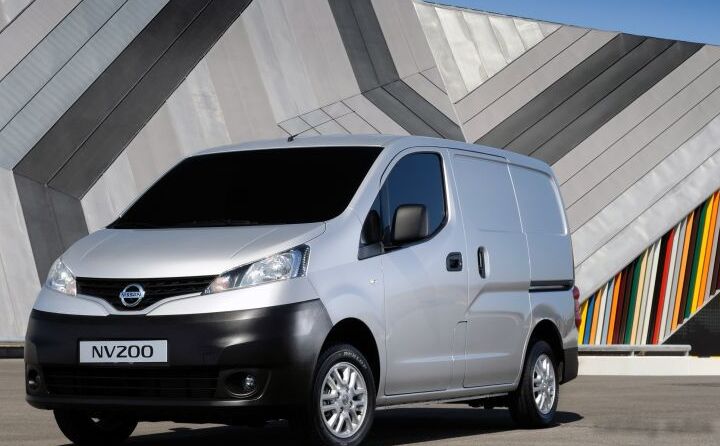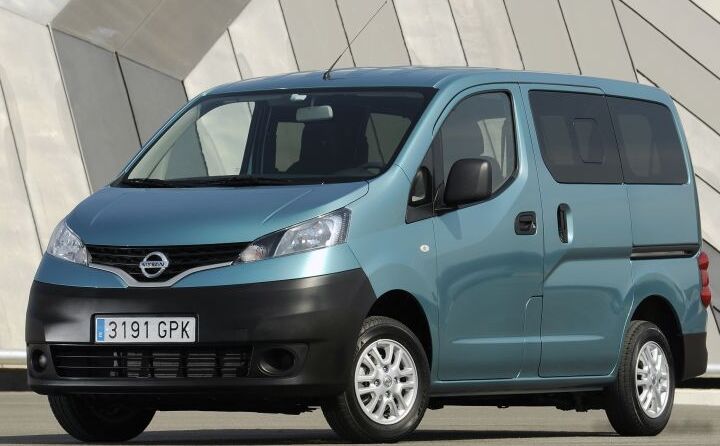
The Nissan NV200 Combi 1.5 dCi (110 hp) 7-seat variant was a popular choice in the European market from 2012 to 2019, offering a practical and relatively affordable option for families and businesses needing a versatile passenger vehicle. Positioned as a mid-range offering within the NV200 Combi lineup, it slotted between the base models with lower power outputs and the more expensive trims with additional features. The NV200 Combi, based on the NV200 platform, was designed as a compact multi-purpose vehicle (MPV) intended to bridge the gap between smaller vans and larger, more expensive people carriers. This particular configuration, with the 1.5-liter diesel engine and seven seats, aimed to provide a balance of fuel efficiency, practicality, and passenger capacity.
Technical Specifications
| Brand | Nissan |
| Model | NV200 |
| Generation | NV200 Combi |
| Type | 1.5 dCi (110 Hp) 7 Seat |
| Start of production | 2012 |
| End of production | 2019 |
| Powertrain Architecture | Internal Combustion engine |
| Body type | Minivan |
| Seats | 7 |
| Doors | 5 |
| Fuel consumption (urban) | 5.5 l/100 km (42.8 US mpg, 51.4 UK mpg, 18.2 km/l) |
| Fuel consumption (extra urban) | 4.6 l/100 km (51.1 US mpg, 61.4 UK mpg, 21.7 km/l) |
| Fuel consumption (combined) | 4.9 l/100 km (48 US mpg, 57.6 UK mpg, 20.4 km/l) |
| CO2 emissions | 130 g/km |
| Fuel Type | Diesel |
| Maximum speed | 169 km/h (105.01 mph) |
| Emission standard | Euro 6 |
| Weight-to-power ratio | 12.6 kg/Hp, 79.1 Hp/tonne |
| Weight-to-torque ratio | 5.8 kg/Nm, 172.5 Nm/tonne |
| Power | 110 Hp @ 4000 rpm |
| Power per litre | 75.3 Hp/l |
| Torque | 240 Nm @ 2000 rpm (177.01 lb.-ft. @ 2000 rpm) |
| Engine layout | Front, Transverse |
| Engine Model/Code | K9K 636, K9K 646 |
| Engine displacement | 1461 cm3 (89.16 cu. in.) |
| Number of cylinders | 4 |
| Engine configuration | Inline |
| Number of valves per cylinder | 4 |
| Fuel injection system | Diesel Commonrail |
| Engine aspiration | Turbocharger, Intercooler |
| Engine oil capacity | 4.5 l (4.76 US qt | 3.96 UK qt) |
| Kerb Weight | 1391-1487 kg (3066.63 – 3278.27 lbs.) |
| Max. weight | 2070 kg (4563.57 lbs.) |
| Max load | 583-679 kg (1285.29 – 1496.94 lbs.) |
| Trunk (boot) space – minimum | 900 l (31.78 cu. ft.) |
| Trunk (boot) space – maximum | 2900 l (102.41 cu. ft.) |
| Fuel tank capacity | 55 l (14.53 US gal | 12.1 UK gal) |
| Max. roof load | 100 kg (220.46 lbs.) |
| Permitted trailer load with brakes (12%) | 1100 kg (2425.08 lbs.) |
| Permitted trailer load without brakes | 640 kg (1410.96 lbs.) |
| Permitted towbar download | 44 kg (97 lbs.) |
| Length | 4400 mm (173.23 in.) |
| Width | 1695 mm (66.73 in.) |
| Height | 1860 mm (73.23 in.) |
| Wheelbase | 2725 mm (107.28 in.) |
| Front track | 1490 mm (58.66 in.) |
| Rear (Back) track | 1510 mm (59.45 in.) |
| Minimum turning circle | 10.60 m (34.78 ft.) |
| Drivetrain Architecture | Front wheel drive |
| Number of gears and type of gearbox | 6 gears, manual transmission |
| Front suspension | Independent type McPherson |
| Rear suspension | Leaf spring |
| Front brakes | Disc |
| Rear brakes | Drum |
| Assisting systems | ABS (Anti-lock braking system) |
| Steering type | Steering rack and pinion |
| Tires size | 175/70 R14C |
| Wheel rims size | 5.5JJ x 14 |
INTRODUCTION
The Nissan NV200 Combi, launched in 2012, was a commercially oriented van adapted for passenger use. The Combi version, specifically, aimed to provide a more comfortable and versatile alternative to traditional cargo vans. The 1.5 dCi (110 hp) 7-seat configuration was a key variant, offering a balance between fuel economy, practicality, and affordability. It was built on the B-platform, shared with other Nissan and Renault vehicles, and was primarily sold in Europe. The NV200 Combi aimed to compete with vehicles like the Citroën Berlingo, Peugeot Partner, and Volkswagen Caddy Life, offering a compelling package for families, taxi operators, and small businesses.
Powertrain & Engine Architecture
The heart of the NV200 Combi 1.5 dCi was the K9K engine family, specifically the K9K 636 or K9K 646 variant. This 1.5-liter, four-cylinder diesel engine utilized a common rail direct injection system, delivering fuel directly into the combustion chamber at high pressure for improved efficiency and reduced emissions. The engine featured a turbocharger with an intercooler, boosting power output and torque. The engine produced 110 horsepower at 4000 rpm and 240 Nm (177 lb-ft) of torque at 2000 rpm. This engine was known for its relatively frugal fuel consumption and robust construction. The NV200 Combi 1.5 dCi was typically paired with a six-speed manual transmission, providing a good balance of fuel economy and drivability. The transmission was a standard front-wheel-drive configuration.
Driving Characteristics
The NV200 Combi 1.5 dCi, with its 110 hp engine and six-speed manual transmission, offered adequate performance for everyday driving. Acceleration was not particularly brisk, but the engine provided sufficient power for highway cruising and navigating urban environments. The gear ratios were tuned for fuel efficiency, meaning the engine needed to be revved slightly to access its full power. Compared to higher-output versions of the NV200, this variant felt less responsive, especially when fully loaded with passengers and luggage. However, the lower power output contributed to better fuel economy. The suspension, tuned for comfort, provided a reasonably smooth ride, although it could feel somewhat bouncy when encountering uneven road surfaces.
Equipment & Trim Levels
The NV200 Combi 1.5 dCi 7-seat variant typically came equipped with features such as air conditioning, power steering, electric front windows, and a basic audio system. Safety features included ABS brakes, driver and passenger airbags, and seatbelts for all seven occupants. Higher trim levels offered additional features like alloy wheels, rear parking sensors, a navigation system, and upgraded interior trim. Interior upholstery was typically cloth, with a durable and practical design. The dashboard layout was functional and straightforward, prioritizing usability over aesthetics.
Chassis & Braking
The NV200 Combi featured a front-wheel-drive layout with an independent McPherson strut suspension at the front and a leaf spring suspension at the rear. The leaf spring rear suspension was a cost-effective solution, but it could result in a less refined ride compared to more sophisticated multi-link setups. The braking system consisted of disc brakes at the front and drum brakes at the rear. ABS (Anti-lock Braking System) was standard, enhancing braking performance and stability. The steering was a rack and pinion system, providing reasonably precise and responsive handling.
Market Reception & Comparison
The Nissan NV200 Combi 1.5 dCi 7-seat variant was generally well-received by critics for its practicality, fuel efficiency, and affordability. However, some reviewers noted that the engine could feel underpowered when fully loaded, and the interior lacked the refinement of some competitors. Compared to the petrol-powered versions of the NV200 Combi, the 1.5 dCi offered significantly better fuel economy, making it a popular choice for high-mileage drivers. Against rivals like the Citroën Berlingo and Peugeot Partner, the NV200 Combi offered a competitive package, but often lacked the same level of interior quality and driving refinement.
Legacy
The Nissan NV200 Combi 1.5 dCi (110 hp) has proven to be a relatively reliable vehicle, with the K9K engine known for its durability. Common issues are typically related to wear and tear on components like the turbocharger and fuel injectors, but these are generally manageable with regular maintenance. On the used car market, the NV200 Combi 1.5 dCi remains a popular choice for budget-conscious buyers seeking a practical and versatile MPV. Its fuel efficiency and spacious interior continue to make it a compelling option for families and businesses alike. The NV200 Combi was discontinued in 2019, replaced by newer models in Nissan’s lineup, but it remains a recognizable and respected vehicle in the European market.