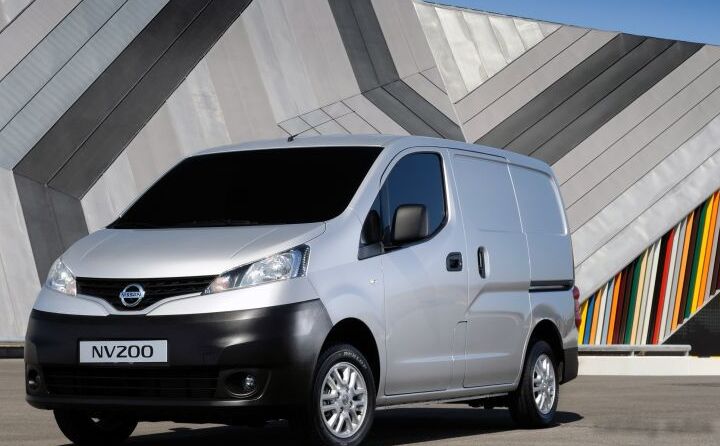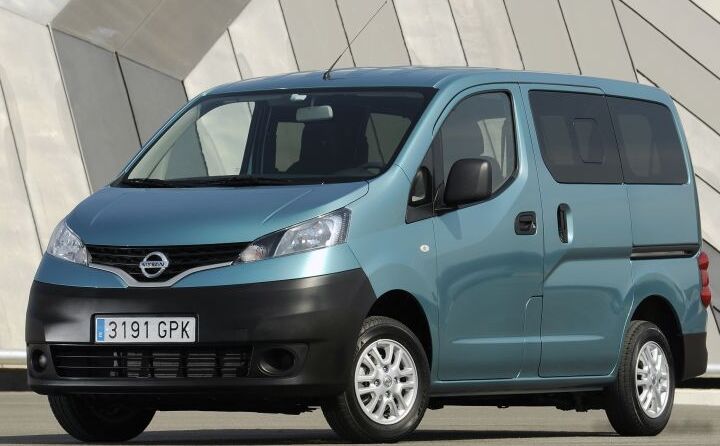
The Nissan NV200 Combi 1.5 dCi (90 hp) 7-seat variant was a popular choice in the European market from 2009 to 2019, offering a practical and affordable solution for families and businesses needing a versatile passenger vehicle. Positioned as an entry-level option within the NV200 Combi range, it provided a balance between fuel efficiency, passenger capacity, and cost. The NV200 Combi itself is a panel van-derived multi-purpose vehicle (MPV), designed to compete with other compact vans and people carriers like the Renault Kangoo and Citroën Berlingo. This specific 90 horsepower diesel version aimed to provide a cost-effective option for those not requiring the performance of higher-powered engines.
Technical Specifications
| Brand | Nissan |
| Model | NV200 |
| Generation | NV200 Combi |
| Type | 1.5 dCi (90 Hp) 7 Seat |
| Start of production | 2009 |
| End of production | 2019 |
| Powertrain Architecture | Internal Combustion engine |
| Body type | Minivan |
| Seats | 7 |
| Doors | 5 |
| Fuel consumption (urban) | 5.7 l/100 km (41.3 US mpg, 49.6 UK mpg, 17.5 km/l) |
| Fuel consumption (extra urban) | 4.8 l/100 km (49 US mpg, 58.9 UK mpg, 20.8 km/l) |
| Fuel consumption (combined) | 5.1 l/100 km (46.1 US mpg, 55.4 UK mpg, 19.6 km/l) |
| CO2 emissions | 133 g/km |
| Fuel Type | Diesel |
| Maximum speed | 158 km/h (98.18 mph) |
| Emission standard | Euro 6 |
| Weight-to-power ratio | 15.3 kg/Hp, 65.4 Hp/tonne |
| Weight-to-torque ratio | 6.9 kg/Nm, 145.2 Nm/tonne |
| Power | 90 Hp @ 4000 rpm |
| Power per litre | 61.6 Hp/l |
| Torque | 200 Nm @ 2000 rpm (147.51 lb.-ft. @ 2000 rpm) |
| Engine layout | Front, Transverse |
| Engine Model/Code | K9K 892 |
| Engine displacement | 1461 cm3 (89.16 cu. in.) |
| Number of cylinders | 4 |
| Engine configuration | Inline |
| Number of valves per cylinder | 4 |
| Fuel injection system | Diesel Commonrail |
| Engine aspiration | Turbocharger, Intercooler |
| Engine oil capacity | 4.5 l (4.76 US qt | 3.96 UK qt) |
| Kerb Weight | 1377-1473 kg (3035.77 – 3247.41 lbs.) |
| Max. weight | 2050 kg (4519.48 lbs.) |
| Max load | 577-673 kg (1272.07 – 1483.71 lbs.) |
| Trunk (boot) space – minimum | 900 l (31.78 cu. ft.) |
| Trunk (boot) space – maximum | 2900 l (102.41 cu. ft.) |
| Fuel tank capacity | 55 l (14.53 US gal | 12.1 UK gal) |
| Max. roof load | 100 kg (220.46 lbs.) |
| Permitted trailer load with brakes (12%) | 1100 kg (2425.08 lbs.) |
| Permitted trailer load without brakes | 640 kg (1410.96 lbs.) |
| Permitted towbar download | 44 kg (97 lbs.) |
| Length | 4400 mm (173.23 in.) |
| Width | 1695 mm (66.73 in.) |
| Height | 1860 mm (73.23 in.) |
| Wheelbase | 2725 mm (107.28 in.) |
| Front track | 1490 mm (58.66 in.) |
| Rear (Back) track | 1510 mm (59.45 in.) |
| Minimum turning circle | 10.60 m (34.78 ft.) |
| Drivetrain Architecture | Front wheel drive |
| Number of gears | 5 gears, manual transmission |
| Front suspension | Independent type McPherson |
| Rear suspension | Leaf spring |
| Front brakes | Disc |
| Rear brakes | Drum |
| Assisting systems | ABS (Anti-lock braking system) |
| Steering type | Steering rack and pinion |
| Tires size | 175/70 R14C |
| Wheel rims size | 5.5JJ x 14 |
INTRODUCTION
The Nissan NV200 Combi, launched in 2009, was designed as a practical and versatile vehicle aimed at both commercial and family users. The 1.5 dCi (90 hp) 7-seat configuration represented the entry point into the Combi range, offering a more affordable option compared to higher-powered variants. Built on the B-platform, shared with vehicles like the Renault Kangoo and Mercedes-Benz Citan, the NV200 Combi prioritized interior space and functionality. This variant was particularly popular in Europe, where compact vans and MPVs are a common sight, serving as a workhorse for small businesses and a family vehicle for those needing flexible seating arrangements.
Powertrain & Engine Architecture
The heart of the NV200 Combi 1.5 dCi (90 hp) is the K9K 892 engine, a 1.5-liter inline-four cylinder diesel engine. This engine is part of the K9K family, known for its relatively simple design and fuel efficiency. It features a turbocharger with an intercooler to boost power output and improve combustion. The engine utilizes a diesel common rail direct injection system, delivering fuel directly into the cylinders at high pressure for optimized combustion. The K9K 892 produces 90 horsepower at 4000 rpm and 200 Nm (147.51 lb.-ft.) of torque at 2000 rpm. The engine is paired with a five-speed manual transmission, which was the standard offering for this variant. The transmission is a conventional setup, designed for durability and ease of maintenance.
Driving Characteristics
The 90 hp output of the 1.5 dCi engine, coupled with the five-speed manual transmission, provides adequate performance for everyday driving. Acceleration is not brisk, and the vehicle feels most comfortable at moderate speeds. The gear ratios are tuned for fuel efficiency rather than outright performance. Compared to higher-powered NV200 Combi variants, such as those with the 110 hp engine, this version feels noticeably slower, especially when fully loaded with passengers and cargo. However, the engine delivers a usable amount of torque at low to mid-range revs, making it suitable for urban driving and navigating hilly terrain. The manual transmission allows for greater driver control and contributes to the vehicle’s fuel efficiency.
Equipment & Trim Levels
The NV200 Combi 1.5 dCi (90 hp) 7-seat typically came with a basic level of equipment, focusing on practicality and functionality. Standard features generally included power steering, central locking, electric front windows, and an adjustable steering column. The interior upholstery was typically a durable cloth material. Safety features included ABS (Anti-lock Braking System) and driver/passenger airbags. Optional extras available for this trim level included air conditioning, a radio/CD player, and rear parking sensors. Higher trim levels offered additional features such as alloy wheels, upgraded interior trim, and a navigation system.
Chassis & Braking
The NV200 Combi utilizes a front-wheel-drive layout. The front suspension consists of an independent McPherson strut setup, providing a comfortable ride and decent handling. The rear suspension employs a leaf spring design, which is a cost-effective solution for load-carrying capacity but can result in a slightly less refined ride compared to independent rear suspension. The braking system features disc brakes on the front wheels and drum brakes on the rear wheels. The ABS system helps to prevent wheel lock-up during hard braking, enhancing safety. The vehicle’s weight-to-power ratio of 15.3 kg/Hp indicates that it is not a particularly powerful vehicle, and the braking system is adequate for its intended use.
Market Reception & Comparison
The Nissan NV200 Combi 1.5 dCi (90 hp) 7-seat was generally well-received as a practical and affordable MPV. Critics praised its spacious interior, versatile seating arrangements, and fuel efficiency. However, some reviewers noted that the engine felt underpowered, especially when the vehicle was fully loaded. Compared to other trims in the NV200 Combi lineup, this variant offered the most affordable entry point but sacrificed some performance. Its fuel economy of around 5.1 l/100 km (46.1 US mpg) was competitive with other diesel-powered MPVs in its class. Reliability was generally good, with the K9K engine proving to be a durable and dependable unit.
Legacy
The Nissan NV200 Combi 1.5 dCi (90 hp) remains a popular choice in the used car market, particularly for those seeking a practical and affordable MPV. The K9K engine is known for its longevity and relatively low maintenance costs. While not the most exciting vehicle to drive, it provides a reliable and functional transportation solution. Common issues reported with this model include wear and tear on suspension components and occasional problems with the turbocharger. However, these issues are generally not major and can be addressed with routine maintenance. The NV200 Combi continues to be a viable option for families and businesses needing a versatile and economical vehicle.