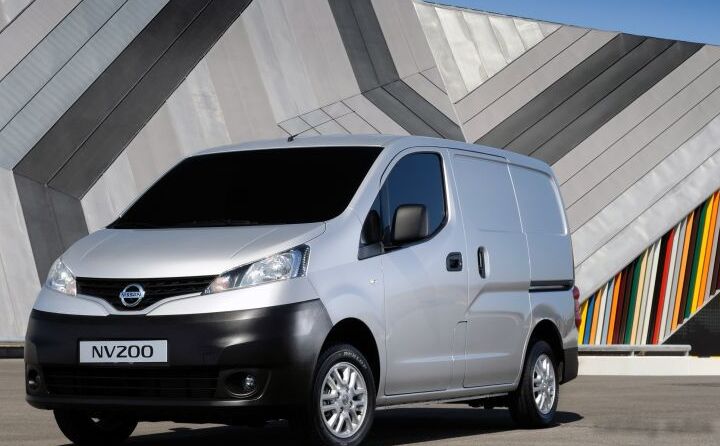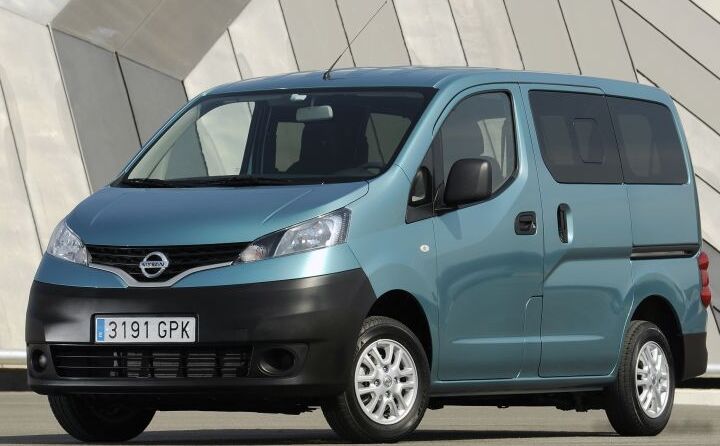
The Nissan NV200 Combi 1.6 (110 hp) 7-seat variant was a popular choice in the European and other international markets from 2009 to 2019. Positioned as a versatile and affordable people carrier, the NV200 Combi aimed to provide practical transportation for families and businesses. It was part of the larger NV200 family, which also included van configurations, and utilized the B-platform underpinning several Nissan and Renault vehicles. This specific 1.6-liter, 110 horsepower version represented a mid-range offering within the Combi lineup, balancing fuel efficiency with adequate performance for everyday use.
Technical Specifications
| Brand | Nissan |
| Model | NV200 |
| Generation | NV200 Combi |
| Type | 1.6 (110 Hp) 7 Seat |
| Start of production | 2009 |
| End of production | 2019 |
| Powertrain Architecture | Internal Combustion engine |
| Body type | Minivan |
| Seats | 7 |
| Doors | 5 |
| Fuel consumption (urban) | 9.1 l/100 km (25.8 US mpg) |
| Fuel consumption (extra urban) | 6.3 l/100 km (37.3 US mpg) |
| Fuel consumption (combined) | 7.3 l/100 km (32.2 US mpg) |
| CO2 emissions | 169 g/km |
| Fuel Type | Petrol (Gasoline) |
| Maximum speed | 165 km/h (102.53 mph) |
| Emission standard | Euro 6 |
| Weight-to-power ratio | 11.9 kg/Hp |
| Weight-to-torque ratio | 8.6 kg/Nm |
| Power | 110 Hp @ 6000 rpm |
| Torque | 153 Nm @ 4400 rpm (112.85 lb.-ft. @ 4400 rpm) |
| Engine layout | Front, Transverse |
| Engine Model/Code | HR16DE |
| Engine displacement | 1598 cm3 (97.52 cu. in.) |
| Number of cylinders | 4 |
| Engine configuration | Inline |
| Number of valves per cylinder | 4 |
| Fuel injection system | Multi-port manifold injection |
| Engine aspiration | Naturally aspirated |
| Engine oil capacity | 4.3 l (4.54 US qt | 3.78 UK qt) |
| Coolant capacity | 6.3 l (6.66 US qt | 5.54 UK qt) |
| Kerb Weight | 1312-1410 kg (2892.46 – 3108.52 lbs.) |
| Max. weight | 1970 kg (4343.11 lbs.) |
| Max load | 560-658 kg (1234.59 – 1450.64 lbs.) |
| Trunk (boot) space – minimum | 900 l (31.78 cu. ft.) |
| Trunk (boot) space – maximum | 2900 l (102.41 cu. ft.) |
| Fuel tank capacity | 55 l (14.53 US gal | 12.1 UK gal) |
| Max. roof load | 100 kg (220.46 lbs.) |
| Permitted trailer load (braked) | 1100 kg (2425.08 lbs.) |
| Permitted trailer load (unbraked) | 640 kg (1410.96 lbs.) |
| Permitted towbar download | 44 kg (97 lbs.) |
| Length | 4400 mm (173.23 in.) |
| Width | 1695 mm (66.73 in.) |
| Height | 1860 mm (73.23 in.) |
| Wheelbase | 2725 mm (107.28 in.) |
| Front track | 1490 mm (58.66 in.) |
| Rear track | 1510 mm (59.45 in.) |
| Minimum turning circle | 10.60 m (34.78 ft.) |
| Drivetrain | Front wheel drive |
| Number of gears | 5 |
| Gearbox type | Manual transmission |
| Front suspension | Independent type McPherson |
| Rear suspension | Leaf spring |
| Front brakes | Disc |
| Rear brakes | Drum |
| Assisting systems | ABS (Anti-lock braking system) |
| Steering type | Steering rack and pinion |
| Tires size | 175/70 R14C |
| Wheel rims size | 5.5JJ x 14 |
Powertrain & Engine Architecture
The NV200 Combi 1.6 utilized Nissan’s HR16DE engine, a 1.6-liter inline-four cylinder gasoline engine. This engine is known for its relatively simple design and reliability. The HR16DE features multi-point fuel injection and four valves per cylinder, contributing to reasonable power output and fuel efficiency. The engine produced 110 horsepower at 6000 rpm and 153 Nm (113 lb-ft) of torque at 4400 rpm. The engine’s design prioritized fuel economy and smooth operation over outright performance. Paired with a 5-speed manual transmission, the powertrain delivered power to the front wheels. The transmission was chosen for its cost-effectiveness and simplicity, rather than sporting performance.
Driving Characteristics
The 1.6-liter engine and 5-speed manual transmission combination in the NV200 Combi provided adequate, but not exhilarating, performance. Acceleration was modest, and the vehicle was best suited for urban and suburban driving. The gear ratios were tuned for fuel efficiency, meaning the engine needed to be revved to access its full power. Compared to potential higher-output engine options (which weren’t widely available in the Combi configuration), this variant felt less responsive, particularly when fully loaded with passengers and cargo. However, the lighter engine weight contributed to better handling and reduced body roll compared to heavier, more powerful versions.
Equipment & Trim Levels
The NV200 Combi 1.6 7-seat typically came with a fairly basic level of standard equipment. This included power steering, central locking, electric front windows, and an adjustable steering column. Safety features included ABS brakes and driver/passenger airbags. Interior upholstery was typically cloth, and the dashboard featured a functional, if somewhat utilitarian, design. Optional extras could include air conditioning, a radio/CD player, and rear parking sensors. Higher trim levels, if available, might have added features like alloy wheels and upgraded interior trim.
Chassis & Braking
The NV200 Combi featured a front-wheel-drive layout with an independent McPherson strut suspension at the front and a leaf spring suspension at the rear. The leaf spring setup was a cost-saving measure, and while it provided adequate load-carrying capacity, it resulted in a less refined ride quality compared to a fully independent rear suspension. Braking consisted of disc brakes at the front and drum brakes at the rear. ABS was standard, providing enhanced braking performance in emergency situations. The suspension was tuned for comfort and practicality, prioritizing a stable ride over sporty handling.
Market Reception & Comparison
The Nissan NV200 Combi 1.6 7-seat was generally well-received as a practical and affordable people carrier. Critics praised its spacious interior, versatile seating configuration, and fuel efficiency. However, the engine was often criticized for being underpowered, especially when the vehicle was fully loaded. Compared to other MPVs in its class, such as the Renault Scenic or Citroen C4 Picasso, the NV200 Combi offered a more basic driving experience but at a lower price point. Its fuel economy was competitive, and its reliability was generally considered good.
Legacy
The Nissan NV200 Combi, including the 1.6-liter variant, has proven to be a relatively reliable vehicle in the used car market. The HR16DE engine is known for its durability, and routine maintenance is relatively straightforward and inexpensive. While not a performance vehicle, the NV200 Combi continues to be a popular choice for families and businesses seeking a practical and affordable people carrier. Its simple design and robust construction contribute to its longevity, making it a viable option for buyers looking for a dependable used vehicle.