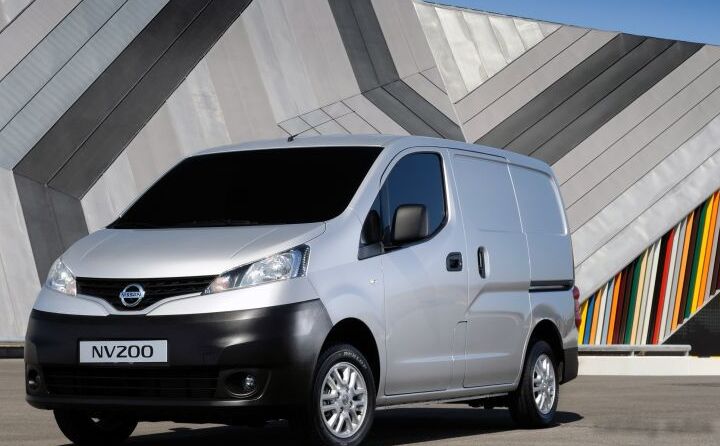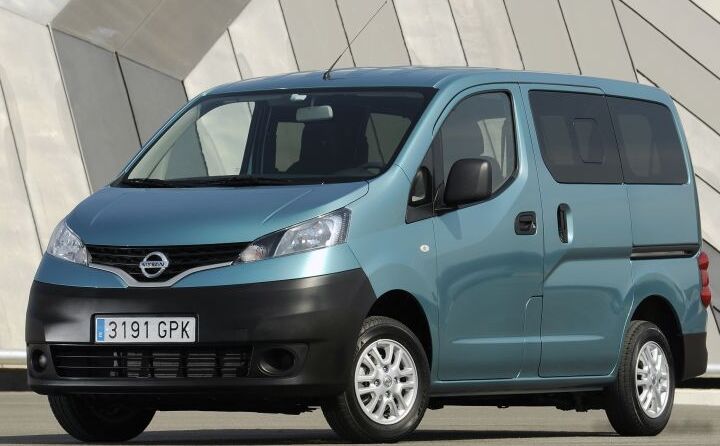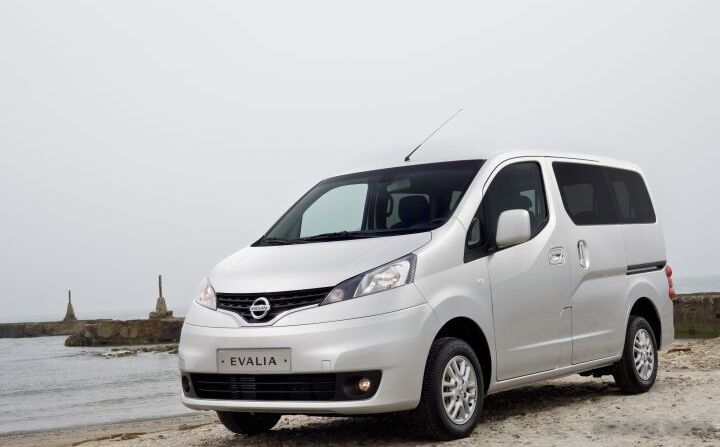
The Nissan NV200 Evalia 1.5 dCi, producing 110 horsepower, was a compact multi-purpose vehicle (MPV) marketed primarily in Europe and Asia from 2012 to 2019. Positioned as a versatile and affordable people carrier, the Evalia represented Nissan’s attempt to capture a segment dominated by vehicles like the Renault Scenic and Citroën C4 Picasso. It was based on the B-platform, shared with the Nissan Note and Kubistar, and offered a unique combination of space, practicality, and fuel efficiency. The Evalia was not officially sold in the United States.
Technical Specifications
| Brand | Nissan |
| Model | NV200 |
| Generation | NV200 Evalia |
| Type (Engine) | 1.5 dCi (110 Hp) |
| Start of production | 2012 |
| End of production | 2019 |
| Powertrain Architecture | Internal Combustion engine |
| Body type | Minivan |
| Seats | 5 |
| Doors | 5 |
| Fuel consumption (urban) | 5.5 l/100 km (42.8 US mpg) |
| Fuel consumption (extra urban) | 4.6 l/100 km (51.1 US mpg) |
| Fuel consumption (combined) | 4.9 l/100 km (48 US mpg) |
| CO2 emissions | 130 g/km |
| Fuel Type | Diesel |
| Maximum speed | 160 km/h (99.42 mph) |
| Emission standard | Euro 6 |
| Weight-to-power ratio | 12.6 kg/Hp |
| Weight-to-torque ratio | 5.8 kg/Nm |
| Power | 110 Hp @ 4000 rpm |
| Torque | 240 Nm @ 1750 rpm (177.01 lb.-ft. @ 1750 rpm) |
| Engine layout | Front, Transverse |
| Engine Model/Code | K9K 636, K9K 646 |
| Engine displacement | 1461 cm3 (89.16 cu. in.) |
| Number of cylinders | 4 |
| Engine configuration | Inline |
| Cylinder Bore | 76 mm (2.99 in.) |
| Piston Stroke | 80.5 mm (3.17 in.) |
| Compression ratio | 15.2:1 |
| Number of valves per cylinder | 2 |
| Fuel injection system | Diesel Commonrail |
| Engine aspiration | Turbocharger, Intercooler |
| Engine oil capacity | 4.5 l (4.76 US qt | 3.96 UK qt) |
| Kerb Weight | 1390-1437 kg (3064.43 – 3168.04 lbs.) |
| Max. weight | 2030 kg (4475.38 lbs.) |
| Max load | 593-640 kg (1307.34 – 1410.96 lbs.) |
| Trunk (boot) space – minimum | 2300 l (81.22 cu. ft.) |
| Trunk (boot) space – maximum | 3100 l (109.48 cu. ft.) |
| Fuel tank capacity | 55 l (14.53 US gal | 12.1 UK gal) |
| Max. roof load | 100 kg (220.46 lbs.) |
| Permitted trailer load with brakes (12%) | 1100 kg (2425.08 lbs.) |
| Permitted trailer load without brakes | 640 kg (1410.96 lbs.) |
| Permitted towbar download | 44 kg (97 lbs.) |
| Length | 4400 mm (173.23 in.) |
| Width | 1695 mm (66.73 in.) |
| Height | 1860 mm (73.23 in.) |
| Wheelbase | 2725 mm (107.28 in.) |
| Front track | 1490 mm (58.66 in.) |
| Rear (Back) track | 1510 mm (59.45 in.) |
| Minimum turning circle | 10.60 m (34.78 ft.) |
| Drivetrain Architecture | Front wheel drive |
| Number of gears and type of gearbox | 6 gears, manual transmission |
| Front suspension | Independent type McPherson |
| Rear suspension | Leaf spring |
| Front brakes | Disc |
| Rear brakes | Drum |
| Assisting systems | ABS (Anti-lock braking system) |
| Steering type | Steering rack and pinion |
| Tires size | 175/70 R14C |
| Wheel rims size | 5.5JJ x 14 |
Powertrain & Engine Architecture
The NV200 Evalia 1.5 dCi was powered by the Renault-Nissan Alliance’s K9K engine family, specifically the K9K 636 or K9K 646 variant. This 1.5-liter, four-cylinder diesel engine featured a common-rail direct injection system, a turbocharger with an intercooler, and two valves per cylinder. The engine produced 110 horsepower at 4000 rpm and 240 Nm (177 lb-ft) of torque at 1750 rpm. The K9K engine was known for its relatively simple design and robust construction. The engine’s high compression ratio of 15.2:1 contributed to its fuel efficiency, but also required high-quality diesel fuel. The 6-speed manual transmission was the only transmission option available with this engine configuration. The transmission’s gear ratios were tuned for fuel economy and drivability, rather than outright performance.
Driving Characteristics
The 1.5 dCi engine, paired with the six-speed manual transmission, provided adequate, though not exhilarating, performance. Acceleration was modest, and the Evalia was not designed for rapid overtaking. The engine’s peak torque was available at relatively low engine speeds, making it suitable for everyday driving and carrying a full load of passengers. The gear ratios were spaced to maximize fuel efficiency, with a taller final drive. Compared to higher-powered versions of the NV200 (which were not widely available in all markets), the 1.5 dCi offered a more economical driving experience, but at the expense of performance. The leaf spring rear suspension, while cost-effective, resulted in a somewhat firm ride, particularly when the vehicle was unladen.
Equipment & Trim Levels
The NV200 Evalia 1.5 dCi typically came with a reasonable level of standard equipment. This included power steering, central locking, electric front windows, and an ABS anti-lock braking system. Higher trim levels, such as the Visia+ and Acenta, added features like air conditioning, a radio/CD player with MP3 compatibility, and alloy wheels. Optional extras included rear parking sensors, a navigation system, and a panoramic sunroof. Interior upholstery was typically cloth, with a durable and practical design. The dashboard layout was functional and straightforward, prioritizing usability over aesthetics.
Chassis & Braking
The NV200 Evalia utilized a front-engine, front-wheel-drive layout. The front suspension consisted of independent McPherson struts, while the rear suspension employed a more basic leaf spring setup. This configuration was chosen to balance cost, load-carrying capacity, and simplicity. The front brakes were ventilated discs, providing adequate stopping power, while the rear brakes were drums. The steering was a rack-and-pinion system, offering reasonable precision and feedback. The vehicle’s relatively high center of gravity and soft suspension settings contributed to noticeable body roll during cornering.
Market Reception & Comparison
The Nissan NV200 Evalia 1.5 dCi was generally well-received for its practicality, fuel efficiency, and spacious interior. Critics praised its versatility and affordability, but some noted its somewhat unrefined driving experience and basic interior trim. Compared to other MPVs in its class, the Evalia offered a competitive price point and excellent fuel economy. However, it lacked the sophistication and refinement of some of its rivals, such as the Renault Scenic or Citroën C4 Picasso. The 1.5 dCi engine provided a good balance between performance and economy, making it a popular choice for buyers who prioritized fuel efficiency over outright speed.
Legacy
The Nissan NV200 Evalia, while not a mainstream success in all markets, established itself as a practical and reliable MPV. The K9K engine, in particular, proved to be a durable and long-lasting unit, with many examples still in service today. On the used car market, the 1.5 dCi variant is often sought after for its fuel efficiency and relatively low maintenance costs. However, potential buyers should be aware of the potential for diesel particulate filter (DPF) issues, particularly on vehicles that have primarily been used for short journeys. Overall, the NV200 Evalia 1.5 dCi remains a viable option for those seeking an affordable and versatile people carrier.