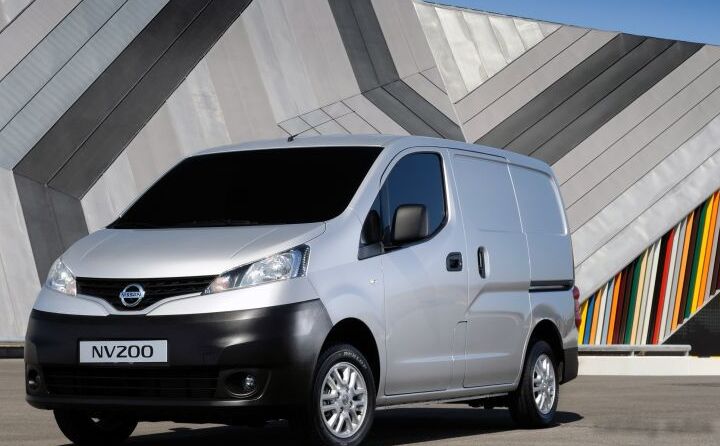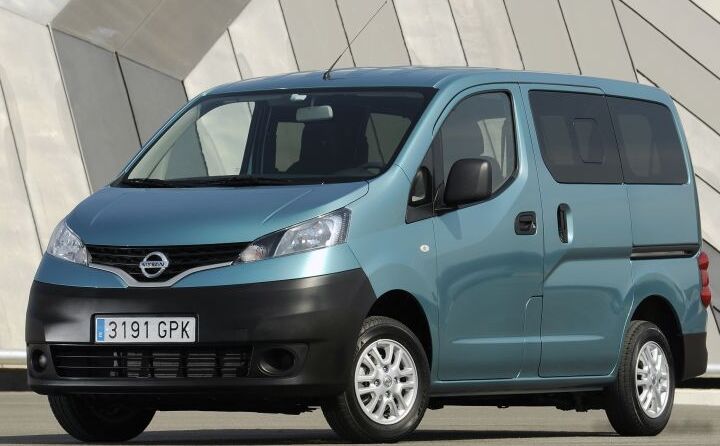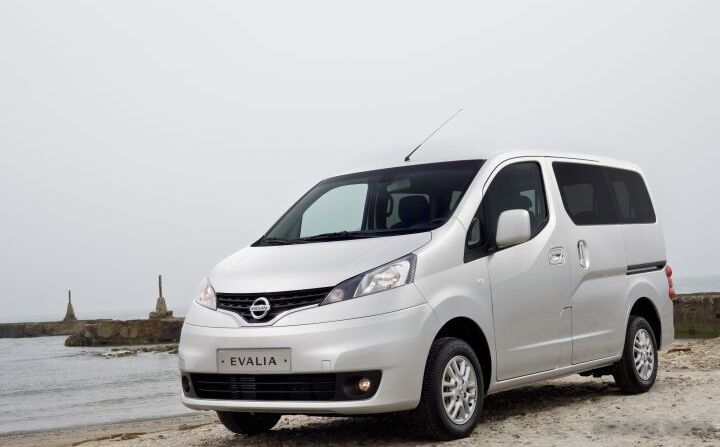
The Nissan NV200 Evalia 1.5 dCi (90 hp) 7-seat variant was a popular choice in European and Asian markets from 2010 to 2019, offering a practical and affordable multi-purpose vehicle solution. Positioned as a mid-range offering within the NV200 Evalia lineup, it catered to families and those requiring flexible passenger and cargo space. The Evalia, a derivative of the globally sold NV200 van, was specifically designed to provide a more comfortable and refined experience than a traditional commercial vehicle, while retaining its inherent practicality. This particular engine and transmission combination aimed to balance fuel efficiency with adequate performance for everyday driving needs.
Technical Specifications
| Brand | Nissan |
| Model | NV200 |
| Generation | NV200 Evalia |
| Type | 1.5 dCi (90 Hp) 7 Seat |
| Start of production | 2010 |
| End of production | 2019 |
| Powertrain Architecture | Internal Combustion engine |
| Body type | Minivan |
| Seats | 7 |
| Doors | 5 |
| Fuel consumption (urban) | 5.7 l/100 km (41.3 US mpg, 49.6 UK mpg, 17.5 km/l) |
| Fuel consumption (extra urban) | 4.8 l/100 km (49 US mpg, 58.9 UK mpg, 20.8 km/l) |
| Fuel consumption (combined) | 5.1 l/100 km (46.1 US mpg, 55.4 UK mpg, 19.6 km/l) |
| CO2 emissions | 133 g/km |
| Fuel Type | Diesel |
| Maximum speed | 158 km/h (98.18 mph) |
| Emission standard | Euro 6 |
| Weight-to-power ratio | 15.7 kg/Hp, 63.5 Hp/tonne |
| Weight-to-torque ratio | 7.1 kg/Nm, 141.1 Nm/tonne |
| Power | 90 Hp @ 4000 rpm |
| Power per litre | 61.6 Hp/l |
| Torque | 200 Nm @ 1750 rpm (147.51 lb.-ft. @ 1750 rpm) |
| Engine layout | Front, Transverse |
| Engine Model/Code | K9K 892 |
| Engine displacement | 1461 cm3 (89.16 cu. in.) |
| Number of cylinders | 4 |
| Engine configuration | Inline |
| Cylinder Bore | 76 mm (2.99 in.) |
| Piston Stroke | 80.5 mm (3.17 in.) |
| Compression ratio | 15.2:1 |
| Number of valves per cylinder | 2 |
| Fuel injection system | Diesel Commonrail |
| Engine aspiration | Turbocharger, Intercooler |
| Engine oil capacity | 4.5 l (4.76 US qt | 3.96 UK qt) |
| Kerb Weight | 1417-1477 kg (3123.95 – 3256.23 lbs.) |
| Max. weight | 2060 kg (4541.52 lbs.) |
| Max load | 583-643 kg (1285.29 – 1417.57 lbs.) |
| Trunk (boot) space – minimum | 900 l (31.78 cu. ft.) |
| Trunk (boot) space – maximum | 2900 l (102.41 cu. ft.) |
| Fuel tank capacity | 55 l (14.53 US gal | 12.1 UK gal) |
| Max. roof load | 100 kg (220.46 lbs.) |
| Permitted trailer load with brakes (12%) | 1100 kg (2425.08 lbs.) |
| Permitted trailer load without brakes | 640 kg (1410.96 lbs.) |
| Permitted towbar download | 44 kg (97 lbs.) |
| Length | 4400 mm (173.23 in.) |
| Width | 1695 mm (66.73 in.) |
| Width including mirrors | 2011 mm (79.17 in.) |
| Height | 1860 mm (73.23 in.) |
| Wheelbase | 2725 mm (107.28 in.) |
| Front track | 1490 mm (58.66 in.) |
| Rear (Back) track | 1510 mm (59.45 in.) |
| Minimum turning circle | 10.60 m (34.78 ft.) |
| Drivetrain Architecture | Front wheel drive |
| Drive wheel | Front wheel drive |
| Number of gears and type of gearbox | 5 gears, manual transmission |
| Front suspension | Independent type McPherson |
| Rear suspension | Leaf spring |
| Front brakes | Disc |
| Rear brakes | Drum |
| Assisting systems | ABS (Anti-lock braking system) |
| Steering type | Steering rack and pinion |
| Tires size | 175/70 R14C |
| Wheel rims size | 5.5JJ x 14 |
Powertrain & Engine Architecture
The heart of the NV200 Evalia 1.5 dCi (90 hp) is the K9K 892 engine, a 1.5-liter inline-four cylinder diesel. This engine is part of the K9K family, widely used by Renault-Nissan-Alliance vehicles. It features a turbocharger with an intercooler to boost power and efficiency. The engine utilizes a diesel commonrail direct injection system, delivering fuel directly into the combustion chamber at high pressure for improved combustion and reduced emissions. The engine’s valvetrain consists of two valves per cylinder (SOHC). The 90 horsepower output is achieved at 4000 rpm, while peak torque of 200 Nm (147.51 lb-ft) is available from 1750 rpm. This torque curve provides good low-end grunt, suitable for carrying passengers and cargo. The engine is transversely mounted, driving the front wheels. The transmission is a 5-speed manual gearbox, chosen for its simplicity and cost-effectiveness.
Driving Characteristics
The 1.5 dCi 90 hp engine, paired with the 5-speed manual transmission, delivers adequate, but not exhilarating, performance. Acceleration is modest, and overtaking requires planning. The focus is on fuel economy and usability rather than outright speed. The gear ratios are tuned for efficiency, with a relatively long fifth gear for highway cruising. The turbocharger provides a noticeable boost in power once spooled up, but there is some turbo lag at lower engine speeds. Compared to higher-powered versions of the NV200 Evalia, such as those with 110 hp engines, this variant feels noticeably slower, especially when fully loaded. However, the lower power output contributes to better fuel economy and reduced stress on the engine and drivetrain. The manual transmission provides a more engaging driving experience than an automatic, allowing the driver to better control the engine’s power band.
Equipment & Trim Levels
The 1.5 dCi (90 hp) 7-seat Evalia typically came with a reasonable level of standard equipment. This included power steering, central locking, electric front windows, and an audio system with USB connectivity. Safety features included ABS brakes, driver and passenger airbags, and seatbelt pretensioners. Interior upholstery was typically cloth, with a durable and practical finish. Optional extras included air conditioning, alloy wheels, rear parking sensors, and a navigation system. Trim levels varied depending on the market, but generally, this engine/transmission combination represented a mid-range offering, bridging the gap between basic commercial versions and more luxurious passenger-focused trims.
Chassis & Braking
The NV200 Evalia utilizes a McPherson strut independent suspension at the front, providing a comfortable ride and decent handling. The rear suspension employs a leaf spring setup, which is more cost-effective but less sophisticated than an independent rear suspension. Front brakes are discs, offering good stopping power, while rear brakes are drums, a cost-saving measure. ABS (Anti-lock Braking System) is standard, enhancing safety during emergency braking. The steering is a rack and pinion system, providing precise and responsive steering feel. The relatively lightweight construction of the Evalia helps to offset the modest engine power, resulting in acceptable handling characteristics.
Market Reception & Comparison
The Nissan NV200 Evalia 1.5 dCi (90 hp) was generally well-received as a practical and affordable MPV. Critics praised its spacious interior, versatile seating configuration, and fuel efficiency. However, some reviewers noted the engine’s lack of outright power, particularly when fully loaded. Compared to other MPVs in its class, such as the Renault Scenic or Citroen C4 Picasso, the Evalia offered a more utilitarian and less refined driving experience. However, it often undercut its rivals on price. The 90 hp engine offered a good balance between fuel economy and performance for drivers who primarily used the vehicle for commuting and family transport. The manual transmission was favored by many for its improved fuel efficiency and driver engagement.
Legacy
The K9K engine family, including the K9K 892 variant, has proven to be relatively reliable, provided it is properly maintained. Common issues include turbocharger wear and potential problems with the fuel injection system. However, these are generally addressable with regular servicing and preventative maintenance. On the used car market, the NV200 Evalia 1.5 dCi (90 hp) remains a popular choice for budget-conscious buyers seeking a spacious and practical MPV. Its affordability, fuel efficiency, and relatively simple mechanical design make it an attractive option for families and those needing a versatile vehicle for both passenger and cargo transport. The Evalia’s reputation for durability and practicality ensures its continued presence on roads today.