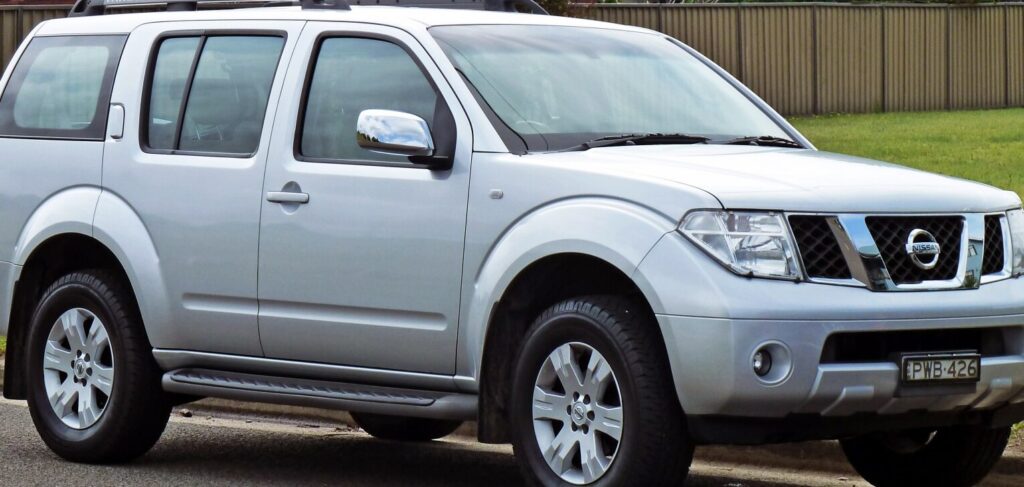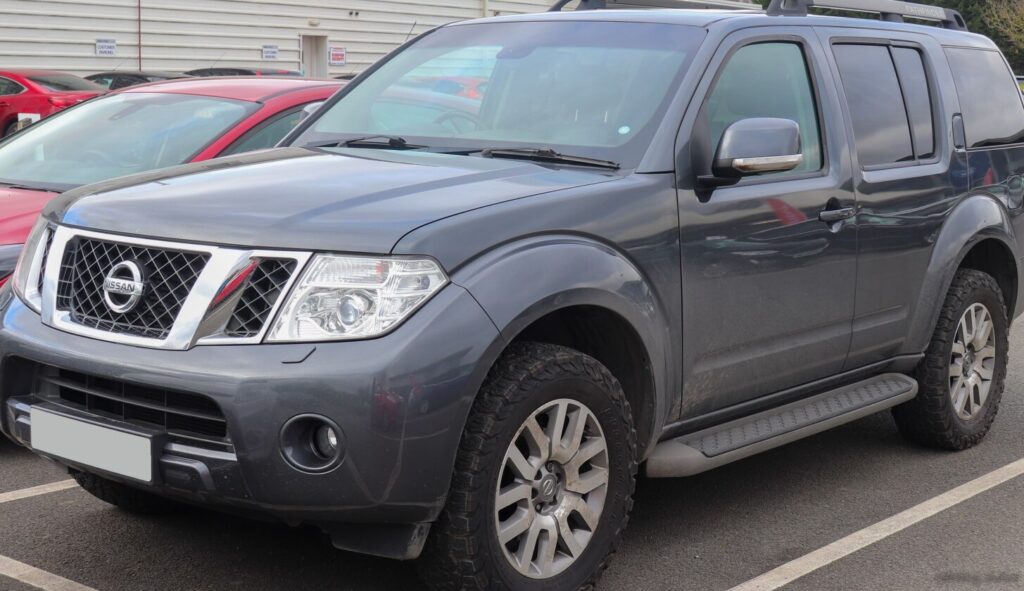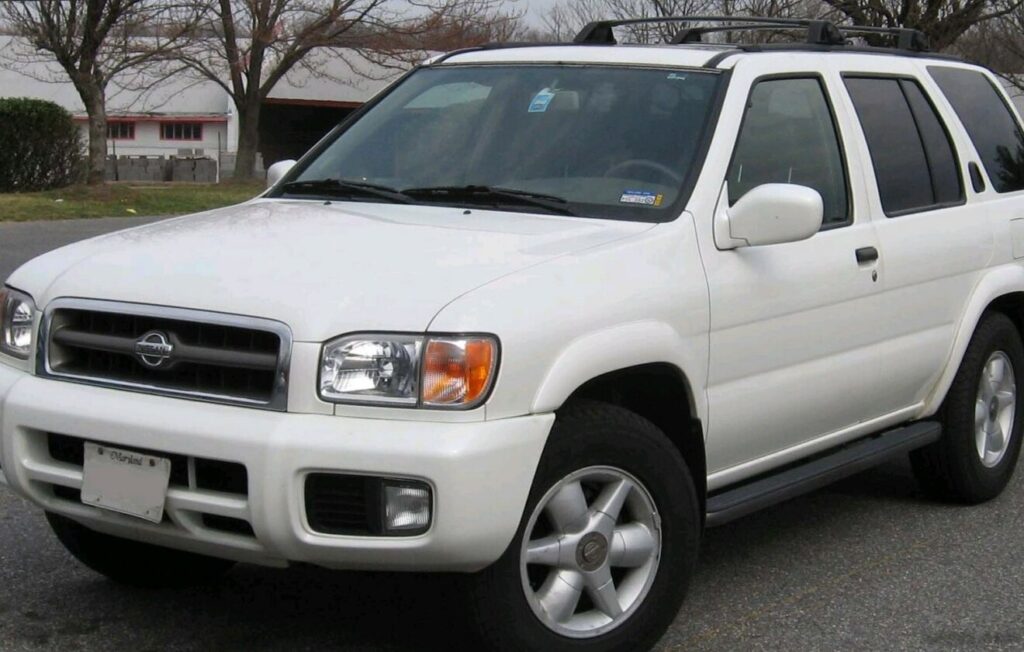
The Nissan Pathfinder II, produced between 1995 and 2001, represented a significant step forward for Nissan’s mid-size SUV offerings. Built on the D22 chassis shared with the Nissan Navara/Frontier pickup truck, the Pathfinder II aimed to blend rugged capability with family-friendly practicality. This particular variant, equipped with the 3.3-liter V6 engine producing 170 horsepower and a four-wheel-drive system, occupied a middle ground in the Pathfinder II lineup, offering a balance between performance, fuel economy, and affordability. It was positioned above the base four-cylinder models and below the more powerful supercharged V6 options available in certain markets.
Technical Specifications
| Brand | Nissan |
| Model | Pathfinder |
| Generation | Pathfinder II |
| Type (Engine) | 3.3 V6 (170 Hp) 4WD |
| Start of production | 1995 |
| End of production | 2001 |
| Powertrain Architecture | Internal Combustion engine |
| Body type | SUV |
| Seats | 5 |
| Doors | 5 |
| Fuel consumption (urban) | 18.2 l/100 km (12.9 US mpg) |
| Fuel consumption (extra urban) | 11.4 l/100 km (20.6 US mpg) |
| Fuel Type | Petrol (Gasoline) |
| Maximum speed | 172 km/h (106.88 mph) |
| Weight-to-power ratio | 11.1 kg/Hp |
| Weight-to-torque ratio | 7 kg/Nm |
| Power | 170 Hp @ 4800 rpm |
| Power per litre | 51.9 Hp/l |
| Torque | 271 Nm @ 2800 rpm (199.88 lb.-ft. @ 2800 rpm) |
| Engine layout | Front, Longitudinal |
| Engine displacement | 3275 cm3 (199.85 cu. in.) |
| Number of cylinders | 6 |
| Engine configuration | V-engine |
| Cylinder Bore | 91.5 mm (3.6 in.) |
| Piston Stroke | 83 mm (3.27 in.) |
| Compression ratio | 8.9:1 |
| Number of valves per cylinder | 2 |
| Fuel injection system | Multi-port manifold injection |
| Engine aspiration | Naturally aspirated engine |
| Valvetrain | OHC |
| Kerb Weight | 1890 kg (4166.74 lbs.) |
| Max. weight | 2360 kg (5202.91 lbs.) |
| Max load | 470 kg (1036.17 lbs.) |
| Trunk (boot) space – minimum | 435 l (15.36 cu. ft.) |
| Trunk (boot) space – maximum | 1670 l (58.98 cu. ft.) |
| Fuel tank capacity | 80 l (21.13 US gal) |
| Length | 4530 mm (178.35 in.) |
| Width | 1840 mm (72.44 in.) |
| Height | 1750 mm (68.9 in.) |
| Wheelbase | 2700 mm (106.3 in.) |
| Front track | 1520 mm (59.84 in.) |
| Rear (Back) track | 1525 mm (60.04 in.) |
| Drive wheel | All wheel drive (4×4) |
| Number of gears and type of gearbox | 5 gears, manual transmission |
| Front suspension | Coil spring |
| Rear suspension | Coil spring |
| Front brakes | Ventilated discs |
| Rear brakes | Drum |
| Assisting systems | ABS (Anti-lock braking system) |
| Steering type | Steering rack and pinion |
| Power steering | Hydraulic Steering |
| Tires size | 245/70 R16 |
Powertrain & Engine Architecture
The heart of this Pathfinder II variant is the VG33E 3.3-liter V6 engine. This engine, a member of Nissan’s long-running VG series, is a naturally aspirated, 60-degree V-engine featuring a cast iron block and aluminum cylinder heads. It utilizes a multi-port fuel injection system, delivering fuel directly to each intake port for improved combustion efficiency. The engine employs a single overhead camshaft (OHC) design, operating two valves per cylinder. The VG33E produces 170 horsepower at 4800 rpm and 271 Nm (199.88 lb-ft) of torque at 2800 rpm. This engine was known for its relatively smooth operation and decent low-end torque, making it suitable for both on-road driving and moderate off-road excursions. The five-speed manual transmission was the standard offering, providing drivers with direct control over gear selection. The transmission’s gear ratios were tuned to balance acceleration and fuel efficiency, though it wasn’t particularly sporty in its feel.
Driving Characteristics
The 3.3L V6 with the five-speed manual transmission offered a reasonably engaging driving experience for its time. Acceleration was adequate, though not particularly brisk, with a 0-60 mph time estimated around 10-11 seconds. The engine’s torque curve provided sufficient power for everyday driving and towing light loads. The manual transmission allowed for precise control, especially when navigating challenging terrain. Compared to the four-cylinder Pathfinder II models, this V6 offered a noticeable improvement in performance. However, it lacked the outright power of the supercharged V6 options available in some markets. The four-wheel-drive system, selectable via a rotary dial, provided enhanced traction in slippery conditions, making it a capable vehicle for inclement weather and light off-roading.
Equipment & Trim Levels
The 3.3 V6 4WD Pathfinder II typically came with a fairly standard equipment list. Base models included features like air conditioning, power steering, and an AM/FM radio. Higher trim levels, often denoted by “SE” or “LE” designations, added features such as alloy wheels, upgraded interior upholstery, a cassette player (later CD player), and power windows and locks. Optional extras included a sunroof, cruise control, and a tow package. Interior materials were generally durable and practical, prioritizing functionality over luxury. The dashboard layout was straightforward and easy to use, with clearly labeled controls.
Chassis & Braking
The Pathfinder II utilized a body-on-frame construction, providing a robust and durable platform. The suspension consisted of coil springs at all four corners, offering a comfortable ride quality. Front suspension featured independent upper and lower control arms, while the rear utilized a solid axle with leaf springs. Braking duties were handled by ventilated discs at the front and drum brakes at the rear. An anti-lock braking system (ABS) was available, enhancing braking performance and stability, particularly on slippery surfaces. The steering system employed a rack-and-pinion setup with hydraulic power assistance, providing responsive and precise steering feel.
Market Reception & Comparison
The Nissan Pathfinder II 3.3 V6 4WD was generally well-received by automotive critics. It was praised for its blend of capability, practicality, and affordability. Fuel economy, however, was a common criticism, with the 3.3L V6 returning around 12.9 mpg in urban driving and 20.6 mpg on the highway. Compared to other mid-size SUVs of the era, such as the Ford Explorer and Jeep Cherokee, the Pathfinder II offered a more rugged and utilitarian character. The Toyota 4Runner was a direct competitor, known for its exceptional off-road capability and reliability. The Pathfinder II often represented a more value-oriented option, offering similar features at a lower price point.
Legacy
The VG33E engine, while not without its quirks, proved to be a relatively reliable powerplant when properly maintained. Common issues included oil leaks and occasional sensor failures. The Pathfinder II, as a whole, has developed a reputation for durability and longevity. Today, well-maintained examples are sought after by enthusiasts and those looking for a capable and affordable SUV. The 3.3L V6 4WD variant remains a popular choice in the used car market, offering a good balance of performance, reliability, and value. Parts availability is generally good, and the relatively simple mechanical design makes it a relatively easy vehicle to maintain and repair.