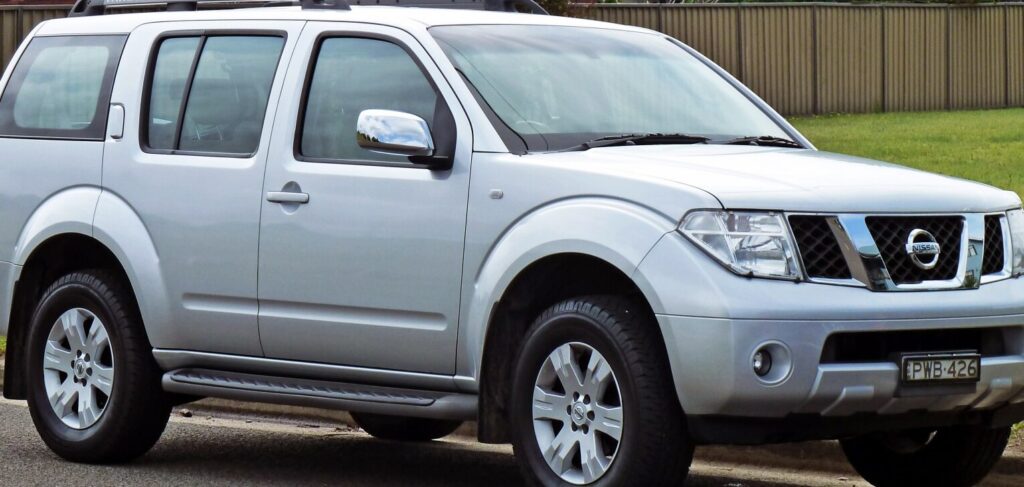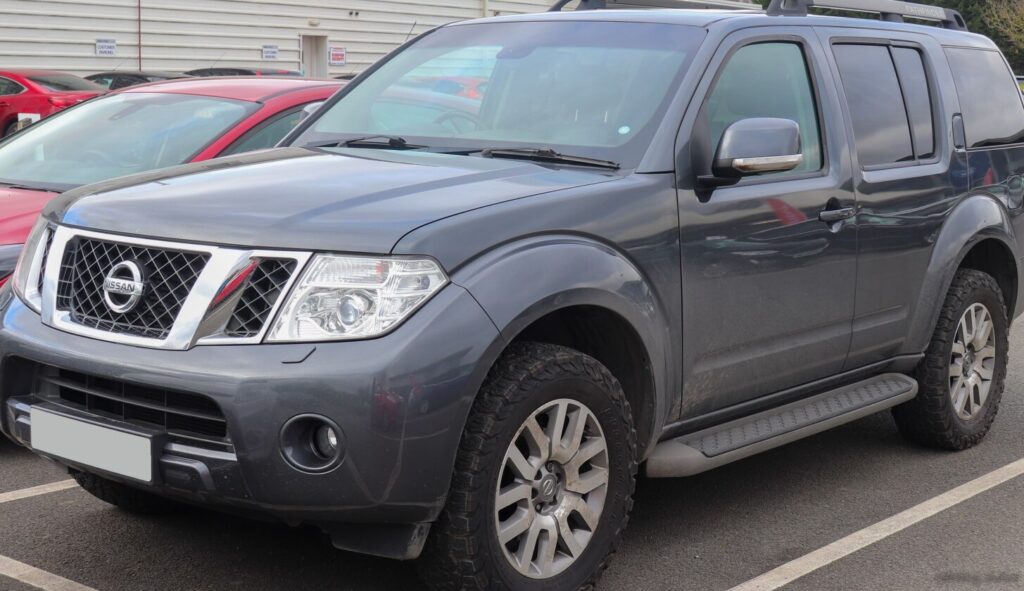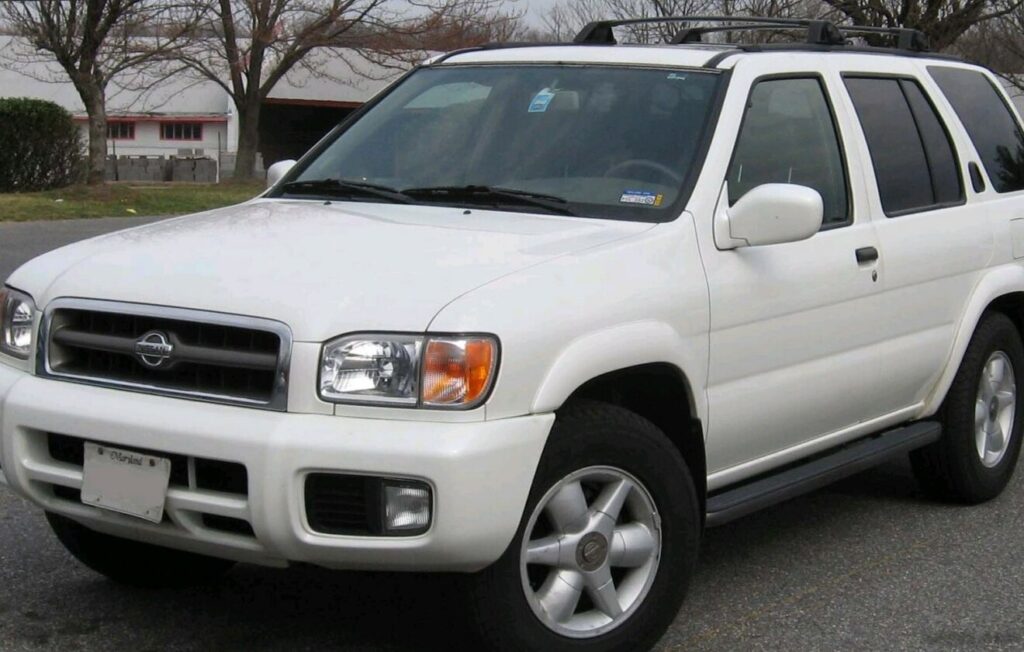
The Nissan Pathfinder II, produced from 2001 to 2004, marked a significant evolution for Nissan’s mid-size SUV lineup. This second-generation model, known internally as the R50 platform, aimed to deliver a blend of traditional SUV ruggedness with enhanced refinement and on-road comfort. The 3.5i V6 24V 4WD variant, powered by the VQ35DE engine and paired with a four-speed automatic transmission, was a key offering, balancing power, practicality, and all-weather capability. It was positioned as an upgrade over the base 3.3L engine, appealing to buyers needing more performance for towing, hauling, and everyday use.
Technical Specifications
| Brand | Nissan |
| Model | Pathfinder |
| Generation | Pathfinder II |
| Type (Engine) | 3.5 i V6 24V (220 Hp) 4WD |
| Start of production | 2001 |
| End of production | 2004 |
| Powertrain Architecture | Internal Combustion engine |
| Body type | SUV |
| Seats | 5 |
| Doors | 5 |
| Fuel consumption (urban) | 18.7 l/100 km (12.6 US mpg) |
| Fuel consumption (extra urban) | 12 l/100 km (19.6 US mpg) |
| Fuel consumption (combined) | 14.5 l/100 km (16.2 US mpg) |
| Fuel Type | Petrol (Gasoline) |
| Acceleration 0 – 100 km/h | 10.3 sec |
| Acceleration 0 – 62 mph | 10.3 sec |
| Acceleration 0 – 60 mph | 9.8 sec |
| Maximum speed | 175 km/h (108.74 mph) |
| Weight-to-power ratio | 8.9 kg/Hp |
| Weight-to-torque ratio | 5.4 kg/Nm |
| Power | 220 Hp @ 6000 rpm |
| Torque | 363 Nm @ 3200 rpm (267.74 lb.-ft. @ 3200 rpm) |
| Engine layout | Front, Longitudinal |
| Engine Model/Code | VQ35DE |
| Engine displacement | 3498 cm3 (213.46 cu. in.) |
| Number of cylinders | 6 |
| Engine configuration | V-engine |
| Cylinder Bore | 95.5 mm (3.76 in.) |
| Piston Stroke | 81.4 mm (3.2 in.) |
| Compression ratio | 10:1 |
| Number of valves per cylinder | 4 |
| Fuel injection system | Multi-port manifold injection |
| Engine aspiration | Naturally aspirated engine |
| Valvetrain | DOHC |
| Engine oil capacity | 5 l (5.28 US qt | 4.4 UK qt) |
| Coolant capacity | 9.2 l (9.72 US qt | 8.09 UK qt) |
| Kerb Weight | 1950 kg (4299.01 lbs.) |
| Max. weight | 2400 kg (5291.09 lbs.) |
| Max load | 450 kg (992.08 lbs.) |
| Trunk (boot) space – minimum | 435 l (15.36 cu. ft.) |
| Trunk (boot) space – maximum | 1670 l (58.98 cu. ft.) |
| Fuel tank capacity | 80 l (21.13 US gal | 17.6 UK gal) |
| Length | 4640 mm (182.68 in.) |
| Width | 1820 mm (71.65 in.) |
| Height | 1750 mm (68.9 in.) |
| Wheelbase | 2700 mm (106.3 in.) |
| Front track | 1520 mm (59.84 in.) |
| Rear (Back) track | 1525 mm (60.04 in.) |
| Drive wheel | All wheel drive (4×4) |
| Number of gears | 4 |
| Gearbox type | automatic transmission |
| Front suspension | Coil spring |
| Rear suspension | Coil spring |
| Front brakes | Ventilated discs |
| Rear brakes | Drum |
| Assisting systems | ABS (Anti-lock braking system) |
| Steering type | Steering rack and pinion |
| Power steering | Hydraulic Steering |
| Tires size | 255/65 R16 |
Powertrain & Engine Architecture
The 3.5i Pathfinder II’s powertrain centers around the VQ35DE 3.5-liter V6 engine. This engine is part of Nissan’s celebrated VQ engine family, renowned for its smooth operation, inherent reliability, and respectable power output. The VQ35DE features a 60-degree V-angle, four valves per cylinder, and a dual overhead camshaft (DOHC) configuration. It employs a multi-port fuel injection system, delivering fuel directly into the intake ports for optimized combustion. The engine’s 10:1 compression ratio contributes to both efficiency and a responsive feel. The engine is mated to a four-speed automatic transmission, designed to provide smooth shifts and ease of use. This transmission was selected for its cost-effectiveness and drivability, though it lacks the more advanced gear ratios found in contemporary automatic transmissions.
Driving Characteristics
The VQ35DE engine’s 220 horsepower and 267.74 lb-ft of torque, coupled with the all-wheel-drive system, gave the Pathfinder II adequate performance for most driving scenarios. Acceleration from 0-60 mph took around 9.8 seconds, which was competitive within its class at the time. While the four-speed automatic transmission was reliable, it did exhibit noticeable gear changes and wasn’t as refined as newer transmissions with more gears. The all-wheel-drive system enhanced traction in adverse weather conditions and on unpaved surfaces, making it a capable vehicle for drivers in regions with challenging roads. Compared to the base 3.3L engine option, the 3.5i delivered a substantial improvement in acceleration and towing capacity, making it a more versatile choice for families and those with active lifestyles.
Equipment & Trim Levels
The 3.5i trim level generally included standard features like air conditioning, power windows and locks, a CD player, and cloth upholstery. Optional extras available included a sunroof, leather upholstery, upgraded audio systems, and a navigation system. The interior design was functional and straightforward, prioritizing practicality over luxury. The Pathfinder II offered a comfortable and spacious cabin for up to five passengers, with generous cargo space behind the second-row seats. The 4WD system was a standard feature on the 3.5i, adding to its appeal for those seeking all-weather capability.
Chassis & Braking
The Pathfinder II utilized a traditional body-on-frame construction, providing a robust and durable platform. The suspension system consisted of coil springs at all four corners, delivering a comfortable ride quality. The front brakes were ventilated discs, offering ample stopping power, while the rear brakes were drums. The steering system was a rack-and-pinion setup with hydraulic power assist, providing precise and responsive steering feel. An ABS (Anti-lock Braking System) was standard equipment, enhancing safety by preventing wheel lockup during hard braking maneuvers.
Market Reception & Comparison
The Nissan Pathfinder II 3.5i V6 4WD was generally well-received by automotive reviewers. It was praised for its powerful engine, comfortable ride, and spacious interior. However, some critics pointed out that the four-speed automatic transmission felt somewhat dated compared to newer transmissions with more gears. Fuel economy was also a concern, with the 3.5i achieving around 16.2 US mpg in combined driving. When compared to competitors like the Ford Explorer and Jeep Grand Cherokee, the Pathfinder II offered a compelling combination of value, reliability, and capability.
Legacy
The VQ35DE engine has proven to be exceptionally durable and reliable, with many examples exceeding 200,000 miles with consistent maintenance. The Pathfinder II, particularly the 3.5i variant, has maintained a relatively strong following in the used car market. Routine maintenance items include regular oil changes, inspection of the timing chain (though generally robust), and monitoring for potential coolant leaks. The Pathfinder II represents a solid and dependable SUV that continues to offer good value in the used car market. Its blend of capability, comfort, and reliability has solidified its position as a popular choice among used car buyers.