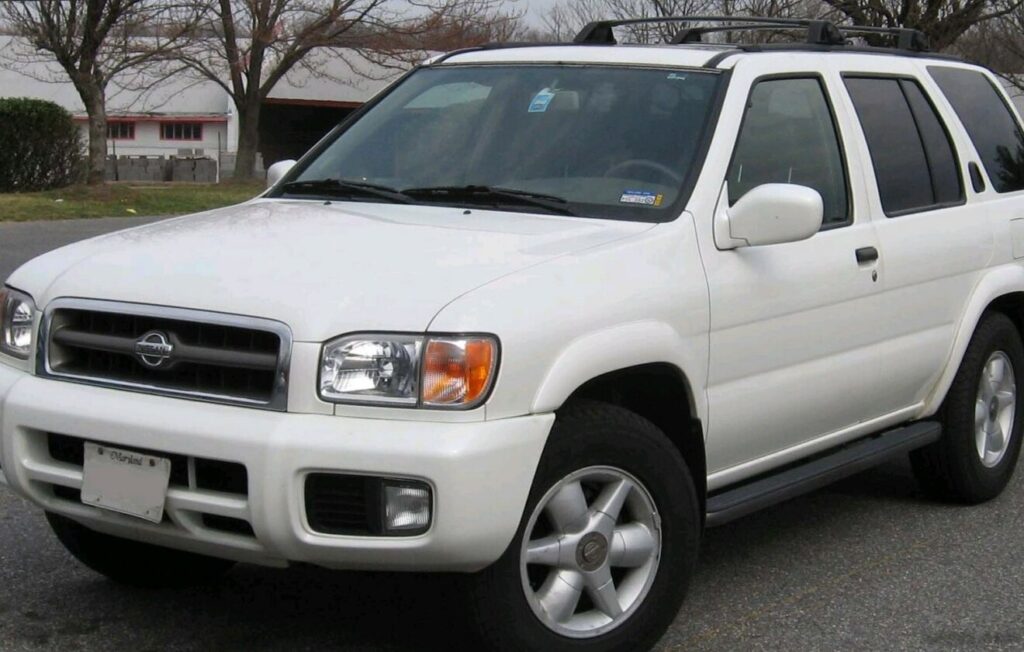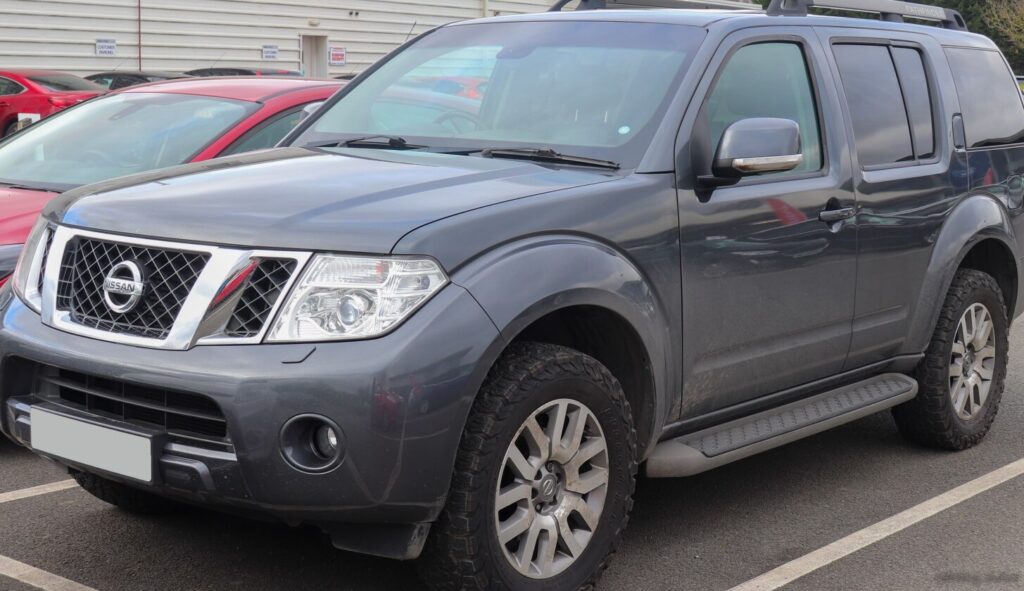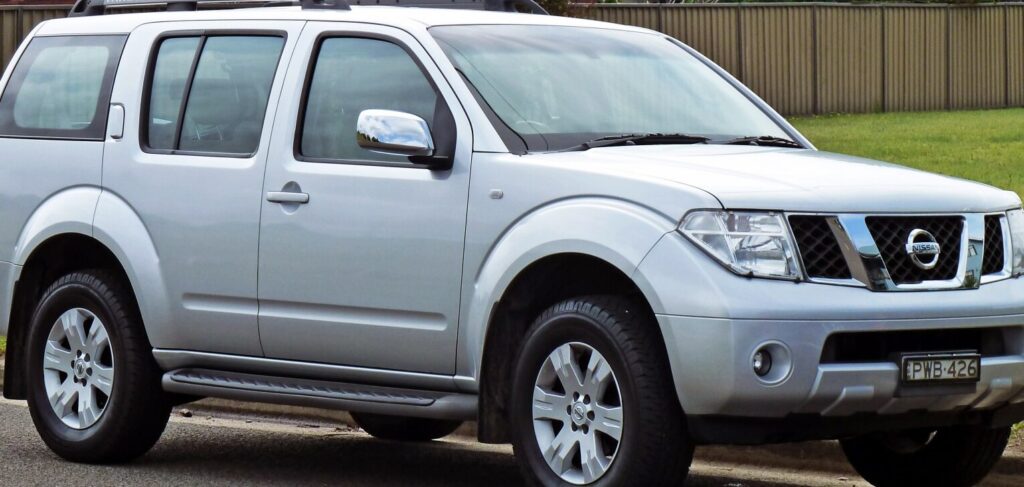
The Nissan Pathfinder III, produced from 2004 to 2010, represented a significant shift for Nissan’s popular SUV. Moving away from the truck-based chassis of its predecessors, the third-generation Pathfinder adopted a unibody construction, shared with the Altima sedan and Murano crossover. This transition aimed to improve on-road comfort and handling while retaining the Pathfinder’s reputation for practicality and family-friendliness. The 4.0i V6 2WD variant, equipped with the VQ40DE engine producing 269 horsepower, occupied a middle ground in the Pathfinder lineup, offering a balance between performance and fuel efficiency. It was positioned above the base 2.5L four-cylinder models and below the more expensive 4WD versions.
Technical Specifications
| Brand | Nissan |
| Model | Pathfinder |
| Generation | Pathfinder III |
| Type (Engine) | 4.0 i V6 2WD (269 Hp) |
| Start of production | 2004 |
| End of production | 2010 |
| Powertrain Architecture | Internal Combustion engine |
| Body type | SUV |
| Seats | 7 |
| Doors | 4 |
| Fuel consumption (urban) | 18.7 l/100 km (12.6 US mpg) |
| Fuel consumption (extra urban) | 10.5 l/100 km (22.4 US mpg) |
| Fuel consumption (combined) | 13.5 l/100 km (17.4 US mpg) |
| Fuel Type | Petrol (Gasoline) |
| Acceleration 0 – 100 km/h | 8.9 sec |
| Acceleration 0 – 62 mph | 8.9 sec |
| Acceleration 0 – 60 mph | 8.5 sec |
| Maximum speed | 190 km/h (118.06 mph) |
| Emission standard | Euro 4 |
| Weight-to-power ratio | 7.9 kg/Hp |
| Weight-to-torque ratio | 5.5 kg/Nm |
| Power | 269 Hp @ 5600 rpm |
| Torque | 385 Nm @ 4000 rpm (283.96 lb.-ft. @ 4000 rpm) |
| Engine layout | Front, Longitudinal |
| Engine Model/Code | VQ40DE |
| Engine displacement | 3954 cm3 (241.29 cu. in.) |
| Number of cylinders | 6 |
| Engine configuration | V-engine |
| Fuel injection system | Multi-port manifold injection |
| Engine aspiration | Naturally aspirated engine |
| Engine oil capacity | 5.1 l (5.39 US qt | 4.49 UK qt) |
| Coolant capacity | 10.2 l (10.78 US qt | 8.97 UK qt) |
| Kerb Weight | 2132 kg (4700.26 lbs.) |
| Max. weight | 2793 kg (6157.51 lbs.) |
| Max load | 661 kg (1457.26 lbs.) |
| Trunk (boot) space – minimum | 515 l (18.19 cu. ft.) |
| Trunk (boot) space – maximum | 2091 l (73.84 cu. ft.) |
| Fuel tank capacity | 80 l (21.13 US gal | 17.6 UK gal) |
| Length | 4877 mm (192.01 in.) |
| Width | 1854 mm (72.99 in.) |
| Height | 1879 mm (73.98 in.) |
| Wheelbase | 2850 mm (112.2 in.) |
| Front track | 1570 mm (61.81 in.) |
| Rear track | 1570 mm (61.81 in.) |
| Minimum turning circle | 12.4 m (40.68 ft.) |
| Drivetrain Architecture | Front wheel drive |
| Number of gears | 6 gears, manual transmission |
| Power steering | Hydraulic Steering |
| Tires size | 255/65 R17 |
| Wheel rims size | 17 |
Powertrain & Engine Architecture
The heart of the Pathfinder 4.0i is Nissan’s VQ40DE 4.0-liter V6 engine. This engine, a member of Nissan’s highly-regarded VQ family, is known for its smooth operation, reliability, and respectable power output. The VQ40DE utilizes a 60-degree V-angle, contributing to its balance and reduced vibrations. It features multi-port fuel injection and a double overhead camshaft (DOHC) valvetrain with four valves per cylinder. This configuration allows for efficient cylinder filling and improved breathing, enhancing both power and torque. The engine produces 269 horsepower at 5600 rpm and 385 Nm (283.96 lb-ft) of torque at 4000 rpm. The 6-speed manual transmission was standard on this trim, offering drivers precise control and a more engaging driving experience.
Driving Characteristics
The 4.0i 2WD Pathfinder offered a noticeable performance advantage over the base four-cylinder models. Acceleration from 0-60 mph was achieved in approximately 8.5 seconds, making it adequately quick for everyday driving and highway merging. The manual transmission allowed for good control over the engine’s powerband, although the relatively long gearing aimed for fuel efficiency rather than outright acceleration. Compared to the 4WD versions, the 2WD model had slightly lighter steering and a more responsive feel due to the reduced weight. However, it lacked the all-weather capability and off-road prowess of its four-wheel-drive siblings. The suspension, tuned for comfort, provided a reasonably smooth ride, but body roll was noticeable during aggressive cornering.
Equipment & Trim Levels
The 4.0i trim generally included features such as air conditioning, power windows and locks, a CD player, and cloth upholstery. Higher trim levels, often available as optional packages, added features like leather seats, a sunroof, upgraded audio systems, and alloy wheels. Safety features included front airbags, anti-lock brakes, and a tire pressure monitoring system. The Pathfinder III offered a spacious interior with seating for up to seven passengers, making it a practical choice for families. The third-row seats, while best suited for children, added versatility for occasional passengers.
Chassis & Braking
The Pathfinder III’s unibody construction provided a stiffer and lighter chassis compared to traditional body-on-frame SUVs. The front suspension utilized MacPherson struts, while the rear suspension employed a multi-link setup. This combination aimed to balance ride comfort with handling stability. The 4.0i 2WD model featured disc brakes on the front wheels and drum brakes on the rear. While adequate for normal driving conditions, the rear drum brakes were a cost-saving measure and didn’t offer the same stopping power as disc brakes on all four wheels, which were standard on some higher trim levels.
Market Reception & Comparison
The Nissan Pathfinder III was generally well-received by critics for its comfortable ride, spacious interior, and improved handling compared to previous generations. The 4.0i V6 engine was praised for its smooth power delivery and respectable fuel economy, although the 17.4 US mpg combined rating was not class-leading. Compared to competitors like the Honda Pilot and Toyota Highlander, the Pathfinder offered a more affordable price point and a slightly more rugged aesthetic. However, some reviewers noted that the interior materials weren’t as refined as those found in some of its rivals. The 2WD version was often seen as a good value for buyers who didn’t require all-wheel drive.
Legacy
The VQ40DE engine in the Pathfinder III has proven to be remarkably durable and reliable, with many examples exceeding 200,000 miles with proper maintenance. Common issues include minor oil leaks and occasional sensor failures, but major engine problems are relatively rare. The Pathfinder III, particularly the 4.0i variant, remains a popular choice in the used car market due to its practicality, affordability, and proven reliability. While not as fuel-efficient as more modern crossovers, it continues to offer a compelling combination of space, comfort, and capability for families seeking a versatile SUV.