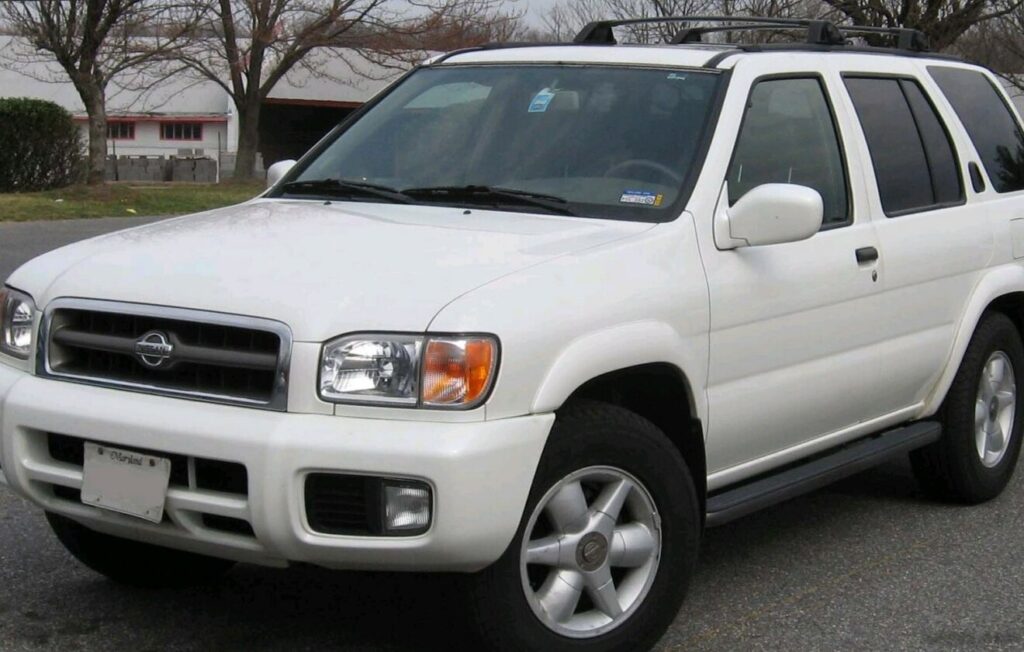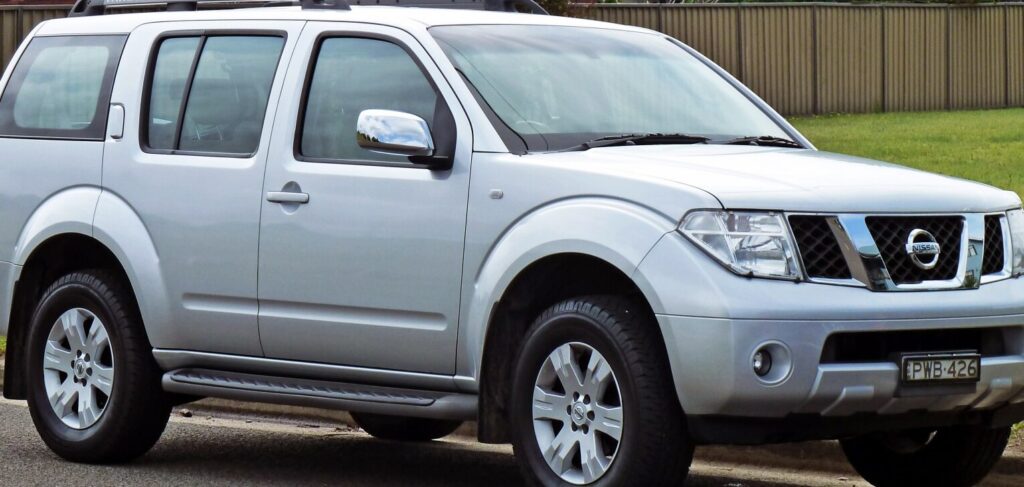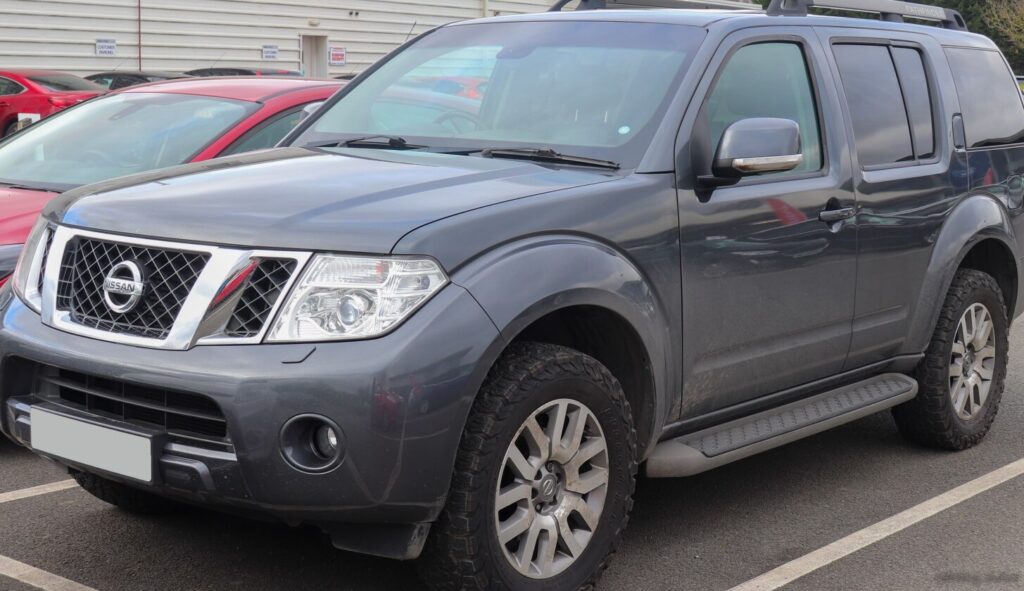
The Nissan Pathfinder III, specifically the facelifted version introduced in 2010, represented a significant evolution of Nissan’s mid-size SUV offering. Produced from 2010 to 2013, this generation Pathfinder aimed to blend family practicality with a more rugged aesthetic. Within the Pathfinder III range, the 2.5 dCi variant, producing 190 horsepower, occupied a middle ground, offering a balance between fuel efficiency and performance. It was positioned as a more economical alternative to the gasoline-powered models, while still providing sufficient power for typical SUV duties. This model was primarily aimed at the European and international markets, where diesel engines held a stronger preference due to fuel costs and driving distances.
Technical Specifications
| Brand | Nissan |
| Model | Pathfinder |
| Generation | Pathfinder III (facelift 2010) |
| Type (Engine) | 2.5 dCi (190 Hp) |
| Start of production | 2010 |
| End of production | 2013 |
| Powertrain Architecture | Internal Combustion engine |
| Body type | SUV |
| Seats | 7 |
| Doors | 5 |
| Fuel consumption (urban) | 11 l/100 km (21.4 US mpg) |
| Fuel consumption (extra urban) | 7.3 l/100 km (32.2 US mpg) |
| Fuel consumption (combined) | 8.7 l/100 km (27 US mpg) |
| CO2 emissions | 224 g/km |
| Fuel Type | Diesel |
| Acceleration 0 – 100 km/h | 11 sec |
| Acceleration 0 – 62 mph | 11 sec |
| Acceleration 0 – 60 mph | 10.5 sec |
| Maximum speed | 186 km/h (115.58 mph) |
| Emission standard | Euro 4 |
| Weight-to-power ratio | 11.1 kg/Hp |
| Weight-to-torque ratio | 4.7 kg/Nm |
| Power | 190 Hp @ 4000 rpm |
| Torque | 450 Nm @ 2000 rpm (331.9 lb.-ft. @ 2000 rpm) |
| Engine layout | Front, Transverse |
| Engine Model/Code | YD25DDTi |
| Engine displacement | 2488 cm3 (151.83 cu. in.) |
| Number of cylinders | 4 |
| Engine configuration | Inline |
| Number of valves per cylinder | 4 |
| Fuel injection system | Diesel Commonrail |
| Engine aspiration | Turbocharger, Intercooler |
| Engine oil capacity | 6.9 l (7.29 US qt | 6.07 UK qt) |
| Coolant capacity | 10.2 l (10.78 US qt | 8.97 UK qt) |
| Kerb Weight | 2110 kg (4651.75 lbs.) |
| Max. weight | 2880 kg (6349.31 lbs.) |
| Max load | 770 kg (1697.56 lbs.) |
| Trunk (boot) space – minimum | 190 l (6.71 cu. ft.) |
| Trunk (boot) space – maximum | 2091 l (73.84 cu. ft.) |
| Fuel tank capacity | 80 l (21.13 US gal | 17.6 UK gal) |
| Max. roof load | 100 kg (220.46 lbs.) |
| Permitted trailer load with brakes (12%) | 3000 kg (6613.87 lbs.) |
| Permitted trailer load without brakes | 750 kg (1653.47 lbs.) |
| Permitted towbar download | 120 kg (264.55 lbs.) |
| Length | 4813 mm (189.49 in.) |
| Width | 1848 mm (72.76 in.) |
| Height | 1858 mm (73.15 in.) |
| Wheelbase | 2853 mm (112.32 in.) |
| Minimum turning circle | 11.9 m (39.04 ft.) |
| Front suspension | Independent multi-link suspension |
| Rear suspension | Independent multi-link suspension |
| Front brakes | Ventilated discs |
| Rear brakes | Ventilated discs |
| Assisting systems | ABS (Anti-lock braking system) |
| Steering type | Steering rack and pinion |
| Power steering | Electric Steering |
| Tires size | 255/65 R17 |
| Wheel rims size | 17 |
| Number of gears | 6 |
| Gearbox type | Manual transmission |
Powertrain & Engine Architecture
The heart of the Pathfinder 2.5 dCi is the YD25DDTi engine, a 2.5-liter inline-four cylinder diesel. This engine utilizes a common rail direct injection system, delivering fuel at extremely high pressure for optimized combustion. A turbocharger with an intercooler further enhances performance by forcing more air into the cylinders. The YD25DDTi engine is known for its relatively robust construction, though it can be susceptible to issues with the fuel injectors and turbocharger over time. The 190 horsepower output is achieved at 4000 rpm, while the substantial 450 Nm (331.9 lb-ft) of torque is available from just 2000 rpm, providing strong low-end pulling power. This engine was paired with a six-speed manual transmission in this configuration, offering precise gear changes and contributing to the vehicle’s fuel efficiency. Nissan also offered an automatic transmission option with this engine in some markets, but the manual was favored by many drivers for its responsiveness.
Driving Characteristics
The 2.5 dCi Pathfinder with the manual transmission delivers a competent, if not particularly exhilarating, driving experience. The high torque output makes it well-suited for towing and hauling, and provides ample power for overtaking maneuvers. The six-speed gearbox is well-matched to the engine’s characteristics, allowing drivers to keep the engine in its optimal power band. Compared to the gasoline-powered Pathfinder models, the 2.5 dCi offers significantly better fuel economy, making it a more practical choice for long-distance driving. However, it lacks the immediate responsiveness of the gasoline engines. Against higher-output diesel variants, such as those found in some European Pathfinder models, the 190 hp version feels less powerful, particularly when fully loaded. The gear ratios are tuned for a balance of fuel efficiency and usability, rather than outright performance.
Equipment & Trim Levels
The 2.5 dCi Pathfinder typically came equipped with a reasonable level of standard features. These generally included air conditioning, power windows and locks, a basic audio system, and alloy wheels. Higher trim levels added features such as leather upholstery, a sunroof, a more advanced audio system with navigation, and parking sensors. Interior upholstery was typically cloth on the base models, with leather available as an option. The dashboard layout was functional and straightforward, prioritizing usability over luxury. Optional extras included a rear entertainment system, heated seats, and a tow package.
Chassis & Braking
The Pathfinder III utilizes an independent multi-link suspension system both front and rear, providing a comfortable ride quality and good handling characteristics. Ventilated disc brakes are fitted on all four wheels, offering adequate stopping power. Anti-lock Braking System (ABS) is standard. The chassis is designed to handle the weight of a full load of passengers and cargo, as well as the stresses of towing. Stabilizer bars are present on both axles to reduce body roll during cornering. The suspension tuning is geared towards comfort and stability, rather than sporty handling.
Market Reception & Comparison
The Nissan Pathfinder 2.5 dCi was generally well-received by automotive critics as a practical and fuel-efficient SUV. It was praised for its spacious interior, comfortable ride, and strong towing capacity. However, some critics noted that the engine could be somewhat noisy and that the interior materials were not as luxurious as those found in some competitors. Compared to other trims in the Pathfinder lineup, the 2.5 dCi offered a more affordable entry point, appealing to buyers who prioritized fuel economy and practicality over outright performance. Its fuel economy was competitive with other diesel SUVs in its class, and its reliability was generally considered to be good, although preventative maintenance was crucial.
Legacy
The YD25DDTi engine, while generally reliable, has a reputation for requiring regular maintenance, particularly regarding the fuel injectors and turbocharger. Proper servicing and the use of high-quality oil are essential to ensure long-term durability. In the used car market, the Pathfinder 2.5 dCi remains a popular choice for those seeking a spacious and capable SUV at a reasonable price. Its fuel efficiency and towing capacity continue to be attractive features. However, potential buyers should be aware of the potential maintenance issues associated with the diesel engine and ensure that the vehicle has been properly maintained.