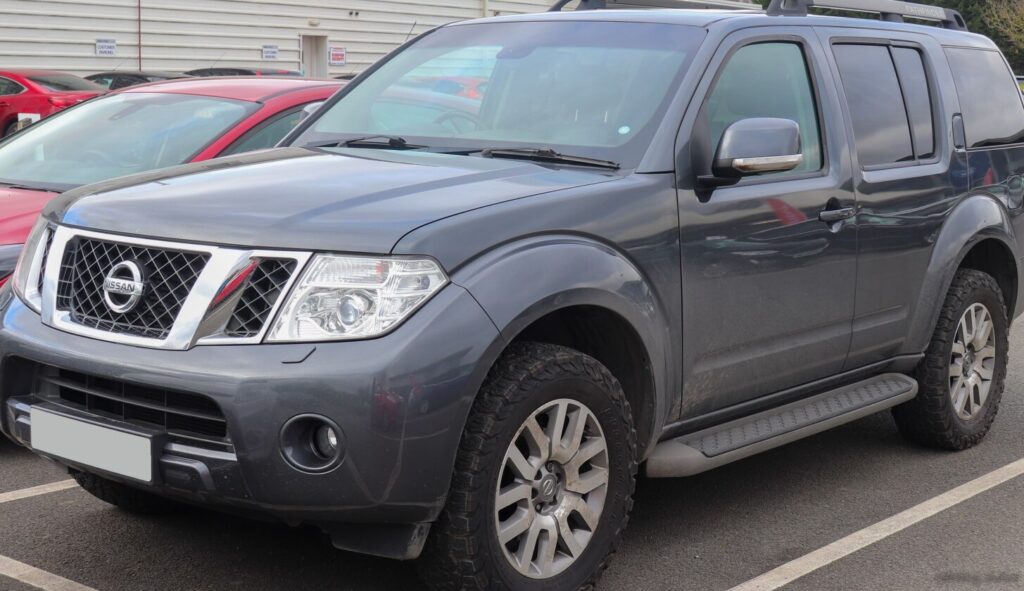
The Nissan Pathfinder III, specifically the facelifted version produced from 2010 to 2013, represented a significant evolution of Nissan’s mid-size SUV offering. This generation Pathfinder, built on the D platform, aimed to blend family practicality with a more rugged aesthetic. The 2.5 dCi (190 hp) Automatic variant, introduced during the facelift, was positioned as a balance between fuel efficiency and acceptable performance for the European and other international markets where diesel engines were favored. It offered a seven-seat configuration and aimed to appeal to buyers seeking a versatile vehicle for both daily commuting and occasional off-road excursions. This model year saw updates to the exterior styling, interior materials, and available technology, enhancing its overall appeal.
Technical Specifications
| Brand | Nissan |
| Model | Pathfinder |
| Generation | Pathfinder III (facelift 2010) |
| Type (Engine) | 2.5 dCi (190 Hp) Automatic |
| Start of production | 2010 |
| End of production | 2013 |
| Powertrain Architecture | Internal Combustion engine |
| Body type | SUV |
| Seats | 7 |
| Doors | 5 |
| Fuel consumption (urban) | 11.7 l/100 km (20.1 US mpg, 24.1 UK mpg, 8.5 km/l) |
| Fuel consumption (extra urban) | 7.5 l/100 km (31.4 US mpg, 37.7 UK mpg, 13.3 km/l) |
| Fuel consumption (combined) | 9 l/100 km (26.1 US mpg, 31.4 UK mpg, 11.1 km/l) |
| CO2 emissions | 238 g/km |
| Fuel Type | Diesel |
| Acceleration 0 – 100 km/h | 10.7 sec |
| Acceleration 0 – 62 mph | 10.7 sec |
| Acceleration 0 – 60 mph | 10.2 sec |
| Maximum speed | 186 km/h (115.58 mph) |
| Emission standard | Euro 5 |
| Weight-to-power ratio | 11.4 kg/Hp, 88 Hp/tonne |
| Weight-to-torque ratio | 4.8 kg/Nm, 208.3 Nm/tonne |
| Power | 190 Hp @ 3600 rpm |
| Power per litre | 76.4 Hp/l |
| Torque | 450 Nm @ 2000 rpm (331.9 lb.-ft. @ 2000 rpm) |
| Engine layout | Front, Transverse |
| Engine Model/Code | YD25DDTi |
| Engine displacement | 2488 cm3 (151.83 cu. in.) |
| Number of cylinders | 4 |
| Engine configuration | Inline |
| Number of valves per cylinder | 4 |
| Fuel injection system | Diesel Commonrail |
| Engine aspiration | Turbocharger, Intercooler |
| Engine oil capacity | 6.9 l (7.29 US qt | 6.07 UK qt) |
| Coolant capacity | 10.2 l (10.78 US qt | 8.97 UK qt) |
| Kerb Weight | 2160 kg (4761.98 lbs.) |
| Max. weight | 2880 kg (6349.31 lbs.) |
| Max load | 720 kg (1587.33 lbs.) |
| Trunk (boot) space – minimum | 190 l (6.71 cu. ft.) |
| Trunk (boot) space – maximum | 2091 l (73.84 cu. ft.) |
| Fuel tank capacity | 80 l (21.13 US gal | 17.6 UK gal) |
| Max. roof load | 100 kg (220.46 lbs.) |
| Permitted trailer load with brakes (12%) | 3000 kg (6613.87 lbs.) |
| Permitted trailer load without brakes | 750 kg (1653.47 lbs.) |
| Permitted towbar download | 120 kg (264.55 lbs.) |
| Length | 4813 mm (189.49 in.) |
| Width | 1848 mm (72.76 in.) |
| Height | 1858 mm (73.15 in.) |
| Wheelbase | 2853 mm (112.32 in.) |
| Minimum turning circle | 11.9 m (39.04 ft.) |
| Front suspension | Independent multi-link suspension |
| Rear suspension | Independent multi-link suspension |
| Front brakes | Ventilated discs |
| Rear brakes | Ventilated discs |
| Gearbox | 5 gears, automatic transmission |
| Tire size | 255/65 R17; 255/60 R18 |
Powertrain & Engine Architecture
The heart of this Pathfinder variant is the YD25DDTi 2.5-liter inline-four diesel engine. This engine, a mainstay in Nissan’s commercial and passenger vehicle lineups, utilizes a cast iron block and aluminum cylinder head. The YD25DDTi employs a common rail direct injection system, delivering fuel at extremely high pressures for optimized combustion. A variable geometry turbocharger (VGT) and intercooler work in tandem to boost power and torque across a broad RPM range. The engine features four valves per cylinder (DOHC) and is known for its relatively robust construction. Paired with this engine is a five-speed automatic transmission, designed to provide smooth shifts and adequate power delivery for everyday driving. This transmission isn’t known for being particularly sporty, prioritizing comfort and fuel efficiency over rapid gear changes.
Driving Characteristics
The 190 hp and 450 Nm (331.9 lb-ft) of torque offered by the 2.5 dCi engine provide adequate, but not exhilarating, performance. Acceleration from 0-60 mph takes around 10.2 seconds, making it competitive with other mid-size SUVs of the era. The automatic transmission, while smooth, can feel somewhat sluggish, especially during overtaking maneuvers. The gear ratios are tuned for fuel economy rather than outright speed. Compared to higher-output Pathfinder variants, such as those equipped with the V6 gasoline engine, the 2.5 dCi Automatic feels noticeably less powerful. However, it offers significantly better fuel economy and a more relaxed driving experience, particularly on long journeys. The torque delivery is strong from low RPMs, making it suitable for towing and navigating challenging terrain.
Equipment & Trim Levels
The 2.5 dCi Automatic Pathfinder typically came equipped with a reasonable level of standard features. These included air conditioning, power windows and locks, a basic audio system with CD player, and alloy wheels. Higher trim levels added features such as leather upholstery, a sunroof, navigation system, and upgraded audio with more speakers. Safety features like ABS, electronic brakeforce distribution (EBD), and multiple airbags were standard across the range. Optional extras included a rear entertainment system, parking sensors, and a tow hitch.
Chassis & Braking
The Pathfinder III utilizes an independent multi-link suspension system both front and rear, providing a comfortable ride quality. The suspension is tuned to balance on-road comfort with off-road capability. Braking duties are handled by ventilated discs on all four wheels, providing adequate stopping power. The steering is rack and pinion with power assistance, offering a reasonably precise feel. The vehicle’s weight (approximately 2160 kg or 4762 lbs) does contribute to a feeling of bulkiness, particularly during cornering.
Market Reception & Comparison
The 2.5 dCi Automatic Pathfinder was generally well-received in markets where diesel SUVs were popular. Critics praised its fuel efficiency and comfortable ride. However, some reviewers noted the engine’s lack of outright power and the automatic transmission’s somewhat slow response. Compared to the gasoline-powered Pathfinder variants, the diesel offered superior fuel economy but less performance. Against competitors like the Toyota RAV4 and Honda CR-V, the Pathfinder offered a larger interior and more seating capacity, but often at the expense of fuel efficiency and handling agility.
Legacy
The YD25DDTi engine, while generally reliable, is known to require regular maintenance, particularly regarding the fuel injection system and turbocharger. Proper servicing, including regular oil changes and fuel filter replacements, is crucial for long-term durability. The five-speed automatic transmission is also relatively reliable, but can be prone to wear and tear with heavy use. Today, the 2010-2013 Pathfinder 2.5 dCi Automatic represents a relatively affordable option in the used SUV market. Its combination of space, practicality, and fuel efficiency continues to appeal to buyers seeking a versatile family vehicle. However, potential buyers should be aware of the engine’s maintenance requirements and the transmission’s potential for wear.