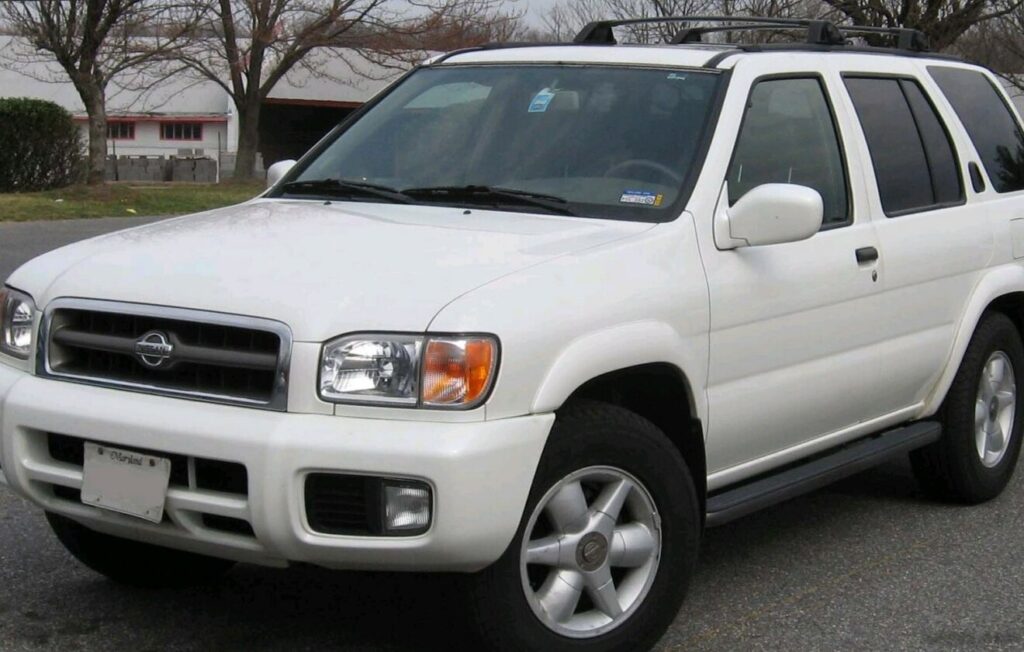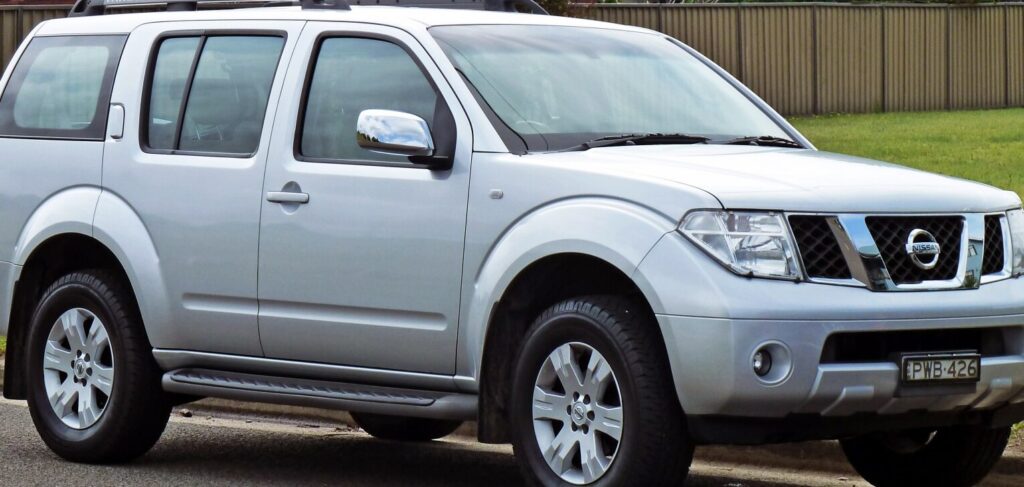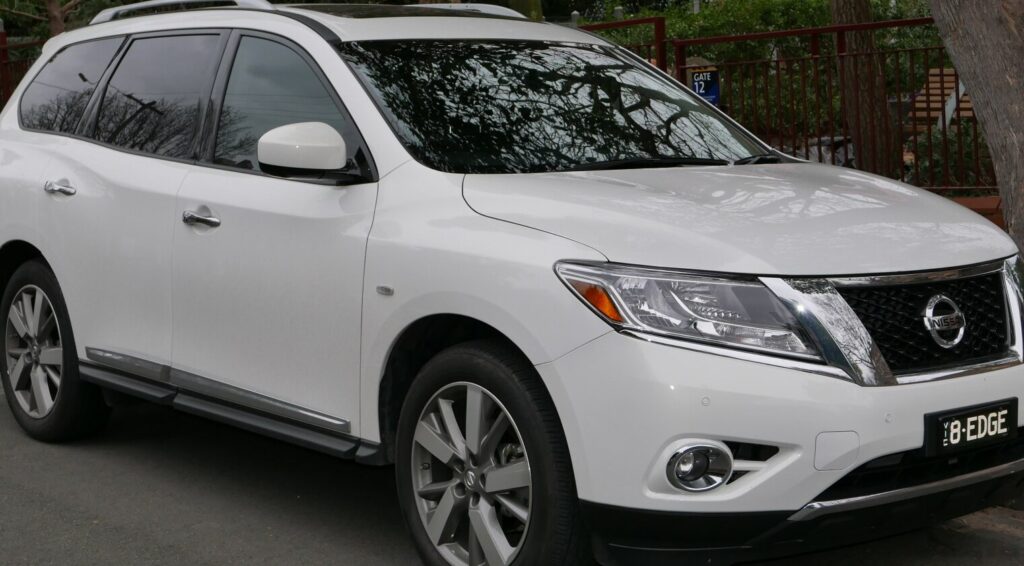
The Nissan Pathfinder IV 3.5, equipped with a 3.5-liter V6 engine producing 260 horsepower and paired with a Xtronic Continuously Variable Transmission (CVT), represents a significant iteration in Nissan’s popular mid-size SUV lineup. Produced from 2012 to 2016, this variant occupied a central position within the fourth-generation Pathfinder (T33 chassis), offering a balance between performance, fuel efficiency, and family-oriented practicality. It marked a shift away from the body-on-frame construction of previous Pathfinders towards a more comfortable and fuel-efficient unibody design, aligning it with the growing trend of crossover SUVs. This model aimed to appeal to buyers seeking a versatile vehicle capable of handling daily commutes, family road trips, and light towing duties.
Technical Specifications
| Brand | Nissan |
| Model | Pathfinder |
| Generation | Pathfinder IV |
| Type (Engine) | 3.5 (260 Hp) Xtronic CVT |
| Start of production | 2012 |
| End of production | 2016 |
| Powertrain Architecture | Internal Combustion engine |
| Body type | SUV |
| Seats | 7 |
| Doors | 5 |
| Fuel consumption (urban) | 11.8 l/100 km (19.9 US mpg) |
| Fuel consumption (extra urban) | 9 l/100 km (26.1 US mpg) |
| Fuel Type | Petrol (Gasoline) |
| Emission standard | LEV2 ULEV |
| Weight-to-power ratio | 7.2 kg/Hp |
| Weight-to-torque ratio | 5.8 kg/Nm |
| Power | 260 Hp @ 6400 rpm |
| Torque | 325 Nm @ 4400 rpm (239.71 lb.-ft. @ 4400 rpm) |
| Engine layout | Front, Transverse |
| Engine Model/Code | VQ35DE |
| Engine displacement | 3498 cm3 (213.46 cu. in.) |
| Number of cylinders | 6 |
| Engine configuration | V-engine |
| Cylinder Bore | 95.5 mm (3.76 in.) |
| Piston Stroke | 81.4 mm (3.2 in.) |
| Number of valves per cylinder | 4 |
| Fuel injection system | Multi-port manifold injection |
| Engine aspiration | Naturally aspirated engine |
| Valvetrain | DOHC, CVTCS |
| Engine oil capacity | 4.8 l (5.07 US qt | 4.22 UK qt) |
| Coolant | 9.8 l (10.36 US qt | 8.62 UK qt) |
| Kerb Weight | 1882-1964 kg (4149.1 – 4329.88 lbs.) |
| Trunk (boot) space – minimum | 453 l (16 cu. ft.) |
| Trunk (boot) space – maximum | 2260 l (79.81 cu. ft.) |
| Fuel tank capacity | 74 l (19.55 US gal | 16.28 UK gal) |
| Permitted trailer load with brakes (12%) | 2268 kg (5000.08 lbs.) |
| Length | 5009 mm (197.2 in.) |
| Width | 1961 mm (77.2 in.) |
| Height | 1768 mm (69.61 in.) |
| Front track | 1669 mm (65.71 in.) |
| Rear (Back) track | 1669 mm (65.71 in.) |
| Drivetrain Architecture | The Internal combustion engine (ICE) drives the front wheels of the vehicle. |
| Drive wheel | Front wheel drive |
| Number of gears and type of gearbox | automatic transmission Xtronic CVT |
| Front suspension | Independent type McPherson, Transverse stabilizer |
| Rear suspension | Independent multi-link suspension, Transverse stabilizer |
| Front brakes | Ventilated discs |
| Rear brakes | Ventilated discs |
| Assisting systems | ABS (Anti-lock braking system) |
| Steering type | Steering rack and pinion |
| Power steering | Hydraulic Steering |
| Tires size | 235/65 R18; 235/55 R20 |
| Wheel rims size | 7.5J x 18; 7.5J x 20 |
Powertrain & Engine Architecture
The heart of the Pathfinder IV 3.5 is the VQ35DE 3.5-liter V6 engine. This engine, a member of Nissan’s highly regarded VQ family, is known for its smooth operation and reliability. The VQ35DE features a 60-degree V-angle, dual overhead camshafts (DOHC) with Continuously Variable Valve Timing Control System (CVTCS) on both intake and exhaust valves, and multi-port fuel injection. These features contribute to a broad torque curve and responsive power delivery. The engine produces 260 horsepower at 6400 rpm and 239.71 lb-ft of torque at 4400 rpm. Paired with this engine is Nissan’s Xtronic CVT, a continuously variable transmission designed to maximize fuel efficiency and provide seamless acceleration. Unlike traditional automatic transmissions with fixed gear ratios, the CVT utilizes a belt and pulley system to offer an infinite number of gear ratios within its operating range. This allows the engine to operate at its most efficient rpm for any given driving condition.
Driving Characteristics
The 3.5-liter V6 and Xtronic CVT combination delivers adequate performance for everyday driving and highway cruising. While not a sports-oriented setup, the Pathfinder IV 3.5 offers sufficient power for merging onto freeways and passing other vehicles. The CVT, while prioritizing efficiency, can sometimes feel less engaging than a traditional automatic transmission, exhibiting a “rubber band” effect during hard acceleration. However, Nissan implemented programming to simulate stepped gear changes in certain driving modes, mitigating this sensation. Compared to the base 2.5-liter four-cylinder Pathfinder, the 3.5-liter offers a noticeable improvement in acceleration and overall responsiveness. It also provides a more relaxed driving experience, particularly when fully loaded with passengers and cargo. The CVT’s continuously variable nature helps maintain optimal engine speed, resulting in smoother and quieter operation than a conventional automatic.
Equipment & Trim Levels
The Pathfinder IV 3.5 was available in several trim levels, including S, SV, and SL. The base S model typically included standard features such as cloth upholstery, a rearview camera, Bluetooth connectivity, and a basic audio system. The mid-range SV trim added features like alloy wheels, a power driver’s seat, and a more advanced audio system. The top-of-the-line SL trim offered premium features such as leather upholstery, heated front seats, a navigation system, and a premium Bose audio system. Optional extras included a dual-pane sunroof, rear-seat entertainment system, and advanced safety features like blind-spot monitoring and lane departure warning.
Chassis & Braking
The Pathfinder IV utilizes a unibody construction, contributing to its lighter weight and improved ride quality compared to previous generations. The front suspension features an independent McPherson strut design with a transverse stabilizer bar, while the rear suspension employs an independent multi-link setup, also with a stabilizer bar. This configuration provides a comfortable and controlled ride. Braking duties are handled by ventilated discs on all four wheels, providing adequate stopping power. The Pathfinder IV also incorporates an Anti-lock Braking System (ABS) as standard equipment. Steering is rack-and-pinion with hydraulic power assist, offering a responsive and predictable feel.
Market Reception & Comparison
The Nissan Pathfinder IV 3.5 was generally well-received by automotive critics, who praised its comfortable ride, spacious interior, and fuel efficiency. The CVT transmission was a point of contention for some reviewers, with some finding it less engaging than a traditional automatic. However, the fuel economy benefits were widely acknowledged. Compared to competitors like the Honda Pilot and Toyota Highlander, the Pathfinder IV offered a competitive combination of features and value. The 3.5-liter V6 provided a noticeable performance advantage over the base four-cylinder engine, making it the preferred choice for buyers who prioritized power and towing capacity. Fuel economy figures averaged around 19 mpg city and 26 mpg highway, depending on driving conditions and trim level.
Legacy
The VQ35DE engine and Xtronic CVT combination in the Nissan Pathfinder IV have proven to be relatively reliable over the long term. While some CVTs have experienced issues with durability, the VQ35DE engine is known for its robustness and longevity. In the used car market, the Pathfinder IV 3.5 remains a popular choice for families seeking a versatile and affordable SUV. Regular maintenance, including timely CVT fluid changes, is crucial for ensuring the continued reliability of this powertrain. The shift to a unibody platform and the adoption of the CVT transmission marked a significant evolution for the Pathfinder, solidifying its position as a competitive player in the mid-size SUV segment.