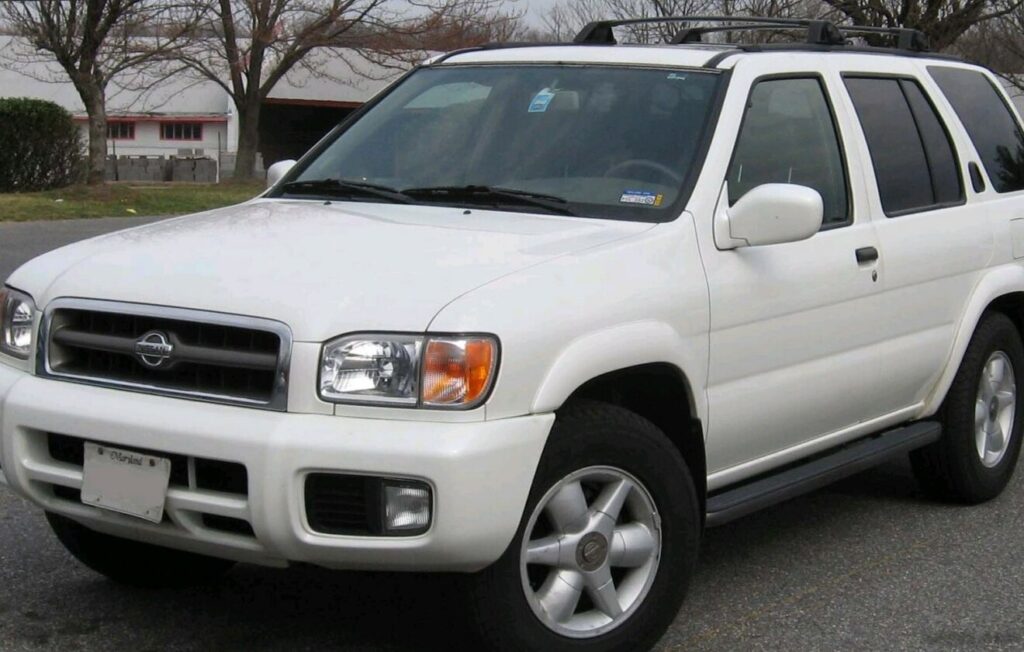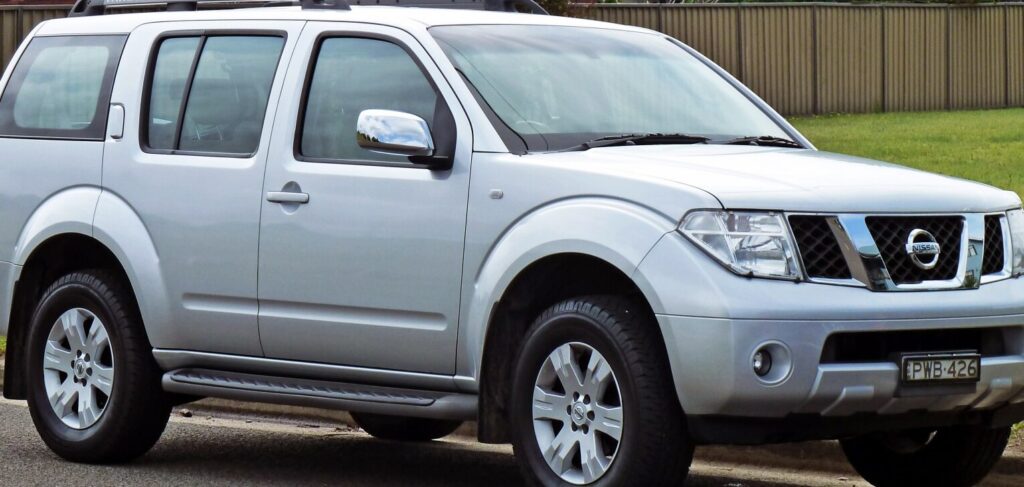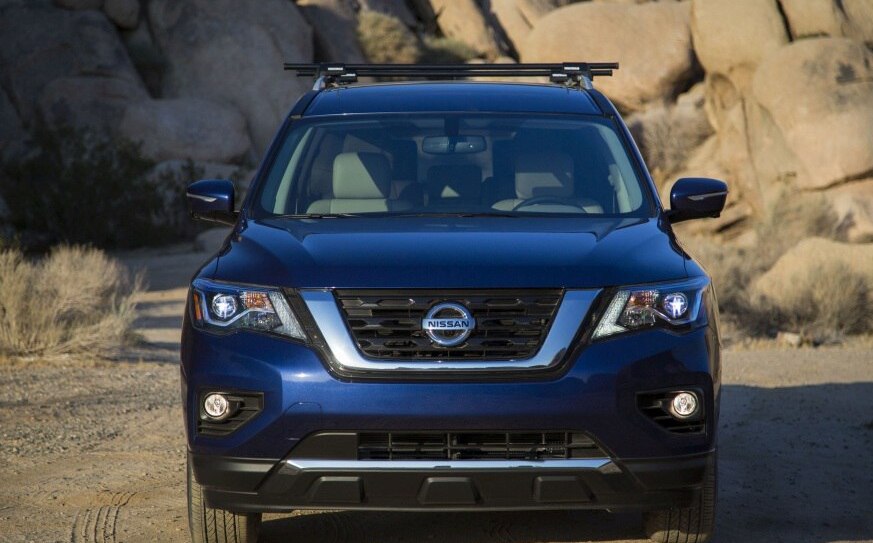
The Nissan Pathfinder IV (facelift, introduced in 2017) represents a significant mid-cycle refresh of Nissan’s popular three-row SUV. Produced from 2017 through 2021, this iteration of the Pathfinder aimed to enhance both its styling and driving experience. The 3.5 V6 4WD Automatic variant, equipped with Nissan’s VQ35DD engine, occupied a central position in the Pathfinder lineup, offering a balance of power, capability, and family-friendly features. It was positioned as a step up from the base S trim, appealing to buyers seeking enhanced performance and all-weather traction without the premium price tag of the higher Platinum trims.
Technical Specifications
| Brand | Nissan |
| Model | Pathfinder |
| Generation | Pathfinder IV (facelift 2017) |
| Type (Engine) | 3.5 V6 (284 Hp) 4WD Automatic |
| Start of production | 2017 |
| End of production | 2021 |
| Powertrain Architecture | Internal Combustion engine |
| Body type | SUV |
| Seats | 7 |
| Doors | 5 |
| Fuel consumption (urban) | 12.4 l/100 km (19 US mpg, 22.8 UK mpg, 8.1 km/l) |
| Fuel consumption (extra urban) | 9 l/100 km (26.1 US mpg, 31.4 UK mpg, 11.1 km/l) |
| Fuel consumption (combined) | 10.7-11.2 l/100 km (22-21 US mpg, 26.4-25.2 UK mpg, 9.3-8.9 km/l) |
| Fuel Type | Petrol (Gasoline) |
| Weight-to-power ratio | 7.1 kg/Hp, 141.2 Hp/tonne |
| Weight-to-torque ratio | 5.7 kg/Nm, 174.5 Nm/tonne |
| Power | 284 Hp @ 6400 rpm |
| Power per litre | 81.2 Hp/l |
| Torque | 351 Nm @ 4800 rpm (258.88 lb.-ft. @ 4800 rpm) |
| Maximum engine speed | 6600 rpm |
| Engine layout | Front, Longitudinal |
| Engine Model/Code | VQ35DD |
| Engine displacement | 3498 cm3 (213.46 cu. in.) |
| Number of cylinders | 6 |
| Engine configuration | V-engine |
| Cylinder Bore | 95.5 mm (3.76 in.) |
| Piston Stroke | 81.4 mm (3.2 in.) |
| Compression ratio | 11:1 |
| Number of valves per cylinder | 4 |
| Fuel injection system | Direct injection |
| Engine aspiration | Naturally aspirated engine |
| Valvetrain | DOHC |
| Engine oil capacity | 4.8 l (5.07 US qt, 4.22 UK qt) |
| Coolant capacity | 9.8 l (10.36 US qt, 8.62 UK qt) |
| Kerb Weight | 2011-2115 kg (4433.5 – 4662.78 lbs.) |
| Max. weight | 2715 kg (5985.55 lbs.) |
| Max load | 600-704 kg (1322.77 – 1552.05 lbs.) |
| Trunk (boot) space – minimum | 453 l (16 cu. ft.) |
| Trunk (boot) space – maximum | 2251 l (79.49 cu. ft.) |
| Fuel tank capacity | 74 l (19.55 US gal, 16.28 UK gal) |
| Permitted trailer load with brakes (12%) | 2722 kg (6000.98 lbs.) |
| Length | 5042 mm (198.5 in.) |
| Width | 1963 mm (77.28 in.) |
| Height | 1793 mm (70.59 in.) |
| Wheelbase | 2901 mm (114.21 in.) |
| Front track | 1669 mm (65.71 in.) |
| Rear (Back) track | 1669 mm (65.71 in.) |
| Ride height (ground clearance) | 178 mm (7.01 in.) |
| Drag coefficient (Cd) | 0.34 |
| Minimum turning circle (turning diameter) | 11.7 m (38.39 ft.) |
| Approach angle | 14.7° |
| Departure angle | 22.3° |
| Ramp-over (brakeover) angle | 16.2° |
| Drive wheel | All wheel drive (4×4) |
| Number of gears and type of gearbox | automatic transmission CVT Xtronic |
| Front suspension | Independent coil spring |
| Rear suspension | Independent multi-link suspension |
| Front brakes | Ventilated discs |
| Rear brakes | Ventilated discs |
| Assisting systems | ABS (Anti-lock braking system) |
| Steering type | Steering rack and pinion |
| Power steering | Electric Steering |
| Tires size | 235/65 R18; 235/55 R20 |
| Wheel rims size | 7.5J x 18; 7.5J x 20 |
INTRODUCTION
The 2017-2021 Nissan Pathfinder, particularly the 3.5 V6 4WD Automatic, represented Nissan’s attempt to refine a popular family SUV. Building upon the foundation of the fourth-generation Pathfinder (introduced in 2013), the facelift brought updated styling, improved technology, and a continued focus on practicality. This variant utilized Nissan’s well-regarded VQ35DD engine, paired with a continuously variable transmission (CVT) and a four-wheel-drive system, making it a capable and comfortable option for families needing space and all-weather performance. The Pathfinder competed directly with vehicles like the Honda Pilot, Toyota Highlander, and Ford Explorer.
Powertrain & Engine Architecture
At the heart of the Pathfinder 3.5 V6 4WD Automatic lies Nissan’s VQ35DD 3.5-liter V6 engine. This engine is a member of the renowned VQ engine family, known for its smooth operation and reliability. The VQ35DD features a 60-degree V-angle, four valves per cylinder, and a dual overhead camshaft (DOHC) design. It employs Nissan’s Direct Injection Gasoline (DIG) system, which improves fuel efficiency and power output by directly injecting fuel into the combustion chambers. The engine produces 284 horsepower at 6400 rpm and 258.88 lb-ft of torque at 4800 rpm. The engine’s longitudinal mounting allows for a front-engine, all-wheel-drive configuration. The engine is mated to Nissan’s Xtronic CVT (Continuously Variable Transmission). This CVT, while offering smooth acceleration and improved fuel economy, was a point of contention for some owners due to concerns about long-term durability, particularly when subjected to heavy towing or aggressive driving.
Driving Characteristics
The 3.5L V6 and CVT combination in the Pathfinder 4WD delivers adequate, though not exhilarating, performance. Acceleration is smooth and linear, but the CVT lacks the distinct gear changes of a traditional automatic transmission. This can result in a somewhat detached feeling during acceleration, with the engine often holding at a constant rpm while the vehicle gains speed. Compared to the base 3.5L front-wheel-drive model, the 4WD version experiences a slight performance penalty due to the added weight and drivetrain losses. The CVT is programmed to mimic traditional gear shifts under hard acceleration, but it still doesn’t offer the same responsiveness as a conventional automatic. The Pathfinder’s suspension is tuned for comfort, providing a relatively smooth ride over most road surfaces. However, the vehicle’s weight and high center of gravity can result in noticeable body roll during cornering.
Equipment & Trim Levels
The 3.5 V6 4WD Automatic Pathfinder typically came standard with a good level of equipment. Features included tri-zone automatic climate control, an 8-inch touchscreen infotainment system with navigation, Bluetooth connectivity, a rearview camera, and keyless entry. Higher trim levels added features such as leather upholstery, heated and ventilated front seats, a power liftgate, and a premium audio system. Optional extras included a panoramic sunroof, rear-seat entertainment system, and various driver-assistance technologies like blind-spot monitoring and adaptive cruise control. Interior upholstery was typically cloth on lower trims and leather on higher ones. Dashboard configurations were consistent across trims, with a focus on user-friendliness and practicality.
Chassis & Braking
The Pathfinder IV utilizes a unibody construction, providing a good balance of strength and weight. The front suspension features independent coil springs and stabilizer bar, while the rear suspension employs an independent multi-link setup. This configuration contributes to a comfortable ride and decent handling. Braking duties are handled by ventilated discs on all four wheels, providing adequate stopping power. The Pathfinder’s ABS (Anti-lock Braking System) helps maintain control during emergency braking situations. The 4WD system is an automatic system, capable of seamlessly switching between two-wheel drive and four-wheel drive depending on road conditions. The Pathfinder’s relatively high curb weight (2011-2115 kg) necessitates a robust braking system to ensure safe and reliable stopping performance.
Market Reception & Comparison
The 2017-2021 Nissan Pathfinder 3.5 V6 4WD Automatic received generally positive reviews from critics. It was praised for its spacious interior, comfortable ride, and user-friendly technology. However, the CVT transmission was a common point of criticism, with some reviewers expressing concerns about its long-term reliability and driving feel. Compared to other trims in the Pathfinder lineup, the 3.5 V6 4WD Automatic offered a significant performance upgrade over the base 3.5L front-wheel-drive model. Fuel economy was comparable to other V6-powered SUVs in its class, averaging around 22 mpg combined. Reliability was generally considered average, with some reports of CVT issues and minor electrical problems.
Legacy
The Nissan Pathfinder IV (facelift) 3.5 V6 4WD Automatic remains a popular choice in the used car market. Its spacious interior, comfortable ride, and available features make it a practical option for families. However, potential buyers should be aware of the potential for CVT issues and should carefully inspect the transmission before purchasing. The VQ35DD engine is generally considered reliable, but regular maintenance is essential to ensure its longevity. Overall, the Pathfinder 3.5 V6 4WD Automatic represents a solid, if not spectacular, choice in the mid-size SUV segment.