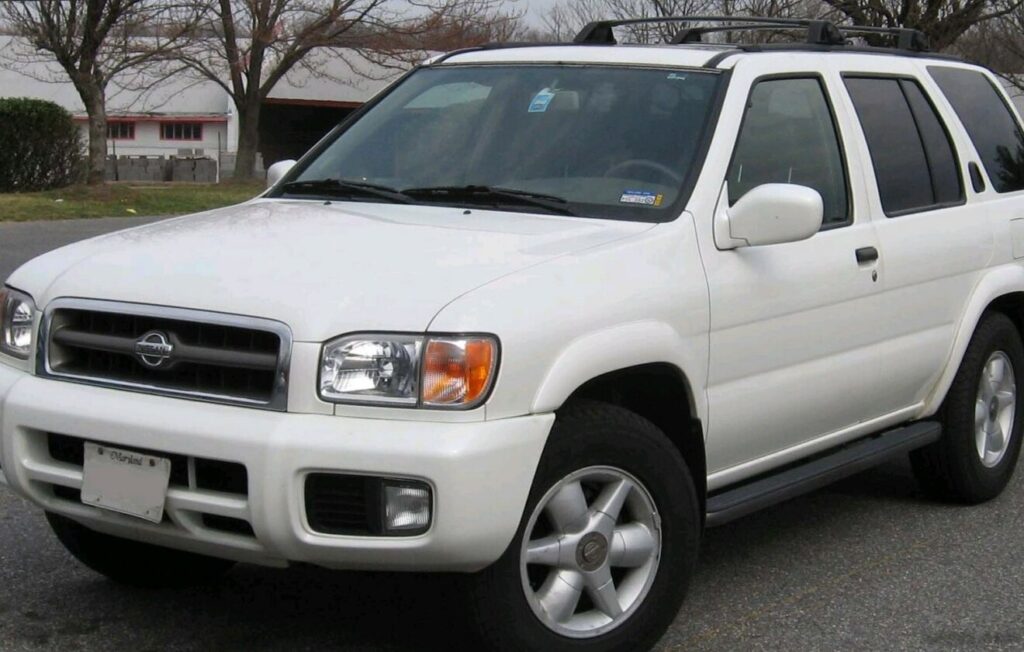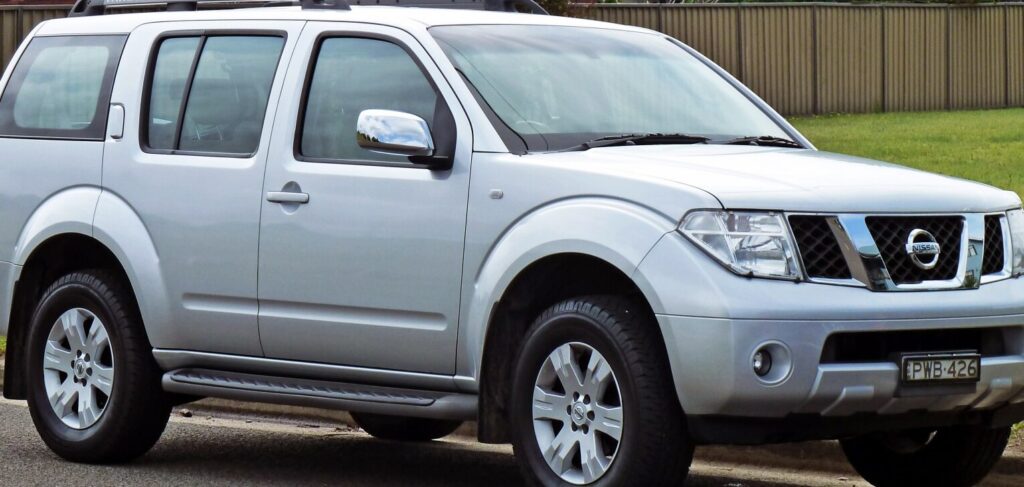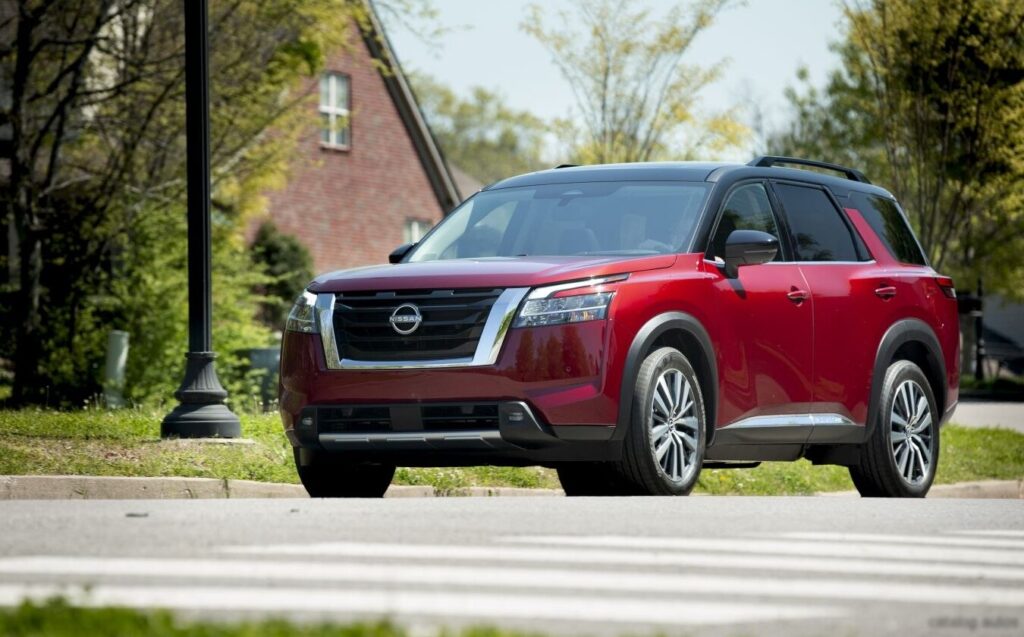
The Nissan Pathfinder V, specifically the 3.5 V6 4WD Automatic variant, represents the fifth generation of Nissan’s popular mid-size SUV. Introduced for the 2021 model year and continuing through November 2025, this iteration marked a significant departure from its unibody crossover predecessor, returning to a body-on-frame construction. This shift aimed to enhance its ruggedness, towing capacity, and overall utility, appealing to families and those seeking a more capable SUV. The 3.5 V6 4WD Automatic trim sat as a prominent offering within the Pathfinder V lineup, balancing performance, capability, and a comfortable driving experience.
Technical Specifications
| Brand | Nissan |
| Model | Pathfinder |
| Generation | Pathfinder V |
| Type (Engine) | 3.5 V6 (284 Hp) 4WD Automatic |
| Start of production | 2021 year |
| End of production | November, 2025 year |
| Powertrain Architecture | Internal Combustion engine |
| Body type | SUV |
| Seats | 7-8 |
| Doors | 5 |
| Fuel consumption (urban) | 11.2-11.8 l/100 km (21 – 19.9 US mpg) |
| Fuel consumption (extra urban) | 8.7-9.4 l/100 km (27 – 25 US mpg) |
| Fuel consumption (combined) | 10.2-10.7 l/100 km (23.1 – 22 US mpg) |
| Fuel Type | Petrol (Gasoline) |
| Emission standard | Tier3 Bin70/LEV3-ULEV70 |
| Weight-to-power ratio | 7.1 kg/Hp, 140.1 Hp/tonne |
| Weight-to-torque ratio | 5.8 kg/Nm, 173.2 Nm/tonne |
| Power | 284 Hp @ 6400 rpm |
| Power per litre | 81.2 Hp/l |
| Torque | 351 Nm @ 4800 rpm (258.88 lb.-ft. @ 4800 rpm) |
| Maximum engine speed | 6600 rpm |
| Engine layout | Front, Transverse |
| Engine Model/Code | VQ35DD |
| Engine displacement | 3498 cm3 (213.46 cu. in.) |
| Number of cylinders | 6 |
| Engine configuration | V-engine |
| Cylinder Bore | 96 mm (3.78 in.) |
| Piston Stroke | 81 mm (3.19 in.) |
| Compression ratio | 11:1 |
| Number of valves per cylinder | 4 |
| Fuel injection system | Direct injection |
| Engine aspiration | Naturally aspirated engine |
| Valvetrain | DOHC, CVTCS |
| Engine oil capacity | 4.8 l (5.07 US qt | 4.22 UK qt) |
| Coolant capacity | 11.6 l (12.26 US qt | 10.21 UK qt) |
| Kerb Weight | 2027-2098 kg (4468.77 – 4625.3 lbs.) |
| Max. weight | 2676-2750 kg (5899.57 – 6062.71 lbs.) |
| Max load | 649-652 kg (1430.8 – 1437.41 lbs.) |
| Trunk (boot) space – minimum | 470 l (16.6 cu. ft.) |
| Trunk (boot) space – maximum | 2280 l (80.52 cu. ft.) |
| Fuel tank capacity | 70 l (18.49 US gal | 15.4 UK gal) |
| Permitted trailer load with brakes (12%) | 2722 kg (6000.98 lbs.) |
| Length | 5022 mm (197.72 in.) |
| Width | 1979 mm (77.91 in.) |
| Height | 1796 mm (70.71 in.) |
| Wheelbase | 2901 mm (114.21 in.) |
| Front track | 1699 mm (66.89 in.) |
| Rear (Back) track | 1699 mm (66.89 in.) |
| Ride height (ground clearance) | 180 mm (7.09 in.) |
| Drag coefficient (Cd) | 0.324 |
| Approach angle | 16.1° |
| Departure angle | 15.6° |
| Ramp-over (brakeover) angle | 20.9° |
| Drivetrain Architecture | The Internal combustion engine (ICE) drives the front wheels permanently, and the rear wheels are driven through an electrically or mechanically operated clutch if necessary. |
| Drive wheel | All wheel drive (4×4) |
| Number of gears and type of gearbox | 9 gears, automatic transmission |
| Front suspension | Spring Strut, Transverse stabilizer |
| Rear suspension | Independent multi-link suspension, Transverse stabilizer |
| Front brakes | Ventilated discs, 350×30 mm |
| Rear brakes | Ventilated discs, 330×16 mm |
| Assisting systems | ABS (Anti-lock braking system) |
| Steering type | Steering rack and pinion |
| Power steering | Electric Steering |
| Tires size | 255/50 R20 |
INTRODUCTION
The Nissan Pathfinder V 3.5 V6 4WD Automatic, launched in 2021, represented a return to form for the Pathfinder nameplate. Previous generations had transitioned to a more car-like unibody construction, but the fifth generation embraced a rugged body-on-frame platform, shared with the Nissan Titan pickup truck. This change was driven by consumer demand for a more traditional SUV experience, prioritizing towing capacity, off-road capability, and a robust feel. The 3.5-liter V6 engine paired with a 9-speed automatic transmission and four-wheel drive became a popular configuration, offering a balance of power, efficiency, and all-weather traction. It was positioned as a mid-range to upper-mid-range trim, offering a substantial step up from the base models while remaining more accessible than the fully-loaded Platinum trims.
Powertrain & Engine Architecture
At the heart of the Pathfinder V 3.5 4WD lies Nissan’s VQ35DD 3.5-liter V6 engine. This engine is a naturally aspirated, 24-valve DOHC powerplant featuring Nissan’s Continuously Variable Valve Timing Control System (CVTCS). The VQ engine family is renowned for its reliability and smooth power delivery. The VQ35DD utilizes direct fuel injection, contributing to improved fuel efficiency and reduced emissions. It produces 284 horsepower at 6400 rpm and 258.88 lb-ft of torque at 4800 rpm. The engine is transversely mounted in the front of the vehicle. The 9-speed automatic transmission, sourced from ZF, replaced the continuously variable transmission (CVT) found in earlier Pathfinders. This transmission provides more definitive shift points, enhancing the driving experience and improving towing performance. The 4WD system is an electronically controlled part-time system, allowing drivers to switch between 2WD, Auto, and 4WD Lock modes.
Driving Characteristics
The 3.5 V6 and 9-speed automatic combination delivers a noticeable improvement in driving dynamics compared to previous Pathfinder generations. The 9-speed transmission offers quicker acceleration and more responsive downshifts. While not a sports car, the Pathfinder V 3.5 4WD provides ample power for everyday driving and confident highway merging. The 4WD system enhances traction in inclement weather and on loose surfaces. The gear ratios are tuned for a balance of fuel economy and towing capability. Compared to lower-powered four-cylinder Pathfinder models, the V6 offers significantly more effortless acceleration and a more relaxed driving experience, especially when fully loaded or towing a trailer. It doesn’t quite match the outright acceleration of some competitors with turbocharged engines, but the V6’s smooth and predictable power delivery is a key strength.
Equipment & Trim Levels
The 3.5 V6 4WD Automatic trim typically included features such as tri-zone automatic climate control, an 8-inch touchscreen infotainment system with Apple CarPlay and Android Auto compatibility, Nissan Safety Shield 360 (a suite of driver-assistance technologies), and heated front seats. Interior upholstery was typically cloth or a combination of cloth and leatherette. Optional extras included a panoramic sunroof, leather seats, a premium Bose audio system, and a rear entertainment system. Higher trim levels built upon this foundation, adding features like ventilated front seats, a larger touchscreen display, and more advanced driver-assistance systems.
Chassis & Braking
The Pathfinder V utilizes a fully boxed frame construction, contributing to its increased rigidity and towing capacity. The front suspension features a strut design with a transverse stabilizer bar, while the rear suspension employs an independent multi-link setup, also with a stabilizer bar. This suspension configuration provides a comfortable ride and predictable handling. Braking duties are handled by ventilated discs on all four wheels, with the front discs measuring 350x30mm and the rear discs measuring 330x16mm. The Pathfinder V is equipped with an Anti-lock Braking System (ABS) and electronic brake-force distribution.
Market Reception & Comparison
The 2021 Nissan Pathfinder V was generally well-received by automotive critics, who praised its return to a body-on-frame platform and its improved interior quality. The 3.5 V6 engine was lauded for its smooth power delivery and reliability. Fuel economy was considered average for the segment, with combined ratings around 23 mpg. Compared to competitors like the Toyota Highlander and Honda Pilot, the Pathfinder V offered a more rugged aesthetic and a higher towing capacity. However, some critics noted that its interior design was not as modern or refined as some rivals. The 9-speed transmission, while an improvement over the CVT, occasionally exhibited some hesitation during shifts.
Legacy
The Nissan Pathfinder V 3.5 V6 4WD Automatic has proven to be a reliable and capable SUV. The VQ35DD engine has a long-standing reputation for durability, and the ZF 9-speed transmission has generally held up well in service. On the used car market, these Pathfinders hold their value reasonably well, particularly those that have been well-maintained. Common issues reported by owners include minor infotainment glitches and occasional sensor failures, but major mechanical problems are relatively rare. The return to a body-on-frame platform has solidified the Pathfinder’s position as a versatile SUV capable of handling both family duties and more demanding tasks.